
Keys are one of the few items almost everyone carries daily. Yet, how we organize them varies widely — from minimalist split rings to feature-packed smart trackers and built-in flashlights. The rise of multifunctional key holders has blurred the line between utility and clutter. While some swear by their compact Swiss Army-style tools, others argue that simplicity leads to better usability and comfort. So, is the added functionality worth the extra weight and complexity?
This isn’t just about preference — it’s about practicality, ergonomics, and long-term use. Whether you're a commuter, outdoor enthusiast, or someone who values minimalism, understanding the trade-offs helps you make an informed decision.
The Rise of Multifunctional Key Holders
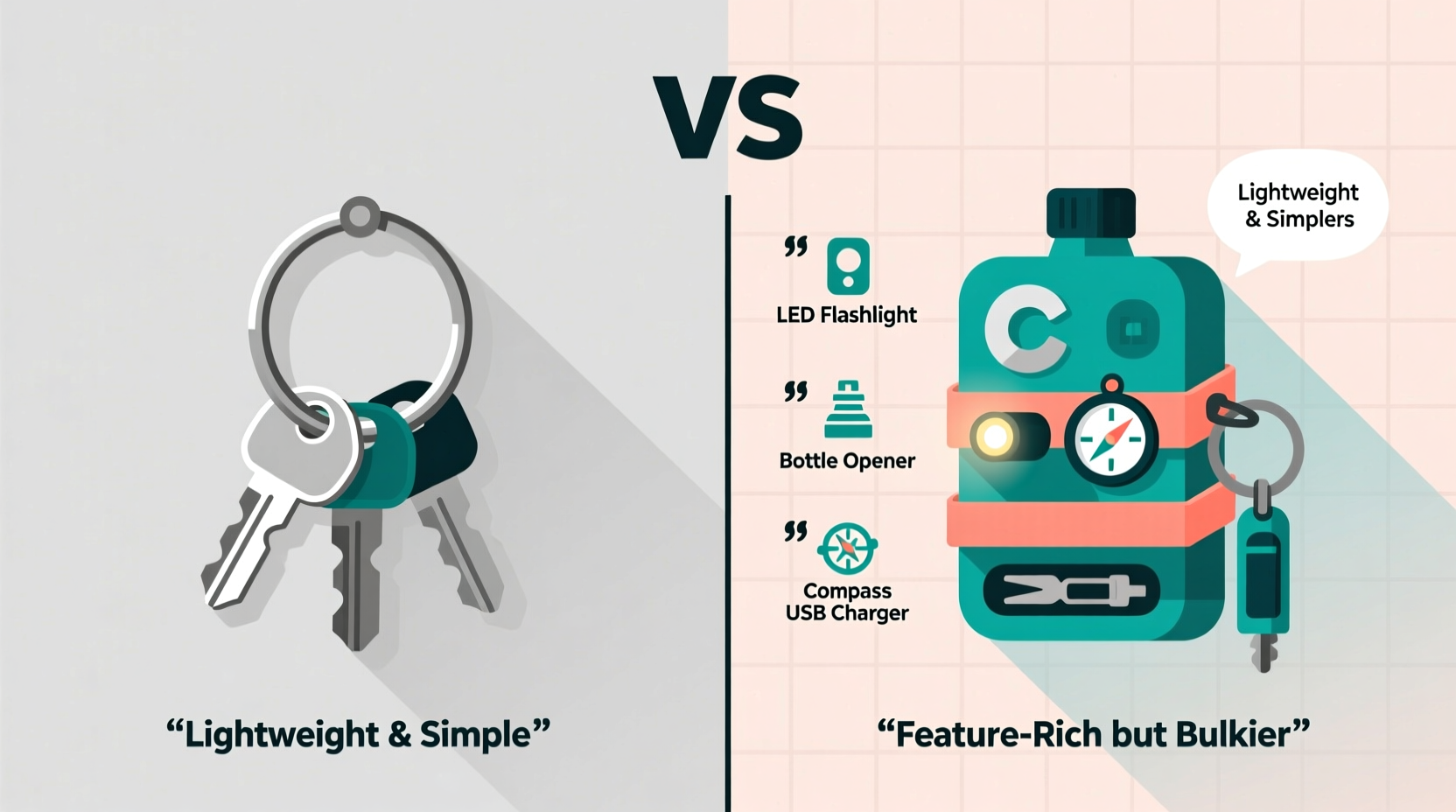
Multifunctional key holders have evolved beyond basic organization. Today’s models include USB drives, bottle openers, mini screwdrivers, LED lights, even Bluetooth trackers. Brands like Nite Ize, KeySmart, and Tile have capitalized on the demand for “everything in one” solutions, promising convenience through consolidation.
The appeal is clear: reduce pocket clutter by combining essential tools into a single unit. For travelers, having a flashlight or flathead screwdriver built into a key holder can be invaluable. For those prone to losing keys, a tracker-equipped model offers peace of mind.
But this convenience comes at a cost — literally and physically. These devices often retail between $30 and $80, significantly more than a simple metal ring or leather fob. More importantly, they add bulk, weight, and potential points of failure.
Simplicity Has Its Strengths
Simple key holders — whether a basic split ring, a slim leather loop, or a minimalist aluminum clip — prioritize function over flair. They do one thing well: keep your keys together without drawing attention or adding discomfort.
Their advantages are often underestimated. A lightweight keychain doesn’t dig into your thigh when sitting. It won’t snag on fabric. It rarely breaks. And because there are no moving parts or electronics, maintenance is virtually nonexistent.
Minimalist users often report greater satisfaction with simple designs. They appreciate the tactile ease of flipping open a compact key fob versus unfolding a multi-tool from a bulky housing. In emergency situations, speed matters — and fewer components mean faster access.
“Sometimes the most elegant solution is the one that disappears. A good key holder should serve without demanding attention.” — Daniel Reeves, Industrial Designer
Feature Comparison: What You Gain (and Lose)
| Feature | Multifunctional Key Holders | Simple Key Holders |
|---|---|---|
| Weight | Heavy (3–8 oz depending on features) | Light (0.5–2 oz) |
| Bulk | High – often wider than a phone |
| Low – fits flush in pocket | ||
| Durability | Varies – hinges, batteries, and circuits can fail | High – metal or leather withstands years of use |
| Cost | $25–$80+ | $5–$25 |
| Features | Flashlight, USB, tracker, tools | None beyond organization |
| Pocket Comfort | Poor – creates pressure points | Excellent – unobtrusive |
| Access Speed | Slower – requires unlocking mechanisms | Instant – keys readily available |
Real-World Example: Urban Commuter vs. Outdoor Enthusiast
Consider two users: Sarah, a city-based office worker, and Mark, a weekend hiker and DIYer.
Sarah carries her keys, phone, wallet, and transit card daily. Her pocket space is limited, and she walks 30 minutes each way to work. She tried a multifunctional key holder with a flashlight and USB drive but found it uncomfortable after a week. The sharp edges pressed into her leg, and she never used the flashlight. She switched back to a smooth titanium key clip — lighter, slimmer, and silent in her pocket.
Mark, on the other hand, frequently camps and repairs gear on trails. His multifunctional key holder includes a knife blade, bottle opener, and hex wrenches. He’s used the tools dozens of times — tightening bike bolts, opening a stuck tent clip, slicing tape. For him, the extra bulk is justified by real utility.
The takeaway? Context defines value. Functionality only matters if it aligns with your routine.
When Multifunctional Makes Sense — and When It Doesn’t
There are scenarios where multifunctional key holders shine. Emergency preparedness kits benefit from integrated tools. Frequent travelers appreciate compact multitools that pass TSA checks. People with mobility issues may find easier key separation helpful. And if you’ve ever lost keys in a dark parking lot, a built-in light or tracker might feel indispensable.
But for many, these features remain underused. A 2022 consumer survey by GearLab found that 68% of multifunctional key holder owners used fewer than half the included tools regularly. Worse, 41% reported mechanical failures within 18 months — broken hinges, dead batteries, or lost components.
Meanwhile, simple key holders consistently score high in durability and user satisfaction. Their lack of complexity means fewer things to go wrong. They’re also easier to customize — swapping out keys, adding luggage tags, or attaching a small charm doesn’t compromise structural integrity.
Step-by-Step Guide to Choosing the Right Key Holder
- Assess Your Daily Load: List everything you carry. If your pockets are already full, avoid adding bulk.
- Identify Pain Points: Do you lose keys often? Need quick tool access? Struggle with pocket bulge?
- Prioritize Features: Rank desired functions (e.g., tracker > flashlight > USB).
- Test Weight and Feel: Visit a store or order samples. Hold them in your pocket for a day.
- Consider Redundancy: Do you already carry a flashlight or multitool? Duplicating functions wastes space.
- Evaluate Longevity: Check warranty, materials, and user reviews for durability.
- Start Simple: Try a minimalist option first. Upgrade only if a genuine need emerges.
Frequently Asked Questions
Can multifunctional key holders damage my other belongings?
Yes. Sharp edges from tools or rough casings can scratch phones, wallets, or fabric linings. Silicone sleeves or padded pouches can mitigate this, but add further bulk.
Are smart key holders worth it for tracking?
For some, yes. If you frequently misplace keys, a Tile or Apple AirTag-integrated holder provides real value. However, standalone tags attached to simple rings offer the same benefit without extra hardware.
Do simple key holders break easily?
Rarely. High-quality metal rings or reinforced leather fobs last years. Stainless steel and titanium models resist corrosion and stress fractures far better than plastic-based multifunctional units.
Final Verdict: Is the Extra Bulk Worth It?
The answer depends entirely on your lifestyle. For most people, the extra bulk of multifunctional key holders isn’t justified. The majority of added features go unused, while comfort and reliability suffer. Simplicity wins in daily usability, longevity, and elegance.
However, for specific use cases — outdoor activities, technical work, frequent travel — a well-designed multifunctional model can be a legitimate asset. The key is intentionality. Don’t buy features for novelty. Buy them because they solve a recurring problem.
Before upgrading, ask: Will I use this weekly? Does it make a task easier, or just different? Can the same benefit be achieved more elegantly?




 浙公网安备
33010002000092号
浙公网安备
33010002000092号 浙B2-20120091-4
Comments
No comments yet. Why don't you start the discussion?