
Dogs that gulp their food in seconds aren’t just messy—they may be putting their health at risk. Rapid eating can lead to choking, bloating, indigestion, and even life-threatening conditions like gastric dilatation-volvulus (GDV), commonly known as bloat. Many pet owners turn to slow feeder bowls as a solution, but are they truly more effective than simply using a larger, standard dog bowl? The answer isn’t just about design—it’s rooted in canine behavior, digestion, and veterinary science.
Why Fast Eating Is a Serious Problem
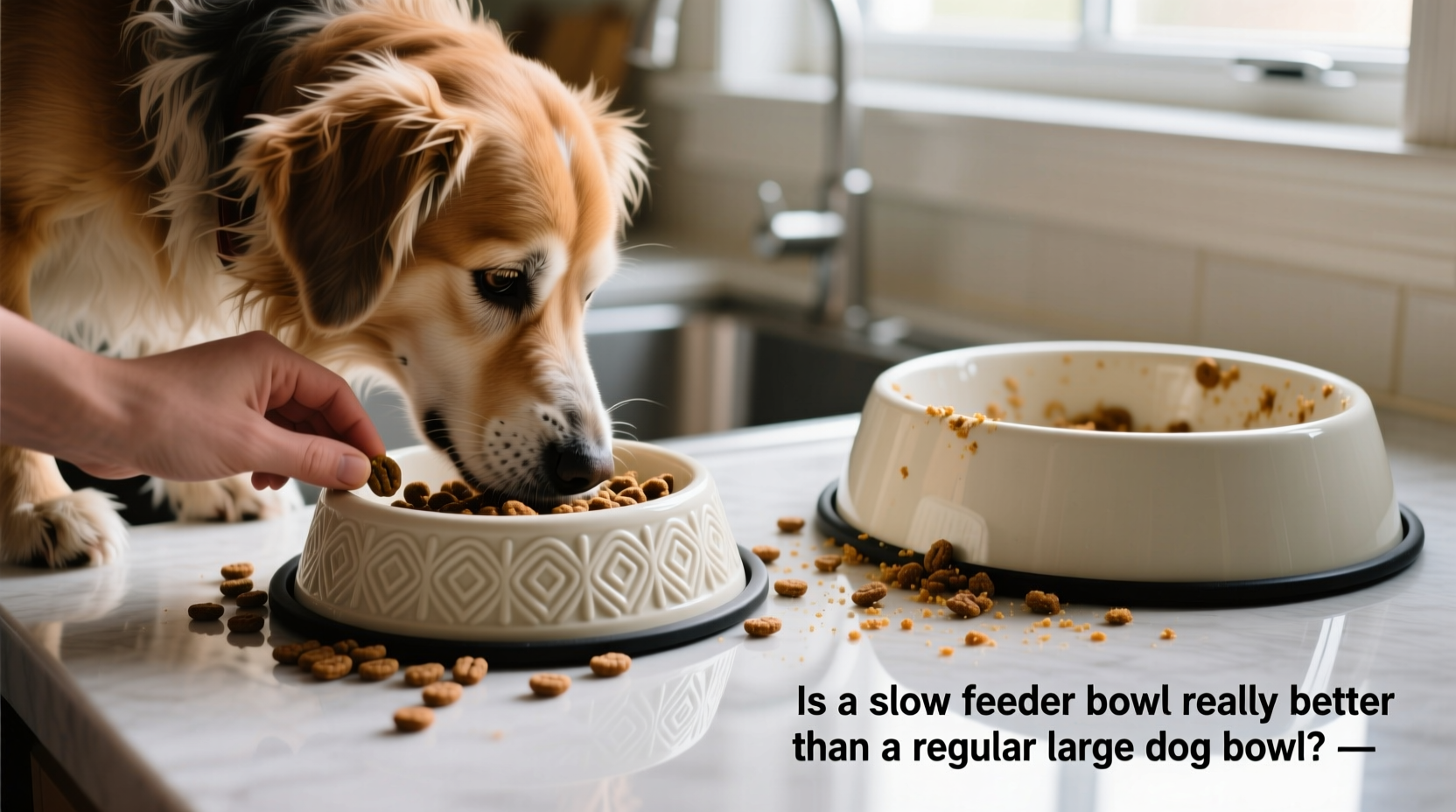
Dogs evolved as scavengers, often competing for food in the wild. This instinct remains strong today, even in well-fed household pets. When a dog eats too quickly, it doesn’t chew properly, swallows excess air, and overwhelms its digestive system. The consequences go beyond messiness:
- Aerophagia: Swallowing air during rapid eating can cause gas, discomfort, and burping.
- Regurgitation: Food may come back up shortly after eating due to poor chewing and overloading the stomach.
- Bloat (GDV): One of the most dangerous outcomes, especially in deep-chested breeds like Great Danes or German Shepherds. GDV occurs when the stomach fills with gas and twists, cutting off blood flow. It’s a medical emergency.
- Poor nutrient absorption: Without proper breakdown, nutrients aren’t efficiently absorbed.
Veterinarians consistently warn against unchecked fast eating. As Dr. Karen Becker, a proactive and integrative veterinarian, states:
“Dogs that eat too fast are at higher risk for gastrointestinal distress and bloat. Slowing down mealtime isn’t just a convenience—it’s a preventive health measure.” — Dr. Karen Becker, DVM
How Slow Feeder Bowls Work
Slow feeder bowls are designed with physical barriers—ridges, mazes, compartments, or raised patterns—that force dogs to work around obstacles to access their food. Unlike a flat-bottomed traditional bowl, these designs require the dog to use its tongue and jaws more deliberately, mimicking natural foraging behavior.
The core principle is behavioral modification through environmental enrichment. Instead of consuming a full meal in under a minute, dogs may take 10–20 minutes to finish, which aligns more closely with natural pacing.
Slow Feeder vs. Regular Large Dog Bowl: A Direct Comparison
At first glance, using a larger standard bowl might seem like a way to spread food out and reduce speed. However, this approach rarely works. Dogs trained to eat quickly will simply lower their heads and sweep food from one side to the other with remarkable efficiency. Size alone doesn’t alter behavior.
The following table compares key aspects of both feeding methods:
| Feature | Slow Feeder Bowl | Regular Large Dog Bowl |
|---|---|---|
| Meal Duration | 10–25 minutes on average | Often less than 2 minutes |
| Air Ingestion | Reduced due to slower pace | High; promotes aerophagia |
| Digestive Comfort | Improved; less bloating and reflux | Poor; frequent post-meal discomfort |
| Mental Stimulation | High; engages problem-solving | None; passive consumption |
| Risk of Bloat | Lowered significantly | Elevated, especially in large breeds |
| Cleanability | Varies; some models harder to clean | Easy; smooth surfaces |
The data clearly favors slow feeders when the goal is to modify eating behavior. While large bowls offer no structural impediment to speed, slow feeders actively disrupt the vacuum-like eating pattern many dogs develop.
Real-World Results: A Mini Case Study
Consider Max, a 3-year-old Labrador Retriever owned by Sarah T. in Portland, Oregon. Max had a history of gulping his food and frequently vomited within 15 minutes of eating. After a vet visit ruled out underlying illness, the recommendation was to try a slow feeder.
Sarah introduced a maze-style stainless steel slow feeder. At first, Max pushed the bowl across the floor in frustration. She mixed in a spoonful of low-sodium chicken broth to make the kibble more enticing. By day three, Max began navigating the grooves. Within a week, his mealtime extended from 90 seconds to nearly 14 minutes. Over the next month, vomiting episodes stopped entirely, and Sarah reported Max seemed “more satisfied” after meals.
“I thought it was just a gimmick,” Sarah said. “But now I’d never go back. He’s calmer, healthier, and actually enjoys his food instead of inhaling it.”
Choosing the Right Slow Feeder: A Practical Checklist
Not all slow feeders are created equal. Effectiveness depends on your dog’s size, breed, food type, and temperament. Use this checklist to select the best option:
- ✅ Size-appropriate design: Ensure the maze or ridges match your dog’s muzzle width.
- ✅ Stable base: Non-slip bottom prevents sliding, especially important for enthusiastic eaters.
- ✅ Material safety: Opt for BPA-free plastic, stainless steel, or ceramic.
- ✅ Easy to clean: Look for dishwasher-safe options or wide openings for scrubbing.
- ✅ Adjustable difficulty: Some models allow you to change obstacle layout as your dog adapts.
- ✅ Food type compatibility: Deep compartments work better for kibble; shallow mazes suit wet food mixes.
Step-by-Step Guide to Transitioning to a Slow Feeder
Switching cold turkey can confuse or frustrate your dog. Follow this timeline for a smooth transition:
- Day 1–2: Place the slow feeder beside the regular bowl filled with treats or a portion of dinner. Let your dog investigate without pressure.
- Day 3–4: Serve half the meal in the slow feeder, half in the regular bowl. Praise any interaction with the new bowl.
- Day 5–6: Serve the full meal in the slow feeder but soften kibble with warm water or broth to enhance smell and ease access.
- Day 7 onward: Use only the slow feeder with dry food. Monitor duration and comfort.
- Week 2: Assess progress. If resistance continues, try a different slow feeder design (e.g., flower-shaped vs. spiral).
Patience is essential. Some dogs adapt in days; others take weeks. Never punish or rush the process.
Frequently Asked Questions
Can slow feeders help with weight management?
Indirectly, yes. Slower eating allows satiety signals time to reach the brain, reducing overeating. Combined with portion control, slow feeders support healthy weight goals.
Are slow feeders suitable for puppies?
Yes, but choose simpler designs. Puppies benefit from learning healthy eating habits early, but complex mazes may discourage them. Start with mild ridges and increase difficulty as they grow.
What if my dog refuses to use the slow feeder?
Troubleshoot by enhancing food appeal with broth, warming the food slightly, or hand-feeding a few pieces inside the maze to demonstrate accessibility. If resistance persists, try a different model or consult a trainer.
Conclusion: A Small Change With Big Health Payoffs
While a regular large dog bowl may seem like a simple fix for fast eating, it fails to address the root issue: uncontrolled consumption. Slow feeder bowls, backed by veterinary insight and real-world success, offer a practical, science-supported solution. They promote healthier digestion, reduce life-threatening risks, and enrich your dog’s daily routine.




 浙公网安备
33010002000092号
浙公网安备
33010002000092号 浙B2-20120091-4
Comments
No comments yet. Why don't you start the discussion?