
For collectors and fans of anime, video games, and pop culture, choosing between a Nendoroid and a Funko Pop is more than just a matter of taste—it’s a decision about value, craftsmanship, and long-term satisfaction. At first glance, the price difference is stark: a typical Nendoroid can cost anywhere from $50 to over $100, while most Funko Pops retail between $12 and $20. But does that higher price tag translate into meaningful gains in display quality and collectible value? The answer depends on what you prioritize as a collector.
Nendoroids, produced by Good Smile Company, are known for their intricate sculpting, expressive faces, and interchangeable parts. Funko Pops, on the other hand, offer broad accessibility, recognizable stylization, and mass-market appeal. This article dives deep into the differences in design, material quality, customization, and longevity to help you determine whether the premium cost of Nendoroids is justified by their superior display detail.
Design Philosophy and Aesthetic Approach
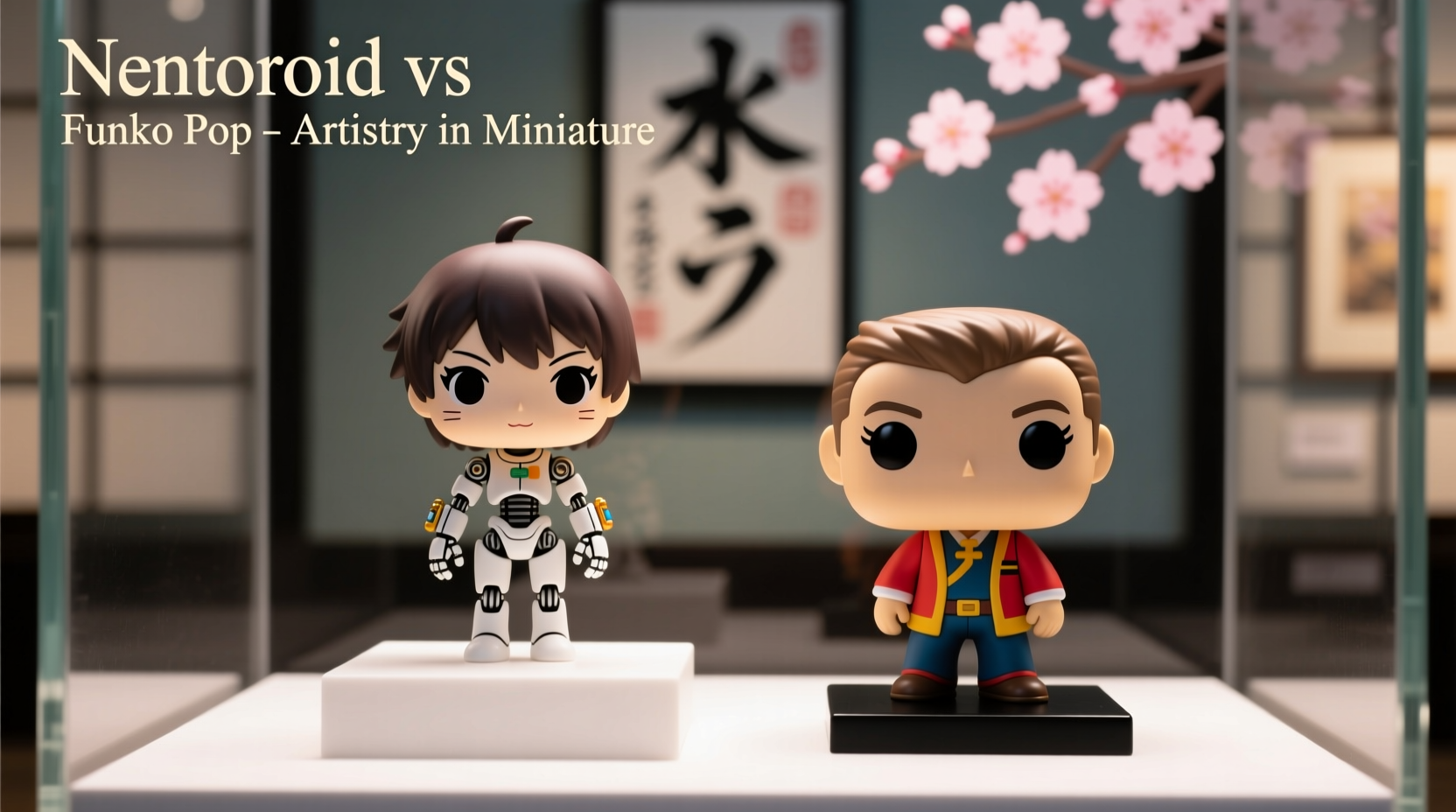
The most immediate distinction between Nendoroids and Funko Pops lies in their design language. Both use a chibi or super-deformed style—characterized by oversized heads and small bodies—but they interpret it very differently.
Funko Pops embrace a minimalist, almost cartoonish aesthetic. Their signature blank white eyes and fixed expressions create a uniform look across their vast catalog. While this consistency makes them instantly recognizable, it also limits emotional range and character specificity. A sad Naruto looks nearly identical to an excited Goku—both have wide eyes and neutral mouths. For casual fans or those building a themed shelf with variety, this sameness isn’t necessarily a drawback. It contributes to a cohesive visual rhythm.
Nendoroids, by contrast, are designed with storytelling in mind. Each figure comes with multiple face plates—smiling, blushing, angry, shouting—that allow collectors to change the character’s expression based on mood or scene. The attention to facial detail is remarkable: subtle blushes, precise eyelid creases, and finely painted irises give each face plate a lifelike expressiveness rare in mass-produced figures.
This level of nuance transforms a static object into a customizable art piece. Where a Funko Pop captures a character in one generic moment, a Nendoroid can reflect a full emotional arc—from quiet contemplation to battle-ready fury.
Material Quality and Construction
Both lines are made primarily of PVC, but the execution differs significantly. Funko Pops are injection-molded with relatively thick walls and simple paint applications. This makes them durable and inexpensive to produce, but often results in visible mold lines, uneven paint distribution, and limited articulation beyond head movement.
Nendoroids use softer, more flexible PVC for facial components and higher-grade plastics for joints. The paintwork is applied with greater precision—often using airbrush techniques—and includes fine details like gradients, shading, and gloss finishes on eyes or hair highlights. Joints are engineered for stability and smooth adjustment, allowing arms, legs, and even fingers to be posed without fear of breakage (within reason).
One often-overlooked aspect is the base system. Nendoroids include clear plastic stands with adjustable rods, enabling dramatic poses mid-action—jumping, casting spells, swinging weapons. Funko Pops typically rest on flat bases or none at all, limiting their ability to interact with dioramas or dynamic displays.
“Nendoroids represent the intersection of toy engineering and miniature sculpture. They’re not just collectibles—they’re poseable portraits.” — Kenji Tanaka, Product Designer at Good Smile Company
Display Comparison: Detail vs. Quantity
Let’s compare how these figures perform in real-world display scenarios. Imagine curating a shelf dedicated to Studio Ghibli characters. You could line up five different Funko Pops—Totoro, Kiki, Howl, No-Face, and Calcifer—for under $75. Or you could purchase a single Nendoroid of Totoro for $85.
The five-Pop lineup offers visual diversity and immediate recognition. However, each figure shares the same rigid posture and blank stare. The overall effect is cheerful but static—a wall of icons rather than living characters.
The Nendoroid Totoro, meanwhile, comes with three face plates: calm, playful, and sleepy. Its limbs are fully articulated, so it can sit cross-legged, wave, or hold included accessories like a leaf umbrella. The fur texture on its body is meticulously sculpted, and the gradient painting on its belly gives depth absent in the flatter Pop version.
In terms of sheer presence, the Nendoroid commands attention. It doesn’t just occupy space—it interacts with it. But if your goal is breadth over depth, the affordability of Funko Pops allows for faster collection growth and thematic variety.
Comparison Table: Nendoroid vs Funko Pop
| Feature | Nendoroid | Funko Pop |
|---|---|---|
| Average Price | $50–$120 | $12–$20 |
| Face Variants | 3–6 interchangeable | Fixed expression |
| Articulation | Full limb + finger joints | Head only (swivel) |
| Poseability | High (with stand) | Low (static) |
| Paint Detail | Precision airbrushing, shading | Broad brush strokes, minimal detail |
| Accessories | Multiple (weapons, props, hands) | Rarely included |
| Collector Resale Value | Often appreciates (limited editions) | Mostly stable or depreciates |
| Best For | Detailed displays, photography, customization | Mass collections, gifts, quick decor |
Real Collector Experience: Sarah’s Anime Shelf Upgrade
Sarah, a longtime anime fan from Portland, started her collection with 20+ Funko Pops spanning Attack on Titan, My Hero Academia, and Demon Slayer. “I loved seeing my favorite characters on the shelf,” she says. “But after a while, they all looked the same—like a row of bobbleheads.”
She decided to invest in a Nendoroid of Nezuko from Demon Slayer, priced at $95. The transformation was immediate. “Suddenly, I had a centerpiece. I could change her face when she ‘woke up’ from sleep mode, pose her with bamboo muzzle or without, and even photograph her in action scenes.” Inspired, Sarah began replacing key figures one by one. Two years later, she owns 14 Nendoroids and only keeps a few Pops for nostalgic reasons.
“It’s not cheaper,” she admits, “but every time I walk past my shelf, I feel like I’m looking at art, not just toys.” Her experience reflects a broader trend among serious collectors: once exposed to the depth of Nendoroid craftsmanship, many find it difficult to return to the limitations of standard vinyl figures.
Is the Premium Justified? A Value Breakdown
To assess whether Nendoroids are worth the price, consider three factors: craftsmanship, longevity, and emotional resonance.
Craftsmanship: From design to delivery, Nendoroids undergo rigorous quality control. Sculptors work closely with IP holders to ensure accuracy. Paint apps are tested across lighting conditions. Even packaging is collector-focused—colorful boxes with windows, foam inserts, and labeled compartments for each part.
Longevity: Due to better materials and modular design, Nendoroids age more gracefully. Lost parts can often be replaced through Good Smile’s service center. Funko Pops, while sturdy, suffer from yellowing over time (especially clear variants), and broken heads or limbs are rarely repairable.
Emotional Resonance: Because Nendoroids invite interaction—changing faces, posing, accessorizing—they foster a deeper connection. You’re not just displaying a character; you’re curating moments from their story.
Step-by-Step Guide: Building a High-Impact Display on a Budget
You don’t need to replace your entire collection overnight. Here’s how to strategically integrate Nendoroids for maximum visual impact without overspending:
- Identify Your Centerpiece Characters: Choose 2–3 favorites you want to highlight (e.g., your most-watched anime protagonist).
- Research Limited Editions: Check Good Smile’s official site for exclusive versions that may appreciate in value.
- Start with One Nendoroid: Purchase your top-priority figure and place it centrally in your display.
- Use Lighting Strategically: LED strip lights or small spotlights enhance sculpted details and paint effects.
- Rotate Seasonally: Swap out one Nendoroid every few months to keep the display fresh.
- Phase Out Select Pops: As budget allows, replace lower-tier Pops with Nendoroids or retire them.
Frequently Asked Questions
Can I customize Funko Pops to match Nendoroid-level detail?
Yes, but with caveats. Advanced hobbyists repaint Pops, add custom eyes, or modify poses with aftermarket parts. However, this requires skill, tools, and time. For most people, buying a pre-crafted Nendoroid delivers higher quality with less effort.
Do Nendoroids hold their value better than Funko Pops?
Generally, yes—especially limited editions. A sold-out Nendoroid of Makima from *Chainsaw Man* has resold for triple its retail price. Most Funko Pops remain near original cost unless they’re rare variants (e.g., chase editions). If investment potential matters, Nendoroids offer stronger long-term returns.
Are Nendoroids fragile?
They’re more delicate than Pops due to smaller parts and finer sculpts, but not inherently fragile. With careful handling and proper stands, they withstand regular display. Avoid direct sunlight and high humidity to prevent paint degradation.
Final Verdict: Worth It for Detail-Oriented Collectors
The question isn’t whether Nendoroids are objectively better than Funko Pops—it’s whether their strengths align with your goals as a collector. If you value speed, affordability, and wide selection, Funko Pops will serve you well. They’re ideal for gifting, office desks, or filling shelves quickly.
But if you care about authenticity, emotional expression, and museum-grade presentation, Nendoroids justify their price through superior engineering and artistic intent. The ability to reconfigure a character’s mood, pose, and accessories turns collecting into curation. Over time, that depth fosters greater attachment and pride.
Think of it like audio equipment: a Bluetooth speaker gets the job done, but audiophiles invest in high-fidelity systems for richer sound. Similarly, Nendoroids are the high-fidelity option in the world of collectible figures—not everyone needs them, but those who do rarely regret the upgrade.




 浙公网安备
33010002000092号
浙公网安备
33010002000092号 浙B2-20120091-4
Comments
No comments yet. Why don't you start the discussion?