
Five years ago, the Nexus 6P and iPhone 6 represented two distinct philosophies in smartphone design—one rooted in raw Android purity and hardware ambition, the other in refined ecosystem integration and longevity. Fast forward to today, and both devices are long past their prime support cycles. Yet, some users still rely on them daily. For those who made the switch from the Nexus 6P to the iPhone 6—or vice versa—was it truly a downgrade in the present context? The answer isn’t as simple as specs suggest. Real-world usability, software updates, app compatibility, and ecosystem loyalty all play critical roles.
Hardware Comparison: Then vs Now
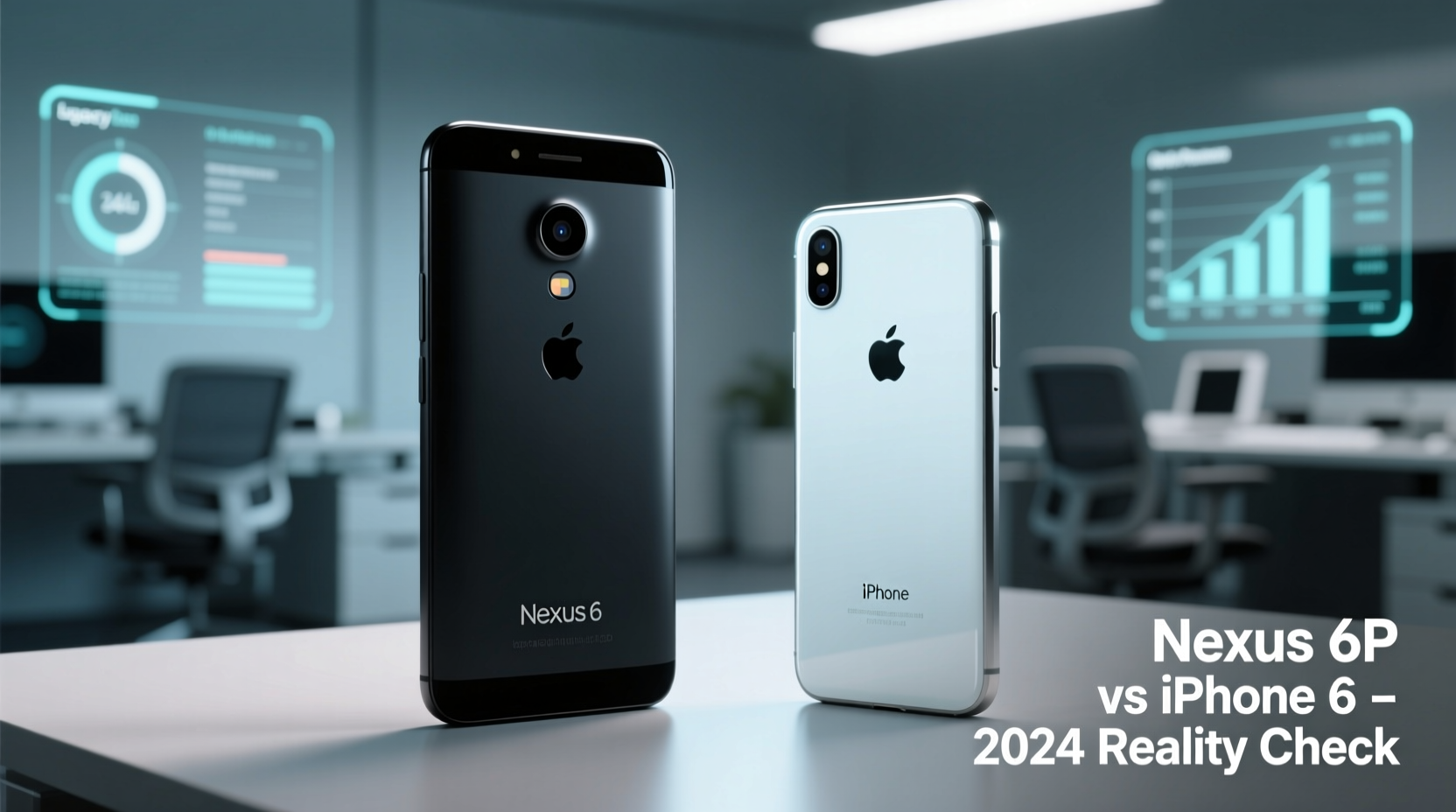
In 2015, the Nexus 6P stood as Google’s flagship collaboration with Huawei, boasting a sleek aluminum body, a 5.7-inch AMOLED display, and a powerful Snapdragon 810 processor. The iPhone 6, released a year earlier, featured a 4.7-inch Retina display, an Apple A8 chip, and a compact design that prioritized comfort over screen size.
At launch, the Nexus 6P had a clear edge in processing power, camera quality (especially in low light), and battery capacity. However, the iPhone 6 ran smoother due to iOS’s efficient resource management—even with less RAM and a weaker SoC by paper metrics.
Fast-forward to 2024, and neither device runs modern apps flawlessly. But the degradation isn’t equal. The Nexus 6P, despite its superior initial hardware, suffers more severely from app bloat and lack of security patches. iOS 12 was the last supported version for the iPhone 6, while the 6P stopped at Android 8.1 Oreo—both outdated, but iOS 12 remains surprisingly functional.
“Hardware age is inevitable, but software optimization can delay obsolescence. The iPhone 6 proves that efficiency often trumps raw power.” — David Lin, Mobile Systems Analyst
Software and Ecosystem Longevity
The most significant difference between these devices today lies not in hardware but in ecosystem resilience. Apple’s approach to backward compatibility means that even on iOS 12, the iPhone 6 can run Safari, Messages, and many core apps with minimal lag. Many third-party developers still maintain lighter versions of their apps compatible with older iOS builds.
In contrast, the Nexus 6P struggles with modern Android experiences. Apps like Chrome, Facebook, and banking services either crash frequently or refuse to install due to API level requirements. Google itself has dropped support for key services on pre-Android 9 devices. Even basic features like Find My Device may fail intermittently.
Real-World Usability Today: A Mini Case Study
Take Mark, a freelance writer who switched from a Nexus 6P to an iPhone 6 in 2017 after his 6P began overheating during video calls. At the time, he considered it a downgrade—smaller screen, weaker speaker, no USB-C. But by 2023, he found himself unexpectedly grateful.
His iPhone 6 still handles email, iMessage, and voice notes without issue. He uses Notes for drafting articles and syncs via iCloud. While he can’t edit photos or stream HD video reliably, his workflow doesn’t require it. Meanwhile, his old Nexus 6P, left with a family member, became nearly unusable by 2021—apps timed out, GPS failed, and WhatsApp stopped working after an update.
Mark’s experience highlights a broader trend: for minimalist users, the iPhone 6’s tight software control offers better long-term stability than the once-more-powerful Nexus 6P.
Performance and Battery Life in 2024
Battery degradation affects both devices equally—after 7+ years, lithium-ion cells lose 40–60% of original capacity. However, replaceable batteries were never an option for either, making this a shared limitation.
Where they differ is thermal throttling. The Snapdragon 810 in the Nexus 6P was notorious for overheating. Today, under minimal load—opening a browser or messaging app—the chip often throttles aggressively, causing stutters. iOS, meanwhile, dynamically scales performance and background activity, preserving responsiveness even on aging silicon.
| Metric | Nexus 6P (2024) | iPhone 6 (2024) |
|---|---|---|
| App Launch Speed | Slow, frequent hangs | Moderate, consistent |
| Web Browsing | Lags on complex sites | Smooth on basic pages |
| Camera Functionality | Shutter lag, poor autofocus | Functional for quick snaps |
| Security Updates | None since 2019 | None since 2018 |
| Third-Party App Support | Severely limited | Partially functional |
Was the Switch a Downgrade?
For power users attached to customization, fast charging, or large displays, moving from the Nexus 6P to the iPhone 6 felt like stepping back in time. The lack of expandable storage, slower charging, and smaller screen were tangible losses.
But for everyday tasks—calls, texts, light browsing, note-taking—the iPhone 6 delivers a more consistent experience today. Its ecosystem integration with iCloud, Apple ID, and service continuity provides subtle advantages that weren’t apparent in 2015. Features like Handoff or SMS relay aren’t usable now, but the foundational reliability of iOS on aging hardware shines through.
The Nexus 6P, while groundbreaking in its day, was built on a foundation that assumed faster upgrade cycles. Android’s fragmented update model meant it received only two major OS updates. In contrast, the iPhone 6 received five—iOS 8 through iOS 12—giving it nearly twice the active lifespan.
Checklist: Is Your Legacy Phone Still Viable in 2024?
- Can it install and run your essential apps (messaging, email, banking)?
- Does the browser load modern websites without crashing?
- Is the battery life sufficient for half a day of light use?
- Are there known security vulnerabilities with no patch available?
- Can you access cloud backups or transfer data easily?
Frequently Asked Questions
Can the Nexus 6P still be used as a daily driver in 2024?
Possibly, but not recommended. Core apps like Gmail or Maps may open slowly or freeze. Security risks are high due to unpatched vulnerabilities. It’s best suited as a backup or offline media player.
Why does the iPhone 6 outlast the Nexus 6P despite weaker specs?
iOS is optimized for specific hardware configurations, allowing Apple to fine-tune performance and memory usage. Android’s open nature leads to greater fragmentation, making long-term optimization harder—especially on discontinued Nexus models.
Is it safe to use either phone for online banking?
Not ideally. Both lack current security patches. If you must, avoid public Wi-Fi, disable unused permissions, and use dedicated banking apps rather than browsers. Consider upgrading for financial safety.
Step-by-Step: Extending Life of an Aging Smartphone
- Reset to factory settings to remove clutter and restore baseline performance.
- Install a lightweight launcher (e.g., Nova Launcher, if compatible) to reduce UI strain.
- Replace default apps with lighter alternatives (e.g., DuckDuckGo instead of Chrome).
- Disable background sync and automatic updates to prevent slowdowns.
- Use offline tools like Markdown editors or local note apps to minimize reliance on cloud services.
- Enable battery saver mode permanently to extend charge cycles.
Conclusion: Rethinking the Meaning of \"Upgrade\"
The question of whether switching from a Nexus 6P to an iPhone 6 was a downgrade depends entirely on how you define progress. By hardware standards, yes—it was a step down in screen size, battery, and connectivity. But longevity, stability, and ecosystem cohesion have proven more valuable over time than peak performance.
The iPhone 6’s ability to remain semi-functional seven years later speaks volumes about Apple’s software discipline. The Nexus 6P, though more advanced at launch, fell victim to Android’s update challenges and aggressive app demands. In the end, sustainability often beats speed.
If you're still clinging to either device, consider this: the real upgrade isn't about newer models—it's about choosing a platform that values long-term usability. Whether you stay or move on, make the decision based on how you actually use your phone, not just what it promises on paper.




 浙公网安备
33010002000092号
浙公网安备
33010002000092号 浙B2-20120091-4
Comments
No comments yet. Why don't you start the discussion?