
In recent years, earring fashion has undergone a quiet revolution. What was once dominated by classic studs and understated hoops now sees a dynamic clash between two dominant forces: bold statement pieces and intricately designed niche earrings. While oversized chandeliers and dramatic geometric forms once ruled red carpets and street style alike, a new wave of subtle individuality is rising—quirky, personalized, and often handmade designs that speak to identity rather than spectacle. So, are bold styles on their way out, or have we simply evolved toward more intentional self-expression through jewelry?
The answer isn’t binary. Instead, it lies in understanding how cultural shifts, digital aesthetics, and personal branding influence what we wear—and why.
The Rise and Reign of Statement Earrings
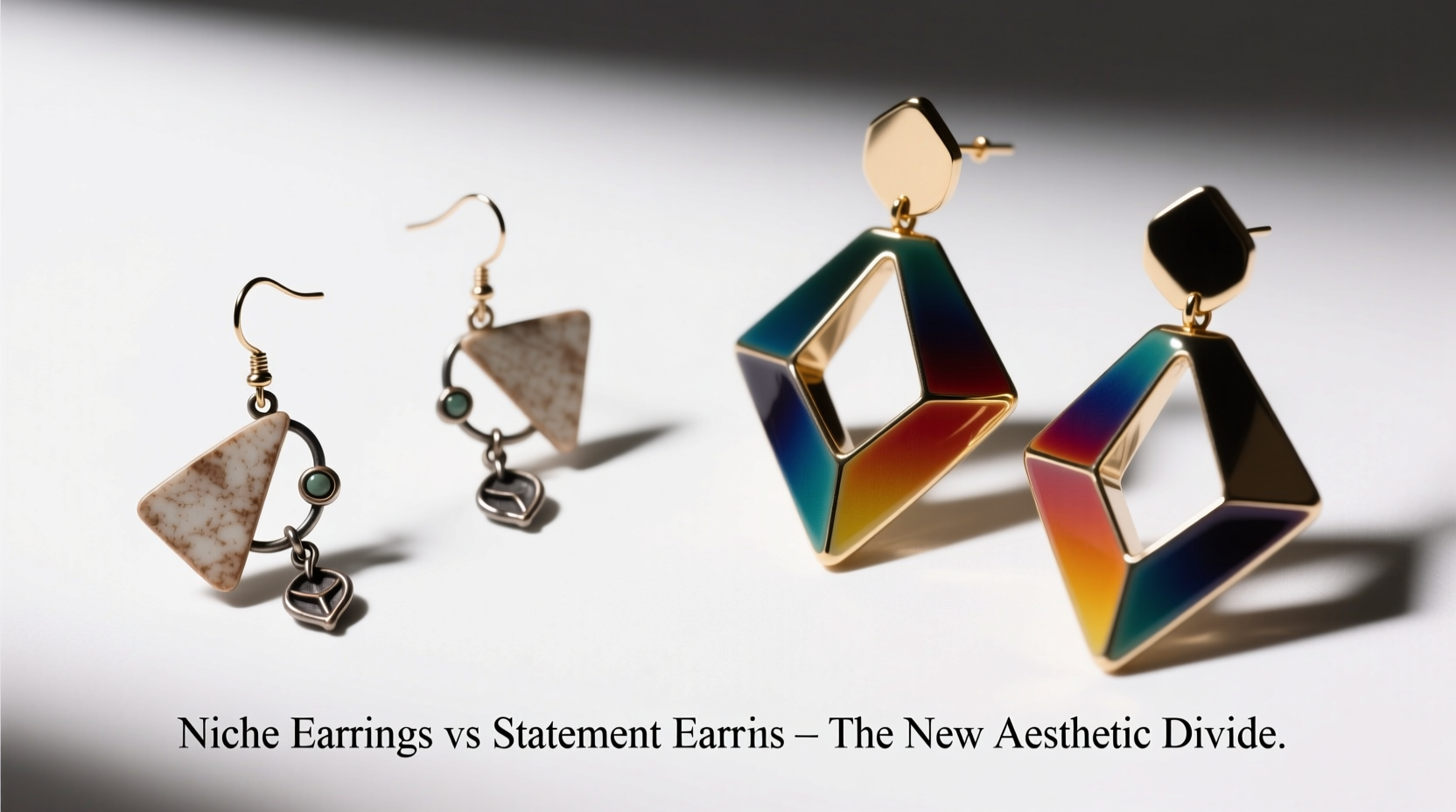
For nearly a decade, statement earrings have been a cornerstone of modern accessory fashion. Their appeal is immediate: they command attention, elevate minimalist outfits, and serve as focal points in both professional and social settings. Designers like Jacquie Aiche, Jennifer Fisher, and Sophie Buhai have popularized large-scale gold hoops, asymmetric drops, and sculptural silhouettes that blend artistry with wearability.
Statement earrings thrive in environments where visual impact matters—photoshoots, events, video calls. They’re particularly effective when paired with sleek hair or simple clothing, allowing the jewelry to shine without competition. During the rise of Instagram aesthetics and curated personal branding, these bold pieces became synonymous with confidence and style authority.
“Big earrings are armor. They change your posture, your voice, even how you hold your head.” — Dana Schutz, Fashion Editor at *Vogue*
Yet, as with all trends, saturation can lead to fatigue. The ubiquity of oversized metallic drops and tassel designs has prompted a search for alternatives—something more distinctive, less predictable.
The Quiet Rebellion: Niche Earrings Take Center Stage
Niche earrings—defined by unique materials, limited production, and conceptual design—are gaining ground among those seeking authenticity over visibility. These include hand-carved wooden shapes, resin pieces embedded with dried florals, mismatched ear climbers, or even 3D-printed biodegradable forms inspired by nature or architecture.
Unlike mass-produced statement items, niche earrings often tell a story. A pair might be made from recycled ocean plastic, feature ancestral motifs, or reflect neurodivergent expression through asymmetry. This shift aligns with broader consumer values: sustainability, craftsmanship, and emotional resonance.
Social media platforms like TikTok and Pinterest have accelerated this movement. Micro-trends emerge not from fashion houses but from independent artisans and subcultures. Think mushroom-shaped ceramic studs, celestial-themed wire wraps, or enamel pins repurposed into earrings. These designs don’t aim to dominate a look—they complete it with nuance.
Comparing Impact: Boldness vs. Individuality
| Feature | Statement Earrings | Niche Earrings |
|---|---|---|
| Size & Visibility | Large, eye-catching, often extends beyond earline | Small to medium, designed for subtlety or surprise |
| Materials | Polished metals, crystals, acrylic, leather | Resin, wood, clay, upcycled elements, natural fibers |
| Production Scale | Boutique or commercial manufacturing | Artisanal, small-batch, handmade |
| Cost Range | $50–$500+ | $25–$200 (often lower due to direct-to-consumer models) |
| Style Function | Centerpiece of an outfit | Conversation starter, personal signature |
Real-World Example: How One Designer Shifted the Narrative
Take Mira Chen, a Brooklyn-based jeweler who launched her brand during the pandemic. Initially crafting bold gold-plated cuffs and angular drops, she found her work blending into a crowded market. Then, she began experimenting with lost-wax casting using biodegradable molds and incorporating client-specific symbols—birth flowers, zodiac signs, even brainwave patterns converted into metal ridges.
Her “Whisper Collection”—featuring tiny, mismatched earrings shaped like open books, sleeping cats, and folded paper planes—went viral on TikTok after being featured in a video titled “Earrings That Feel Like Me.” Orders surged not because the pieces were loud, but because they felt intimate.
Chen’s pivot illustrates a larger trend: consumers aren’t rejecting boldness entirely, but they’re redefining what makes jewelry meaningful. As one customer wrote in a review: “I don’t need people to notice my earrings. I just want to feel seen when I put them on.”
How to Choose What Works for You: A Practical Checklist
Instead of following trends blindly, use this checklist to determine which style aligns best with your lifestyle and identity:
- Evaluate your daily environment: Do you work in a corporate setting where subtlety wins, or a creative field that rewards self-expression?
- Assess comfort level: Large earrings may tug or cause fatigue over time. Consider weight and fit.
- Align with values: Do you prioritize sustainability, ethical sourcing, or supporting small artists?
- Match to wardrobe staples: If you wear neutral tones often, niche color pops or textures can add interest without overwhelming.
- Think about versatility: Can the earrings transition from day to night? Do they complement multiple piercings or work as singles?
The Future of Earring Fashion: Coexistence, Not Competition
Rather than declaring one style obsolete, the current landscape suggests a more inclusive future. Bold statement earrings haven’t disappeared—they’ve evolved. Today’s versions often incorporate artisanal details, such as hand-painted enamel centers or modular components that allow customization. Similarly, niche designers are scaling up slightly, introducing “micro-statement” pieces that balance uniqueness with presence.
Moreover, the rise of ear curation—the practice of styling multiple piercings with layered combinations—has blurred the lines between categories. A single bold hoop might anchor a stack that includes a tiny niche charm or kinetic spiral, merging drama with detail.
Fashion historian Dr. Lila Monroe observes: “We’re moving away from ‘one defining piece’ toward holistic ear storytelling. It’s no longer about choosing between bold or quirky—it’s about weaving both into a personal narrative.”
Frequently Asked Questions
Are statement earrings still in style in 2024?
Yes, but in refined forms. Oversized shapes remain relevant, especially in minimalist metals or transparent materials like lucite. However, they’re often styled more sparingly, paired with clean lines and fewer additional accessories.
Can niche earrings be worn professionally?
Absolutely. Many niche designs are smaller and more discreet than traditional statements. Opt for cohesive materials (like matte ceramics or wood) and avoid overly playful themes in conservative workplaces.
How do I care for unconventional earring materials?
Resin, clay, and wood require gentle handling. Avoid moisture, perfumes, and prolonged sun exposure. Store them separately in soft pouches to prevent chipping or discoloration.
Conclusion: Style Is No Longer One-Size-Fits-All
The debate between niche and statement earrings reflects a deeper transformation in how we approach personal style. It’s no longer about adhering to a singular ideal of glamour or edge, but about curating a visual language that feels true to who we are.
Bold styles aren’t over—they’ve simply made room for quieter ones. Quirky designs aren’t replacing grandeur; they’re expanding what jewelry can mean. Whether you gravitate toward the whisper of a hand-sculpted stud or the roar of a gilded cascade, the power lies in intentionality.




 浙公网安备
33010002000092号
浙公网安备
33010002000092号 浙B2-20120091-4
Comments
No comments yet. Why don't you start the discussion?