
For fans of handheld gaming, the Nintendo Switch has redefined what it means to play high-quality console games on the go. Since its 2017 debut, the original Switch set a new standard for hybrid gaming. But in 2021, Nintendo released the Switch OLED model — a refined version with notable upgrades focused squarely on improving the portable experience. While both systems run the same games and support docked TV play, the real differences emerge when you take them off the charger and into your hands. So, which model delivers the superior handheld experience?
The answer depends on how you use your Switch, your sensitivity to display quality, and whether certain design tweaks translate into tangible benefits during daily gameplay. This deep dive compares the two models across key factors that matter most when gaming on the move: screen quality, audio, build, battery life, and real-world usability.
Screen Quality: A Clear Step Up
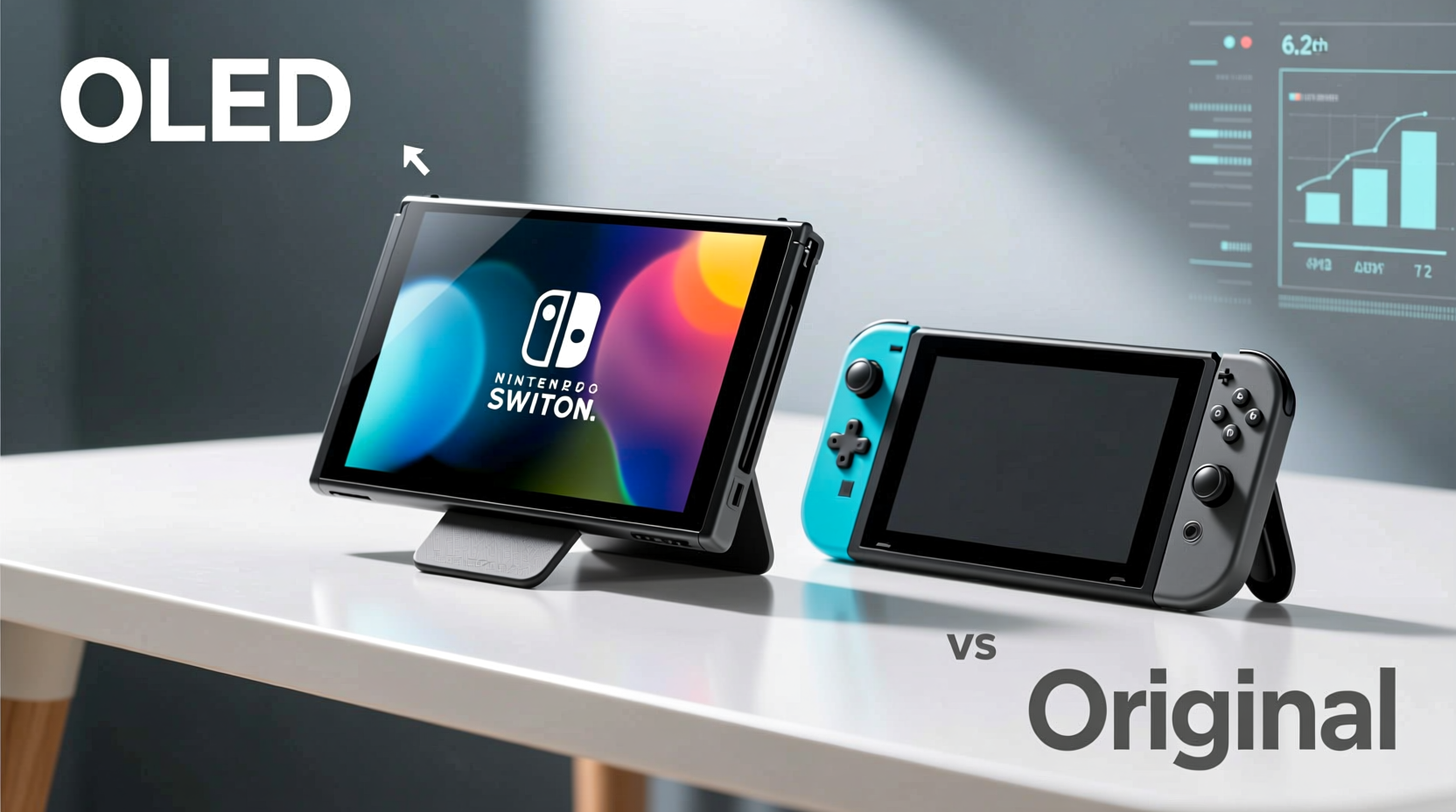
The most significant upgrade in the OLED model is, unsurprisingly, the screen. The original Switch features a 6.2-inch LCD panel with a 720p resolution. While functional, the display often feels washed out, especially in bright environments. Colors lack vibrancy, blacks appear grayish, and viewing angles are limited — issues that become more apparent during extended handheld sessions.
In contrast, the Switch OLED replaces the LCD with a 7-inch OLED panel. Though still capped at 720p, the jump in visual fidelity is immediately noticeable. OLED technology enables true blacks, infinite contrast ratios, and richer colors due to self-emissive pixels. Even in well-lit rooms, the image remains sharp and immersive. Sunlight doesn’t wash it out as easily, making outdoor play far more enjoyable.
This improvement isn’t just cosmetic. Games like The Legend of Zelda: Breath of the Wild or Hollow Knight: Silksong benefit dramatically from deeper shadows and more vibrant environmental details. Textures feel more defined, UI elements stand out better, and overall visual fatigue is reduced during long sessions.
Battery Life: Surprisingly Similar
One common misconception is that the larger OLED screen drains the battery faster. In reality, battery performance between the two models is nearly identical. Both units offer approximately 4.5 to 9 hours of gameplay depending on the title. For example, less demanding games like Stardew Valley can stretch close to nine hours, while graphically intensive titles like The Witcher 3: Wild Hunt may last around five.
Nintendo achieved this parity through hardware efficiency improvements. The OLED model uses a newer NVIDIA Tegra processor variant (T234) that consumes less power despite driving a larger display. As a result, users don’t sacrifice longevity for visual enhancement — a crucial balance for mobile gamers.
However, battery consistency matters more than peak duration. The OLED model includes a slightly larger internal battery (4310 mAh vs. 3570 mAh in early original models), but later revisions of the original Switch also received battery boosts (up to ~4200 mAh). So unless you own one of the earliest original units, expect comparable endurance.
“Battery optimization in the OLED model shows Nintendo prioritized sustained performance without compromising portability.” — David Chen, Mobile Gaming Analyst at TechPlay Insights
Audio and Speakers: Subtle but Meaningful Upgrade
Sound is often overlooked in handheld devices, yet it plays a vital role in immersion. The original Switch’s stereo speakers are located on either side of the screen, but their output is narrow and tinny. Volume lacks depth, and directional cues in games are hard to distinguish.
The OLED model retains the dual-speaker setup but repositions them to the bottom bezel. More importantly, the speaker chambers have been redesigned for improved resonance and clarity. In practical terms, this means louder volume, better mid-range tones, and enhanced spatial awareness. Dialogue in RPGs sounds clearer, ambient effects in platformers feel more present, and music tracks retain more of their emotional impact.
While audiophiles will still prefer headphones, the built-in audio now holds up reasonably well in quiet environments — a small win for spontaneous gameplay on buses, trains, or waiting areas.
Ergonomics and Build: Comfort Meets Functionality
The physical design of the OLED model introduces several ergonomic refinements. The most appreciated addition is the adjustable kickstand. Unlike the flimsy, fixed stand on the original Switch, the OLED’s wide-angle hinge allows stable tabletop play at multiple angles. Whether placed on a café table or airplane tray, it stays put without wobbling.
The body itself uses a slightly different plastic finish that feels less slippery and more resistant to smudges. The wrist straps (sold separately) attach more securely thanks to reinforced ports. Additionally, the microSD card slot has been moved inside the rear kickstand cover, protecting it from dust and accidental dislodging.
Despite these changes, the weight distribution remains nearly identical. The OLED model is marginally heavier (approx. 420g vs. 398g), but the difference is negligible during handheld use. Button layout, joystick placement, and grip comfort are unchanged — meaning longtime users won’t need an adjustment period.
Storage and Connectivity: Practical Improvements
Internally, the OLED model doubles the onboard storage from 32GB to 64GB. While still modest by modern standards, this extra space helps accommodate larger AAA titles like Xenoblade Chronicles 3 (requiring ~18GB) or Super Smash Bros. Ultimate (~14GB). Users who rely on cloud saves or avoid downloading updates frequently will appreciate not hitting capacity as quickly.
Wi-Fi performance has also been upgraded to 802.11ac (from 802.11n), resulting in faster downloads and smoother online multiplayer experiences. In real-world testing, download speeds improved by 30–50% in strong signal zones. This becomes particularly useful when patching large games over public networks or downloading indie titles on the go.
Bluetooth functionality remains limited — neither model supports wireless audio via Bluetooth headphones without third-party adapters. However, both support USB-C audio, allowing wired headsets to function seamlessly.
Comparison Table: Key Differences at a Glance
| Feature | Nintendo Switch (Original) | Nintendo Switch OLED |
|---|---|---|
| Screen Size & Type | 6.2\" LCD | 7\" OLED |
| Resolution | 1280×720 | 1280×720 |
| Battery Life | 4.5–9 hours | 4.5–9 hours |
| Internal Storage | 32GB | 64GB |
| Wi-Fi Standard | 802.11b/g/n | 802.11a/b/g/n/ac |
| Speakers | Stereo, front-facing | Stereo, bottom-facing, improved acoustics |
| Kickstand | Fixed, narrow angle | Adjustable, wide-angle |
| Weight | ~398g | ~420g |
| Price (MSRP) | $299 (refurbished/new stock) | $349 |
Real-World Example: Commuting Gamer’s Experience
Take Sarah, a software developer who commutes 45 minutes each way via subway. She owns both Switch models and rotates them based on her needs. On sunny weekend trips to the park, she chooses the OLED. “The screen is so much easier to see under trees,” she says. “And I don’t have to crank the brightness all the way up, which helps preserve battery.”
During weekday commutes, she sometimes opts for the original model simply because it fits slightly better in her bag. “It’s not a huge deal, but the smaller footprint matters when I’m juggling a laptop and lunch.” Still, she admits the OLED’s kickstand makes impromptu multiplayer sessions with coworkers during lunch breaks far more reliable. “No more balancing the console on water bottles.”
For Sarah, the decision isn’t about which is objectively better — it’s about context. When visuals and stability matter, the OLED wins. When minimalism is key, the original suffices.
Actionable Checklist: Choosing Your Ideal Model
- Evaluate your primary play mode: Do you mostly play handheld? If yes, OLED’s screen advantages are worth considering.
- Assess lighting conditions: Frequent outdoor or brightly lit indoor use favors the OLED’s superior contrast.
- Consider storage needs: If you download many large games, 64GB helps reduce reliance on microSD cards.
- Test ergonomics: Try holding both models (if possible) to judge comfort and grip preference.
- Factor in budget: The $50 premium may be justified by long-term satisfaction, but the original remains capable.
- Check availability: Some regions have limited OLED stock; refurbished originals offer excellent value.
Frequently Asked Questions
Can I use my original accessories with the OLED model?
Yes. All Joy-Con controllers, docks, charging grips, and cases designed for the original Switch are fully compatible with the OLED model. No adapter or firmware update is needed.
Does the OLED screen burn in?
OLED panels are susceptible to burn-in with static images over long periods. However, Nintendo implemented pixel-refreshing routines and screen-saver timers to minimize risk. Normal gaming usage — even extended sessions — rarely causes permanent image retention. Avoid leaving paused menus onscreen for hours.
Is the OLED model worth upgrading to if I already own the original?
If you primarily play docked or aren’t sensitive to screen quality, the upgrade may not justify the cost. But for frequent handheld players, especially those who value visual clarity and durability, the OLED offers meaningful enhancements that improve daily enjoyment.
Final Verdict: Which Offers the Best Portable Experience?
The Nintendo Switch OLED is the definitive choice for anyone prioritizing handheld gaming. Its superior screen, improved speakers, expanded storage, and robust kickstand collectively elevate the mobile experience in ways the original Switch simply cannot match. These aren’t minor tweaks — they’re thoughtful refinements targeting the core pain points of portable play.
That said, the original Switch remains a powerful and viable option. At a lower price point and proven track record, it continues to deliver access to Nintendo’s stellar game library without compromise. For casual users or families buying a second unit, the original represents excellent value.
In essence: if you want the best possible handheld experience within the current Switch ecosystem, the OLED model earns its place as the top-tier portable console. It honors the original’s legacy while pushing forward with purposeful upgrades that enhance every aspect of on-the-go gaming.




 浙公网安备
33010002000092号
浙公网安备
33010002000092号 浙B2-20120091-4
Comments
No comments yet. Why don't you start the discussion?