
In today’s hyper-connected world, distractions are everywhere—especially when you're trying to study. From roommates talking to traffic outside, ambient noise can fracture concentration and reduce information retention. Enter noise-canceling earbuds: sleek, wireless devices promising a bubble of silence in an otherwise chaotic environment. But do they actually help students focus better, or do they introduce new forms of distraction? The answer isn’t black and white. While many users report enhanced concentration with active noise cancellation (ANC), others find themselves more isolated, disengaged, or even mentally fatigued. This article explores the cognitive impact of noise-canceling earbuds on studying, weighs their pros and cons, and provides actionable guidance for using them wisely.
The Science Behind Noise and Focus
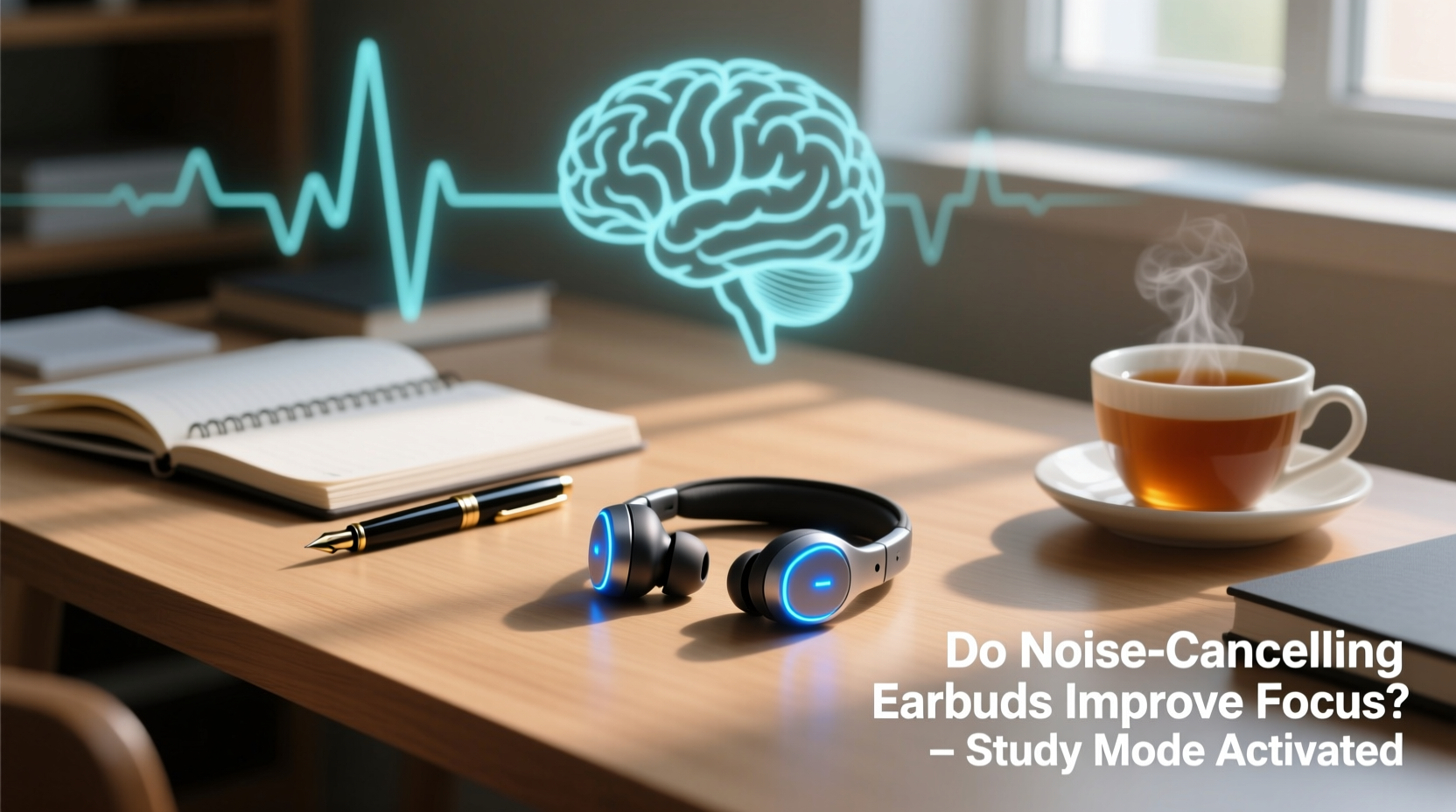
Human attention is highly sensitive to auditory stimuli. Research from the Journal of Environmental Psychology shows that background noise—even at low volumes—can impair working memory and reading comprehension. Irregular sounds like sudden laughter, door slams, or construction work trigger the brain’s orienting response, momentarily pulling focus away from the task at hand. This phenomenon, known as “attentional capture,” disrupts deep cognitive processing essential for learning complex material.
Noise-canceling earbuds combat this by using microphones to detect external sound waves and generating inverse frequencies—a process called destructive interference—that cancel out ambient noise before it reaches the ear. This technology is especially effective against low-frequency droning sounds like air conditioners, traffic hum, or HVAC systems. High-end models now combine feedforward and feedback ANC systems for broader frequency coverage, making them powerful tools in environments where complete silence is unattainable.
“Reducing auditory interruptions allows the prefrontal cortex to maintain sustained attention without constant reallocation of resources.” — Dr. Lena Torres, Cognitive Neuroscientist, University of Toronto
How Noise Canceling Earbuds Can Improve Study Focus
When used correctly, noise-canceling earbuds can create an optimal auditory environment for studying. Here's how:
- Minimizes environmental disruptions: Dorm rooms, coffee shops, and shared apartments often have unpredictable noise patterns. ANC earbuds significantly reduce these interruptions, enabling longer periods of uninterrupted focus.
- Enhances immersion in study material: Whether listening to educational podcasts, language tracks, or instrumental music, eliminating background noise increases clarity and comprehension.
- Supports flow state conditions: Psychologist Mihaly Csikszentmihalyi describes flow as a mental state of full absorption in a task. By reducing sensory clutter, ANC earbuds help create the quiet consistency needed to enter and sustain this productive zone.
- Improves perceived control over environment: Students who feel in control of their surroundings report higher motivation and lower stress levels. Wearing noise-canceling earbuds gives a psychological sense of agency, even in noisy public spaces.
Potential Downsides and Hidden Distractions
Despite their advantages, noise-canceling earbuds aren't universally beneficial. In some cases, they may do more harm than good:
Over-isolation and sensory deprivation: Complete silence created by high-end ANC can feel unnerving. Some users report a pressure-like sensation in the ears or mild dizziness due to the absence of natural environmental cues—a phenomenon sometimes referred to as “the vacuum effect.” This discomfort can itself become a distraction.
Reduced situational awareness: Students wearing ANC earbuds may miss important auditory signals—like fire alarms, someone calling their name, or class announcements—potentially compromising safety and social engagement.
Audio dependency: Relying too heavily on earbuds can weaken natural focus resilience. Over time, some learners struggle to concentrate without them, even in quiet settings, indicating a developing crutch rather than a tool.
Misuse with distracting audio content: Pairing ANC with TikTok-style playlists, social media notifications, or emotionally charged music defeats the purpose. The earbuds eliminate external noise but amplify internal distractions.
Real Example: A Student’s Experience
Sophia, a third-year biology major at Northwestern, began using noise-canceling earbuds during her first remote semester. Initially, she found them transformative—finally able to study in her noisy apartment building. But after two months, she noticed something troubling: while she could block out her neighbor’s dog barking, she was spending more time switching between Spotify playlists and checking phone notifications. “I thought I was focusing,” she said, “but I was just escaping one distraction by creating another.” After tracking her screen time, Sophia realized she spent nearly 40% of her study sessions interacting with her device. She switched to using earbuds only with pre-downloaded lecture recordings and disabled notifications—resulting in measurable improvements in retention and efficiency.
Best Practices for Using Noise Canceling Earbuds While Studying
To harness the benefits of noise-canceling earbuds without falling into common pitfalls, follow this structured approach:
- Define your study goal: Are you memorizing facts, writing essays, or solving problems? Match your audio strategy accordingly. Deep analytical work benefits most from silence or neutral soundscapes.
- Choose the right sound profile: Use white, pink, or brown noise for general focus; lo-fi beats for creative tasks; or no audio at all for intense reading or exam prep.
- Set usage limits: Limit continuous ANC use to 60–90 minutes, followed by a break. Prolonged isolation can lead to mental fatigue and reduced alertness.
- Disable non-essential notifications: Put your phone in focus mode or airplane mode to prevent alerts from breaking concentration.
- Use transparency mode when needed: Most modern ANC earbuds include a “transparency” or “ambient pass-through” mode. Use it during group study or when you need to stay aware of your surroundings.
- Monitor physical comfort: If you experience ear pressure, headaches, or dizziness, remove the earbuds and reassess fit, volume, or duration of use.
Checklist: Smart Use of Noise Canceling Earbuds for Studying
- ✅ Assess whether your environment truly needs noise cancellation
- ✅ Choose appropriate audio (or silence) based on task type
- ✅ Disable notifications and social media access during study blocks
- ✅ Use transparency mode during collaborative or dynamic settings
- ✅ Take breaks every 60–90 minutes to reset auditory perception
- ✅ Monitor for signs of over-reliance or physical discomfort
- ✅ Keep volume below 60% to protect hearing and avoid masking effects
Comparison: ANC Earbuds vs. Alternatives for Studying
| Option | Focused Environment? | Mobility | Situational Awareness | Cost | Best For |
|---|---|---|---|---|---|
| Noise-Canceling Earbuds | High (with proper use) | Excellent | Low (unless transparency mode) | $$$ | Noisy dorms, libraries, travel |
| Foam Earplugs | Moderate (passive only) | Good | Medium | $ | Budget users, short sessions |
| Over-Ear Noise-Canceling Headphones | Very High | Fair (bulky) | Low | $$$$ | Home office, long study marathons |
| Background Music via Speaker | Low (disturbs others) | Good | High | $$ | Private rooms, solo use |
| No Audio Aid (Natural Environment) | Depends on setting | Full | Maximum | Free | Quiet spaces, focus training |
FAQ: Common Questions About Noise Canceling Earbuds and Studying
Can noise canceling earbuds improve memory retention?
Indirectly, yes. By reducing auditory distractions, they support deeper concentration, which enhances encoding of information into long-term memory. However, the content and method of study remain the primary factors in retention.
Are noise canceling earbuds safe for long study sessions?
They are generally safe if used responsibly. Avoid prolonged use beyond 90 minutes without breaks, keep volume under 60%, and be mindful of ear pressure or fatigue. Consider alternating with passive isolation methods like earmuffs or quiet-room scheduling.
Should I use music with my noise canceling earbuds while studying?
It depends on the task. Instrumental music (e.g., classical, ambient, or lo-fi) can aid focus during repetitive or creative work. However, lyrical music tends to interfere with verbal processing and should be avoided during reading, writing, or language-based tasks.
Conclusion: Tools Are Only as Effective as How You Use Them
Noise-canceling earbuds are not magic focus boosters—but in the right context, they can be powerful allies. Their true value lies not in their technology alone, but in how thoughtfully they’re integrated into a student’s workflow. When used with intention—paired with focused audio, disciplined device management, and regular self-assessment—they can significantly enhance study quality. On the flip side, careless use can deepen distraction habits and foster unhealthy reliance.
The key is balance. Treat noise-canceling earbuds like any high-performance tool: respect their capabilities, understand their limitations, and align their use with clear academic goals. Experiment with different settings, track your productivity, and adjust accordingly. Your ideal study environment may include ANC—but only when it serves your mind, not shields it from developing its own resilience.




 浙公网安备
33010002000092号
浙公网安备
33010002000092号 浙B2-20120091-4
Comments
No comments yet. Why don't you start the discussion?