
For millions of remote workers, the home office is no longer a temporary setup—it’s the new norm. But with that shift comes a persistent challenge: distractions. From barking dogs and household chores to construction noise and chatty roommates, ambient sound can fracture focus and erode efficiency. Enter noise-canceling technology—a tool increasingly seen as essential for maintaining concentration in a noisy world. But does it actually improve productivity? The answer isn’t just “yes” or “no.” It depends on how, when, and why you use it.
Modern active noise cancellation (ANC) headphones and earbuds are engineered to suppress low-frequency background sounds like HVAC systems, traffic hum, or refrigerator drones—exactly the kind of constant auditory interference common in home environments. When used strategically, they can create an acoustic bubble that mimics the quiet focus of a private office. However, simply wearing noise-canceling headphones doesn’t guarantee better output. The real benefit lies in integrating this technology into a broader productivity framework.
The Science Behind Noise Cancellation and Cognitive Focus
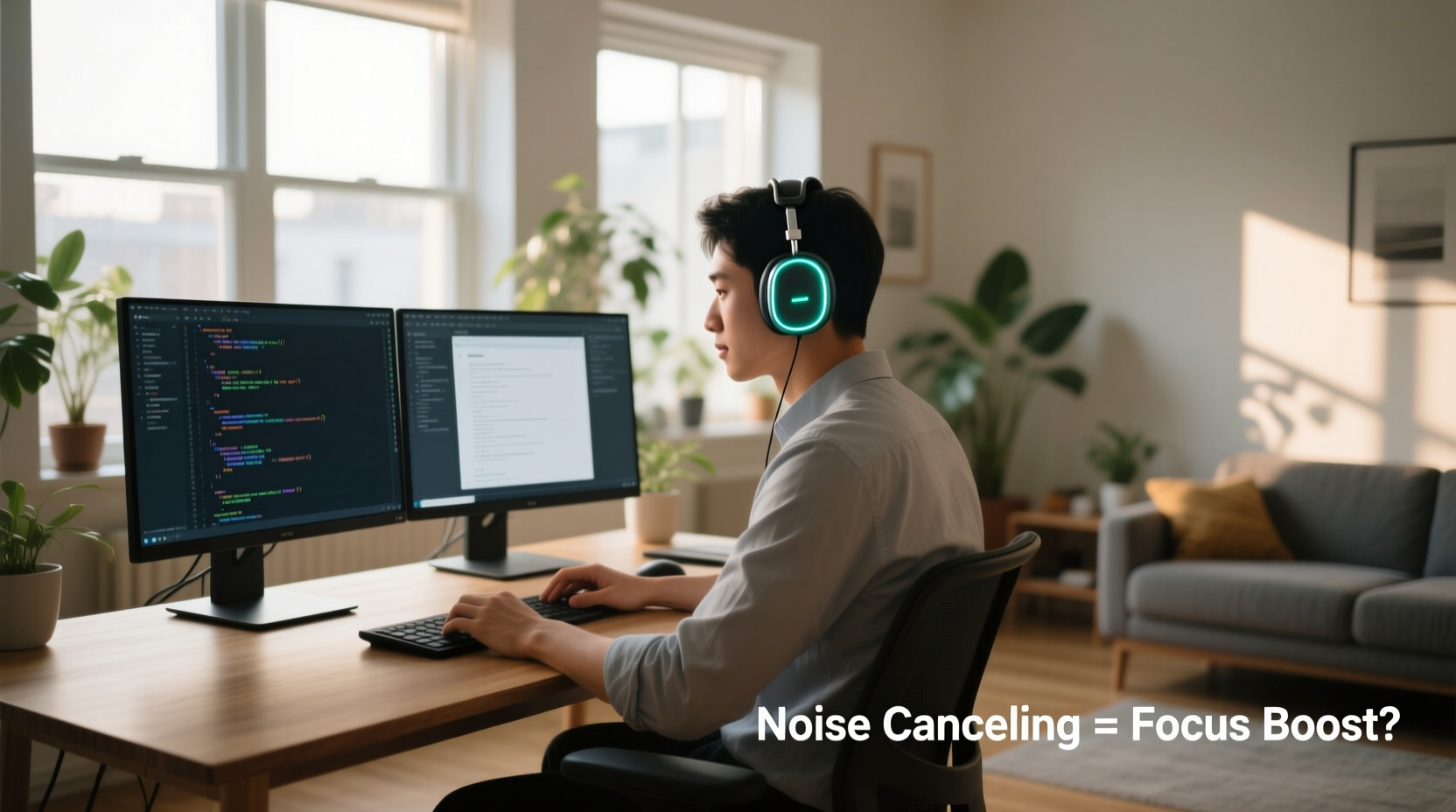
Human brains are wired to respond to sound, especially unpredictable or novel noises. Research from the Journal of Environmental Psychology shows that even low-level background noise can impair cognitive performance, particularly in tasks requiring memory recall, reading comprehension, and problem-solving. One study found that open-plan office workers lost up to 86 minutes per week due to noise-induced distractions.
Noise-canceling technology combats this by using microphones to detect incoming sound waves and generating inverse audio signals—essentially “canceling” the noise before it reaches your ears. This process, known as destructive interference, is most effective against steady, predictable sounds (e.g., fan whir, distant traffic). While it cannot eliminate sudden high-pitched noises like door slams or children shouting, it significantly reduces the cognitive load caused by continuous background noise.
“Reducing auditory distractions allows the brain to allocate more resources to focused thinking. In environments where silence isn’t possible, noise cancellation acts as a cognitive filter.” — Dr. Lena Torres, Cognitive Neuroscientist, University of Michigan
This filtering effect is crucial for deep work—the state of uninterrupted concentration described by author Cal Newport. When your brain isn’t constantly reacting to environmental stimuli, it becomes easier to enter and sustain flow states, leading to higher-quality output in less time.
Real-World Productivity Gains: A Case Study
Consider Sarah, a software developer based in Austin, Texas, who transitioned to full-time remote work in 2020. Her small apartment shares a wall with a daycare center, and during weekday mornings, the laughter and chatter of children disrupted her coding sessions. She estimated losing nearly two hours of productive time daily to refocusing after interruptions.
After investing in a pair of over-ear ANC headphones, she noticed immediate improvements. During her first week of consistent use, she completed a feature update two days ahead of schedule. Over three months, her self-reported focus duration increased from 45 minutes to nearly 90 minutes per session. She also reported lower stress levels and fewer headaches—common side effects of chronic auditory stress.
Sarah’s experience aligns with findings from a 2022 Stanford study on remote workers, which showed that participants using ANC devices reported a 27% increase in task completion speed and a 33% reduction in perceived mental fatigue during prolonged work sessions.
Choosing the Right Tool: Headphones vs. Earbuds vs. Sound Masking
Not all noise-canceling solutions are created equal. Understanding the differences helps you select the right option for your environment and workflow.
| Device Type | Noise Reduction Level | Best For | Limits |
|---|---|---|---|
| Over-Ear ANC Headphones | High (especially low frequencies) | Long work sessions, home offices | Bulky; may cause ear fatigue |
| ANC Earbuds | Moderate to High | Portability, quick tasks, walking meetings | Less comfort over long periods |
| White Noise Machines | Passive masking (not true cancellation) | Whole-room coverage, sleep support | Doesn't isolate individual users |
| Acoustic Panels + ANC Combo | Very High (combined effect) | Dedicated home offices | Higher cost and installation effort |
While ANC headphones lead in personal noise control, combining them with environmental adjustments—such as adding rugs, curtains, or foam panels—can amplify their effectiveness. For those sensitive to pressure or discomfort, bone-conduction headphones with ambient sound filtering offer a promising alternative, though current models provide only partial noise suppression.
When Noise Cancellation Backfires: Pitfalls to Avoid
Despite its advantages, noise cancellation isn’t a universal fix. Misuse can lead to diminishing returns or even counterproductive outcomes.
- Over-isolation: Cutting off all sound can make you less aware of urgent household needs or collaborative moments with family members.
- Audio fatigue: Prolonged use of ANC devices may cause ear pressure or dizziness in some users, particularly with cheaper models.
- False sense of security: Relying solely on noise cancellation without managing visual distractions or scheduling breaks undermines its benefits.
- Poor fit: If ear seals are compromised (e.g., glasses frames, improper size), noise leakage reduces effectiveness.
Moreover, complete silence isn’t always optimal. Some people perform better with low-level background sound—like café ambiance or instrumental music—which provides gentle stimulation without disruption. In such cases, transparency mode (available on many ANC devices) allows controlled ambient sound through, blending focus with situational awareness.
Step-by-Step Guide to Maximizing Productivity with Noise Cancellation
To get the most out of your noise-canceling gear, follow this structured approach:
- Assess Your Noise Profile: Identify the dominant sounds in your workspace. Is it street noise? Family activity? HVAC systems? Low-frequency drones respond best to ANC.
- Invest in Quality Equipment: Choose well-reviewed models with adaptive noise cancellation and good seal design. Top performers include Sony WH-1000XM5, Bose QuietComfort Ultra, and Apple AirPods Pro (2nd gen).
- Pair with Focused Work Techniques: Combine ANC use with time-blocking methods like the Pomodoro Technique. Use noise cancellation during 25-minute focus sprints, then remove headphones during 5-minute breaks to reset auditory perception.
- Create Audio Triggers: Develop a routine where putting on your headphones signals the start of deep work. Pair it with a specific playlist or ambient track to reinforce the mental association.
- Maintain Device Performance: Clean ear pads regularly, update firmware, and store properly to ensure consistent noise-canceling performance.
- Evaluate Weekly: Track metrics like task completion rate, focus duration, and mental fatigue. Adjust usage patterns based on results.
This method turns passive listening into an active productivity strategy. Over time, users report stronger discipline around work boundaries and improved ability to switch into high-focus modes on demand.
FAQ: Common Questions About Noise Cancellation and Remote Work
Can noise-canceling headphones replace a dedicated office?
They can’t fully replicate the physical separation of a private office, but they do simulate the acoustic conditions necessary for concentration. Paired with clear routines and visual boundaries (e.g., closing a door, using a desk-only zone), they come remarkably close.
Do I need expensive headphones to see benefits?
Entry-level ANC models offer noticeable improvements over standard earbuds, but premium devices provide superior sound processing, comfort, and adaptive features. For heavy daily use, investing $200–$350 typically pays off in long-term comfort and performance.
Is it safe to wear noise-canceling headphones all day?
Yes, provided volume levels stay below 85 dB and you take regular breaks. Prolonged isolation from external sound can reduce spatial awareness, so periodic disengagement is recommended—especially if you share space with others.
Expert Insight: The Role of Sound in Modern Work Design
As hybrid and remote work evolve, experts emphasize that environmental acoustics should be treated as seriously as ergonomics or lighting.
“The future of productive remote work isn’t just about faster internet or better cameras—it’s about controlling sensory input. Sound is one of the last frontiers in workplace optimization.” — Dr. Rajiv Mehta, Human Factors Engineer at MIT Media Lab
This perspective shifts noise cancellation from a luxury gadget to a core component of digital wellness. Companies like GitLab and Shopify now include ANC headphones in their remote employee welcome kits, recognizing that reducing auditory stress directly impacts retention, satisfaction, and output quality.
Conclusion: Turning Silence Into Strategy
Noise cancellation, when used intentionally, does more than quiet a room—it reshapes how we engage with our work. It’s not merely about blocking sound, but about reclaiming attention in an age of endless interruption. For remote workers, this technology offers a practical path to deeper focus, reduced fatigue, and greater daily accomplishment.
The key is integration: pairing hardware with habits, environment, and workflow design. Whether you're drafting reports, coding applications, or analyzing data, controlling your sonic environment gives you back one of the most valuable resources—undivided attention.




 浙公网安备
33010002000092号
浙公网安备
33010002000092号 浙B2-20120091-4
Comments
No comments yet. Why don't you start the discussion?