
Sleep disturbances and difficulty concentrating are common challenges in our fast-paced world. With rising background noise, digital distractions, and mental fatigue, many people turn to sound therapy as a solution. Among the most popular tools are colored noises—especially white and brown noise. But what exactly are these \"colors\" of sound? How do they differ, and which one truly supports focus or deep sleep? Understanding the science behind noise colors can help you make informed choices about your auditory environment.
Noise isn’t just random sound—it’s energy distributed across frequencies. The term “color” refers to how this energy is spread, much like light in a spectrum. Each color has unique acoustic properties that influence brain activity, mood, and cognitive performance. While white noise is widely recognized, newer alternatives like brown noise are gaining traction for their deeper, more grounding qualities. Let’s explore the full range of noise colors and determine which works best for concentration and restful sleep.
What Are Noise Colors?
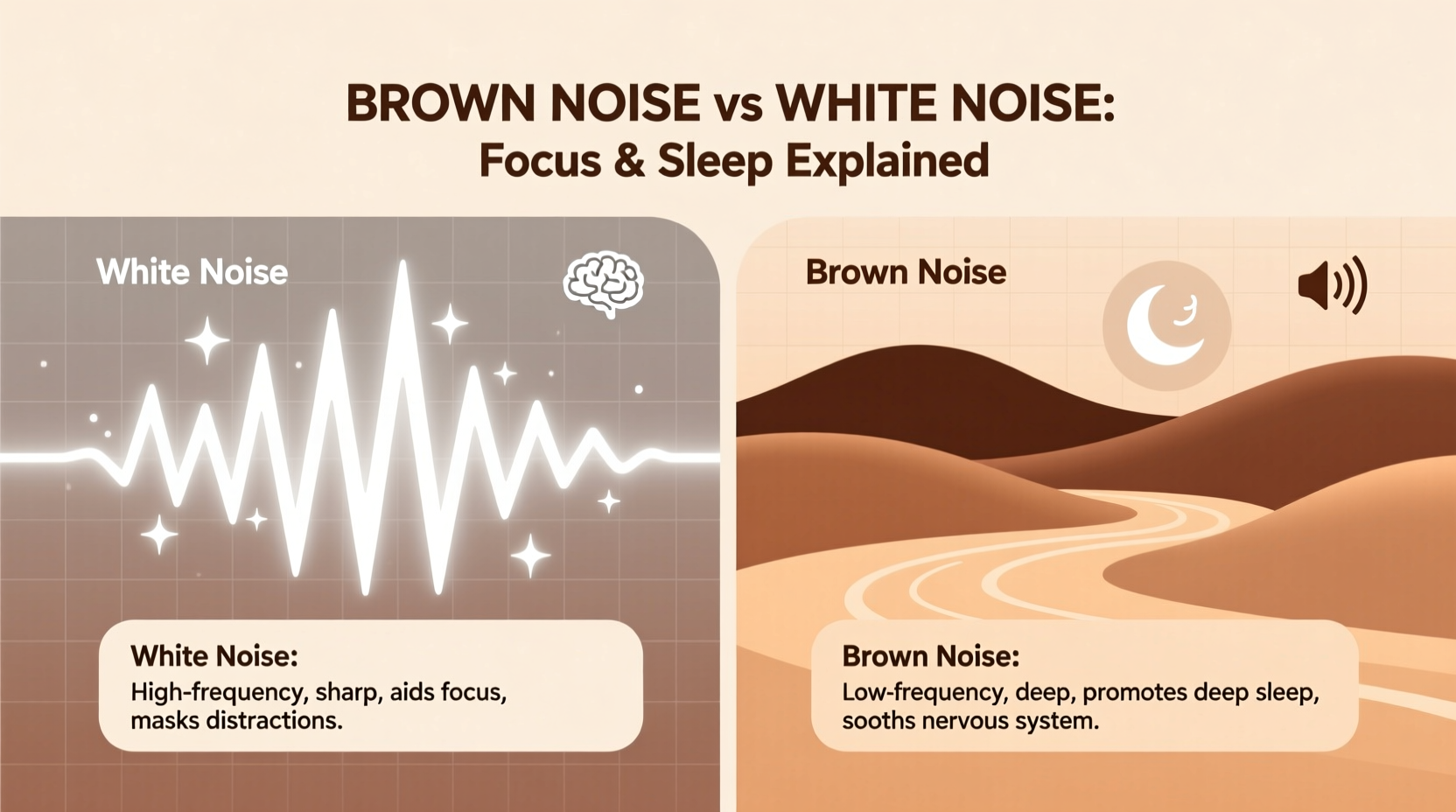
Noise colors categorize sound based on its frequency distribution. Just as white light contains all visible wavelengths equally, white noise includes all audible frequencies at equal intensity. However, not all noise is created equal. As you shift across the spectrum—from pink to red (brown) to blue—the balance of high and low frequencies changes, altering how the sound feels and functions.
The human ear doesn't perceive all frequencies with equal sensitivity. High-pitched sounds often feel harsher, while lower tones are perceived as warmer and more soothing. This perception plays a key role in why certain noise colors work better for specific purposes. For example, masking sudden environmental noises (like a slamming door or barking dog) requires broad-spectrum coverage, whereas promoting relaxation may benefit from deeper, rumbling frequencies.
Below is a breakdown of the most commonly used noise colors:
- White Noise: Equal power per frequency; sharp and hissy.
- Pink Noise: Decreases in power by 3 dB per octave; balanced and natural.
- Brown (Red) Noise: Drops by 6 dB per octave; deep, rumbly, like thunder.
- Blue Noise: Increases in power; bright and crisp, used in audio testing.
- Violet Noise: Sharper than blue; sometimes used for tinnitus relief.
While several types exist, white and brown noise dominate discussions around sleep and productivity due to their accessibility and distinct effects on brainwave patterns.
White Noise: Clarity Through Consistency
White noise is perhaps the most familiar type. It spans the entire audible spectrum (typically 20 Hz to 20,000 Hz) with uniform intensity across all frequencies. Think of an untuned TV, static on a radio, or a fan running at full speed. Because it fills the auditory spectrum so evenly, it effectively masks abrupt environmental sounds that disrupt concentration or wakefulness.
Studies have shown that white noise can improve sleep onset and reduce nighttime awakenings, especially in noisy environments such as hospitals or urban apartments. A 2017 review published in *Sleep Medicine Reviews* found that continuous white noise significantly reduced sleep latency—the time it takes to fall asleep—by creating a predictable sonic backdrop that drowns out unpredictable disturbances.
In work settings, white noise enhances focus by reducing auditory distractions. Open offices, household chatter, or traffic noise become less intrusive when masked by a steady hiss. However, some users report that prolonged exposure to white noise feels fatiguing because of its emphasis on higher frequencies, which can be perceived as shrill over time.
Brown Noise: The Deep Resonance for Focus and Sleep
Brown noise, also known as red noise, emphasizes lower frequencies and diminishes higher ones sharply. Its name comes not from color but from Brownian motion—the random movement of particles in fluid—which generates this type of signal. Unlike white noise’s flat profile, brown noise rolls off at 6 dB per octave, giving it a fuller, earthier tone reminiscent of distant thunder, strong winds, or a rushing waterfall.
This depth makes brown noise particularly effective for individuals seeking mental calm. Many users describe it as more “grounding” than white noise. Neurologically, the low-frequency dominance may encourage alpha and theta brainwave activity—associated with relaxed alertness and meditative states—making it ideal for both deep focus and transitioning into sleep.
Anecdotal evidence suggests brown noise helps people with ADHD maintain attention during tasks requiring sustained mental effort. Though clinical research is still emerging, early findings point to potential benefits. In a small 2023 study conducted at the University of Birmingham, participants exposed to brown noise showed improved reaction times and fewer lapses in attention during cognitive tests compared to silence or white noise conditions.
For sleep, brown noise may offer superior masking of low-frequency disturbances—such as bass-heavy music, snoring, or HVAC systems—without the sharp edge of higher-pitched sounds present in white noise. Some listeners find it easier to tolerate over long durations, making it a preferred choice for overnight use.
“Brown noise taps into the brain’s preference for natural, rhythmic low-frequency inputs—similar to being near a river or under heavy rain. That rhythm can promote slower breathing and deeper relaxation.” — Dr. Lena Patel, Cognitive Neuroscientist at Oxford Sleep Research Unit
Comparing White and Brown Noise: Which Is Better?
Choosing between white and brown noise depends on individual needs, sensitivities, and context. Below is a detailed comparison highlighting key differences:
| Feature | White Noise | Brown Noise |
|---|---|---|
| Frequency Profile | Equal energy across all frequencies | Stronger in low frequencies, weakens toward highs |
| Sound Quality | Hissy, like radio static | Rumbly, like a storm or waterfall |
| Best For | Moderate distraction masking, infants’ sleep, office work | Deep focus, anxiety reduction, blocking bass noise |
| Perceived Harshness | Moderate to high (due to treble emphasis) | Low (smoother, less fatiguing) |
| Research Support | Well-established for sleep improvement | Growing evidence for focus and relaxation |
| Common Uses | Baby monitors, sleep apps, concentration playlists | ADHD focus aids, meditation, deep sleep routines |
Ultimately, personal preference plays a major role. Some people find white noise too bright, while others perceive brown noise as overly muffled or even unsettling if played too loudly. Experimentation is essential.
Mini Case Study: Using Brown Noise for Remote Work Focus
Mark, a freelance copywriter living in a busy Brooklyn apartment, struggled with constant distractions—neighbors, sirens, delivery trucks. He tried white noise initially, but after two hours, he experienced mild headaches and irritability. On a podcast, he heard about brown noise and decided to test it using a free app. He played deep brown noise at 55 dB through over-ear headphones while writing.
Within days, Mark noticed he could write longer without breaks. He described the sound as “a warm blanket for my ears.” Over three weeks, his average daily word output increased by 38%, and he reported feeling calmer at the end of each session. After switching back to white noise for comparison, he reverted to brown noise permanently, citing better endurance and mental clarity.
How to Choose and Use Noise Colors Effectively
Selecting the right noise color involves matching the sound profile to your environment and goals. Follow this step-by-step guide to optimize your experience:
- Identify Your Goal: Determine whether you need help sleeping, focusing, relaxing, or masking external noise.
- Assess Your Environment: Note dominant background sounds—are they high-pitched (e.g., birds, phones) or low-frequency (e.g., traffic, appliances)?
- Test Different Colors: Try white, pink, and brown noise for 15–20 minutes each. Pay attention to comfort and mental state.
- Adjust Volume Carefully: Keep levels below 60 dB—louder isn’t better and may cause hearing stress.
- Use Quality Sources: Choose reputable apps or speakers that generate true spectral profiles, not approximations.
- Limit Duration: Avoid continuous exposure for more than 8 hours; give your ears periodic breaks.
- Combine with Routine: Pair noise use with consistent bedtime or work rituals to strengthen conditioning.
Checklist: Optimizing Your Noise Routine
- ☐ Define your primary goal: sleep, focus, or relaxation
- ☐ Eliminate other disruptions (light, temperature, notifications) first
- ☐ Test at least three noise types for fair comparison
- ☐ Use high-quality audio sources (avoid compressed MP3s when possible)
- ☐ Monitor physical reactions (headaches, ear pressure, fatigue)
- ☐ Set a consistent schedule (e.g., play brown noise during morning writing blocks)
- ☐ Re-evaluate monthly—your preferences may evolve
Frequently Asked Questions
Is brown noise safe for long-term use?
Yes, when used at moderate volumes (below 60 dB). Prolonged exposure to any sound above 85 dB can lead to hearing damage. Brown noise’s lower frequency profile tends to be less straining than high-frequency sounds, but moderation is key. Take listening breaks and avoid falling asleep with earbuds in, as prolonged contact increases risk.
Can colored noise help with ADHD or anxiety?
Emerging research suggests yes. Low-frequency sounds like brown noise may support focus in individuals with ADHD by providing a steady auditory anchor that reduces distractibility. Similarly, rhythmic, deep tones can activate the parasympathetic nervous system, helping regulate anxiety. While not a substitute for medical treatment, many users report meaningful improvements in symptom management when combined with behavioral strategies.
Why is it called 'brown' noise?
Despite the name, brown noise isn’t related to the color brown. It’s named after Robert Brown, the scientist who discovered Brownian motion—random particle movement in fluids. The mathematical model of this motion produces a signal with a power density that decreases by 6 dB per octave, which defines brown noise acoustically.
Conclusion: Find Your Sonic Foundation
Understanding noise colors empowers you to take control of your auditory environment. Whether you’re trying to quiet a restless mind before bed or sustain concentration amid chaos, the right sound can make a measurable difference. White noise remains a reliable option for masking everyday disruptions, but brown noise offers a compelling alternative—richer, deeper, and increasingly favored for its calming resonance.
The best approach is personal experimentation. Don’t assume one size fits all. Listen critically, track your responses, and refine your routine over time. With thoughtful application, colored noise can become a powerful tool in your wellness toolkit.




 浙公网安备
33010002000092号
浙公网安备
33010002000092号 浙B2-20120091-4
Comments
No comments yet. Why don't you start the discussion?