
When it comes to leafy greens, spinach stands out as a nutritional powerhouse—rich in iron, folate, vitamin K, and antioxidants. But in grocery aisles across the country, shoppers face a quiet dilemma: should they reach for the crisp bunches of fresh spinach or the compact blocks of frozen? While many assume fresh is inherently superior, modern food science reveals a more nuanced reality. The truth is that both forms deliver significant health benefits, but their nutrient profiles, culinary applications, and shelf-life characteristics differ in meaningful ways. Understanding these distinctions empowers home cooks and health-conscious eaters to make informed choices based on nutrition, convenience, and intended use.
The debate over frozen versus fresh isn’t just about taste or texture—it’s rooted in how processing affects bioavailability, stability, and overall dietary value. Freezing is not merely preservation; it's a form of intervention that can lock in nutrients at peak ripeness or alter them through blanching. Meanwhile, fresh spinach begins losing certain vitamins the moment it’s harvested, especially if stored improperly or kept too long before consumption. This article examines the science behind both forms, compares their nutritional data side by side, and provides practical guidance for integrating each into a balanced diet.
Definition & Overview
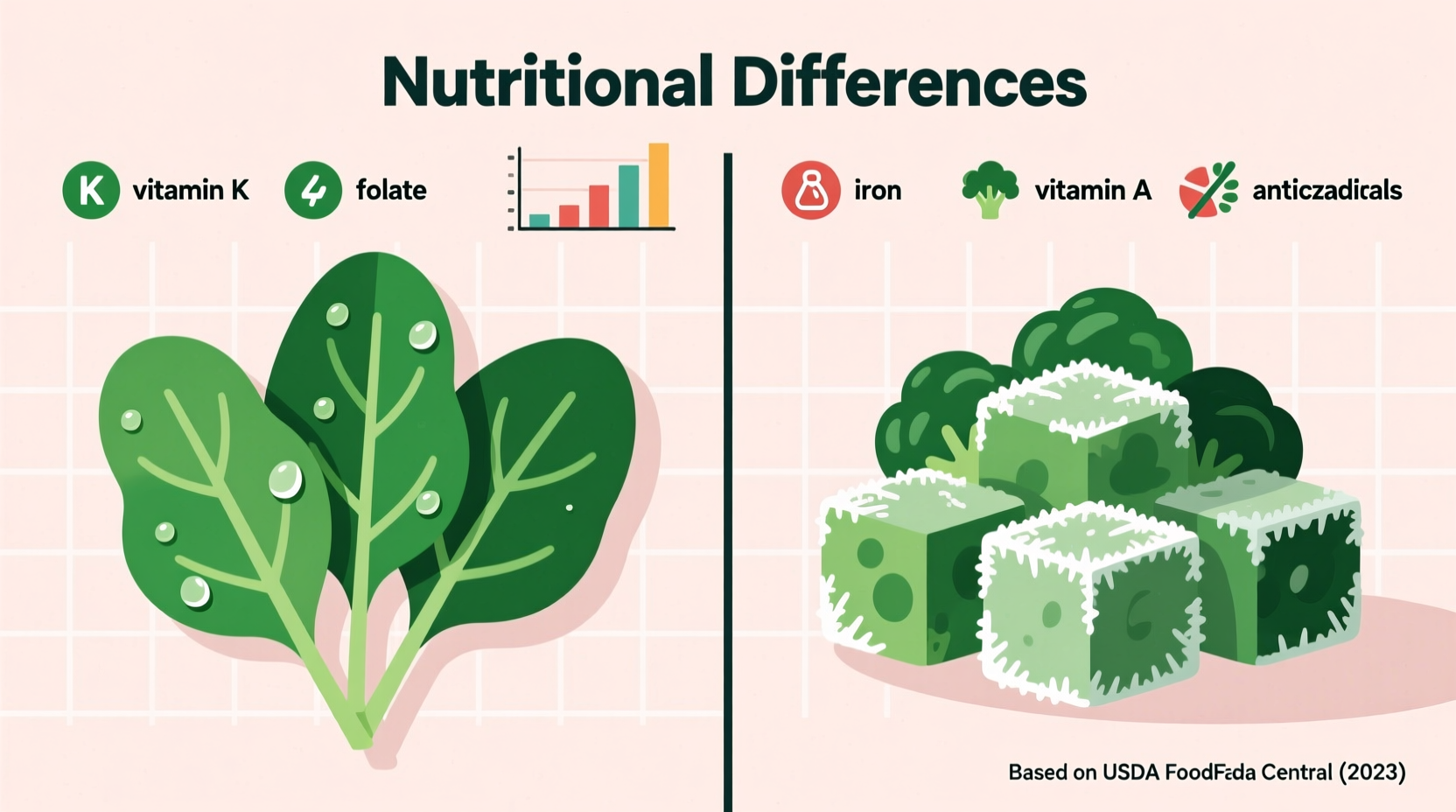
Spinach (Spinacia oleracea) is a flowering plant in the Amaranthaceae family, native to central and western Asia. It has been cultivated for centuries and prized for its tender leaves, mild flavor, and exceptional nutrient density. Today, spinach is consumed globally in salads, sautés, smoothies, soups, and baked dishes.
In commercial markets, spinach appears primarily in two forms: fresh (loose or pre-washed in clamshells) and frozen (typically chopped and blanched before freezing). Fresh spinach consists of raw, unprocessed leaves harvested and cooled rapidly for retail sale. Frozen spinach undergoes minimal processing—usually washing, chopping, blanching (brief exposure to boiling water), and quick-freezing within hours of harvest.
Blanching serves multiple purposes: it deactivates enzymes that cause spoilage and discoloration, reduces microbial load, and preserves color and texture during frozen storage. However, this step also impacts water-soluble vitamins like vitamin C and some B-complex nutrients. Despite this, the rapid freezing process helps retain most other nutrients over extended periods.
Key Characteristics
| Characteristic | Fresh Spinach | Frozen Spinach |
|---|---|---|
| Flavor Profile | Mild, slightly sweet, with grassy notes; delicate when raw | Slightly earthier and more concentrated; loses subtle nuances due to blanching |
| Aroma | Subtle green, vegetal scent | Neutral, faintly cooked aroma |
| Texture | Crisp and tender when fresh; wilts easily when heated | Soft and moist; naturally wilted due to blanching and freezing |
| Color | Bright emerald green | Deeper, darker green (blanching stabilizes chlorophyll) |
| Shelf Life | 5–7 days refrigerated; sensitive to moisture and ethylene | Up to 12 months frozen; stable nutrient profile when sealed |
| Culinary Function | Raw salads, light sautés, garnishes, blended drinks | Cooked dishes: casseroles, sauces, soups, dips, fillings |
Nutritional Comparison: What Science Shows
The core question—“Is frozen spinach as nutritious as fresh?”—has been studied extensively. Research from institutions like the University of California, Davis, and the British Journal of Nutrition indicates that frozen vegetables often match or exceed the nutrient levels of their fresh counterparts, particularly when the fresh version has undergone prolonged storage or transport.
To understand why, consider the timeline:
- Fresh spinach: Typically harvested 7–10 days before reaching supermarket shelves. During transit and display, it is exposed to light, oxygen, and temperature fluctuations—all of which degrade heat- and light-sensitive nutrients such as vitamin C, folate, and beta-carotene.
- Frozen spinach: Harvested at peak ripeness, processed within hours, blanched briefly, and flash-frozen. This locks in nutrients at their highest concentration.
A 2017 study published in the Journal of Agricultural and Food Chemistry analyzed vitamin retention in 16 vegetables, including spinach, comparing fresh-stored, fresh-cooked, and frozen-cooked samples. The findings were revealing:
“For spinach, frozen samples retained significantly higher levels of folate and vitamin C after three weeks of storage compared to fresh spinach stored under typical retail conditions.”
Here’s a direct comparison of key nutrients per 100 grams of cooked spinach (USDA FoodData Central):
| Nutrient | Fresh Spinach (Cooked) | Frozen Spinach (Cooked) | Notes |
|---|---|---|---|
| Calories | 23 kcal | 24 kcal | Nearly identical |
| Protein | 2.9 g | 3.0 g | Frozen slightly higher due to concentration |
| Dietary Fiber | 2.2 g | 2.4 g | Minimal difference |
| Vitamin A (RAE) | 469 µg | 530 µg | Frozen retains more due to stabilized carotenoids |
| Vitamin C | 15 mg | 18 mg | Blanching causes loss, but freezing prevents further degradation |
| Folate (B9) | 110 µg | 125 µg | Frozen often superior due to immediate processing |
| Vitamin K | 483 µg | 490 µg | Both excellent sources; fat-soluble vitamin remains stable |
| Iron | 2.7 mg | 2.8 mg | Negligible difference; non-heme iron, enhanced by vitamin C |
| Calcium | 99 mg | 100 mg | Consistent across forms |
Notably, frozen spinach contains slightly more lutein and zeaxanthin—carotenoids linked to eye health—because the blanching process breaks down cell walls, increasing bioavailability. Additionally, oxalic acid levels remain comparable in both forms, meaning neither offers a clear advantage for individuals concerned about kidney stone formation.
Practical Usage: When to Use Each Form
The choice between frozen and fresh spinach should be guided not only by nutrition but by culinary intent. Each form excels in different applications.
Fresh Spinach: Best Uses
- Raw Salads: Baby spinach leaves are tender and mild, ideal for mixed greens with vinaigrettes, citrus, nuts, and cheeses like feta or goat.
- Smoothies: Adds volume and nutrients without overpowering flavor. Blend with banana, berries, yogurt, and chia seeds.
- Light Sautéing: Wilt quickly in olive oil with garlic for a simple side dish. Finish with lemon juice to enhance iron absorption.
- Garnishes and Wraps: Use whole leaves as edible wrappers for rice paper rolls or as a bed for proteins.
Tip: To maximize nutrient retention in fresh spinach, store it in a breathable container lined with paper towels, away from ethylene-producing fruits like apples and bananas. Consume within 5 days for optimal vitamin levels.
Frozen Spinach: Best Uses
- Casseroles and Gratins: Thaw and squeeze dry before incorporating into dishes like spinach-artichoke dip or pasta bakes.
- Sauces and Purees: Blend directly into Alfredo, curry, or dal for added thickness and nutrition.
- Omelets and Frittatas: Mix thawed spinach into egg mixtures—no need to pre-cook.
- Baked Goods: Fold into savory muffins, quiches, or spanakopita.
- Baby Food and Blends: Ideal for pureeing into infant meals or thickening soups.
Tip: Always drain frozen spinach thoroughly after thawing. Excess moisture can dilute flavors and ruin the texture of sauces. Place in a fine-mesh strainer and press with the back of a spoon or wrap in cheesecloth and squeeze.
Variants & Types
Within both fresh and frozen categories, several variants exist, tailored to different needs:
Fresh Spinach Varieties
- Baby Spinach: Harvested early (20–30 days), with small, tender leaves. Milder flavor, ideal for raw consumption. Most common in supermarkets.
- Savoy Spinach: Dark green, crinkly leaves. More robust texture, suited for cooking. Often sold in bunches.
- Flat-Leaf (or Smooth-Leaf) Spinach: Easier to clean than savoy; commonly used in commercial kitchens.
Frozen Spinach Forms
- Chopped and Blanch-Frozen: Most widely available. Pre-cut and ready for cooking.
- Unblanched (Rare): Found in specialty or organic lines; requires full cooking but may preserve marginally more vitamin C.
- Organic Frozen Spinach: Grown without synthetic pesticides; same nutrient profile, but preferred by environmentally conscious consumers.
Comparison with Similar Leafy Greens
While spinach is often compared to kale, Swiss chard, and arugula, its closest functional substitute in frozen form is frozen kale or mixed greens. Here’s how spinach stacks up:
| Green | Best For | Freezable? | Nutrient Edge |
|---|---|---|---|
| Fresh Spinach | Raw eating, quick cooking | Moderate (loses texture) | Higher folate, vitamin K |
| Kale | Massaged salads, chips, stews | Excellent when blanched/frozen | More vitamin C, calcium |
| Swiss Chard | Stir-fries, stems utilized | Good when chopped/frozen | Higher magnesium, vibrant colors |
| Arugula | Peppery salads, pizza topping | Poor (wilts completely) | Glucosinolates (cancer-protective) |
Frozen spinach remains unmatched in convenience and consistency among frozen leafy greens, making it a staple in professional kitchens where batch cooking and standardization matter.
Practical Tips & FAQs
Q: Does cooking destroy nutrients in spinach?
A: Cooking reduces vitamin C and some B vitamins, but increases the bioavailability of fat-soluble nutrients like vitamins A, E, and K, as well as minerals such as iron and calcium. Light cooking also breaks down oxalic acid slightly, improving mineral absorption.
Q: Can I substitute frozen for fresh in recipes?
A: Yes, but adjust for moisture. Replace 1 cup of raw fresh spinach with approximately 1/3 cup of cooked, drained frozen spinach. In baked dishes, the substitution is nearly seamless.
Q: Is frozen spinach pre-cooked?
A: Technically, yes. Blanching is a form of partial cooking. While safe to eat after thawing, it should be heated through in most recipes for optimal flavor and safety.
Q: How do I freeze fresh spinach at home?
A: Wash leaves, blanch for 90 seconds, chill in ice water, drain thoroughly, and pack in airtight freezer bags. Label and use within 10–12 months.
Q: Which is better for smoothies—frozen or fresh?
A: Fresh is preferable for raw blends, preserving enzyme activity and maximizing vitamin C. However, frozen spinach adds creaminess and chill without diluting flavor, making it a practical alternative.
Q: Does frozen spinach have additives?
A: Plain frozen spinach contains only spinach. Always check labels to avoid varieties with added salt, preservatives, or seasoning blends.
Expert Insight: \"The idea that 'fresh is always better' is outdated. With leafy greens like spinach, time is the enemy of nutrition. If your fresh spinach sits in the fridge for six days, you’re consuming fewer vitamins than if you’d used frozen picked and frozen at peak.\" — Dr. Elena Torres, Food Scientist, UC Davis
Summary & Key Takeaways
The nutritional differences between frozen and fresh spinach are smaller than commonly believed—and in some cases, frozen emerges as the superior option. Key points to remember:
- Frozen spinach often matches or exceeds fresh in key nutrients, especially folate, vitamin A, and vitamin K, due to rapid processing at peak ripeness.
- Blanching causes minor losses in vitamin C, but prevents further degradation during storage.
- Fresh spinach is best for raw applications like salads and smoothies, where texture and freshness matter.
- Frozen spinach excels in cooked dishes, offering convenience, consistent quality, and concentrated nutrition.
- Proper storage maximizes nutrient retention in both forms—refrigerate fresh promptly, keep frozen sealed and frost-free.
- Neither form is universally “better”; the optimal choice depends on usage, timing, and personal health goals.
Ultimately, the goal is consistent vegetable intake. Whether pulled from the crisper drawer or defrosted from the freezer, spinach delivers exceptional value. By understanding the strengths of each form, cooks can optimize both nutrition and meal planning efficiency—proving that sometimes, the most powerful tools in the kitchen come not from the farmers market alone, but from the deep freeze.
Choose wisely, cook confidently, and eat abundantly—your body will thank you.




 浙公网安备
33010002000092号
浙公网安备
33010002000092号 浙B2-20120091-4
Comments
No comments yet. Why don't you start the discussion?