
Sweet potatoes are more than just a colorful side dish—they are nutrient-dense root vegetables that have earned their place in both traditional diets and modern nutrition science. When evaluating the nutritional value of 100 grams of sweet potato, the data reveals a powerhouse of essential vitamins, complex carbohydrates, and antioxidants. This precise measurement is commonly used in dietary planning, recipe development, and comparative food analysis, making it a critical reference point for health-conscious eaters, athletes, and culinary professionals alike. Understanding what this single serving delivers can inform better meal choices, support blood sugar management, and enhance overall wellness through plant-based nutrition.
Beyond its macronutrient profile, the sweet potato stands out for its high beta-carotene content—especially in orange-fleshed varieties—which the body converts into vitamin A, a vital nutrient for vision, immune function, and skin health. Its natural sweetness, creamy texture when cooked, and adaptability across cuisines make it a favorite from breakfast bowls to dinner mains. Whether baked, mashed, roasted, or air-fried, 100 grams of sweet potato offers consistent nutritional benefits regardless of preparation—though cooking methods do influence glycemic impact and micronutrient availability.
Definition & Overview
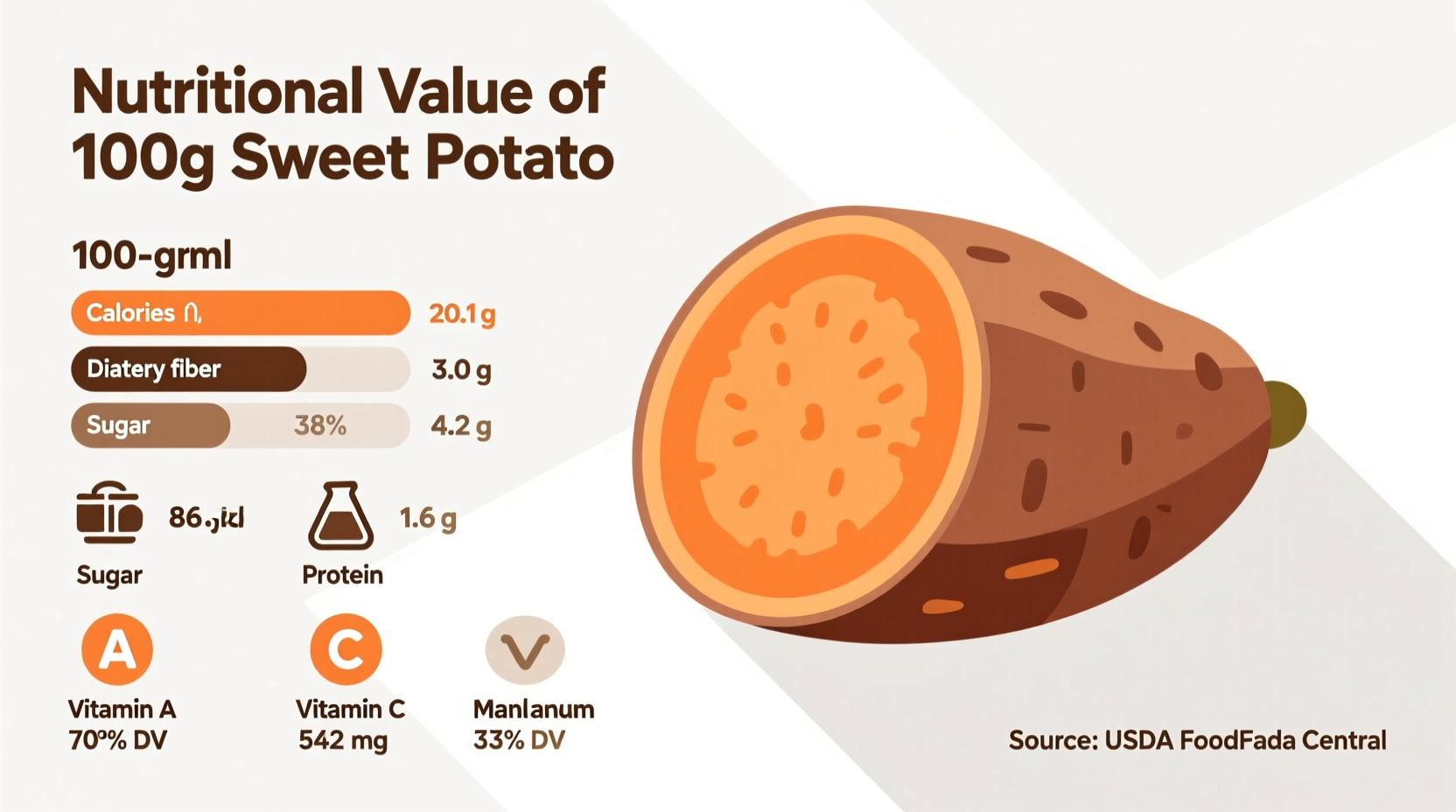
The sweet potato (Ipomoea batatas) is a dicotyledonous plant belonging to the morning glory family, Convolvulaceae. Unlike regular potatoes (which are tubers), sweet potatoes are storage roots, meaning they develop from root tissue rather than stem structures. Native to Central and South America, they’ve been cultivated for over 5,000 years and are now grown worldwide, particularly in tropical and subtropical regions.
Sweet potatoes come in several flesh colors—most commonly orange, but also white, yellow, purple, and red—each with slightly different phytonutrient profiles. The orange variety is richest in beta-carotene, while purple types contain anthocyanins, potent antioxidants linked to reduced inflammation and improved cognitive function. Despite common confusion, sweet potatoes are not related to yams, which are native to Africa and Asia and belong to an entirely different botanical family.
In culinary terms, sweet potatoes straddle the line between starchy vegetable and functional carbohydrate source. They provide sustained energy due to their complex carbohydrate composition and moderate glycemic index (GI), especially when consumed with fiber-rich foods or healthy fats. Their mild sweetness makes them suitable for both savory and dessert applications, from curries and grain bowls to pies and puddings.
Key Characteristics
- Flavor Profile: Naturally sweet with earthy undertones; intensity varies by cultivar and cooking method.
- Aroma: Mildly vegetal when raw; develops caramelized, nutty notes when roasted or baked.
- Color/Form: Skin ranges from pale beige to deep burgundy; flesh varies from white to vibrant orange or purple.
- Texture: Firm and dense when raw; soft, creamy, or fluffy when cooked depending on variety.
- Culinary Function: Acts as a complex carbohydrate base, thickener in soups, natural sweetener in baking, and source of color in plant-based dishes.
- Shelf Life: Up to 3–5 weeks when stored in a cool, dark, well-ventilated area (not refrigerated).
- Heat Level: Non-pungent; does not contribute spiciness.
Nutritional Breakdown: 100 Grams of Raw Sweet Potato
The following table outlines the standard nutritional content of 100 grams of raw sweet potato, based on USDA FoodData Central and peer-reviewed dietary databases. Values may vary slightly depending on variety, growing conditions, and freshness.
| Nutrient | Amount per 100g | % Daily Value (DV)* |
|---|---|---|
| Energy | 86 kcal | 4% |
| Water | 77 g | — |
| Protein | 1.6 g | 3% |
| Total Fat | 0.1 g | 0% |
| Carbohydrates | 20.1 g | 7% |
| Dietary Fiber | 3.0 g | 11% |
| Sugars | 4.2 g | — |
| Starch | 15.9 g | — |
| Vitamin A (as beta-carotene) | 14,187 IU | 284% |
| Vitamin C | 2.4 mg | 3% |
| Vitamin B6 | 0.2 mg | 10% |
| Thiamin (B1) | 0.08 mg | 5% |
| Riboflavin (B2) | 0.06 mg | 4% |
| Niacin (B3) | 0.6 mg | 3% |
| Folate (B9) | 11 µg | 3% |
| Potassium | 337 mg | 7% |
| Manganese | 0.3 mg | 13% |
| Copper | 0.1 mg | 11% |
| Iron | 0.6 mg | 3% |
| Magnesium | 25 mg | 6% |
| Calcium | 30 mg | 3% |
*Percent Daily Values are based on a 2,000-calorie diet. Vitamin A content is especially high due to beta-carotene, which gives orange-fleshed sweet potatoes their characteristic hue.
Health Benefits Supported by Nutrient Profile
The nutritional composition of 100 grams of sweet potato contributes meaningfully to several aspects of human health:
- Vision and Immune Support: With nearly 300% of the daily recommended intake of vitamin A, sweet potatoes play a crucial role in maintaining healthy eyesight and bolstering immune defenses—particularly important in populations at risk for deficiency.
- Digestive Health: At 3 grams of fiber per 100 grams, sweet potatoes promote regular bowel movements, feed beneficial gut bacteria, and help regulate appetite through increased satiety.
- Blood Pressure Regulation: High in potassium and low in sodium, sweet potatoes support cardiovascular health by helping balance electrolytes and reduce hypertension risk.
- Antioxidant Protection: Beta-carotene, anthocyanins (in purple varieties), and other polyphenols neutralize free radicals, reducing oxidative stress linked to chronic diseases including cancer and neurodegenerative disorders.
- Blood Sugar Management: Despite being starchy, sweet potatoes have a moderate glycemic index (GI ≈ 63 when boiled), especially when eaten with protein or fat. Their fiber and resistant starch content slow glucose absorption, making them suitable for many diabetic meal plans when portion-controlled.
“Sweet potatoes are one of the most underrated superfoods in the American pantry. A single 100-gram serving delivers more vitamin A than any other common vegetable—and it’s naturally packaged with fiber and complex carbs that support long-term energy.” — Dr. Lena Torres, Registered Dietitian and Plant-Based Nutrition Specialist
Practical Usage in Cooking
One hundred grams of sweet potato is roughly equivalent to a small half-cup diced or a thin wedge before cooking. After boiling or roasting, volume decreases slightly due to water loss, so adjustments should be made in recipes requiring precision.
In home kitchens, this amount serves as an ideal portion for side dishes, additions to salads, or components in grain bowls. For example:
- Add 100g cubed sweet potato to a lunchtime quinoa bowl with black beans, avocado, and lime dressing for balanced macronutrients.
- Use in smoothies: Cooked and cooled sweet potato adds creaminess and natural sweetness without refined sugars.
- Replace part of the flour in muffins or pancakes with mashed sweet potato (about 100g per cup of flour) to boost moisture, flavor, and nutrition.
- Make single-serving snacks: Roast 100g cubes with olive oil, rosemary, and sea salt for a fiber-rich side.
Pro Tip: To maximize beta-carotene absorption, always consume sweet potatoes with a source of dietary fat—such as olive oil, nuts, seeds, or yogurt. These fat-soluble vitamins require lipids for optimal uptake in the intestines.
Variants & Types: Choosing the Right One
Different sweet potato varieties offer distinct textures and nutritional advantages:
- Orange-Fleshed (e.g., Beauregard, Jewel): Most widely available; highest in beta-carotene; moist and sweet when cooked; excellent for mashing, roasting, or baking.
- Purple-Fleshed (e.g., Okinawan, Stokes): Rich in anthocyanins; mildly sweet with a firmer texture; retains striking color after cooking; ideal for steaming or slicing into stir-fries.
- White/Yellow-Fleshed (e.g., Hannah, O’Henry): Lower in sugar and beta-carotene; drier, more potato-like texture; better suited for savory applications like fries or gratins.
- Raw vs. Cooked: Boiling preserves more antioxidants than frying; microwaving retains nutrients efficiently; roasting enhances flavor via caramelization but may increase GI slightly.
Comparison with Similar Ingredients
Sweet potatoes are often compared to other starchy vegetables. Here's how 100 grams of sweet potato stacks up against common alternatives:
| Ingredient (100g) | Calories | Carbs (g) | Fiber (g) | Vitamin A (%DV) | Glycemic Index |
|---|---|---|---|---|---|
| Sweet Potato (boiled) | 86 | 20.1 | 3.0 | 284% | 63 |
| White Potato (boiled) | 87 | 20.0 | 2.2 | 0% | 82 |
| Butternut Squash (baked) | 45 | 11.7 | 2.0 | 225% | 51 |
| Plantain (green, boiled) | 116 | 31.9 | 2.3 | 0% | 40 |
| Yam (boiled) | 118 | 28.0 | 4.1 | 0% | 54 |
While similar in calories and carbohydrates to white potatoes, sweet potatoes stand out for their superior vitamin A content and lower glycemic impact. Compared to squash, they offer more energy per serving—making them better suited as a primary carbohydrate source. Yams, though often mislabeled as sweet potatoes in the U.S., are starchier and less nutrient-dense in terms of vitamins.
Practical Tips & FAQs
Can I eat sweet potatoes every day?
Yes, in moderation. Including 100 grams daily can support vitamin A status and digestive health, but variety remains key in a balanced diet. Rotate with other vegetables to ensure diverse phytonutrient intake.
Are sweet potatoes good for weight loss?
They can be, due to their high fiber and satiety-promoting properties. However, portion control matters—100 grams is appropriate within a calorie-conscious plan, especially when prepared without added sugars or fats.
Do sweet potatoes raise blood sugar?
They contain carbohydrates and will raise blood glucose, but their effect is tempered by fiber and resistant starch. Boiling results in a lower glycemic response than roasting. Pairing with protein (like chicken or lentils) further stabilizes insulin levels.
How should I store sweet potatoes?
Keep them in a cool, dry, dark place with good airflow—never in the refrigerator, which can cause hard centers and off-flavors. Avoid plastic bags; use a paper bag or basket instead. Do not wash until ready to use.
What’s the best way to cook sweet potatoes for maximum nutrition?
Boiling for 20 minutes retains up to 92% of beta-carotene and lowers the glycemic index. Steaming and microwaving are also efficient. Frying or candying increases calorie density and reduces health benefits.
Can I freeze cooked sweet potatoes?
Yes. Cool completely, then store in airtight containers for up to 10–12 months. Thaw in the refrigerator before reheating. Texture may soften slightly, but flavor remains intact—ideal for soups, purees, or baked goods.
Storage Checklist:
- Inspect for bruises or soft spots before storing.
- Store away from onions, which emit gases that accelerate spoilage.
- Use within 3–5 weeks for peak freshness.
- Discard if mold appears or odor turns sour.
Summary & Key Takeaways
The nutritional value of 100 grams of sweet potato demonstrates why this humble root vegetable deserves a central place in health-focused diets. It provides a rich supply of vitamin A, dietary fiber, potassium, and antioxidants—all within a modest 86-calorie package. Its versatility in cooking allows seamless integration into meals across all times of day, from breakfast hashes to dinner mains.
Among starchy vegetables, sweet potatoes uniquely combine flavor, function, and health promotion. Whether you're managing blood sugar, supporting immune function, or simply seeking satisfying plant-based fuel, incorporating measured portions—such as 100 grams—ensures you reap the benefits without excess caloric intake.
Choose orange-fleshed types for maximum vitamin A, purple for antioxidant diversity, and white for lower sugar content. Prepare by boiling or steaming to preserve nutrients, and pair with healthy fats to enhance nutrient absorption. Store properly to extend shelf life and maintain quality.
Start today: Add 100 grams of boiled sweet potato to your next salad or blend it into a morning smoothie. Track how it affects your energy and fullness—you may find it becomes a staple in your kitchen rotation.




 浙公网安备
33010002000092号
浙公网安备
33010002000092号 浙B2-20120091-4
Comments
No comments yet. Why don't you start the discussion?