
When shopping for a new backpack, one of the most overlooked yet critical decisions is the material. Nylon and polyester dominate the market, each offering distinct advantages. But with nylon often priced 20–40% higher than polyester, many buyers wonder: is the premium justified? The answer isn’t always straightforward. It depends on how you use your backpack, where you take it, and what you expect from its lifespan.
Understanding the technical differences between these two synthetic fabrics goes beyond marketing claims. Both are durable, lightweight, and resistant to abrasion—but their performance diverges in key areas like moisture handling, UV resistance, long-term wear, and environmental impact. Let’s break down the facts so you can make an informed decision without overspending—or underestimating your needs.
Durability and Strength: Tensile Performance Compared
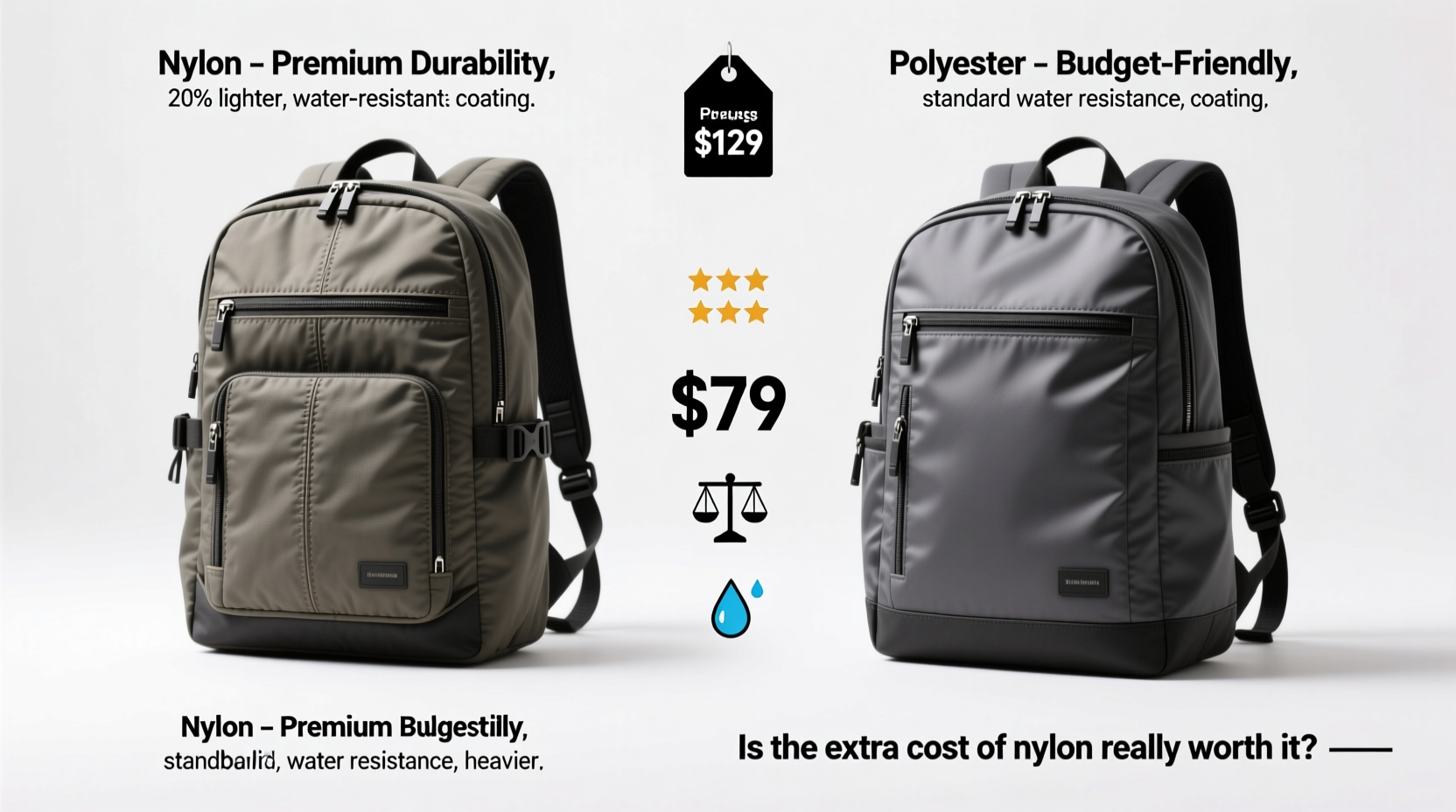
Nylon is inherently stronger than polyester at the fiber level. When measured by tensile strength (resistance to breaking under tension), nylon outperforms polyester by up to 20%. This makes it particularly suitable for heavy-duty applications such as hiking packs, travel gear, or daily commuter bags that carry laptops, books, and other dense items.
Nylon also has greater elasticity, meaning it can stretch slightly under load and return to shape—reducing stress on seams during sudden impacts or overloading. However, this same elasticity means nylon can sag more over time if consistently overloaded, especially when wet.
Polyester, while slightly weaker in raw strength, maintains its structural integrity better under prolonged UV exposure and resists degradation from sunlight more effectively. This makes it a smarter choice for outdoor gear used frequently in sunny climates.
Water Resistance and Moisture Handling
One of the most misunderstood aspects of fabric performance is water resistance. Neither nylon nor polyester is fully waterproof, but their behavior when wet differs significantly.
Nylon absorbs more moisture than polyester—up to 4% of its weight in water compared to less than 0.4% for polyester. This means a soaked nylon backpack becomes heavier, dries slower, and may develop mildew if stored damp. However, because nylon fibers swell when wet, they can actually become temporarily more tear-resistant.
Polyester excels here: it wicks moisture away quickly, dries faster, and doesn’t lose much strength when wet. That’s why high-end rainwear and marine-grade tarps often use polyester. For humid environments or rainy commutes, polyester offers practical advantages despite lower raw strength.
Both materials rely on coatings (like PU or silicone) for true water resistance. A well-coated polyester pack can outperform an uncoated nylon one in wet conditions—even if nylon is marketed as “rugged.” Always check whether the entire bag, including seams, has taped or sealed protection.
Weight, Softness, and Comfort
Backpack comfort isn’t just about padding—it starts with the shell fabric. Nylon tends to be softer to the touch and drapes more naturally, contributing to a premium feel. Many users report that nylon bags “break in” better over time, conforming slightly to body shape.
Polyester typically feels stiffer and more plasticky, especially in lower denier weaves. However, modern micro-polyester weaves have narrowed this gap significantly, offering improved flexibility without sacrificing structure.
In terms of weight, there's little difference between comparable denier ratings. A 600D nylon and 600D polyester backpack weigh roughly the same. But because nylon is stronger per thread, manufacturers can use lighter-weight versions (e.g., 420D nylon) to achieve similar durability to heavier 600D polyester—resulting in a lighter overall pack.
“Material choice should align with usage patterns. For urban commuters facing rain and subway crowds, quick-drying polyester might be smarter than strong-but-slow-drying nylon.” — Daniel Park, Outdoor Gear Engineer at TrailForm Labs
Comparative Analysis: Nylon vs Polyester at a Glance
| Feature | Nylon | Polyester |
|---|---|---|
| Tensile Strength | Higher – excellent for heavy loads | Moderate – sufficient for average use |
| Moisture Absorption | Up to 4% – slower drying | Less than 0.4% – fast drying |
| UV Resistance | Fair – degrades faster in sun | Excellent – holds up longer outdoors |
| Softness & Flexibility | Softer hand-feel, better drape | Stiffer, but improving with tech |
| Cost | Higher – 20–40% premium | Lower – budget-friendly |
| Eco Impact | Higher energy to produce, slower to biodegrade | Slightly lower footprint; recyclable (rPET) |
Real-World Use Case: Commuter vs Traveler
Consider two users: Maya, a city commuter, and Alex, a weekend hiker.
Maya walks 30 minutes to work daily, often in rain, and carries a laptop, lunch, and umbrella. Her route includes crowded subways and occasional shoulder rubbing against walls. She replaces her backpack every 18 months due to scuffing and mildew smell after getting caught in storms.
Alex hikes trails monthly, carries 20+ lbs of gear, and stores his pack in a garage exposed to sunlight. His last backpack cracked along the seams after two years, even though it rarely got wet.
For Maya, a **polyester** backpack with a PU coating and sealed seams would perform better—resisting moisture absorption and drying quickly after rain. The lower cost also suits her replacement cycle.
Alex benefits from **nylon**, especially 1000D or ballistic weave, which handles heavy loads and abrasion from rocky terrain. He should store it indoors to prevent UV damage—a small habit that extends life dramatically.
How to Extend the Life of Any Backpack
No matter the material, how you treat your backpack determines its longevity. Follow this checklist to maximize value:
- Clean regularly: Wipe down exteriors monthly with a damp cloth and mild soap.
- Avoid overloading: Respect weight limits to reduce strain on straps and stitching.
- Store properly: Keep in a cool, dry place away from direct sunlight.
- Dry thoroughly: Never store a damp bag—turn inside out and air dry for 24 hours.
- Check zippers: Lubricate with a graphite pencil if sticking occurs.
“Most backpack failures start at stress points—straps, corners, bottom panels. Reinforced stitching matters more than fabric alone.” — Lena Torres, Product Designer at UrbanPack Co.
Frequently Asked Questions
Is nylon more eco-friendly than polyester?
No. Nylon requires more energy to produce and releases nitrous oxide, a potent greenhouse gas. Recycled polyester (rPET) made from plastic bottles has a lower carbon footprint and is widely available in sustainable brands.
Can I repair a torn nylon backpack?
Yes. Small tears can be patched with iron-on repair tape or sewn with reinforced thread. Nylon accepts adhesives better than polyester, making DIY fixes more reliable.
Does denier rating tell the whole story?
No. Denier measures thread thickness, not overall quality. A 500D polyester with ripstop weave may outperform a 600D plain-weave nylon. Look for construction details like double stitching, bar tacks, and coated linings.
Final Verdict: When the Extra Cost Makes Sense
The higher price of nylon is worth it only in specific scenarios: if you carry heavy loads, need maximum abrasion resistance, or prioritize softness and drape. For everyday urban use, frequent exposure to rain, or budget-conscious buyers, high-quality polyester delivers comparable performance at a lower cost.
Don’t pay more for nylon just because it sounds “premium.” Instead, evaluate your actual usage. A $120 nylon backpack used lightly for commuting won’t outlast a $70 polyester model—and may degrade faster in sunlight or humidity.
Smart buying means matching material strengths to your lifestyle. Whether you choose nylon or polyester, focus on craftsmanship: reinforced stress points, quality zippers, and thoughtful design often matter more than fabric type alone.




 浙公网安备
33010002000092号
浙公网安备
33010002000092号 浙B2-20120091-4
Comments
No comments yet. Why don't you start the discussion?