
When shopping for a reliable raincoat, two materials dominate the market: nylon and polyester. Both are synthetic fabrics known for their durability and weather resistance, but they differ significantly in how effectively they repel water and resist stains. Understanding these differences helps you make an informed decision based on your environment, activity level, and maintenance preferences. This article breaks down the performance of nylon and polyester raincoats across key criteria—water shedding, stain resistance, breathability, durability, and care requirements—so you can choose the best option for your needs.
How Water Resistance Works in Raincoats
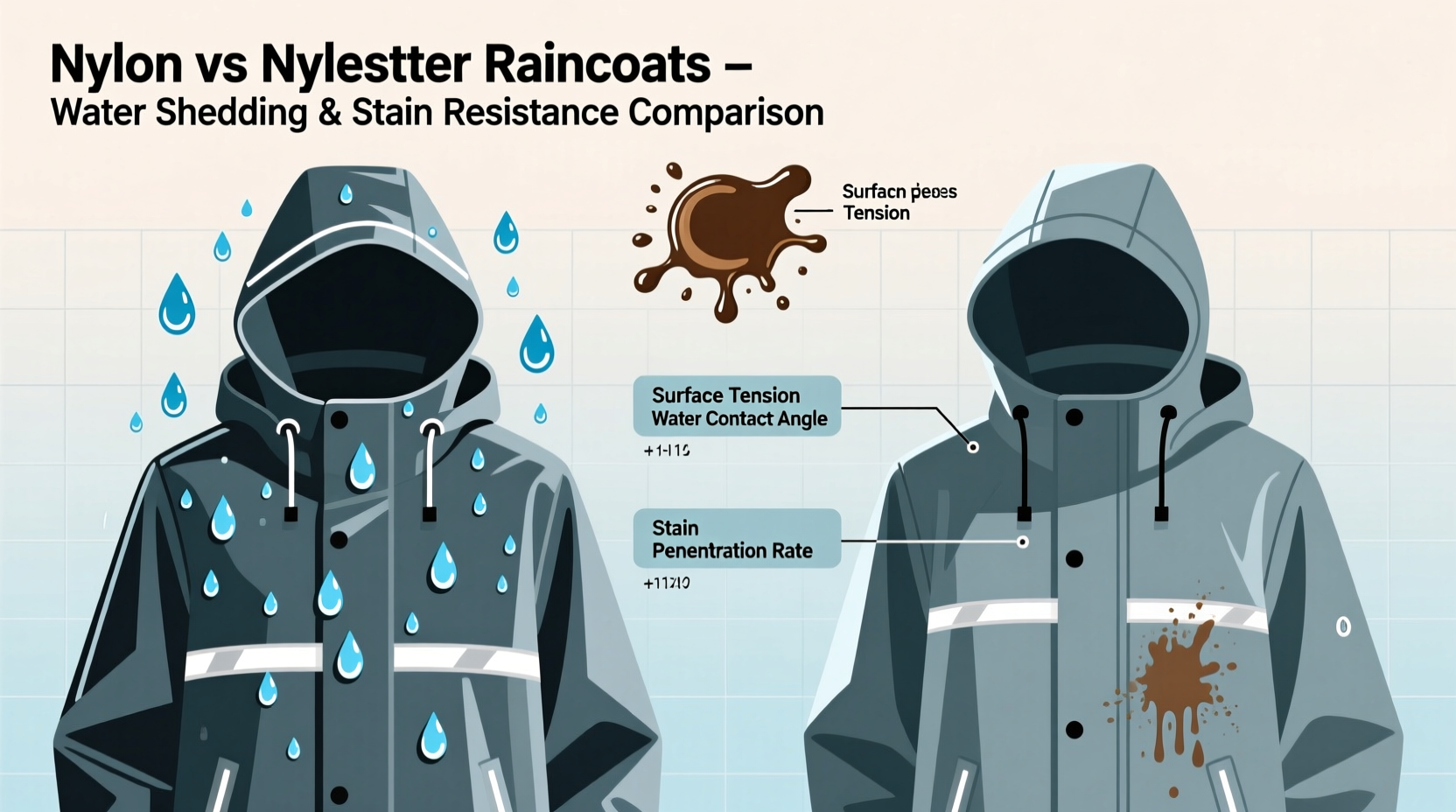
Raincoats don’t just rely on fabric type—they depend on a combination of material composition, weave density, and chemical treatments to keep you dry. The primary mechanism for water resistance is surface tension: water forms droplets that roll off instead of soaking in. This effect is enhanced by durable water repellent (DWR) coatings applied to the outer layer of most rainwear.
Both nylon and polyester are inherently hydrophobic, meaning they do not absorb water easily. However, untreated versions of both fabrics will eventually wet out under prolonged exposure. That’s why manufacturers apply DWR finishes and often pair the outer shell with a waterproof membrane like Gore-Tex or a polyurethane (PU) coating.
The effectiveness of water shedding depends not only on the base fabric but also on how well the DWR treatment bonds to it and how long that treatment lasts through use and washing.
Nylon Raincoats: Lightweight Powerhouses
Nylon has long been a favorite for high-performance outdoor gear due to its excellent strength-to-weight ratio. Originally developed as a silk substitute, modern nylon used in raincoats—such as ripstop nylon or ballistic nylon—is engineered for toughness and flexibility.
In terms of water shedding, nylon generally performs exceptionally well when treated with DWR. Its smooth fiber surface allows water to bead up and roll off quickly. Because nylon fibers swell slightly when exposed to moisture, untreated nylon can lose some breathability over time, but this is rarely an issue in properly coated raincoats.
One advantage of nylon is its ability to bond strongly with DWR treatments. This means the water-repellent finish tends to last longer than on polyester, especially in entry-level to mid-range jackets. High-end nylon shells used in mountaineering or hiking apparel often feature multiple layers, including microporous membranes, to enhance both waterproofing and breathability.
However, nylon is more susceptible to UV degradation than polyester. Prolonged sun exposure can weaken nylon fibers, leading to brittleness and reduced lifespan if not stored properly.
“Nylon remains the go-to for ultralight backpackers who need maximum protection with minimal pack weight.” — Dr. Lena Torres, Textile Engineer at Outdoor Materials Lab
Polyester Raincoats: Durable and UV-Resistant
Polyester is widely used in everyday rainwear due to its affordability, colorfastness, and resistance to environmental stressors. Unlike nylon, polyester does not absorb moisture at all—its fibers remain stable even in humid conditions. This makes it ideal for urban commuters and travelers who face frequent, light rainfall rather than extreme weather.
While polyester naturally resists water, its surface texture is slightly rougher than nylon, which can cause water to cling momentarily before rolling off. Without a strong DWR treatment, polyester may “wet out” faster, meaning the outer layer soaks up water and stops breathing effectively.
On the plus side, polyester holds up far better against UV radiation. It won’t degrade as quickly in sunlight, making it a smarter choice for tropical climates or summer use. Additionally, polyester dyes more evenly and retains color longer, which helps maintain the jacket’s appearance over time.
Many budget-friendly raincoats use polyester because it’s cheaper to produce and easier to recycle. However, lower-quality weaves may feel stiffer and less comfortable against the skin compared to softer nylon variants.
Stain Resistance: Where Polyester Excels
When it comes to resisting stains, polyester takes the lead. Its non-porous structure prevents liquids like coffee, oil, or mud from penetrating quickly. Most spills sit on the surface long enough to be wiped away, especially if the jacket has a DWR finish.
Nylon, while still reasonably stain-resistant, is slightly more prone to absorbing oily substances. Once oil-based stains set into nylon, they’re harder to remove without specialized cleaners. This makes polyester a better option for city wear where contact with food, grease, or pollution is common.
That said, both fabrics benefit from prompt cleaning. Allowing dirt or grime to accumulate degrades the DWR layer and reduces overall performance.
Comparative Performance Table
| Feature | Nylon | Polyester |
|---|---|---|
| Water Shedding (Initial) | Excellent – beads water quickly | Good – may cling slightly before rolling off |
| DWR Longevity | Better adhesion; lasts longer | Moderate; wears faster without care |
| Stain Resistance | Fair – vulnerable to oils | Excellent – repels most liquids |
| UV Resistance | Poor – degrades in sunlight | Excellent – highly resistant |
| Durability (Abrasion) | High – strong tensile strength | Moderate – varies by weave |
| Weight & Packability | Lighter and more compressible | Slightly heavier and bulkier |
| Breathability (with membrane) | Very good | Good |
| Cost Range | Mid to high | Budget to mid |
Real-World Example: Commuter vs. Hiker
Consider two users: Sarah, a daily bike commuter in Seattle, and James, a weekend hiker in the Rockies.
Sarah spends hours outdoors in drizzle and city grime. Her raincoat gets splashed with puddle water, brushed against café counters, and tossed in her office closet each day. For her, a **polyester raincoat** makes sense. It resists coffee spills, handles urban pollutants well, and won’t fade quickly under occasional sun. Even though she doesn’t need extreme lightweight gear, the jacket’s durability and ease of care matter most.
James, on the other hand, hikes alpine trails where sudden storms occur. He values every ounce in his pack and needs a jacket that keeps him dry during hours of exertion. A **nylon raincoat** with a Gore-Tex lining offers superior breathability and packs down small. Despite requiring more careful storage to prevent UV damage, its performance in heavy rain and rugged terrain justifies the extra maintenance.
This contrast shows that neither fabric is universally better—the right choice depends on context.
Care and Maintenance Tips
Even the best raincoat will fail prematurely without proper care. Here’s how to extend the life of both nylon and polyester shells:
- Wash regularly but gently. Use a technical detergent (not regular laundry soap) every 20–30 wears or whenever the jacket feels grimy.
- Avoid fabric softeners. They coat fibers and reduce breathability and water repellency.
- Tumble dry low or air dry. Heat reactivates DWR finishes—run the jacket in the dryer for 10–15 minutes after washing (if label permits).
- Reproof periodically. Use a spray-on DWR treatment when water no longer beads on the surface.
- Store properly. Keep in a cool, dry place away from direct sunlight. Avoid folding sharply; hang if possible.
Checklist: Choosing the Right Raincoat
- ✅ Assess your typical weather: frequent light rain favors polyester; heavy storms favor nylon.
- ✅ Prioritize weight and packability? Choose nylon.
- ✅ Concerned about stains or city wear? Go with polyester.
- ✅ Check for breathable membrane (e.g., Gore-Tex, eVent) in addition to shell material.
- ✅ Look for taped seams and storm flaps—these matter as much as fabric type.
- ✅ Verify DWR treatment and whether it’s eco-friendly (PFC-free options available).
- ✅ Consider sustainability: recycled nylon (like ECONYL®) and rPET polyester reduce environmental impact.
FAQ
Can I wash my nylon or polyester raincoat in a regular washing machine?
Yes, but use cold water, a gentle cycle, and a cleaner designed for technical outerwear (like Nikwax Tech Wash). Always close zippers and avoid bleach or softeners.
Why does water stop beading on my raincoat?
Over time, dirt, sweat, and surfactants from detergents degrade the DWR coating. Washing and reapplying a DWR spray usually restores beading. If not, the membrane may be compromised.
Is recycled polyester as effective as virgin polyester in raincoats?
Yes. Modern recycled polyester (rPET) matches the performance of virgin polyester in strength, water resistance, and durability. It’s also more sustainable, reducing plastic waste and energy consumption.
Final Verdict: Which Is Better?
If your priority is **maximum water shedding and lightweight performance**, nylon edges ahead—especially in high-end outdoor gear. Its superior DWR retention and strength make it ideal for adventurers and those facing intense weather.
For **stain resistance, UV stability, and everyday durability**, polyester wins. It’s better suited for urban environments, casual use, and situations where convenience and longevity under sun exposure are key.
In practice, many premium raincoats blend both materials or enhance them with advanced coatings. Some brands use nylon on high-wear areas (shoulders, hood) and polyester elsewhere to balance benefits.
Ultimately, look beyond the fabric label. Evaluate the entire construction: seam sealing, ventilation, fit, and additional features like adjustable hoods or pit zips. But when comparing nylon vs. polyester purely on water shedding and stain resistance, let your lifestyle guide the decision.
“The future of rainwear isn’t just about material—it’s about smart engineering. The best jackets combine the strengths of both fibers.” — Mark Delgado, Senior Product Designer at Alpine Outerwear Co.
Take Action Today
Your raincoat should protect you without demanding constant attention. Whether you lean toward nylon for trail adventures or polyester for city resilience, take a moment to assess your current jacket’s condition. Is the DWR worn? Are stains building up? Clean it, reproof it, and store it right. And next time you shop, use this knowledge to pick a coat that truly fits your life—not just the forecast.




 浙公网安备
33010002000092号
浙公网安备
33010002000092号 浙B2-20120091-4
Comments
No comments yet. Why don't you start the discussion?