
In the world of premium Android smartphones, hardware often reaches parity — with both OnePlus and Google offering top-tier processors, advanced cameras, and stunning displays. But when it comes to long-term value, one factor separates true flagships from fleeting trends: software longevity. How long will your phone receive critical security patches, performance updates, and major Android OS upgrades? For users who plan to keep their device for four years or more, this question is not just relevant — it's decisive.
The OnePlus 12 and Pixel 8 Pro represent two distinct philosophies in smartphone design and support. OnePlus, once criticized for inconsistent software promises, has made significant strides under OPPO’s umbrella. Meanwhile, Google’s Pixel line remains the gold standard for pure Android experiences and guaranteed update timelines. So which device truly delivers better software longevity?
Understanding Software Longevity in Smartphones
Software longevity refers to how long a smartphone receives official operating system (OS) updates, feature drops, and security patches from its manufacturer. This impacts not only user experience but also device security, app compatibility, and resale value.
A phone that stops receiving updates after two years may still function, but it becomes increasingly vulnerable to exploits, incompatible with newer apps, and sluggish due to lack of optimization. In contrast, a well-supported device continues to feel modern, secure, and fast even three to five years after launch.
Key components of software longevity include:
- Major OS Updates: Upgrades to new versions of Android (e.g., Android 14 → 15 → 16).
- Security Patches: Monthly fixes addressing vulnerabilities.
- Feature Drops: New functionalities added mid-cycle without requiring a full OS upgrade.
- Beta Programs: Access to early builds and developer tools.
These factors are shaped by a manufacturer’s commitment, ecosystem strategy, and relationship with Google.
Google Pixel 8 Pro: The Benchmark for Update Commitment
The Pixel 8 Pro isn’t just another Android phone — it’s Google’s vision of what Android should be. As the company behind the operating system, Google sets the pace for software innovation and support standards.
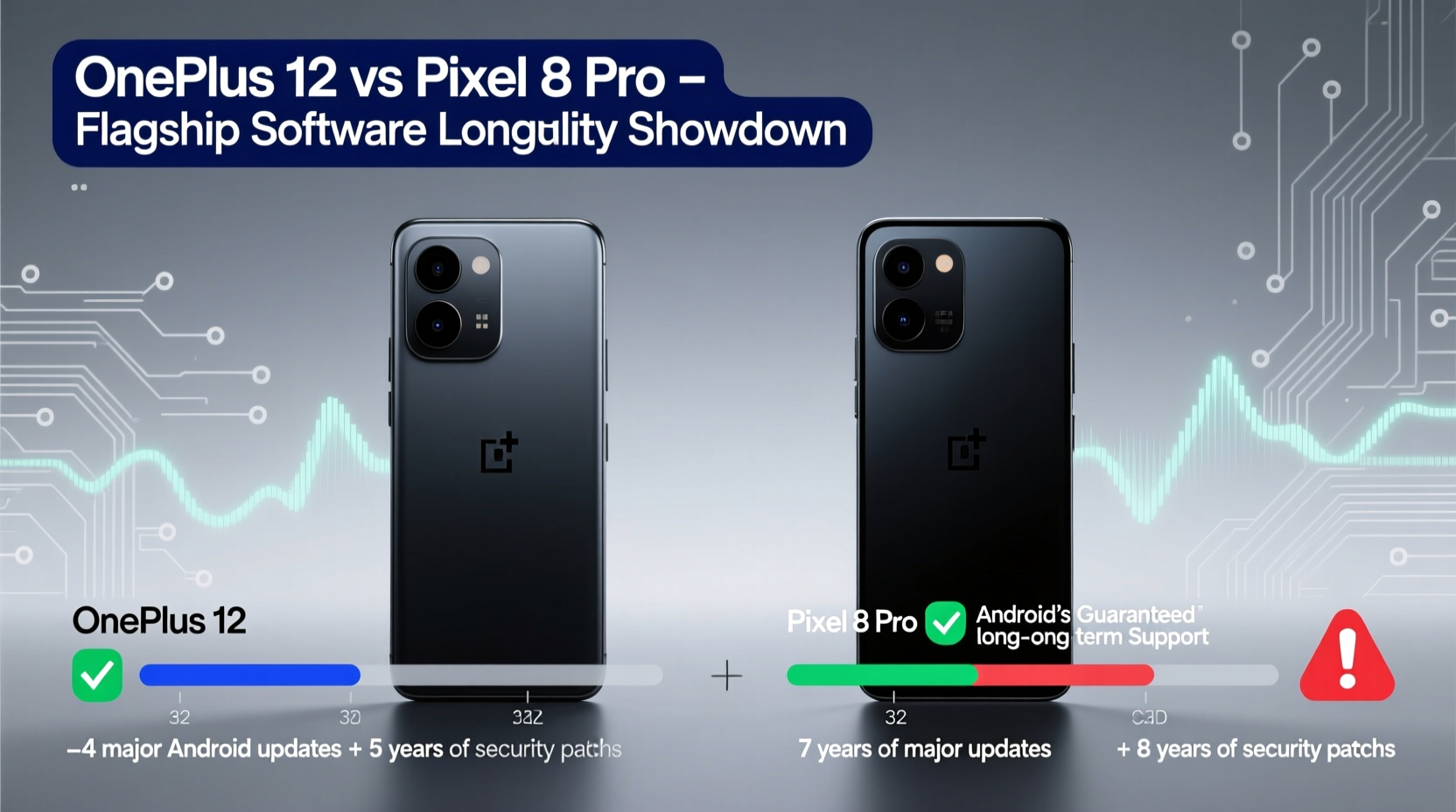
With the Pixel 8 series, Google introduced a bold new promise: seven years of OS and security updates. This includes:
- Three guaranteed major Android version upgrades.
- Seven years of monthly security patches.
- Ongoing Feature Drops throughout the lifecycle.
This policy applies to all Pixel 8 and Pixel 8 Pro units sold globally, making it the longest official support window among any Android manufacturer today.
The reasoning behind this extended timeline is strategic. Google wants users to stay within its ecosystem — using Google Photos, Assistant, Gmail, and other services — and reducing churn to competing platforms like iOS. By ensuring devices remain secure and functional for nearly a decade, Google strengthens long-term loyalty.
Moreover, the Pixel 8 Pro runs a clean, optimized version of Android with minimal bloatware. This reduces fragmentation issues and allows faster deployment of updates compared to heavily skinned interfaces.
“Seven years of support means your Pixel can last through multiple ownership cycles — ideal for families or secondary users.” — Arjun Sethi, Mobile Ecosystem Analyst at TechInsight Group
OnePlus 12: Improved Promises, But Still Playing Catch-Up
OnePlus has undergone a transformation in recent years. Once known for its “Never Settle” ethos and aggressive pricing, the brand faced criticism for erratic software updates and dropping support too soon on earlier models.
That changed significantly starting with the OnePlus 9 series, when the company committed to clearer update policies. With the OnePlus 12, OnePlus now promises:
- Four years of major OS updates.
- Five years of security updates.
This marks a substantial improvement over previous generations (which offered only two OS upgrades). However, it still falls short of Google’s seven-year pledge.
The OnePlus 12 ships with OxygenOS 14, a refined version of Android that blends customization with increasing alignment to stock Android principles. While it includes some proprietary features like Zen Mode and Gaming Mode, the interface is far less intrusive than Samsung’s One UI or Xiaomi’s MIUI.
Still, being part of OPPO introduces complexities. OPPO uses a shared software development pipeline across brands, meaning certain optimizations or bug fixes may be delayed while waiting for broader rollouts. This can result in slightly slower update delivery compared to Pixels, even when timelines appear similar on paper.
Detailed Comparison: Update Timeline and Real-World Impact
To understand the practical difference between these two phones, let’s compare their expected software lifecycles side-by-side.
| Update Type | Pixel 8 Pro | OnePlus 12 |
|---|---|---|
| Launch OS Version | Android 14 | Android 14 |
| Final OS Version | Android 20 (expected) | Android 18 (expected) |
| Major OS Updates | 7 years / 3 upgrades | 4 years / 4 upgrades |
| Security Updates | 7 years (monthly) | 5 years (monthly) |
| Feature Drops | Yes (annual AI-driven updates) | Limited (via Open Canvas & AI features) |
| Rollout Speed | Same-day (Google-controlled) | Within 4–8 weeks (OPPO pipeline) |
| Beta Program Access | Yes (Pixel Beta) | Yes (Open Beta) |
At first glance, OnePlus appears competitive — even surpassing Pixel in number of OS upgrades (four vs. three). But context matters. Google counts each new Android version as an upgrade regardless of marketing names, so Android 14 to 15 to 16 to 17 would be four upgrades — contradicting their stated “three” unless future naming diverges.
More importantly, Google’s seven-year security patch guarantee ensures protection against emerging threats long after OnePlus ends its program. Given rising cyber risks targeting mobile banking, messaging apps, and biometric data, this extended coverage is invaluable.
Real-World Example: The Four-Year Ownership Test
Consider Sarah, a freelance photographer who bought a flagship phone in 2020 and used it until 2024. She initially chose a OnePlus 8T for its fast charging and smooth display. It received timely updates for two years, but by late 2022, delays crept in. The Android 13 rollout arrived months after launch, and security patches became sporadic.
By 2023, her camera app started crashing, third-party apps warned about outdated OS versions, and she noticed increased lag during multitasking. Despite the hardware still being capable, the software environment had degraded enough to justify an upgrade — two years earlier than planned.
Had she chosen a Pixel 6 Pro instead — launched the same year — she’d still be receiving updates today. Google extended support to seven years partly because of strong user feedback like Sarah’s. Her experience highlights how update consistency directly affects usable lifespan.
Fast forward to 2024: buyers of the Pixel 8 Pro can reasonably expect support until at least 2031. That’s longer than many laptops or tablets receive updates.
Expert Insight: Why Seven Years Matters
The shift toward longer software support reflects changing consumer behavior. People are holding onto phones longer — the average replacement cycle in the U.S. is now over four years, according to Consumer Technology Association data.
“The seven-year model isn't just about convenience — it’s a sustainability imperative. Longer device life reduces e-waste and resource consumption.” — Dr. Lena Park, Sustainable Tech Researcher at GreenTech Institute
Google’s decision aligns with EU regulations pushing for minimum five-year support on consumer electronics. While not yet law globally, industry leaders are adapting preemptively. OnePlus’ move to five-year security patches shows awareness of this trend, though they haven’t matched Google’s ambition.
Actionable Checklist: Choosing for Longevity
If you're deciding between the OnePlus 12 and Pixel 8 Pro based on software longevity, follow this checklist to make an informed choice:
- ✅ Determine your intended ownership period — are you likely to keep the phone beyond four years?
- ✅ Prioritize security if you use mobile banking, work emails, or store sensitive data.
- ✅ Evaluate ecosystem lock-in — do you rely heavily on Google services (Photos, Drive, Assistant)?
- ✅ Consider resale value — well-supported phones retain value better.
- ✅ Check regional variations — some markets receive slower or limited updates.
- ✅ Review beta participation — if you enjoy testing new features, ensure the brand offers reliable beta channels.
Frequently Asked Questions
Does more OS updates always mean better longevity?
Not necessarily. Quantity matters, but so does quality and consistency. Receiving four OS updates means little if they arrive six months late or introduce instability. Google’s tightly controlled ecosystem ensures faster, more reliable delivery than most OEMs, including OnePlus.
Can I extend software life through custom ROMs?
Technically yes — enthusiast communities often port LineageOS or other custom firmware to popular devices after official support ends. However, this requires technical skill, voids warranties, and may compromise security. It’s not a viable solution for mainstream users.
Will either phone get Android 18 or beyond?
The Pixel 8 Pro is virtually guaranteed to receive Android 18, 19, and 20. The OnePlus 12 may reach Android 18 depending on how OnePlus defines version increments, but there’s no assurance beyond Android 17. Security patches will cease after five years, limiting usability post-2029.
Conclusion: The Clear Winner for Long-Term Users
While the OnePlus 12 impresses with powerful specs, rapid charging, and a vibrant display, its software longevity roadmap cannot compete with the Pixel 8 Pro’s industry-leading seven-year commitment. For users who prioritize future-proofing, security, and seamless integration with Google’s ecosystem, the Pixel 8 Pro is the superior choice.
OnePlus deserves credit for improving its update policy — moving from two to four OS upgrades is progress. But in a market where longevity equals sustainability and cost efficiency, falling two years short on security patches and relying on a slower update pipeline undermines its competitiveness.
If you plan to use your phone for four years or more, especially for work, travel, or storing personal memories, choosing the device with the longest, most reliable software support isn’t just smart — it’s responsible.




 浙公网安备
33010002000092号
浙公网安备
33010002000092号 浙B2-20120091-4
Comments
No comments yet. Why don't you start the discussion?