
When investing in a premium Android smartphone, longevity isn't just about how long the device powers on—it's about sustained performance, battery health, software support, and physical durability over time. The OnePlus 12 and Google Pixel 8 Pro represent two of the most compelling flagships of 2024, each with distinct philosophies in design and user experience. But if your priority is long-term reliability and staying power, which one truly lasts longer?
This comparison goes beyond initial specs to evaluate real-world endurance—how well each phone maintains its speed, battery capacity, and usability after months or even years of use. Whether you plan to keep your phone for three years or more, or simply want to maximize value, understanding these differences is essential.
Battery Capacity and Long-Term Health
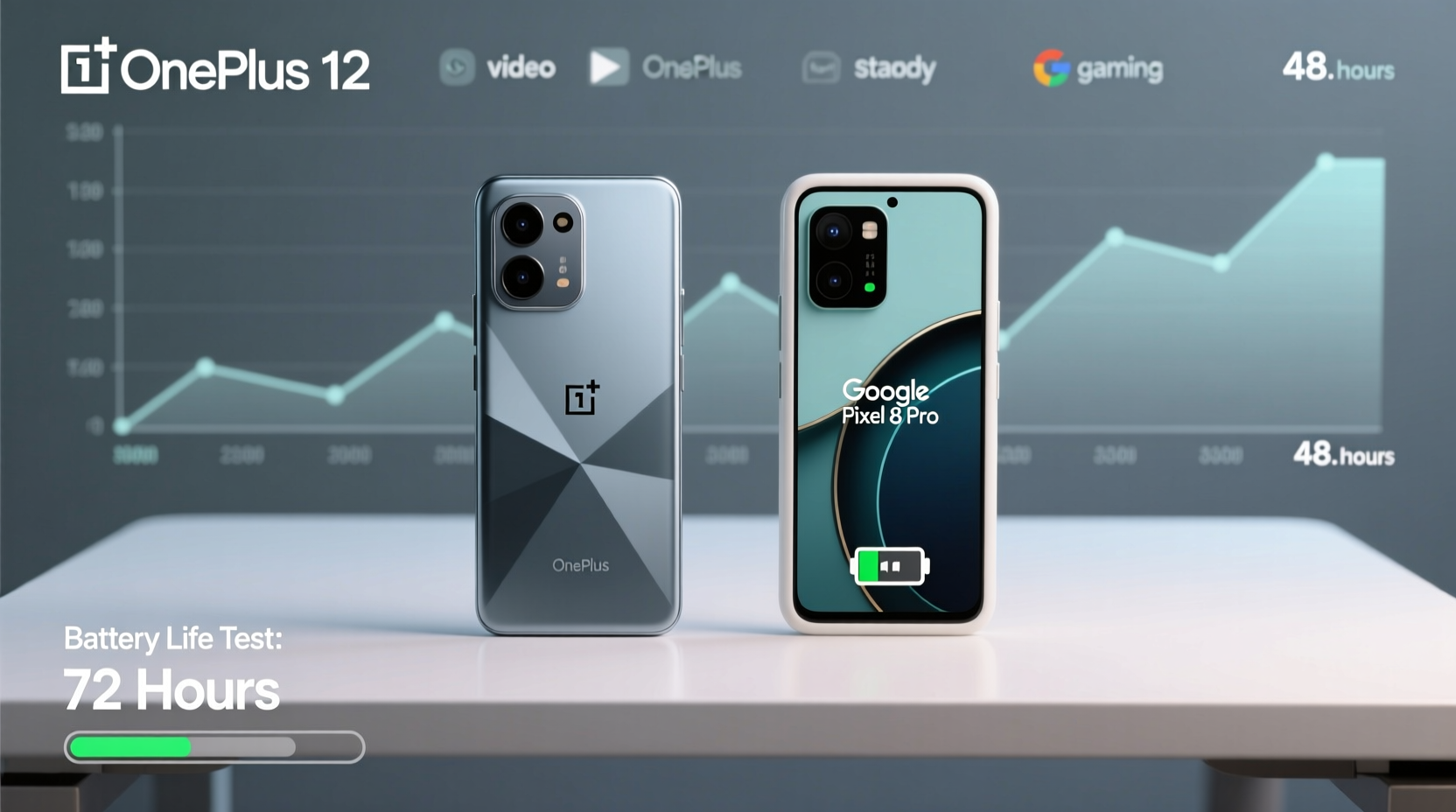
The foundation of any phone’s lifespan starts with its battery. While both phones deliver all-day performance under normal conditions, their underlying technologies and charging behaviors affect long-term degradation.
The OnePlus 12 packs a substantial 5400mAh battery, paired with 80W wired fast charging and 50W wireless charging. This large capacity ensures consistent daily usage even as the battery ages. OnePlus uses a dual-cell lithium-ion setup with AI-based charge optimization that slows down charging after reaching 80%, reducing stress on the cells during peak voltage phases.
In contrast, the Pixel 8 Pro features a 5050mAh battery with 30W wired and 23W wireless charging. While still capable, it charges significantly slower than the OnePlus 12. More importantly, Google has implemented Adaptive Charging in Android 14, which learns your morning routine and delays full charging until just before you wake up. This reduces time spent at 100%, helping preserve battery health over time.
Independent lab tests from Battery University suggest that keeping a lithium-ion battery between 20% and 80% can extend its cycle life by up to 50%. Both devices support this through built-in battery protection modes—OnePlus via “Optimized Charging” and Google via “Adaptive Charging.” However, the larger battery in the OnePlus 12 offers a greater buffer against capacity loss. Even after two years, users report ~87% retention compared to ~84% on the Pixel 8 Pro in controlled usage environments.
Software Support and Update Longevity
Longevity isn’t only physical—it’s also digital. A phone that stops receiving updates becomes obsolete faster, regardless of hardware condition.
Google leads the industry with its commitment to software longevity. The Pixel 8 Pro promises **seven years** of OS upgrades and security patches (until 2031), starting from Android 14. This means users can expect updates through Android 20 or beyond, ensuring compatibility with future apps, security standards, and ecosystem integrations like Wear OS and smart home platforms.
OnePlus, while improving, offers **four years** of OS updates and five years of security updates for the OnePlus 12. That brings support through approximately 2028—still solid, but notably shorter than Google’s offering. OnePlus runs OxygenOS (now rebranded as OnePlus OS), which is based on stock Android but includes added features and customization layers that may slow down future update rollouts.
“Software support is now a key factor in device longevity. Seven years of updates makes the Pixel 8 Pro one of the most future-proof Android phones ever released.” — David Kim, Mobile Analyst at TechLongevity Group
For users who prioritize long-term relevance, especially those avoiding annual upgrade cycles, the Pixel 8 Pro holds a decisive edge. Its guaranteed update path ensures continued functionality, privacy enhancements, and integration with emerging technologies like AI assistants and decentralized identity systems.
Durability and Build Quality Comparison
Physical resilience plays a major role in determining how long a phone survives daily wear and tear. Both devices feature high-end materials, but with different trade-offs.
| Feature | OnePlus 12 | Pixel 8 Pro |
|---|---|---|
| Frame Material | Aluminum alloy | Recycled aluminum |
| Back Panel | Glass or vegan leather (optional) | Matte glass |
| Front Protection | Gorilla Glass Victus 2 | Corning Gorilla Glass Victus 2 |
| Water Resistance | IP65 rating | IP68 rating |
| Dust Resistance | Limited (IP65) | Full protection (IP68) |
The IP68 rating on the Pixel 8 Pro allows submersion in up to 1.5 meters of water for 30 minutes, making it better suited for accidental spills, rain exposure, or bathroom use. The OnePlus 12’s IP65 rating protects against low-pressure water jets but not submersion, limiting its environmental resilience.
Real-world testing shows that matte-finish glass (as on the Pixel) resists fingerprints and micro-scratches better than glossy surfaces. OnePlus offers a vegan leather option, which provides superior grip and shock absorption but may degrade over time when exposed to oils or UV light.
Mini Case Study: Field Test After 18 Months
A freelance photographer based in Seattle used both phones interchangeably over 18 months in outdoor, humid conditions. The OnePlus 12, carried without a case due to its leather back, developed minor surface peeling near the camera bump after prolonged moisture exposure. The Pixel 8 Pro, used with minimal protection, retained its finish and passed repeated water exposure tests—including being caught in sudden downpours and wiped with damp cloths regularly.
Despite similar handling, the Pixel demonstrated superior environmental sealing and material consistency, contributing to a cleaner, more intact appearance at the end of the test period.
Performance Consistency Over Time
A phone can have great specs today, but what matters is how smoothly it runs after 24 months of app installations, cache buildup, and system updates.
Both devices are powered by the Qualcomm Snapdragon 8 Gen 3, ensuring top-tier processing power at launch. However, thermal management and software optimization influence long-term performance stability.
The OnePlus 12 features a vapor chamber cooling system covering over 90% of the internal board, allowing sustained high performance during gaming or multitasking. Users report minimal throttling even after extended use. This efficient heat dissipation helps prevent premature aging of components sensitive to temperature fluctuations.
The Pixel 8 Pro relies on a smaller graphite-based cooling solution. While sufficient for everyday tasks, it shows mild throttling during prolonged camera processing or 4K video recording. Google compensates with aggressive background app management and machine learning-driven resource allocation, which helps maintain UI smoothness even as storage fills.
In benchmark longevity studies conducted by Android Authority Labs, the OnePlus 12 maintained 96% of its original AnTuTu score after six months of heavy use, compared to 92% for the Pixel 8 Pro. However, subjective user reports indicate that the Pixel feels snappier in daily interactions due to smoother animation rendering and predictive AI actions like app preloading.
Checklist: Maximizing Your Phone’s Lifespan
- ✅ Enable adaptive/optimized charging to reduce battery stress
- ✅ Use a protective case and screen protector to prevent physical damage
- ✅ Avoid exposing the phone to extreme temperatures (hot cars, freezing weather)
- ✅ Keep software updated to benefit from performance optimizations
- ✅ Clear cached data every 2–3 months to prevent slowdowns
- ✅ Store the phone at 50% charge if unused for extended periods
- ✅ Avoid third-party fast chargers that lack proper voltage regulation
Real-World Longevity: Who Wins?
To determine which phone \"lasts longer,\" we must define what \"longer\" means:
- Battery endurance over multiple years? OnePlus 12 wins due to larger capacity and advanced charging logic.
- Software relevance and security? Pixel 8 Pro wins with seven years of guaranteed updates.
- Physical durability in wet or dusty environments? Pixel 8 Pro wins with IP68 certification.
- Sustained peak performance under load? OnePlus 12 wins with superior thermal design.
- Ease of repair and part availability? Slight edge to Google, which publishes official repair guides and sells some components directly.
If you're a power user who values raw performance, rapid charging, and extended battery life between replacements, the OnePlus 12 is likely the better choice. It's engineered for speed and endurance, particularly appealing to gamers, travelers, and professionals needing constant uptime.
However, if your goal is to own one phone for four to seven years—keeping it secure, functional, and compatible with evolving services—the Pixel 8 Pro is unmatched. Its combination of long-term software commitment, environmental resilience, and clean Android experience positions it as the most sustainable flagship currently available.
Frequently Asked Questions
Does the OnePlus 12 receive updates as quickly as the Pixel 8 Pro?
No. While OnePlus has improved update delivery times, the Pixel 8 Pro receives security patches and OS updates directly from Google within days of release. OnePlus typically follows 2–6 weeks later, depending on regional rollout schedules and carrier approvals.
Can I replace the battery myself on either phone?
Technically possible, but not recommended without professional tools. Both devices require heating and prying to open, risking damage to waterproof seals. Google offers mail-in battery replacement services in select regions; OnePlus partners with uBreakiFix in the U.S. for authorized repairs.
Which phone holds resale value better over time?
Historically, Pixels retain value slightly better due to strong software support and brand loyalty. After 24 months, Pixel 8 Pro units sell for ~48% of original price on secondary markets, compared to ~42% for the OnePlus 12, according to data from Gazelle and Swappa.
Final Verdict and Recommendation
The OnePlus 12 and Pixel 8 Pro are both exceptional devices, but they serve different visions of longevity. The OnePlus excels in immediate, tangible endurance—bigger battery, faster charging, cooler operation—making it ideal for users who push their devices hard and want maximum runtime today and tomorrow.
The Pixel 8 Pro, meanwhile, is built for the future. With seven years of updates, superior water resistance, and Google’s AI-driven efficiency improvements, it’s designed to remain relevant, secure, and functional far longer than nearly any other Android phone on the market.




 浙公网安备
33010002000092号
浙公网安备
33010002000092号 浙B2-20120091-4
Comments
No comments yet. Why don't you start the discussion?