
In 2018, smartphone buyers faced a pivotal decision: stick with the premium Samsung Galaxy S8 or take a chance on the rising star, the OnePlus 6. At the time, Samsung represented polished refinement and global support, while OnePlus offered flagship specs at half the price. Now, several years later, we can assess that choice with clarity. Was switching from the S8 to the OnePlus 6 truly an upgrade—or just a short-term thrill?
Design and Build: Premium Glass vs Practical Simplicity
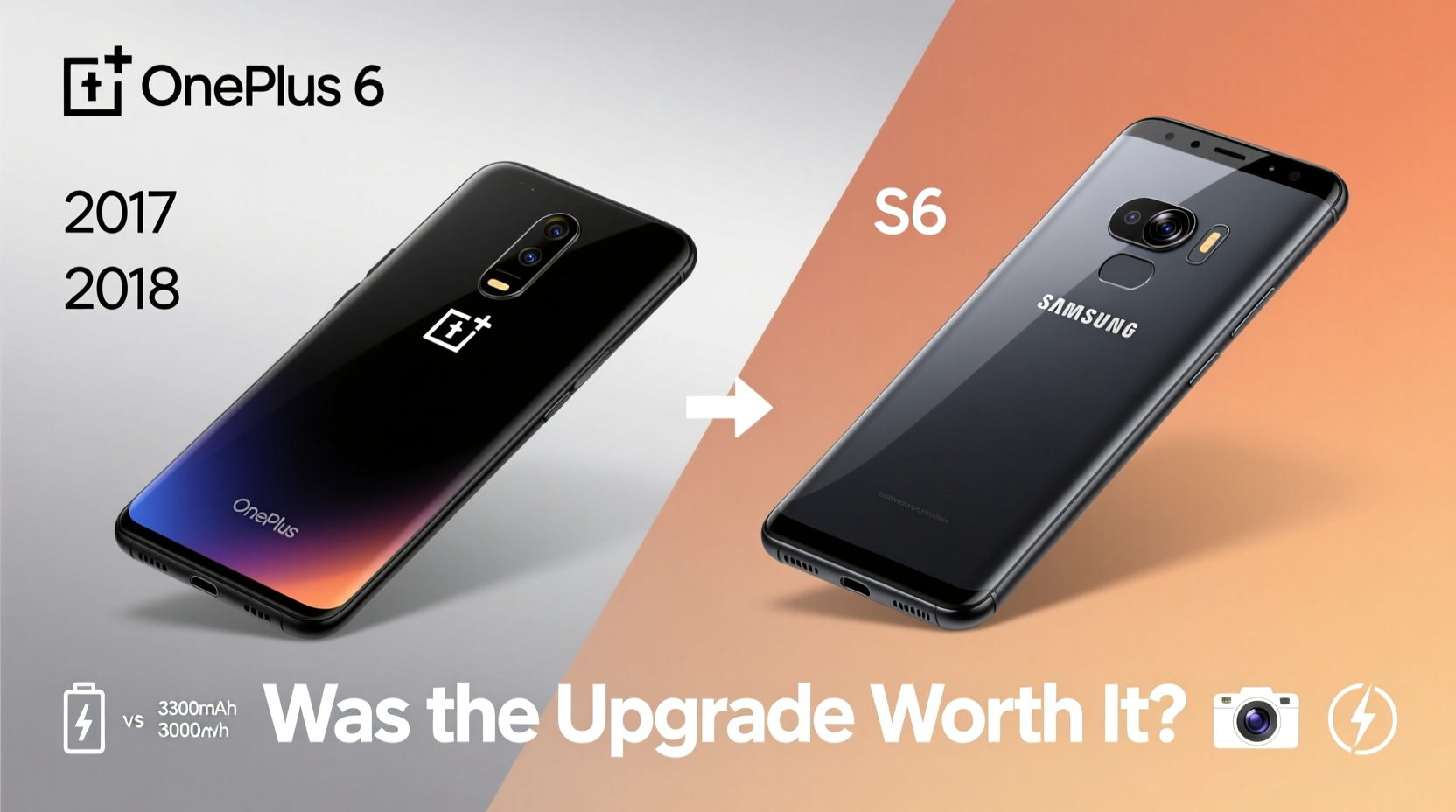
The Galaxy S8 set a new standard for smartphone aesthetics. Its curved edge-to-edge display, sleek aluminum frame, and glass back exuded luxury. It felt like holding a piece of future tech—minimal bezels, symmetrical curves, and IP68 water resistance made it both beautiful and resilient.
The OnePlus 6 took a different approach. While also using glass and metal, its design was more angular and functional. The notch—a controversial addition at the time—allowed for a taller 19:9 display but disrupted the screen’s symmetry. Unlike the S8, the OnePlus 6 lacked official waterproofing, which mattered to users who valued durability in wet conditions.
Despite these differences, the OnePlus 6 felt solid in hand. Its matte finishes reduced fingerprints, and the overall build quality held up well over time. However, the S8 still had the edge in elegance and finish refinement.
Performance and Software: Raw Speed vs Polished Experience
This is where the OnePlus 6 shined. Equipped with the Snapdragon 845 and up to 8GB of RAM, it outperformed the S8 (which used the Exynos 9810 or Snapdragon 835, depending on region) in nearly every benchmark. Apps launched faster, multitasking was smoother, and gaming performance was noticeably better.
OnePlus OxygenOS, based on near-stock Android, delivered a clean, responsive interface. Updates arrived quickly, often weeks ahead of Samsung’s patches. For power users who disliked bloatware, this was a breath of fresh air.
Samsung’s One UI (then Samsung Experience) offered richer features—split-screen mode, DeX support, secure folder, and advanced camera controls—but came with added overhead. The software felt heavier, and updates were slower. Still, Samsung’s ecosystem integration (with Galaxy Buds, watches, and tablets) provided long-term value beyond raw speed.
“Speed matters, but consistency and ecosystem matter more over time.” — David Kim, Mobile Analyst at TechPulse Insights
Battery and Charging: Endurance vs Efficiency
The OnePlus 6 packed a 3300mAh battery—slightly larger than the S8’s 3000mAh. But due to aggressive performance tuning and the higher-resolution demands of its AMOLED panel, real-world battery life was comparable. Both phones lasted about a day under moderate use.
Where OnePlus pulled ahead was charging. With Dash Charge (a licensed version of OPPO’s VOOC), the OnePlus 6 could go from 0 to 60% in just 30 minutes. Samsung’s Adaptive Fast Charging was capable but not as rapid, topping out around 50% in the same window.
However, the S8 supported wireless charging out of the box—an increasingly convenient feature that the OnePlus 6 lacked entirely. For users building smart homes or using car docks, this omission was a real drawback.
Camera Comparison: Versatility vs Consistency
The Galaxy S8 featured a single 12MP rear sensor with Dual Pixel autofocus and optical image stabilization. In 2017, it was among the best cameras on the market—especially in low light. Samsung’s processing prioritized natural color reproduction and dynamic range, making photos look balanced without oversaturation.
The OnePlus 6 introduced a dual-camera setup: a 16MP primary and a 20MP secondary lens for portrait mode. While hardware looked stronger on paper, early software tuning struggled with HDR accuracy and background blur realism. Over time, OnePlus improved the camera through updates, but it never quite matched the S8’s consistency across lighting conditions.
Front cameras were closer in quality. The S8’s 8MP selfie cam performed well in daylight, while the OnePlus 6’s 16MP shooter captured more detail but sometimes over-sharpened skin textures.
| Feature | OnePlus 6 | Samsung Galaxy S8 |
|---|---|---|
| Processor | Snapdragon 845 | Snapdragon 835 / Exynos 9810 |
| RAM | 6GB / 8GB | 4GB |
| Storage | 64GB / 128GB / 256GB | 64GB (expandable) |
| Rear Camera | 16MP + 20MP | 12MP (OIS) |
| Battery | 3300mAh (Dash Charge) | 3000mAh (Fast & Wireless Charging) |
| Water Resistance | None | IP68 |
| Display | 6.28\", 1080x2280 (Notch) | 5.8\", 1440x2960 (Curved, No Notch) |
| OS | OxygenOS (Android 8.1 → 10) | Samsung Experience (Android 7 → 9) |
Long-Term Value and Upgrade Justification
Let’s consider the original pricing. The Galaxy S8 launched at $725; the OnePlus 6 started at $529. That $200 difference bought you less brand prestige but significantly better performance and storage options. For tech-savvy users focused on specs and speed, the OnePlus 6 was a compelling alternative.
But value isn’t just about launch price—it’s about longevity. The S8 received three major Android updates and four years of security patches, thanks to Samsung’s expanding update policy. The OnePlus 6 got two OS upgrades (to Android 10) and about three years of patches—solid, but not quite as long.
Resale value also favored Samsung. Even a year after release, unlocked S8 models retained 40–50% of their value, while OnePlus phones depreciated faster due to weaker brand recognition and limited carrier support.
Mini Case Study: Alex’s Switch from S8 to OnePlus 6
Alex, a freelance developer, upgraded from his Galaxy S8 to the OnePlus 6 in mid-2018. He loved the faster app launches, smoother scrolling, and timely Android updates. “I was tired of waiting for Samsung to push fixes,” he said. “With OxygenOS, I felt more in control.”
But within a year, cracks began forming in the experience. He missed wireless charging at cafes and airports. When caught in the rain, he worried about damaging the phone. By 2020, he noticed the camera lagging behind newer devices and regretted skipping the S9 or S10.
“It was a great phone for 18 months,” Alex reflected. “But if I’d known how much I’d miss Samsung’s ecosystem, I might’ve waited and saved for the S9 instead.”
Was the Upgrade Worth It? A Balanced Verdict
For users already embedded in Samsung’s ecosystem—using Gear watches, DeX, or SmartThings—the S8 remained the smarter long-term investment. Its polish, durability, and software depth outweighed the OnePlus 6’s speed advantage.
But for independent users seeking raw performance at a lower cost, the OnePlus 6 was absolutely worth it. It delivered flagship-level responsiveness, excellent charging, and a clean software experience that many still praise today.
The real answer depends on priorities:
- If you valued speed, value, and minimal bloat, the OnePlus 6 was a justified upgrade.
- If you prioritized durability, ecosystem integration, and consistent camera quality, staying with the S8—or moving to a later Samsung model—made more sense.
Checklist: Was the OnePlus 6 Right for You?
- Did you want top-tier performance without paying flagship prices? ✅
- Were you okay with no wireless charging or waterproof rating? ✅
- Did you prefer stock Android over Samsung’s feature-heavy interface? ✅
- Were you willing to accept shorter long-term software support? ✅
- Did you value fast charging more than expandable storage? ✅
Frequently Asked Questions
Could the OnePlus 6 beat the S8 in daily use?
Yes—in app loading, multitasking, and gaming, the OnePlus 6 felt faster. However, the S8 offered a more refined overall experience with better accessories and ecosystem support.
Which phone aged better over time?
The S8 aged more gracefully due to longer software support from Samsung and better resale demand. The OnePlus 6 became outdated quicker once Android 10 arrived.
Is the OnePlus 6 still usable in 2024?
Barely. Without security updates since 2021 and limited app optimization for older Android versions, it's not recommended for daily use, especially for banking or communication apps requiring modern encryption.
Final Thoughts: Learning from the Past
Looking back, the OnePlus 6 vs Samsung S8 debate wasn’t about which phone was objectively better—it was about what kind of user you were. OnePlus appealed to enthusiasts who wanted no-compromise specs at a fair price. Samsung catered to those who valued reliability, ecosystem cohesion, and long-term usability.
The upgrade from S8 to OnePlus 6 was worth it for many—but only if they understood the trade-offs. Speed came at the cost of durability. Value undercut long-term support. And innovation sometimes meant missing conveniences we now take for granted.




 浙公网安备
33010002000092号
浙公网安备
33010002000092号 浙B2-20120091-4
Comments
No comments yet. Why don't you start the discussion?