
In the ever-evolving smartphone market, deciding whether to switch from an older flagship like the iPhone XS Max to a slightly newer Android contender such as the OnePlus 8T isn't just about specs—it's about real-world usability, longevity, ecosystem fit, and value. While both devices were once top-tier, time has shifted their positions. The OnePlus 8T launched in late 2020 with aggressive pricing and high-end features, while the iPhone XS Max debuted in 2018 as Apple’s premium offering. Now, in today’s context, is it actually worthwhile to make the leap? Let’s break down the key factors that matter most when evaluating this transition.
Performance and Hardware: Where Power Meets Longevity
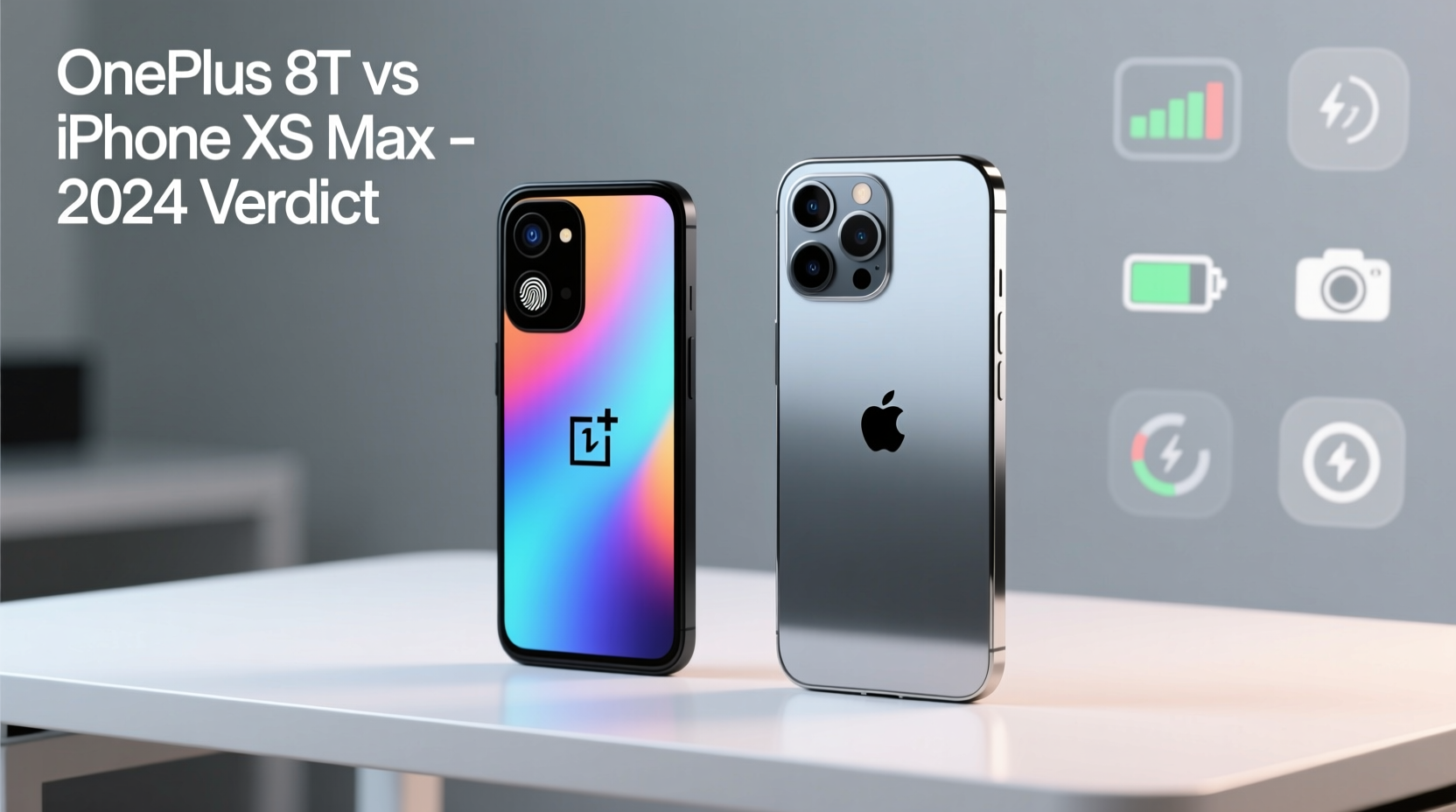
The core of any smartphone decision lies in its processing power and hardware resilience over time. The OnePlus 8T runs on the Qualcomm Snapdragon 865 chipset, paired with up to 12GB of LPDDR5 RAM—still capable of handling multitasking, gaming, and modern apps smoothly in 2024. In contrast, the iPhone XS Max uses Apple’s A12 Bionic chip, which was groundbreaking at launch but now shows limitations under heavier workloads or future iOS updates.
iOS continues to support the XS Max as of 2024 (up to iOS 17), but app developers are increasingly optimizing for newer hardware. Users report slower app launches, longer load times, and occasional stutters in graphics-heavy applications. Meanwhile, the OnePlus 8T, despite running on Android 13 (with no official Android 14 update expected), benefits from OxygenOS’s lightweight design and faster refresh rates, giving it a snappier day-to-day feel.
Display and Design: Smoothness vs Familiarity
One area where the OnePlus 8T clearly outshines the iPhone XS Max is the display. It features a 6.55-inch Fluid AMOLED panel with a 120Hz refresh rate—a feature absent on the XS Max’s 6.5-inch OLED screen, which remains capped at 60Hz. The higher refresh rate makes scrolling, animations, and general navigation feel significantly smoother, especially noticeable when browsing social media or reading articles.
In terms of design, the iPhone XS Max retains Apple’s classic stainless steel frame and glass back, exuding a premium, timeless aesthetic. However, it’s heavier (208g) compared to the OnePlus 8T (188g), and lacks IP68 water resistance consistency across all units (though both claim similar ratings). The OnePlus opts for a matte-finish aluminum frame and Gorilla Glass 5, offering better grip and less fingerprint smudging.
“The shift to 120Hz displays changed user expectations permanently. Once you experience fluid motion, going back feels jarring.” — David Kim, Mobile UX Analyst at TechFlow Insights
Camera Comparison: Quality Over Quantity?
Photography capabilities remain a critical factor for many users considering a switch. The iPhone XS Max features a dual 12MP rear system (wide + telephoto) known for consistent color science, excellent dynamic range, and strong video stabilization—especially in 4K at 60fps. Its portrait mode and low-light performance were industry-leading in 2018, but by 2024 standards, night shots appear grainy and lack detail compared to modern sensors.
The OnePlus 8T introduces a quad-camera setup: 48MP main sensor (Sony IMX586), 16MP ultra-wide, 5MP macro, and 2MP monochrome. While pixel count doesn’t always translate to quality, the larger sensor and improved software algorithms allow for sharper daylight images and wider framing options. Low-light performance is enhanced through Nightscape mode, though it still trails behind current-gen iPhones like the 15 Pro Max.
Front cameras favor the OnePlus too: 16MP vs the iPhone’s 7MP TrueDepth system. For vloggers or frequent selfie-takers, this means clearer, more detailed close-ups—even if Apple maintains better skin tone accuracy and HDR balancing.
Real-World Example: Travel Photography Upgrade
Sarah, a digital nomad using her iPhone XS Max since 2019, found herself frustrated during a trip through Southeast Asia. She noticed her photos lacked vibrancy in dense jungle settings, and capturing fast-moving street scenes resulted in blur. After switching to the OnePlus 8T, she appreciated the ultra-wide lens for landscapes and the faster shutter response. “I didn’t realize how much I was missing until I saw the difference,” she said. “The extra lens options gave me creative flexibility I never had before.”
Battery Life and Charging: Speed vs Sustainability
Battery degradation affects all smartphones after years of use, and the iPhone XS Max is no exception. Originally rated for around 13 hours of mixed usage, many units now struggle to last a full day without charging—especially after multiple battery cycles. Fast charging requires a separate 18W adapter (not included), and wireless charging is limited to 7.5W.
The OnePlus 8T counters this with a 4500mAh battery and Warp Charge 65 technology—capable of going from 0% to 100% in under 35 minutes. This is a game-changer for users who need quick top-ups between meetings or commutes. Even with moderate wear, the battery retention on well-maintained 8T units remains strong into 2024.
Ecosystem and Software Experience
This may be the most personal aspect of the decision. If you’re deeply embedded in Apple’s ecosystem—using a Mac, iPad, AirPods, or Apple Watch—the seamless integration (Handoff, iMessage, iCloud, AirDrop) can outweigh any hardware advantages offered by Android. Switching disrupts these workflows, particularly if you depend on iMessage for communication.
On the other hand, the OnePlus 8T offers greater customization, sideloading freedom, native Google services integration, and USB-C file transfers. OxygenOS (now merged into ColorOS) provides gesture navigation, dark mode, Zen Mode for focus, and more granular control over notifications and permissions. For tech-savvy users or those prioritizing flexibility, Android delivers a more open environment.
| Feature | iPhone XS Max | OnePlus 8T |
|---|---|---|
| Operating System | iOS 17 (supported) | Android 13 (no further major updates) |
| Refresh Rate | 60Hz | 120Hz |
| Charging Speed | 18W wired, 7.5W wireless | 65W wired, no wireless charging |
| Rear Cameras | Dual 12MP (Wide, Telephoto) | 48MP + 16MP UW + 5MP Macro + 2MP Mono |
| RAM | 4GB | 8GB / 12GB |
| Battery Capacity | ~3174mAh (aged) | 4500mAh |
Is It Worth Switching in the Current Year?
The answer depends on your priorities. If you value ecosystem cohesion, brand loyalty, and consistent long-term software support, sticking with the iPhone XS Max—or upgrading to a newer iPhone—makes sense. However, if you're experiencing slowdowns, poor battery life, or desire features like high refresh rate displays and ultra-fast charging, the OnePlus 8T presents a compelling upgrade path, even in 2024.
Consider the following checklist before making the move:
- ✅ Are you frustrated with slow app loading or daily charging anxiety?
- ✅ Do you want a smoother, more responsive screen experience?
- ✅ Are you open to learning a new OS or managing data migration?
- ✅ Do you frequently take photos or videos in varied lighting conditions?
- ✅ Can you live without iMessage and FaceTime as primary tools?
Frequently Asked Questions
Can the OnePlus 8T receive security updates now?
Officially, OnePlus provided three years of OS updates and four years of security patches. As of 2024, the 8T may still receive occasional patch-level updates, but major improvements are unlikely. Community ROMs like LineageOS offer extended life for technically inclined users.
Will my iPhone accessories work with the OnePlus 8T?
Most Bluetooth devices (headphones, speakers) will pair seamlessly. However, Lightning cables won’t work—you’ll need USB-C equivalents. MagSafe accessories are incompatible, and cloud-based syncing (via Google Drive or Dropbox) is required for transferring files.
Is the OnePlus 8T still durable enough for daily use in 2024?
Yes, provided the device has been well-maintained. Units with original batteries above 80% health and minimal physical damage perform reliably for everyday tasks including web browsing, messaging, and media consumption.
Final Verdict and Next Steps
Switching from the iPhone XS Max to the OnePlus 8T in the current year isn’t about chasing the latest trend—it’s about reclaiming responsiveness, extending usable battery life, and accessing features that have become standard elsewhere. While neither phone is cutting-edge today, the 8T delivers a noticeably fresher experience for users tired of aging hardware.
If you're ready to explore beyond Apple’s walled garden and prioritize speed, efficiency, and practical upgrades, the OnePlus 8T remains a smart, cost-effective alternative. Used models often sell for under $200, making it an affordable way to breathe new life into your mobile routine.




 浙公网安备
33010002000092号
浙公网安备
33010002000092号 浙B2-20120091-4
Comments
No comments yet. Why don't you start the discussion?