
When deciding whether to upgrade from a flagship device like the Samsung Galaxy S20 to a newer competitor such as the OnePlus 9 Pro, it’s not just about newness—it’s about real-world value. Both phones represent high-end engineering from their respective brands, but they serve slightly different audiences. The S20 set a benchmark in 2020 for Android flagships with its powerful specs and refined software, while the OnePlus 9 Pro arrived in 2021 aiming to close the gap in camera quality and premium build while retaining the speed-focused appeal OnePlus is known for.
This comparison dives deep into hardware, software longevity, camera performance, charging speed, and overall user experience to determine if moving from the S20 to the 9 Pro delivers meaningful improvements—or if your current device still has plenty of life left.
Performance and Hardware: Speed Meets Efficiency
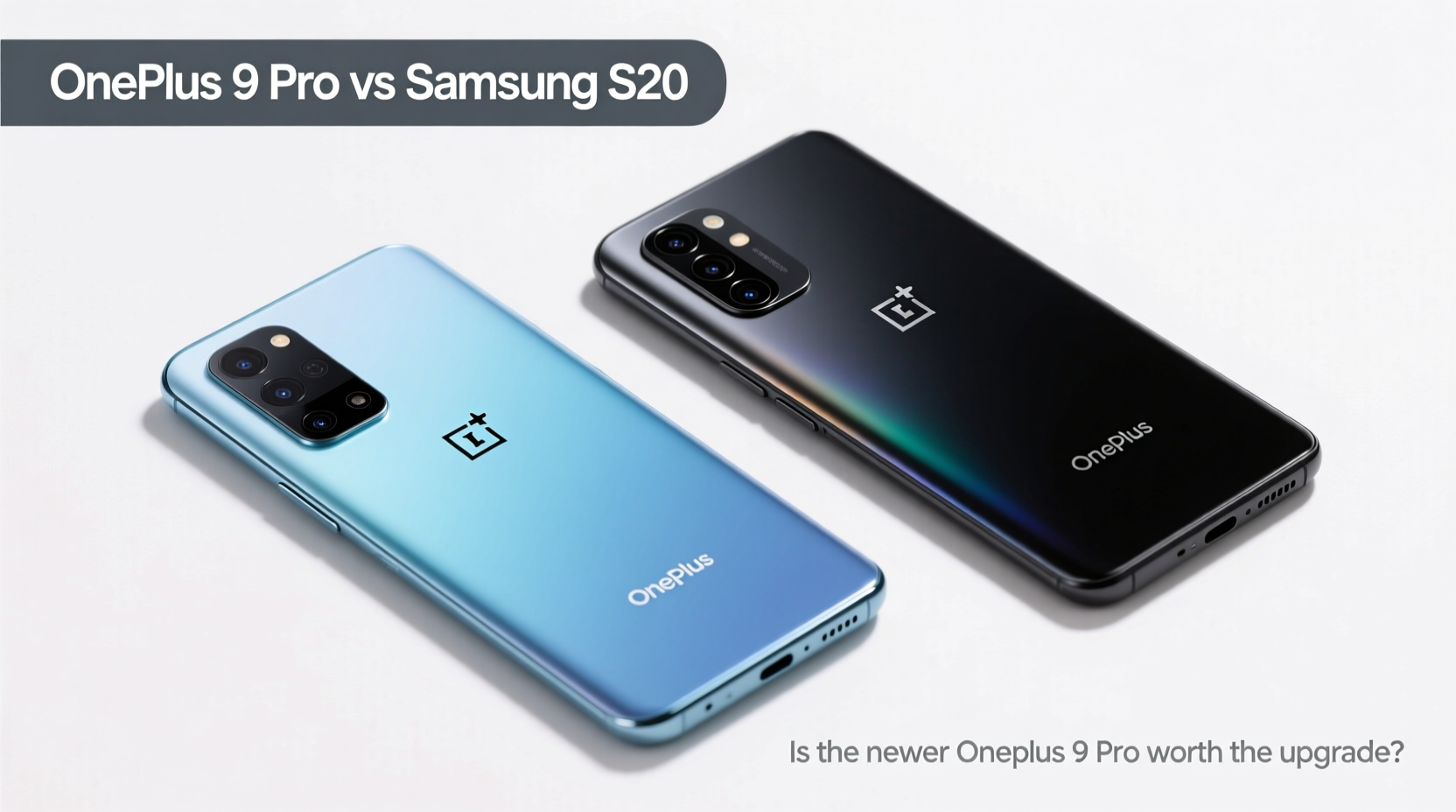
At the core, both devices pack elite-tier processors. The Samsung Galaxy S20 runs on either the Qualcomm Snapdragon 865 (in most global markets) or Samsung’s Exynos 990 (in select regions), while the OnePlus 9 Pro uses the Snapdragon 888 across all variants. This generational leap means better CPU and GPU performance, improved AI processing, and more efficient multitasking.
In practical terms, users upgrading from the S20 will notice faster app launches, smoother transitions, and better gaming performance—especially in titles that leverage Vulkan or advanced rendering techniques. The OnePlus 9 Pro also includes UFS 3.1 storage and LPDDR5 RAM, giving it a slight edge in data read/write speeds over the S20’s UFS 3.0 setup.
Display Quality: Brighter, Smoother, More Adaptive
The display is where both phones shine, but the OnePlus 9 Pro takes refinement further. Both feature 6.7-inch QHD+ AMOLED panels with 120Hz refresh rates, HDR10+ support, and excellent color accuracy. However, the 9 Pro introduces an LTPO-based display that dynamically adjusts refresh rate from 1Hz to 120Hz based on content, significantly improving battery efficiency during idle or low-motion tasks.
The S20’s 120Hz mode is fixed at full resolution and refresh rate when enabled, which can drain the battery faster. In contrast, the 9 Pro intelligently scales down, offering comparable smoothness with better power management. Additionally, OnePlus partnered with Hasselblad for color calibration, resulting in more natural skin tones and balanced whites under various lighting conditions.
“LTPO displays are a game-changer for high-refresh smartphones—they deliver fluidity without sacrificing battery life.” — David Lee, Display Analyst at TechPulse Insights
Camera Comparison: From Solid to Competitive Flagship
The camera is arguably the most debated aspect. The Galaxy S20 launched with a versatile triple-camera system: 12MP main, 64MP telephoto (hybrid zoom up to 3x), and 12MP ultra-wide. Its strengths lie in consistent processing, strong dynamic range, and reliable low-light output thanks to Samsung’s mature image pipeline.
The OnePlus 9 Pro marks a turning point for OnePlus’s photography ambitions. By partnering with Hasselblad, the company reworked its entire imaging stack. The result is a 48MP main sensor (Sony IMX789), a 50MP monochrome lens, an 8MP periscope telephoto (5x optical zoom), and a 50MP ultra-wide. The ultra-wide, in particular, sees massive improvement—less distortion, better detail, and superior night shots compared to the S20’s wide-angle.
In daylight, both phones produce excellent results, though the 9 Pro favors slightly warmer tones and enhanced texture retention. In low light, the 9 Pro’s larger sensors and multi-frame processing yield cleaner images with less noise. Video recording remains a Samsung stronghold—the S20 supports 8K at 24fps and superior stabilization—but the 9 Pro now offers 8K at 30fps with improved gyro-EIS.
Real-World Example: Travel Photography Upgrade
Sophia, a digital nomad using her S20 for content creation, upgraded to the 9 Pro before a trip to Iceland. She noticed immediate differences in landscape shots: the 9 Pro captured broader dynamic range in snowy glaciers, retained more shadow detail in dimly lit cabins, and produced more usable ultra-wide shots without cropping. “The Hasselblad tuning made my photos feel less processed and more true to what I saw,” she said. For creators prioritizing photo authenticity, the upgrade pays off.
Battery Life and Charging: A Clear Advantage
Battery capacity is nearly identical—4500mAh in the S20 versus 4500mAh in the 9 Pro—but real-world endurance differs due to software optimization and adaptive display tech. The S20 typically lasts a full day with moderate use, but heavy 120Hz usage can push it to recharge by evening.
The OnePlus 9 Pro, thanks to its variable refresh rate and OxygenOS efficiency tweaks, often stretches into late evening even with intensive use. But the standout feature is charging speed. The 9 Pro supports 65W wired fast charging (reaching 100% in about 29 minutes), compared to the S20’s 25W (which takes over 70 minutes). It also adds 50W wireless charging—an option absent on the S20.
Software Experience and Longevity
Samsung’s One UI, based on Android, offers deep customization, robust security updates, and a longer support lifecycle. The S20 is guaranteed up to four major Android OS upgrades and five years of security patches, meaning it could receive updates until 2025.
OnePlus transitioned from near-stock OxygenOS to a more feature-rich interface co-developed with Oppo (now called OxygenOS 12+). While initially criticized for bloat, recent versions have streamlined the experience. The 9 Pro receives three major OS updates and four years of security patches—slightly shorter than Samsung’s promise.
If long-term software support is a priority, the S20 still holds an edge. However, OnePlus has improved update consistency since 2021, reducing delays between Google’s Pixel releases and OnePlus rollouts.
Comparison Table: Key Specs Side-by-Side
| Feature | OnePlus 9 Pro | Samsung Galaxy S20 |
|---|---|---|
| Processor | Qualcomm Snapdragon 888 | Snapdragon 865 / Exynos 990 |
| Display | 6.7\" QHD+ LTPO AMOLED, 120Hz (adaptive) | 6.7\" QHD+ Dynamic AMOLED, 120Hz (fixed) |
| Rear Cameras | 48MP main + 50MP ultra-wide + 8MP telephoto (5x) | 12MP main + 64MP telephoto (3x) + 12MP ultra-wide |
| Front Camera | 16MP | 10MP |
| Battery | 4500mAh | 4500mAh |
| Charging | 65W wired, 50W wireless | 25W wired, 15W wireless |
| OS Support | 3 OS updates, 4 years security | 4 OS updates, 5 years security |
| Water Resistance | IP68 | IP68 |
Upgrade Checklist: Should You Make the Switch?
Consider these factors before upgrading from the S20 to the 9 Pro:
- ✔ Need faster charging? If waiting over an hour to charge frustrates you, 65W makes a dramatic difference.
- ✔ Value camera versatility? The 9 Pro’s ultra-wide and color science offer noticeable gains for photographers.
- ✔ Prioritize screen smoothness and battery? The adaptive 120Hz LTPO panel improves both.
- ✔ Want latest processor? Snapdragon 888 ensures better future-proofing for games and AR apps.
- ✖ Still happy with S20? If your phone works well and you don’t need new features, hold off—flagship lifespan is 3–4 years.
Frequently Asked Questions
Is the OnePlus 9 Pro better than the S20 in low light?
Yes, especially with the ultra-wide and main cameras. The larger sensors, improved algorithms, and reduced noise processing give the 9 Pro an edge in dim environments.
Does the S20 still receive updates?
Yes. Samsung continues to deliver monthly security patches for the S20, and it will likely get Android 14, ensuring it remains secure and functional through 2024–2025.
Can the OnePlus 9 Pro replace a Samsung flagship for daily use?
Absolutely. While Samsung leads in ecosystem integration (DeX, Knox, Galaxy Watch pairing), the 9 Pro delivers comparable performance, better charging, and a cleaner interface for most users.
Final Verdict: Is the Upgrade Worth It?
The OnePlus 9 Pro isn't just a spec bump over the S20—it's a targeted evolution addressing previous weaknesses in camera quality and charging speed. If you're still using an S20 and crave faster charging, more natural photos, and a smoother adaptive display, the upgrade brings tangible benefits.
However, if your S20 performs reliably and you’re satisfied with its camera and battery, the jump may not justify the cost. The S20 remains a capable flagship in 2024, especially with continued software support.
For users who value rapid charging, authentic photo rendering, and cutting-edge display technology, the OnePlus 9 Pro is absolutely worth the upgrade. For everyone else, consider extending the life of your S20 with a fresh battery or case instead.




 浙公网安备
33010002000092号
浙公网安备
33010002000092号 浙B2-20120091-4
Comments
No comments yet. Why don't you start the discussion?