
Rings are more than just accessories—they carry meaning, reflect personal style, and often mark significant life moments. But beyond aesthetics, a subtle yet important detail influences how a ring feels and functions: whether it’s open or closed at the base. While both styles may look similar at first glance, their structural differences affect comfort, fit, durability, and even symbolism. Understanding these distinctions helps you make informed choices when selecting or wearing rings for daily wear, engagement, or fashion statements.
The Structural Difference Between Open and Closed Rings
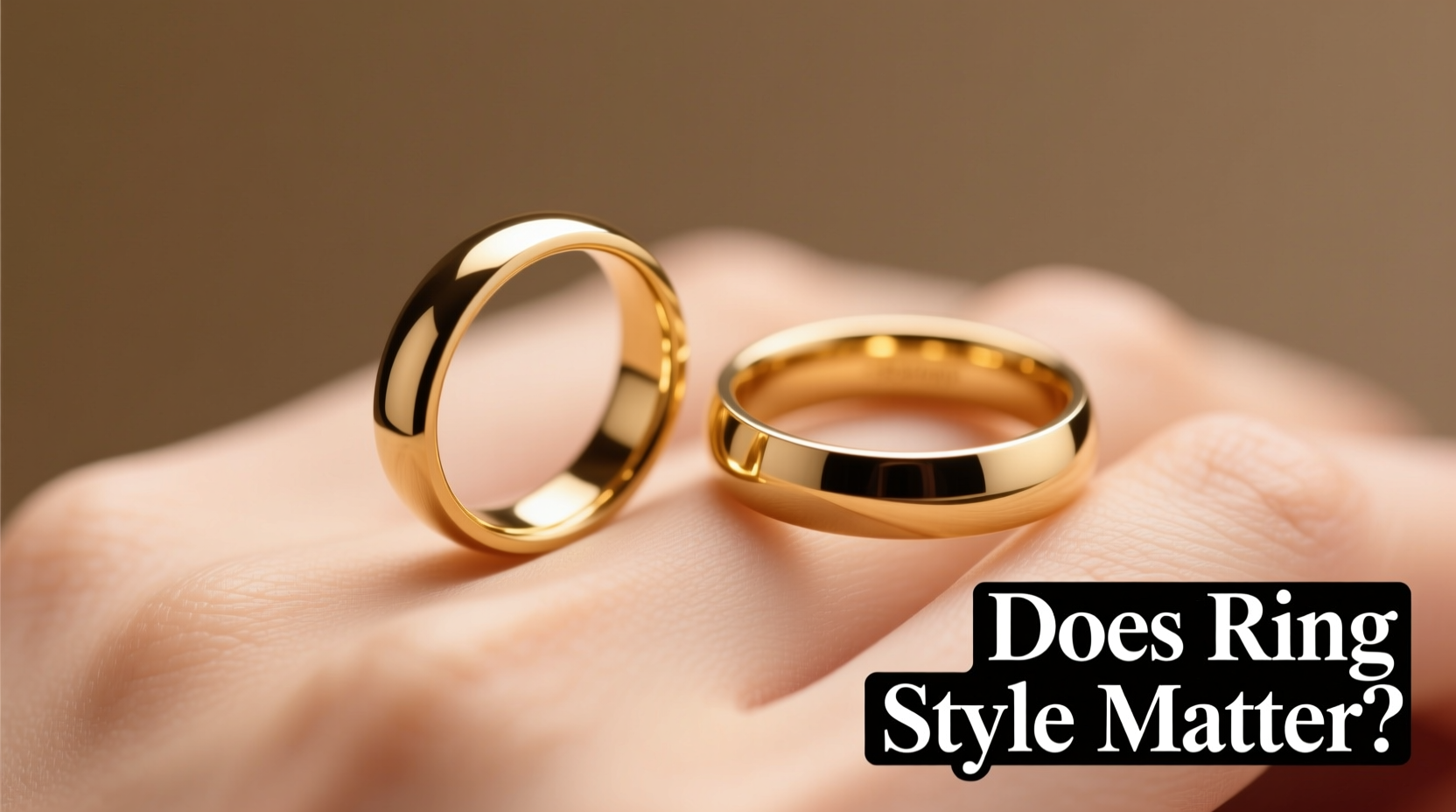
A closed ring features a continuous band with no gap—this is the traditional design most people associate with wedding bands, signet rings, or eternity bands. The metal forms a complete circle, offering consistent support around the finger. In contrast, an open ring has a break or gap at the bottom of the band, typically between 1 to 5 millimeters wide, allowing the ring to expand slightly when put on or removed.
This structural variance impacts several key factors:
- Adjustability: Open rings can accommodate slight size variations due to temperature or swelling.
- Finger Fit: Closed rings require precise sizing; open rings offer more flexibility.
- Durability: Closed bands distribute pressure evenly, while open rings may experience stress at the gap ends over time.
Comfort and Practicality: Which Style Suits Daily Wear?
Comfort is one of the most overlooked aspects of ring selection. A ring worn every day should not only look good but also feel natural. Closed rings offer stability and a secure sensation, making them ideal for those who work with their hands or want a permanent-feeling piece. However, they require accurate sizing. Even a half-size mismatch can lead to discomfort or difficulty removing the ring during finger swelling.
Open rings, by design, allow for micro-adjustments. This makes them excellent for people whose finger size fluctuates due to weather, hydration, or medical conditions like arthritis. They’re also popular in stackable ring sets, where multiple bands are worn together—open styles reduce pressure buildup between rings.
“Many patients come in with swollen fingers after long flights or workouts. Open-style bands are often the solution we recommend for both safety and comfort.” — Dr. Lena Torres, Hand Health Specialist
Symbolism and Cultural Significance
The continuity of a closed ring carries deep symbolic weight. In many cultures, the unbroken circle represents eternal love, commitment, and unity—central reasons why closed bands dominate engagement and wedding jewelry. The idea that “the ring has no end” reinforces emotional permanence.
Open rings, while less traditional in ceremonial contexts, have gained popularity for their modern aesthetic and metaphorical openness. Some interpret the gap as representing freedom, evolution, or the idea that relationships grow rather than remain static. Designers have embraced this narrative, especially in minimalist and contemporary collections aimed at younger consumers.
In certain spiritual traditions, open rings are believed to allow energy flow, contrasting with closed rings that “trap” energy within the loop. While not scientifically supported, such beliefs influence personal preference.
Comparison: Open vs Closed Rings at a Glance
| Feature | Open Ring | Closed Ring |
|---|---|---|
| Fit Flexibility | High – adapts to minor size changes | Low – requires exact sizing |
| Comfort Level | Better for fluctuating finger sizes | Consistent but less forgiving |
| Durability | Moderate – stress points at gap ends | High – even pressure distribution |
| Suitability for Stacking | Excellent – reduces tightness | Good – but may feel constricting |
| Safety (removal during swelling) | Easier to remove | Can get stuck if fingers swell |
| Symmetry & Aesthetic | Modern, edgy | Classic, timeless |
Mini Case Study: Choosing the Right Ring After Injury
After a kitchen accident, Sarah, a graphic designer from Portland, fractured her left ring finger. Though fully healed, she noticed persistent mild swelling, especially after long hours at her desk. Her engagement ring—a closed platinum band with a diamond solitaire—became uncomfortable and difficult to remove. She consulted a local jeweler, who suggested switching to an open-style alternative for daily wear.
Sarah opted for a titanium open band with a similar profile. The new ring adjusted easily to her finger’s shape throughout the day and eliminated discomfort. She keeps her original ring for special occasions. This compromise allowed her to maintain emotional connection to her original piece while prioritizing physical well-being.
How to Choose Based on Lifestyle
Your daily routine plays a major role in determining which ring style suits you best. Consider the following checklist before purchasing:
- ✅ Do your fingers swell during the day? → Lean toward open rings
- ✅ Do you work with tools, keyboards, or gloves? → Closed rings may catch or restrict movement
- ✅ Is this a wedding or engagement ring? → Closed bands are traditionally preferred
- ✅ Do you plan to stack multiple rings? → Open styles prevent tight stacking
- ✅ Are you choosing for symbolism? → Closed = eternal; Open = evolving
- ✅ How active is your lifestyle? → Open rings are generally safer during physical activity
Care and Maintenance Differences
Both styles require regular cleaning and inspection, but maintenance needs differ slightly. Closed rings are structurally simpler—fewer weak points mean less risk of deformation. However, dirt and oils can accumulate under the band over time, requiring periodic professional cleaning.
Open rings demand closer attention to the gap area. Over time, repeated expansion and contraction can weaken the metal ends, especially in softer materials like gold or silver. It’s wise to have these inspected annually by a jeweler to ensure the integrity of the opening mechanism.
Step-by-Step Guide: Testing Ring Comfort Over Time
- Wear the ring for 4–6 hours during normal activities, including typing, cooking, or walking.
- Observe any tightness, especially in warmer environments or after hand use.
- Try removing the ring gently—if resistance occurs, note it.
- Repeat over three days at different times (morning, afternoon, evening) to account for natural swelling cycles.
- Assess overall comfort and adjust choice if needed—consider resizing or switching styles.
FAQ
Can I resize an open ring?
Limited resizing is possible, usually within one full size up or down. However, excessive resizing can compromise the structural integrity of the gap. Consult a professional jeweler before attempting adjustments.
Are open rings more likely to fall off?
Well-designed open rings are not prone to slipping off unless the gap is too wide or the finger is significantly undersized. Most retain a snug fit due to spring tension in the metal.
Do closed rings cause more skin irritation?
Potentially, yes. Because closed rings trap moisture and dead skin underneath, they may contribute to irritation or allergic reactions in sensitive individuals. Regular cleaning and removal during showers can help mitigate this.
Conclusion: Does the Ring Style Actually Matter?
Yes—the choice between open and closed rings does matter, not just aesthetically but functionally. While closed rings uphold tradition and durability, open rings offer adaptability and comfort tailored to modern lifestyles. The right decision depends on your anatomy, daily habits, emotional preferences, and intended use. Whether you're investing in an engagement ring or curating a stylish stack, understanding the subtle power of structure ensures your jewelry enhances your life rather than hinders it.




 浙公网安备
33010002000092号
浙公网安备
33010002000092号 浙B2-20120091-4
Comments
No comments yet. Why don't you start the discussion?