
Painting over dark walls is one of the most common challenges homeowners face when refreshing a space. Whether you're transforming a deep navy accent wall into a soft gray retreat or turning burgundy into bright white, achieving solid coverage can feel like an uphill battle. The instinctive response? Apply more primer—sometimes as many as five coats. But that’s not only inefficient; it’s costly and time-consuming. The good news is that with the right tools, techniques, and products, you can achieve excellent coverage over dark paint without drowning your walls in layers of primer.
The key lies in understanding how paint opacity works, selecting high-hiding formulations, preparing properly, and applying paint strategically. This guide walks through proven methods to simplify the process, reduce material use, and deliver professional-quality results—without relying on excessive priming.
Understanding Paint Opacity and Coverage Challenges
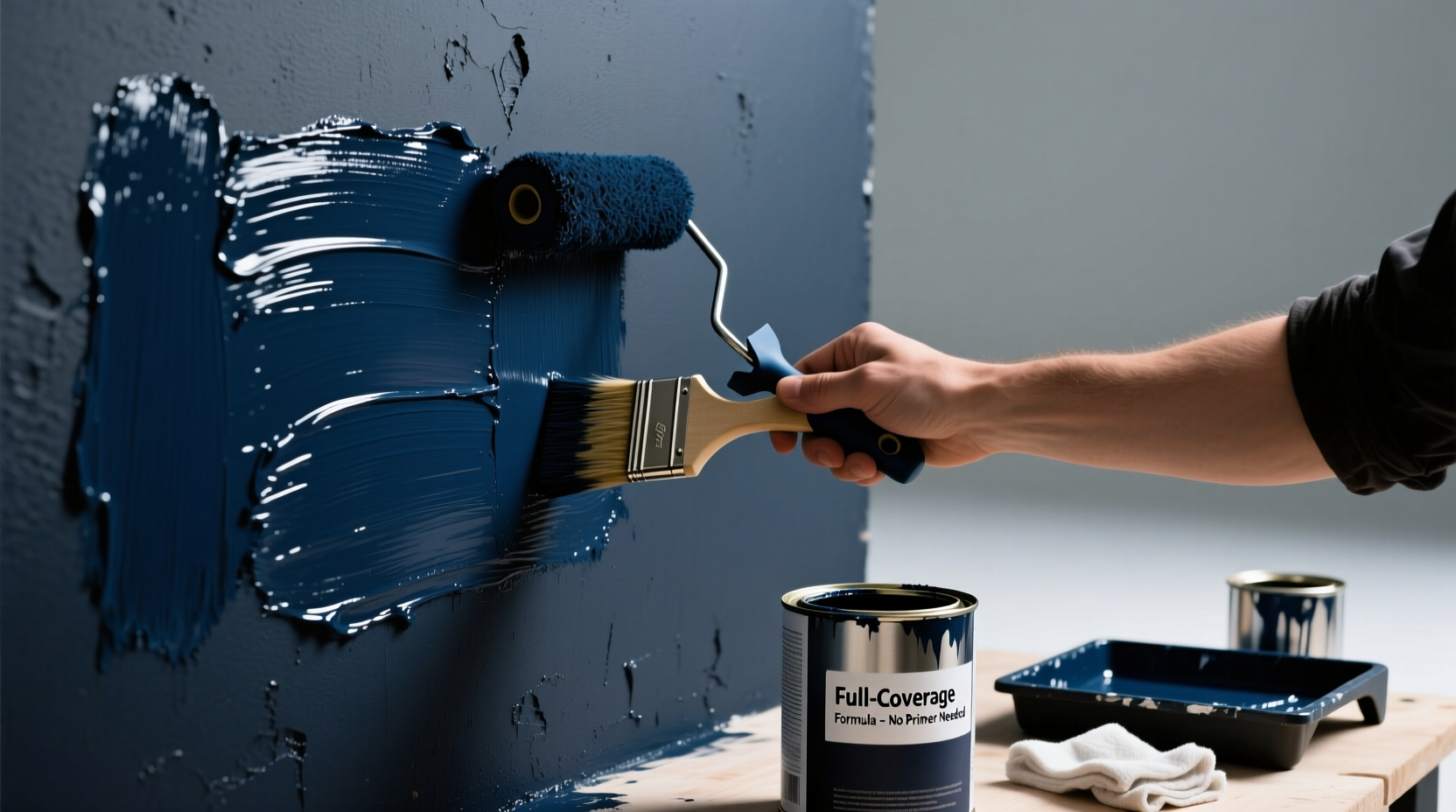
Dark colors absorb light rather than reflect it, which makes them harder to cover with lighter paints. Standard latex paints, especially budget-grade options, often lack sufficient pigment density (also known as \"hiding power\") to block out rich hues like charcoal, maroon, or forest green in just one or two coats. When paint doesn’t fully obscure the underlying color, it creates a washed-out or mottled appearance, forcing painters to apply additional layers.
However, not all dark walls require extreme prep. Factors such as the original paint type, sheen level, wall condition, and the target color all influence how much prep work is truly needed. For example, flat black paint is far more challenging to cover than satin navy because matte finishes tend to be denser and less porous. Similarly, switching from a dark tone to pure white demands more effort than transitioning to a medium-toned beige or greige.
“Many people over-prime because they’re using low-opacity paints or skipping surface prep. With the right product and method, two coats—sometimes even one—is enough.” — James Langford, Professional Painter & Interior Finish Specialist
Smart Preparation: The Foundation of Better Coverage
Before any paint touches the wall, proper preparation sets the stage for success. Skipping this step leads to uneven absorption, poor adhesion, and inconsistent coverage—even with premium paint.
Clean and Repair the Surface
Dust, grease, and grime create barriers between old and new paint. Use a mild detergent solution and a sponge to wipe down walls, especially in kitchens or high-touch areas. Rinse with clean water and let dry completely. Fill any holes or cracks with spackle, sand smooth, and spot-prime repaired areas if necessary.
Lightly Sand for Uniform Absorption
If the existing paint has a glossy finish (semi-gloss or satin), lightly sand it with 120–150 grit paper. This “de-glossing” helps the new paint adhere better and prevents patchy absorption. Wipe away dust with a tack cloth afterward.
Selecting the Right Primer (and Knowing When You Can Skip It)
Primer isn’t always mandatory. High-quality paints with built-in primers or exceptional hiding power can eliminate the need for separate sealing coats—especially when used correctly.
When to Use Primer
- Changing from very dark to very light: A single coat of stain-blocking or high-hide primer can make a dramatic difference.
- Switching sheens drastically: Going from semi-gloss to flat benefits from priming for uniform texture.
- Stained or patched walls: Areas with water marks, smoke residue, or repairs should be sealed first.
When You Might Not Need Primer
- Moving between similar tones: Dark gray to medium gray may not require primer at all.
- Using ultra-premium paints: Brands like Benjamin Moore Aura, Sherwin-Williams Emerald, or Farrow & Ball offer superior opacity.
- Flat-to-flat repaints: If both old and new paints are flat and compatible, direct application can work well.
| Situation | Recommended Primer? | Alternative Approach |
|---|---|---|
| Dark red → White | Yes – 1 coat | Use high-hiding paint + tinted base |
| Navy → Light blue | No (if same family) | Apply 2 coats of quality paint |
| Black → Beige | Yes – gray-tinted primer | Use tinted primer close to final color |
| Brown → Gray | Possibly – depends on sheen | De-gloss + 2 coats of opaque paint |
Choosing Paints That Work Harder: Hiding Power Matters
Not all paints are created equal. Economy paints often have lower pigment concentrations and higher filler content, requiring multiple coats to reach full opacity. Investing in a premium paint line pays off when covering dark walls.
Look for labels that mention “one-coat coverage,” “high hiding,” or “exceptional opacity.” These paints contain more titanium dioxide and optimized resins that scatter light effectively, blocking out underlying colors faster.
Tint Your Primer or First Coat
One of the most effective tricks professionals use is tinting the primer—or the first coat of paint—to match the target color more closely. For instance, if you're painting over black and want white walls, a gray-tinted primer reduces the contrast jump. This dramatically improves the effectiveness of your topcoat.
You can request a “gray undertone” or “mid-tone tint” at the paint store. Even a light gray primer will outperform plain white when covering deep colors.
Use a Higher Sheen for the First Coat (If Tolerable)
While flat paints are popular for their elegance and ability to hide imperfections, they typically have lower hiding power. Consider using a satin or eggshell finish for the first coat—it reflects more light and covers better. Then finish with your desired flat topcoat for aesthetics.
Step-by-Step Guide: Efficient Painting Over Dark Walls
- Assess the wall color and finish: Determine how drastic the change will be and whether the current paint is flat, satin, or glossy.
- Clean thoroughly: Wash walls with mild soap and water; rinse and dry completely.
- Repair damage: Patch holes, sand rough spots, and prime repairs if needed.
- De-gloss if necessary: Lightly sand shiny surfaces to promote adhesion.
- Choose your strategy: Decide whether to use a tinted primer or rely on high-opacity paint alone.
- Apply first coat strategically: Use a roller with a 3/8” to 1/2” nap for even texture. Cut in edges with a brush before rolling.
- Evaluate after drying: Wait at least 4–6 hours. Check for bleed-through under natural light.
- Apply second coat if needed: Most quality paints achieve full coverage in two coats when applied properly.
- Finish with desired sheen: If using a higher-sheen first coat, follow with your preferred final finish.
- Clean tools promptly: Latex paint dries fast; clean brushes and rollers immediately.
Mini Case Study: Transforming a Burgundy Living Room
Sarah, a homeowner in Portland, wanted to convert her 1990s burgundy living room into a modern warm white space. Her contractor initially recommended three coats of primer and two topcoats—nearly five days of work. Instead, Sarah consulted a local paint specialist who suggested a different approach.
She cleaned the walls, lightly sanded the semi-gloss finish, and applied one coat of gray-tinted high-hide primer. After drying, she used two coats of Benjamin Moore Aura in White Dove. The result? Full, even coverage with no visible undertones, completed in three days instead of five. Total cost was reduced by 30% due to less labor and fewer materials.
This case illustrates how informed choices—not brute force—lead to better outcomes.
Checklist: Painting Over Dark Walls Without Excessive Primer
- ☐ Clean walls with mild detergent and water
- ☐ Repair cracks, holes, or peeling paint
- ☐ Lightly sand glossy surfaces for better adhesion
- ☐ Assess color shift (dark to light = more prep)
- ☐ Choose a high-opacity paint brand
- ☐ Consider using a tinted primer (gray or mid-tone)
- ☐ Use a quality roller with appropriate nap length
- ☐ Apply first coat evenly, cutting in edges carefully
- ☐ Wait 4–6 hours before assessing coverage
- ☐ Apply second coat only if needed
- ☐ Finish with desired sheen for final appearance
Frequently Asked Questions
Can I paint over black walls without primer?
Yes, but only if you’re using a high-hiding paint and transitioning to a mid-tone or darker color. For light colors like white or cream, one coat of gray-tinted primer is strongly recommended to avoid multiple topcoats.
Will using a darker first coat help cover black walls?
Counterintuitively, yes. A mid-tone first coat (like warm gray) acts as a buffer between black and white, reducing the number of topcoats needed. This technique is commonly used in professional film and theater painting.
How do I know if my paint has good hiding power?
Check the product data sheet for terms like “superior opacity,” “one-coat hide,” or “high titanium dioxide content.” Premium lines usually list hiding power ratings. You can also test a small area: apply one coat and examine coverage under daylight.
Final Thoughts: Efficiency Meets Quality
Painting over dark walls doesn’t have to mean endless rounds of primer and paint. By focusing on smart preparation, choosing high-performance materials, and applying strategic techniques like tinted priming and layer sequencing, you can achieve flawless results with minimal coats. The goal isn’t to eliminate prep—but to optimize it.
Professional painters don’t succeed because they use more materials; they win because they use the right ones at the right time. You can do the same. With these insights, you’ll save time, reduce waste, and enjoy a beautifully transformed room without the frustration of five primer coats.




 浙公网安备
33010002000092号
浙公网安备
33010002000092号 浙B2-20120091-4
Comments
No comments yet. Why don't you start the discussion?