
When choosing an engagement ring or fine jewelry piece, the center stone often takes center stage—but the setting plays a critical role in how that stone performs. Two popular styles—pave and bezel settings—are frequently compared not just for aesthetics but for their impact on sparkle. While both have loyal followings, understanding how each influences light performance, security, and long-term wear can help you make a more informed decision.
The short answer is yes: the setting absolutely makes a difference in sparkle. But the full picture goes beyond brightness alone. It involves cut precision, metal placement, durability, and even personal lifestyle. Let’s explore how pave and bezel settings compare across these dimensions.
Understanding Pave Settings: Maximizing Light Exposure
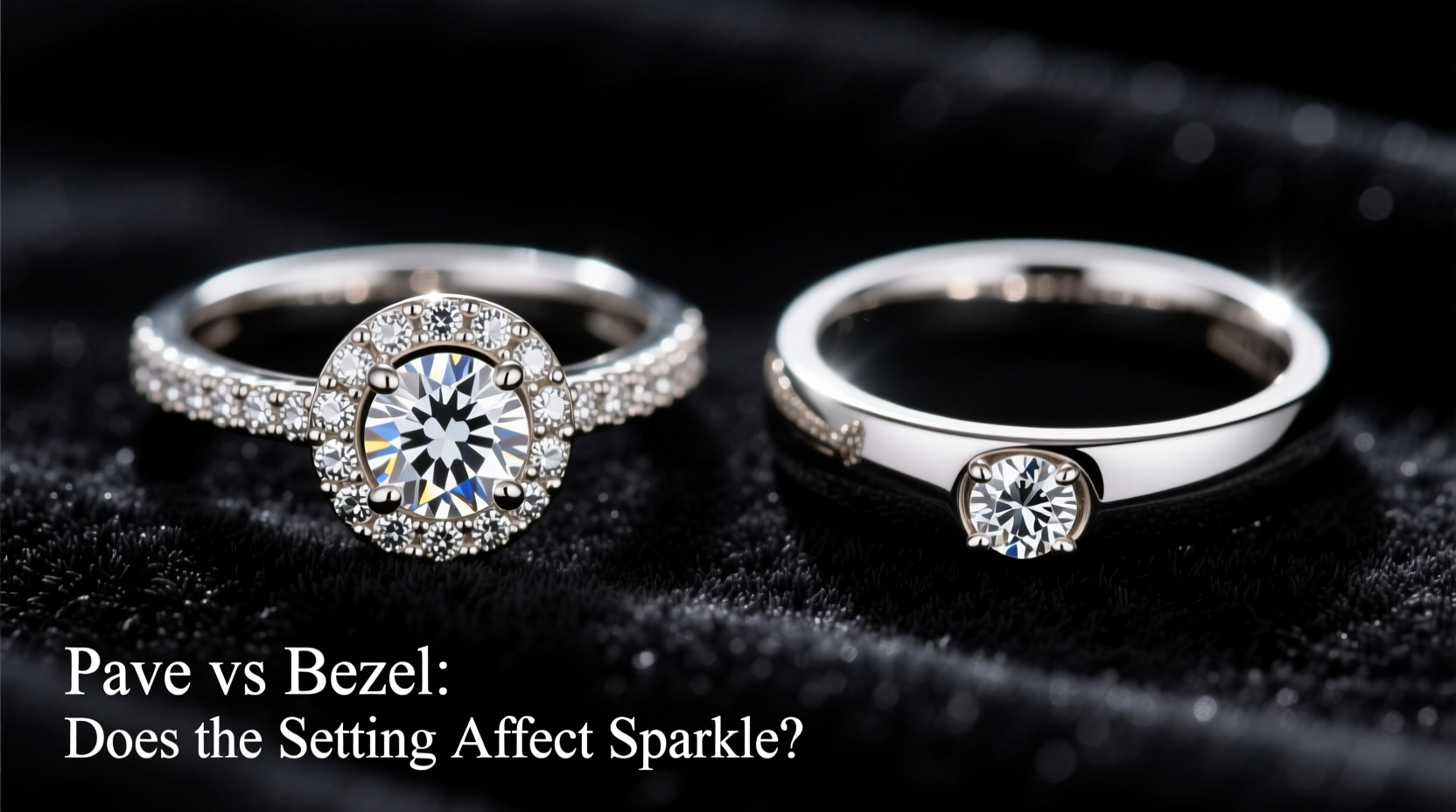
A pave setting features small diamonds set closely together along the band or around a center stone, held in place by tiny metal beads or prongs. The term “pave” comes from the French word for “paved,” as though the surface is paved with diamonds. This design maximizes the number of exposed diamond facets, allowing more light to enter and reflect back to the eye.
Because the stones in a pave setting are elevated slightly above the band, they catch light from multiple angles. This creates a continuous shimmer, especially when the hand moves. The effect is dazzling—ideal for those who want maximum brilliance and a luxurious feel.
However, the very feature that enhances sparkle also introduces vulnerability. The tiny prongs holding each micro-stone can wear down over time, especially with active hands. If one prong loosens, a stone may fall out. Maintenance becomes a factor—not a dealbreaker, but something to consider.
Bezel Settings: Protection First, Sparkle Second?
In contrast, a bezel setting uses a thin strip of metal that wraps around the perimeter of a stone, securing it fully. Full bezels encircle the entire gem, while partial bezels cover only portions. This design prioritizes protection—making it a favorite among professionals, parents, and travelers.
At first glance, a bezel might seem to reduce sparkle because the metal covers part of the stone’s edge. However, modern bezel designs often leave the table (top face) of the diamond completely exposed. As long as the crown angles are well-cut, light can still enter and refract beautifully. In fact, many high-clarity stones in bezel settings exhibit excellent fire and scintillation when viewed face-up.
“Bezel settings don’t kill sparkle—they redirect attention to the quality of the stone itself.” — Lena Torres, GIA-Certified Jewelry Designer
The trade-off isn’t necessarily brilliance, but rather visual weight. Bezel settings tend to sit lower on the finger and have a sleeker profile. Some find this modern and elegant; others miss the elevated, twinkling effect of traditional prong or pave styles.
Sparkle Showdown: How They Compare Side-by-Side
To understand the real-world difference in sparkle, consider three key factors: light return, surface coverage, and perceived size.
| Feature | Pave Setting | Bezel Setting |
|---|---|---|
| Light Performance | High – multiple stones increase overall brilliance | Moderate to High – depends on cut and exposure of crown |
| Diamond Coverage | Extensive – band appears covered in diamonds | Limited – focus is on single or few central stones |
| Durability | Lower – prongs can snag or weaken over time | Higher – metal protects edges and prevents chipping |
| Maintenance Needs | Frequent – requires professional checks every 6–12 months | Rare – minimal upkeep due to secure hold |
| Everyday Wear Suitability | Moderate – best for occasional or low-impact use | Excellent – ideal for active lifestyles |
This comparison shows that while pave wins in total sparkle output, bezel settings offer superior resilience without sacrificing all luminosity. Your preference may depend less on raw brightness and more on how you plan to wear the ring.
Real-Life Example: Choosing Between Styles
Sophia, a physical therapist, loved the look of a vintage-inspired pave engagement ring she saw online. She admired the way the side stones wrapped around the center diamond, creating a halo of light. But after trying it on, she noticed the band caught on her gloves during work. Within weeks of wearing it daily, two micro-diamonds had shifted.
She switched to a semi-bezel solitaire with a diamond-accented shank. Though not as densely sparkly, the ring stayed secure, felt comfortable during patient care, and still drew compliments. “I realized I didn’t need constant sparkle—I needed a ring that worked with my life,” she said.
Her experience highlights a common realization: aesthetic appeal must align with practicality. For many, the slight reduction in dazzle is worth gaining years of worry-free wear.
How to Maximize Sparkle Regardless of Setting
Whether you choose pave or bezel, several strategies can enhance your ring’s brilliance:
- Choose a well-cut center stone. Cut quality matters more than carat weight. A well-proportioned round brilliant will out-sparkle a poorly cut larger stone.
- Keep the ring clean. Oils, lotions, and dust dull any diamond’s luster. Soak in warm water with mild dish soap weekly and gently brush with a soft toothbrush.
- Avoid harsh chemicals. Chlorine and bleach can erode metal and loosen settings over time, especially in pave designs.
- Inspect regularly. Check for loose stones or bent prongs monthly. Take it to a jeweler for tightening every 6–12 months if you have a pave band.
- Wear it mindfully. Remove your ring during heavy chores, gardening, or exercise to prevent knocks and abrasions.
Frequently Asked Questions
Can a bezel setting still look sparkly?
Yes. If the diamond has a high-quality cut and the bezel is designed to leave the crown fully exposed, the stone can display impressive fire and brilliance. Many modern bezel rings are engineered specifically to optimize light entry.
Are pave rings outdated?
No. Pave remains a popular choice, especially in vintage-inspired and halo designs. Its timeless appeal lies in its ability to amplify sparkle. However, newer variations like micro-pave and shared-prong pave offer updated durability and subtlety.
Which setting holds up better over time?
Bezel settings generally last longer with less maintenance. The metal rim protects the diamond’s girdle (edge), reducing the risk of chipping. Pave rings require more frequent inspections due to the number of small prongs involved.
Final Thoughts: Sparkle Is Personal
The debate between pave and bezel settings isn’t about which is objectively better—it’s about alignment with your values and lifestyle. If your priority is maximum radiance and you’re willing to commit to regular care, a pave setting delivers unmatched glamour. But if you value durability, safety, and a clean, modern silhouette, a bezel setting offers quiet elegance with lasting integrity.
Ultimately, sparkle isn’t just a function of setting type. It’s shaped by cut, clarity, cleanliness, and context. A well-maintained bezel diamond in natural sunlight can outshine a neglected pave ring under dim lighting. What matters most is how the ring makes you feel when you wear it—and whether it fits seamlessly into your daily rhythm.




 浙公网安备
33010002000092号
浙公网安备
33010002000092号 浙B2-20120091-4
Comments
No comments yet. Why don't you start the discussion?