
In an era where smartphones are extensions of our daily lives, accessories that enhance usability without compromising style matter more than ever. Two popular options—phone cases with built-in stands and PopSockets—have dominated the market for years. But as design preferences shift and new technologies emerge, a growing question surfaces: Are PopSockets going out of style? And how do they stack up against functional alternatives like stand-equipped cases? This article examines both solutions from practical, aesthetic, and ergonomic perspectives to help you make an informed decision.
Functionality Compared: Stand Case vs PopSocket
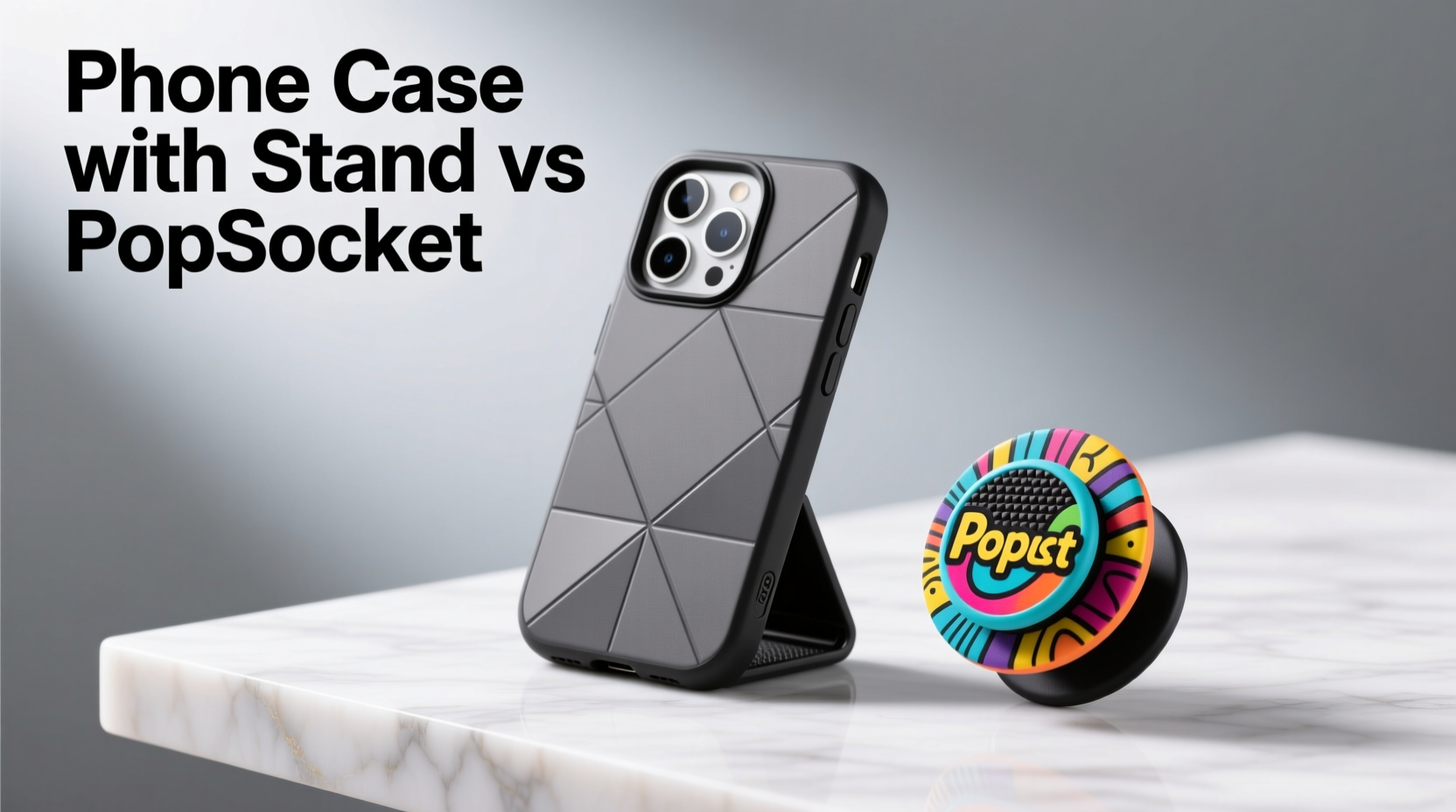
The primary appeal of both accessories lies in their ability to improve smartphone usability. However, their core functions differ significantly.
A phone case with a built-in stand offers hands-free viewing at adjustable angles, ideal for watching videos, video calls, or following recipes in the kitchen. These cases are typically made with foldable kickstands integrated into the back panel, often crafted from durable materials like polycarbonate or TPU. Once unfolded, the stand props the phone securely on flat surfaces.
On the other hand, a PopSocket is a collapsible grip and stand hybrid. When expanded, it provides a stable base for horizontal viewing and doubles as a secure finger grip during scrolling, texting, or gaming. Its versatility lies in its dual function: utility and portability.
Design Trends and Market Shifts
PopSockets exploded in popularity around 2017, becoming a cultural phenomenon with customizable designs, celebrity endorsements, and widespread retail presence. At their peak, they were seen on phones across college campuses, offices, and social media feeds. However, recent years have shown signs of market saturation and shifting consumer tastes.
Smartphone manufacturers are now integrating features that reduce reliance on third-party accessories. For example, foldable phones like the Samsung Galaxy Z Flip series come with natural standing capabilities when partially folded. Additionally, minimalist design trends favor sleek, uncluttered devices—something a protruding PopSocket can disrupt.
Meanwhile, phone cases with stands have evolved beyond bulky models. Modern versions are slimmer, more discreet, and better integrated into case aesthetics. Brands like Spigen, OtterBox, and UAG now offer rugged or slim-line cases with fold-out stands that don’t compromise on style.
“Accessories that blend seamlessly with device design are winning consumer trust. The trend is moving toward integration over add-ons.” — Jordan Lee, Mobile Tech Analyst at GadgetInsight
Practical Comparison: Features at a Glance
| Feature | Phone Case with Stand | PopSocket |
|---|---|---|
| Hands-Free Viewing | Yes (on flat surfaces) | Yes (limited angle stability) |
| Finger Grip Support | No | Yes (excellent for one-handed use) |
| Portability & Bulk | Slightly thicker case | Adds minimal weight but protrudes |
| Durability | Integrated, less likely to break | Expandable mechanism may wear over time |
| Customization | Limited to case designs | Highly customizable (interchangeable tops) |
| Wallet Function | Some models include card slots | Can double as makeshift wallet (cards behind phone) |
| Compatibility Across Devices | Case-specific | One PopSocket fits most phones and cases |
Real-World Usage: A Day-in-the-Life Scenario
Consider Sarah, a digital marketer who commutes via public transit and relies heavily on her phone for work and entertainment. During her morning train ride, she uses her phone to review emails. With a PopSocket attached, she grips her phone securely while standing, avoiding accidental drops. Later, during lunch, she watches a tutorial video. She expands the PopSocket to prop her phone on the table—but finds the angle awkward and the surface uneven, causing instability.
Switching to a stand-equipped case, Sarah gains a more reliable viewing experience. On her desk during lunch, the kickstand holds her phone at a comfortable angle. However, when walking between meetings, she misses the extra grip the PopSocket provided. Her phone feels slippery, especially with one hand.
This scenario illustrates a key insight: neither solution is universally superior. The best choice depends on individual habits, environments, and priorities.
Are PopSockets Going Out of Style?
The short answer: not entirely, but their dominance is waning. While PopSockets remain popular among younger demographics and those who value customization, broader market trends suggest a pivot toward subtlety and multifunctional integration.
Search data from Google Trends shows a steady decline in PopSocket-related queries since 2020. Simultaneously, searches for “slim phone stand case” and “foldable phone stand” have risen, indicating shifting interest. Retailers are also reducing shelf space dedicated to standalone grips in favor of all-in-one protective cases.
Moreover, adhesive fatigue is a common complaint. PopSockets rely on glue-based mounts that degrade over time, especially with frequent repositioning or exposure to heat. Many users report needing replacements every 6–12 months, which diminishes long-term value.
That said, PopSockets aren’t obsolete. Their innovation in modular design—swappable tops, magnetic versions for car mounts, and compatibility with wireless charging—keeps them relevant. For users who prioritize personal expression and adaptability, they still offer unmatched flexibility.
Step-by-Step: Choosing the Right Option for You
- Assess Your Daily Use: Do you spend more time holding your phone or placing it down? If you’re often on the move, a grip might be more useful.
- Evaluate Your Environment: Frequent desk or table use favors a stand case. Commuters or travelers may benefit more from a PopSocket’s grip.
- Check Compatibility: Ensure any case supports your phone model and doesn’t interfere with wireless charging or camera functionality.
- Test Durability Needs: If you drop your phone often, a rugged case with a stand offers better overall protection than a separate PopSocket.
- Consider Aesthetics: Ask yourself whether you prefer a clean look or enjoy changing designs. PopSockets win in customization; stand cases offer consistency.
Checklist: What to Look for in Either Option
- ✅ Secure grip or stable stand mechanism
- ✅ Compatibility with wireless charging
- ✅ Durable materials (e.g., reinforced hinges, scratch-resistant coating)
- ✅ Easy installation (for PopSockets) or precise cutouts (for cases)
- ✅ Slim profile to fit in pockets and bags
- ✅ Positive user reviews regarding long-term reliability
Frequently Asked Questions
Can I use a PopSocket with a stand case?
Yes, but it may feel bulky. Some users attach PopSockets to the back of stand cases for added grip, though this can make the phone harder to set down flat or store in tight spaces.
Do PopSockets damage phone cases or backs?
Potentially. The adhesive can leave residue, especially on silicone or soft plastic cases. Heat and repeated removal increase the risk. Using a dedicated mounting disk can reduce direct adhesion issues.
Are there newer alternatives replacing both?
Yes. Magnetic mounts, such as Apple’s MagSafe ecosystem, are gaining traction. These allow for secure attachment of grips, wallets, and stands without adhesives. Many new cases include built-in magnets for seamless accessory pairing.
Final Thoughts: It’s About Personal Fit, Not Fashion Fads
The debate between phone cases with stands and PopSockets isn’t just about what’s trendy—it’s about matching form to function. While PopSockets may no longer dominate headlines, they still serve a valuable niche for users who want grip, portability, and flair. Meanwhile, stand-equipped cases offer integrated convenience for stationary use and enhanced durability.
Rather than asking whether PopSockets are going out of style, ask whether they fit your lifestyle. Technology evolves, but personal preference remains central. The smartest choice isn’t the most popular one—it’s the one that makes your daily interactions with your phone easier, safer, and more enjoyable.




 浙公网安备
33010002000092号
浙公网安备
33010002000092号 浙B2-20120091-4
Comments
No comments yet. Why don't you start the discussion?