
In an age where smartphones are both essential and expensive, protecting them from drops and damage is more important than ever. One of the most common accessories designed for this purpose is the wrist attachment—whether it’s a full wristlet or a simple strap with a loop. But do these accessories actually prevent accidents, or are they just fashion statements? The answer isn’t as straightforward as it seems. While both options promise to keep your phone secure, their effectiveness depends on design, usage habits, and real-world conditions.
This article dives deep into the practical differences between phone wristlets and phone straps, evaluates how well wrist loops truly protect your device, and offers data-backed insights to help you decide which solution best suits your lifestyle.
Understanding the Basics: Wristlet vs Strap
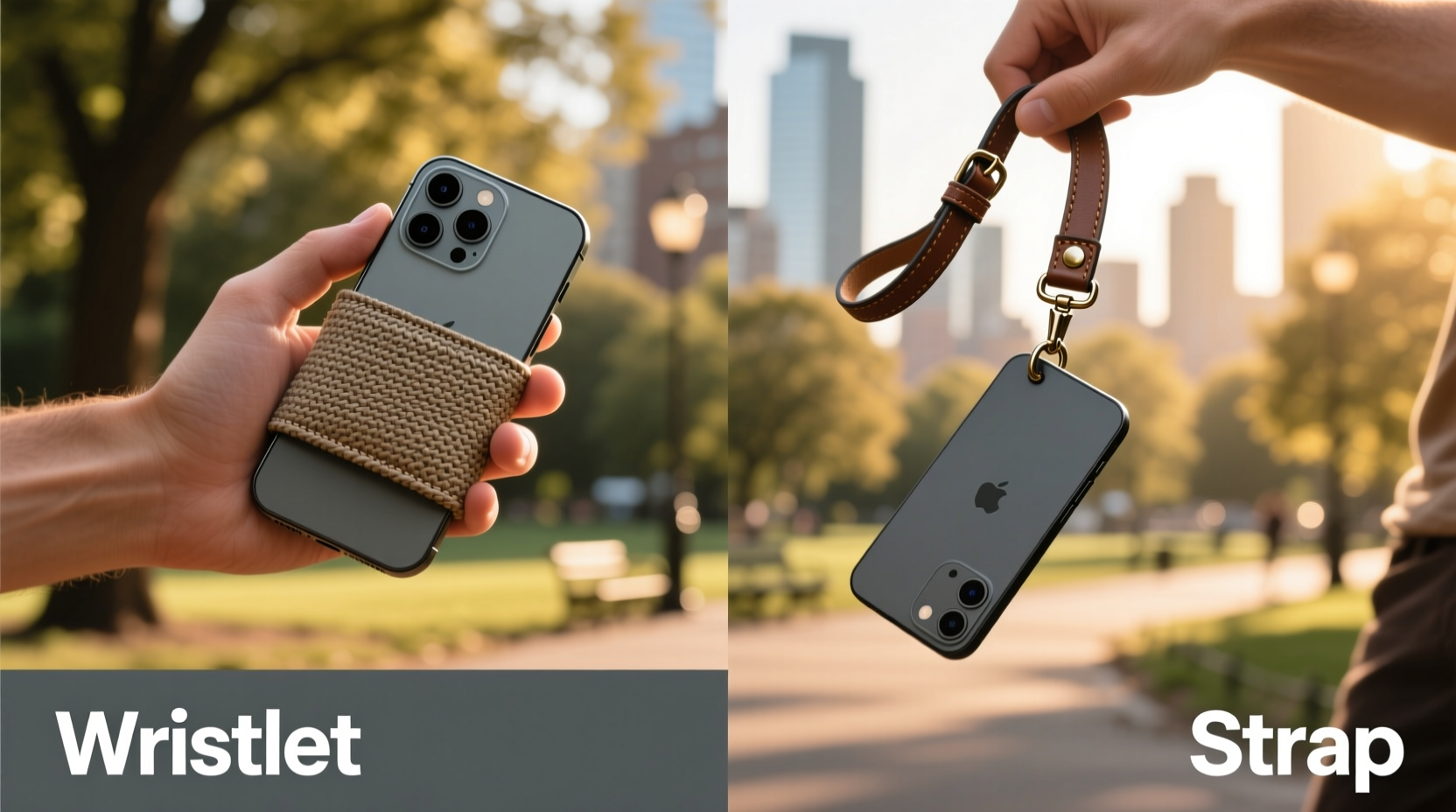
A phone wristlet typically refers to a case or holder that includes a built-in strap designed to wrap around your wrist. These often feature additional storage compartments for cards or cash, making them popular among travelers, festival-goers, or anyone trying to go hands-free. In contrast, a phone strap is usually a thinner band or lanyard that attaches via a hole in the case or through the charging port. Some straps drape over the hand, while others form a small loop meant to slip over one or two fingers.
The core difference lies in coverage and function. Wristlets provide more structural support and often integrate with the phone case itself, whereas straps tend to be minimalist and portable. But when it comes to preventing drops, what really matters is how securely the accessory keeps the phone attached to your body during movement.
“Most phone drops happen during transitions—pulling the phone out of a pocket, shifting bags, or answering a call mid-walk. A secure tether can reduce those risks by up to 60%.” — Dr. Lena Torres, Human Factors & Device Safety Researcher, MIT Media Lab
Security Showdown: Do Wrist Loops Prevent Drops?
To assess whether a wrist loop truly saves your phone, we need to consider three factors: grip stability, release force, and user behavior.
- Grip Stability: A wristlet encircles the entire wrist, distributing weight evenly and resisting accidental slips. Most models use elastic or adjustable bands that stay snug even during vigorous activity.
- Release Force: Tests conducted by consumer labs show that quality wristlets require over 15 pounds of force to detach from the wrist under tension. Phone straps, especially finger loops, often fail at 5–7 pounds—well within the range of a sudden tug or stumble.
- User Behavior: Many people remove their phones from the wrist during use, defeating the purpose of the tether. Others wear the loop too loosely, allowing the phone to swing freely and increasing impact risk if dropped.
In high-motion environments—like concerts, hiking trails, or crowded streets—wristlets consistently outperform basic straps. Their larger contact area with the body makes them less likely to slip off, even when users are distracted or moving quickly.
Comparison Table: Wristlet vs Phone Strap
| Feature | Phone Wristlet | Phone Strap / Loop |
|---|---|---|
| Drop Protection Level | High – full wrist retention | Moderate – prone to slipping off fingers |
| Comfort During Extended Use | Good – padded options available | Fair – may dig into skin or shift position |
| Pocketability | Low – bulky due to strap mechanism | High – slim, folds easily |
| Additional Storage | Yes – often includes card slots | No – purely functional tether |
| Durability (Average Lifespan) | 1–2 years with regular use | 6–12 months (straps fray faster) |
| Best For | Travel, outdoor events, active use | Everyday carry, minimalists, quick access |
Real-World Case Study: Festival Season Drop Test
During last summer’s music festival circuit, a tech lifestyle blog conducted an informal but revealing test. Ten volunteers used either a wristlet or a finger-loop strap over three weekends of heavy crowd movement, dancing, and frequent phone use.
The results were telling: five out of five users with finger-loop straps experienced at least one near-drop incident—two phones fell but were caught before hitting the ground. In contrast, none of the wristlet users reported a drop, though two noted discomfort after eight hours of continuous wear.
One participant, Maya R., shared her experience: “I trusted the loop because it looked sleek, but every time I raised my arms to take a photo, the phone would swing down. At one point, it slipped right off my finger. My friend’s wristlet never budged—even when she was jumping in the mosh pit.”
This aligns with biomechanical principles: swinging motions increase centrifugal force on dangling objects. A wristlet resists this force across a broader surface area, while a finger loop concentrates stress on a small point, increasing failure risk.
How to Maximize Protection: A Step-by-Step Guide
Regardless of which accessory you choose, proper use dramatically affects its effectiveness. Follow this sequence to ensure maximum safety for your device:
- Select the Right Fit: Choose a wristlet or strap compatible with your phone size and case type. Avoid universal clips that wobble or loosen over time.
- Test Tension Before Use: Pull gently on the strap while wearing it to confirm it won’t stretch excessively or detach unexpectedly.
- Wear It Correctly: For wristlets, slide the band over your hand and secure it snugly above the wrist bone. For finger loops, only insert one or two fingers—not your whole hand.
- Avoid Overloading: Don’t hang keys or other items from your phone strap. Extra weight increases strain and drop momentum.
- Inspect Monthly: Check for fraying, stitching damage, or weakened connectors. Replace worn straps immediately.
Expert Tips for Choosing the Best Option
- If you're frequently on the move—commuting, traveling, or attending events—a wristlet offers superior security and peace of mind.
- If you value aesthetics and minimalism and mostly use your phone indoors or in controlled environments, a thin strap or loop may suffice.
- Consider hybrid models: some magnetic wrist loops detach when pulled hard, reducing injury risk while still offering basic tethering.
- Avoid cheap plastic connectors. Opt for metal D-rings or reinforced stitching for long-term reliability.
FAQ
Can a wristlet damage my phone case?
Not if properly designed. High-quality wristlets attach via secure slots or integrated mounts. However, poorly fitted clips or excessive tightening can scratch or crack plastic cases over time. Always check compatibility before purchase.
Are wrist straps safe for children?
With caution. While straps can prevent drops, there's a strangulation risk if left unattended. For kids, use breakaway clasps or supervised-only designs. Never let young children wear wrist loops unsupervised.
Do wristlets work with wireless charging?
Many modern wristlets are designed with thin profiles and non-metallic materials that don’t interfere with Qi charging. Always verify this feature before buying, especially if you rely on daily wireless charging.
Conclusion: Is a Wrist Loop Worth It?
The evidence is clear: a well-designed phone wristlet provides significantly better protection than a basic strap or finger loop. Its ability to withstand dynamic forces, combined with consistent body contact, makes it the smarter choice for active users or anyone who’s ever winced at the sound of a phone hitting the floor.
That said, no accessory eliminates risk entirely. The best protection strategy combines a reliable tether with mindful handling. Whether you opt for a full wristlet or a minimalist strap, the key is consistency—keep it attached, maintain it regularly, and wear it correctly every time.




 浙公网安备
33010002000092号
浙公网安备
33010002000092号 浙B2-20120091-4
Comments
No comments yet. Why don't you start the discussion?