
When Google launched the Pixel 5 in 2020, it marked a shift from flagship-tier hardware to a more balanced, mid-range approach focused on software optimization and long-term updates. Meanwhile, Samsung’s Galaxy S20 had already set a high bar with its premium Snapdragon 865 processor, 120Hz display, and advanced camera system. Many Samsung loyalists made the switch to the Pixel 5 intrigued by clean Android, faster update cycles, and Google’s computational photography. But did they regret it?
This article dives into real-world experiences, technical comparisons, and long-term usability to answer whether former S20 owners found the transition to the Pixel 5 satisfying—or disappointing.
Performance and Hardware: A Clear Divide
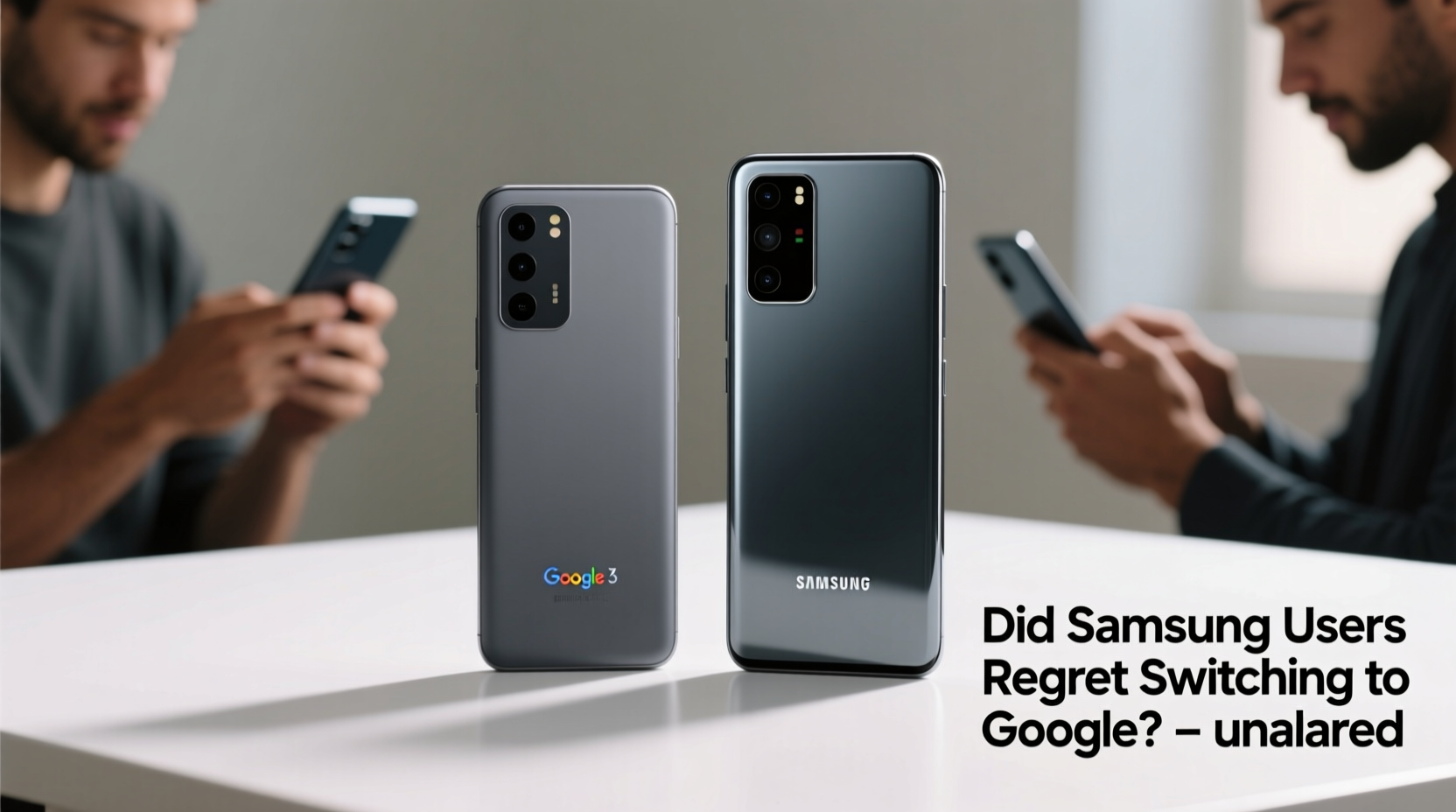
The Galaxy S20 was built as a powerhouse. With the Qualcomm Snapdragon 865, 12GB of RAM (on some models), and UFS 3.0 storage, it delivered top-tier performance across gaming, multitasking, and app responsiveness. The Pixel 5, in contrast, used the Snapdragon 765G—a solid mid-range chip at the time—paired with 8GB of RAM. While this setup allowed for smooth daily use, it wasn’t designed to compete with flagship-level raw power.
For users accustomed to the speed and fluidity of the S20, especially those who played graphics-heavy games or used resource-intensive apps, the Pixel 5 felt like a step down. Some reported minor stutters when switching between apps or during prolonged camera use. However, others appreciated the improved thermal management; the Pixel 5 rarely overheated, unlike the S20, which could throttle under sustained load.
Camera Comparison: Software vs. Hardware Advantage
One area where the Pixel 5 consistently impressed—even against higher-end devices—was the camera. Despite having a dual-camera setup (12.2MP main + 16MP ultrawide) compared to the S20’s triple-lens array (12MP main, 64MP telephoto, 12MP ultrawide), Google’s computational photography often produced more natural colors, better dynamic range, and superior low-light results.
Many ex-Samsung users noted that while the S20 offered more zoom versatility and higher-resolution shots, the Pixel 5 delivered more consistent point-and-shoot quality. Portrait mode was sharper, HDR+ handled harsh lighting better, and Night Sight outperformed Samsung’s Night Mode in most scenarios.
However, fans of telephoto photography missed the S20’s 3x hybrid zoom. The Pixel 5 lacked optical zoom entirely, relying on digital cropping, which limited flexibility for distant subjects.
“Google’s camera processing is like having a photo editor in your pocket. It just gets the shot right more often.” — David Kim, Mobile Photographer & Tech Reviewer
User Experience: Stock Android vs. One UI
This is where preferences truly diverged. Samsung’s One UI offers deep customization, split-screen multitasking, DeX support, and a wide array of features tailored for productivity. The Pixel 5 runs near-stock Android, emphasizing simplicity, speed, and seamless integration with Google services like Assistant, Photos, and Messages.
Some S20 users found the move to stock Android refreshing—no bloatware, faster access to settings, and cleaner animations. Others missed features like Secure Folder, Edge Panels, and advanced battery-saving modes. Power users who relied on multi-window workflows or Samsung-specific tools often felt constrained.
On the flip side, Pixel owners praised the immediacy of Google Assistant, smoother gesture navigation, and timely OS updates. While Samsung now delivers four years of Android upgrades, back in 2020, Pixel users enjoyed a clear advantage in update frequency and longevity.
Real-World Switch: A Mini Case Study
Take Mark T., a long-time Samsung user from Austin, TX. After five years with Galaxy flagships, he switched to the Pixel 5 primarily for its camera and promise of three years of guaranteed updates. Initially, he loved the lightweight design, improved battery efficiency, and crisper photos. “I finally got natural-looking skin tones,” he said. “No more orange tints.”
But within two months, frustrations emerged. He missed the S20’s curved screen for quick notifications, found the lack of expandable storage limiting, and disliked the absence of wireless power sharing. Most notably, he struggled with app compatibility—some banking and enterprise apps were optimized poorly for stock Android.
By six months, Mark admitted he was “constantly comparing” the two phones. While he appreciated the Pixel’s reliability and clean interface, he ultimately traded back to a Galaxy S21. “The Pixel is great if you live in Google’s ecosystem. But I needed more flexibility than it offered.”
Detailed Feature Comparison
| Feature | Google Pixel 5 | Samsung Galaxy S20 |
|---|---|---|
| Processor | Qualcomm Snapdragon 765G | Qualcomm Snapdragon 865 / Exynos 990 |
| RAM | 8GB | 8GB / 12GB |
| Display | 6.0” FHD+ OLED, 90Hz | 6.2” QHD+ AMOLED, 120Hz |
| Rear Cameras | 12.2MP main + 16MP ultrawide | 12MP main + 64MP telephoto + 12MP ultrawide |
| Zoom | Digital only (up to 7x) | 3x hybrid, 30x digital |
| Battery | 4,080 mAh | 4,000 mAh |
| Charging | 18W wired, 23W with adapter, 11W wireless | 25W wired, 15W wireless |
| Software Updates | 3 major OS updates, 5 years security | 3 major OS updates (later extended to 4) |
| Additional Features | Fully recyclable aluminum body, Face Unlock + fingerprint, 5G | IP68, DeX, Secure Folder, Wireless PowerShare, 5G |
Common Regrets Among Switchers
- Lack of high refresh rate: The S20’s 120Hz screen felt noticeably smoother than the Pixel 5’s 90Hz panel.
- No telephoto lens: Users who frequently zoomed in missed the 3x optical option.
- Fewer customization options: No Secure Folder, limited themes, and fewer gesture controls.
- Weaker speaker quality: The Pixel 5 has stereo speakers but lacks the depth and volume of the S20.
- Slower charging: 18W charging felt outdated next to Samsung’s 25W support.
Tips for Making the Switch Successfully
- Evaluate your app ecosystem: Ensure critical apps (banking, work tools) function well on stock Android.
- Test camera priorities: If you shoot distant subjects or use pro modes often, stick with Samsung.
- Adapt to gestures: Spend a week using Pixel gestures before deciding they’re worse than Samsung’s navigation.
- Leverage Google integration: Use Google Assistant routines, Messages RCS, and Nearby Share to get full value.
- Accept trade-offs: You’re trading raw power for longevity and software purity.
Frequently Asked Questions
Did the Pixel 5 receive better software updates than the S20?
Yes. At launch, the Pixel 5 was guaranteed three major Android upgrades and five years of security patches. The S20 initially promised three, but Samsung later extended support to four OS updates. In practice, Pixels received updates weeks earlier than Samsung devices.
Is the Pixel 5 camera better than the S20’s?
In daylight and low light, yes—especially for automatic shooting. The Pixel’s HDR+ and Night Sight produce more balanced exposures and natural colors. However, the S20 wins in versatility due to its telephoto lens and higher-resolution sensor.
Why did some Samsung users switch back?
Many returned due to missing Samsung-exclusive features like DeX, Secure Folder, fast charging, and the immersive 120Hz display. Others found the smaller app optimization circle around stock Android limiting for productivity.
Final Verdict: Was the Switch Worth It?
The answer depends on what users valued most. For photography enthusiasts, privacy-focused individuals, and those deeply embedded in Google’s ecosystem, the Pixel 5 was a compelling upgrade in terms of experience and long-term reliability. Its build quality, software cleanliness, and camera intelligence won over many skeptics.
But for performance-driven users, multitaskers, and fans of Samsung’s feature-rich interface, the downgrade in hardware and functionality led to genuine regret. The S20 offered a more complete package for power users, even if it came with bloat and slower updates.
In the end, the Pixel 5 wasn’t trying to beat the S20 at its own game. It offered a different philosophy: less hardware, more intelligence; fewer features, greater focus. Those who aligned with that vision rarely looked back. Others, expecting a direct upgrade, found themselves longing for the familiarity and firepower of their Galaxy days.




 浙公网安备
33010002000092号
浙公网安备
33010002000092号 浙B2-20120091-4
Comments
No comments yet. Why don't you start the discussion?