
The smartphone market moves fast. If you're still using a Samsung Galaxy S20 Plus—once a top-tier device from 2020—it’s natural to wonder whether upgrading to Google’s Pixel 7 Pro in 2025 makes sense. While both phones were flagships in their time, technology has evolved significantly. The decision isn’t just about specs; it’s about real-world usability, longevity, software support, and personal priorities like photography or ecosystem integration.
This comparison dives deep into key areas: performance, camera quality, display, battery life, software experience, and future-proofing. Whether you’re a power user, photographer, or someone who values clean Android and long-term updates, this breakdown will help determine if the Pixel 7 Pro is truly worth the leap.
Performance and Hardware: Generational Leap vs Still Capable
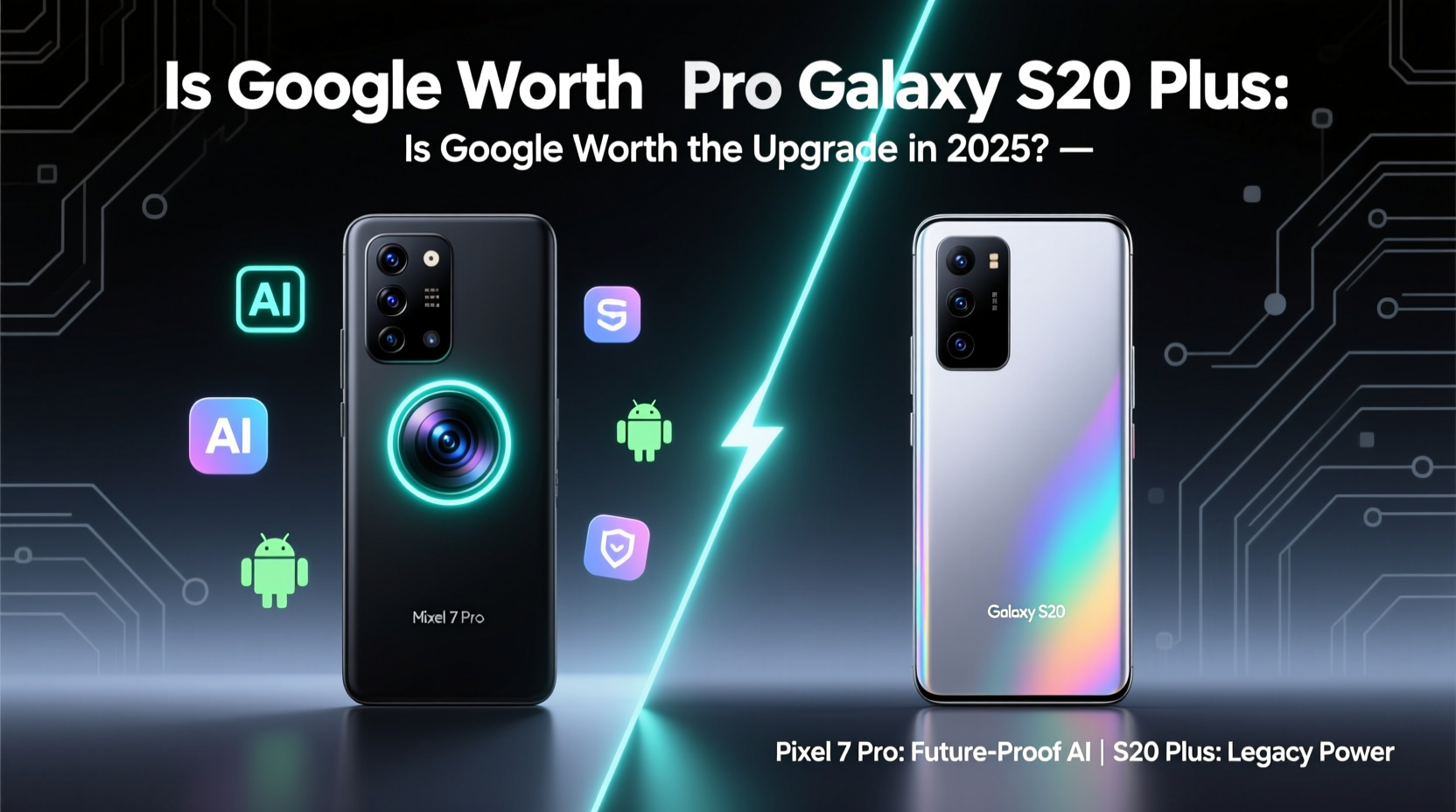
The Galaxy S20 Plus launched with the Qualcomm Snapdragon 865 (or Exynos 990 outside the U.S.), which was among the best chips of its era. Even in 2025, it can handle everyday tasks smoothly—web browsing, messaging, streaming video—but struggles with intensive multitasking, modern mobile gaming, and AI-driven features.
In contrast, the Pixel 7 Pro runs on Google’s custom Tensor G2 chip. Built specifically for machine learning and AI enhancements, it excels in computational photography, voice processing, and real-time language translation. While not always faster in raw benchmarks than newer Snapdragon chips, the Tensor G2 delivers smoother integration with Google’s ecosystem and services.
More importantly, the S20 Plus reached its last major OS update with Android 13. It now only receives security patches sporadically. The Pixel 7 Pro, however, launched with Android 13 and is guaranteed updates through 2025, including OS upgrades up to Android 16. This means three full years of new features, privacy improvements, and security coverage—a critical advantage in 2025.
Camera Comparison: Computational Photography vs Versatility
The S20 Plus featured a strong triple-camera setup: 64MP telephoto, 12MP wide, and 12MP ultra-wide. Its 3x hybrid zoom and Space Zoom up to 30x were impressive at launch. However, by 2025 standards, the image processing appears dated—especially in low light—and lacks advanced HDR or night mode refinement.
The Pixel 7 Pro redefines what smartphone photography can do without relying solely on megapixels. Its 50MP main sensor may seem modest on paper, but Google’s computational photography—powered by the Tensor chip—delivers superior dynamic range, color accuracy, and noise reduction. Features like Magic Eraser, Face Unblur, and enhanced Night Sight give users editing capabilities once reserved for desktop software.
“Google has turned the camera into a thinking tool, not just a lens.” — David Ng, Mobile Imaging Analyst at TechLens Review
The Pixel also offers a dedicated 48MP telephoto lens with 5x optical zoom and up to 30x Super Res Zoom—more consistent and sharper than the S20’s digital-heavy approach. For videographers, the Pixel supports 4K/60fps across all lenses with improved stabilization and cinematic blur effects.
Display and Design: Refinement Meets Innovation
The S20 Plus set a high bar in 2020 with its 6.9-inch Dynamic AMOLED 2X display, 120Hz refresh rate, and QHD+ resolution. In 2025, that screen still looks vibrant and fluid, though it lacks adaptive brightness intelligence and peak brightness levels found in newer devices.
The Pixel 7 Pro improves upon this with a 6.7-inch LTPO OLED display that dynamically adjusts refresh rate from 10Hz to 120Hz based on content, saving battery without sacrificing smoothness. Peak brightness exceeds 1500 nits, making outdoor visibility far better than the S20 Plus’s ~1200-nit max.
Design-wise, the S20 Plus has a sleek, minimalist look with curved edges and a metal frame. The Pixel 7 Pro takes a bolder approach with a horizontal camera visor and matte aluminum finish. Some users prefer Samsung’s elegance; others appreciate Google’s distinct identity. Both are IP68-rated for water and dust resistance.
Software Experience and Ecosystem Integration
Samsung’s One UI, built atop Android, offers extensive customization and multitasking tools like DeX and split-screen windows. But after four years, the interface feels bloated to some, and post-support updates mean missing out on newer Android innovations.
The Pixel 7 Pro runs near-stock Android with subtle Google enhancements. The result is a cleaner, faster, more intuitive experience. Features like Direct My Call (AI-powered customer service routing), Hold for Me (virtual queue waiting), and Live Translate (real-time conversation subtitles) showcase how software can reduce friction in daily life.
If you rely heavily on Google services—Photos, Drive, Assistant, Gmail—the Pixel provides seamless integration. Photos backed up to Google Photos benefit from AI curation, automatic album creation, and advanced search (“show me pictures of my dog at the beach”).
Battery Life and Charging: Efficiency Over Capacity
The S20 Plus packs a 4500mAh battery, while the Pixel 7 Pro has a slightly smaller 5000mAh unit. Real-world usage tells a different story: the Pixel often lasts longer due to optimized software and the efficiency of the Tensor G2 in managing background tasks.
Both support 25W wired charging and 15W wireless. Neither includes a charger in the box. However, the Pixel adds face-unlock and in-display fingerprint authentication with improved reliability over earlier models.
| Feature | Samsung Galaxy S20 Plus | Google Pixel 7 Pro |
|---|---|---|
| Release Year | 2020 | 2022 |
| Processor | Snapdragon 865 / Exynos 990 | Google Tensor G2 |
| OS Support Until | 2023 (Security only) | 2025 (Full OS + Security) |
| Main Camera | 12MP (f/1.8) | 50MP (f/1.85) |
| Zoom Capability | 3x Hybrid, 30x Digital | 5x Optical, 20x Super Res |
| Battery | 4500mAh | 5000mAh |
| Charging | 25W Wired, 15W Wireless | 25W Wired, 15W Wireless |
| Display | 6.9” AMOLED, 120Hz | 6.7” LTPO OLED, 120Hz Adaptive |
| Price in 2025 (Used/New) | $200–$250 (used) | $500–$600 (refurbished) |
Real-World Example: Maria’s Upgrade Journey
Maria, a freelance photographer based in Portland, used her S20 Plus for nearly four years. She loved the screen and zoom capabilities but grew frustrated with slow photo processing, inconsistent night shots, and app crashes after the latest Android updates stopped arriving. In early 2025, she traded up to a refurbished Pixel 7 Pro for $550.
Within days, she noticed dramatic improvements: her RAW edits loaded faster, Google Photos automatically organized thousands of images by location and subject, and Face Unblur saved several otherwise unusable portraits. During a trip to Iceland, the Pixel’s enhanced Night Sight captured starry skies with minimal noise—something her S20 struggled with even on tripod.
“It wasn’t just about better photos,” she said. “The whole phone feels alive. Like it’s helping me work smarter.”
Step-by-Step: How to Decide If You Should Upgrade
- Evaluate Current Performance: Does your S20 Plus lag during daily use? Are apps crashing or failing to update?
- Check Update Status: Confirm if your device still receives OS or security patches via Settings > Software Update.
- Assess Camera Needs: Do you frequently take low-light photos or need advanced editing tools?
- Review Ecosystem Use: Are you deeply invested in Google services? If yes, Pixel synergy adds tangible value.
- Compare Costs: Factor in the price of a refurbished Pixel 7 Pro (~$500) versus repair costs or productivity loss from an aging device.
- Test Before Buying: Visit a store or borrow a friend’s Pixel to experience the software firsthand.
Frequently Asked Questions
Is the Pixel 7 Pro waterproof like the S20 Plus?
Yes, both phones have an IP68 rating, meaning they can survive submersion in up to 1.5 meters of water for 30 minutes.
Can I transfer my data easily from Samsung to Pixel?
Absolutely. Google’s “Switch to Android” app guides you through transferring contacts, messages, photos, and accounts wirelessly or via cable.
Will the Pixel 7 Pro get Android 15?
Yes. Google confirmed Android 15 support for the Pixel 7 series, with security updates continuing into 2025.
Final Verdict: Yes, the Upgrade Makes Sense in 2025
For most S20 Plus owners, upgrading to the Pixel 7 Pro in 2025 isn’t just reasonable—it’s practical. You gain access to cutting-edge AI features, superior photo processing, longer software support, and a more efficient, secure Android experience. While the S20 Plus was excellent in its day, it no longer keeps pace with modern demands.
The Pixel 7 Pro represents more than hardware; it’s a commitment to intelligent design and long-term usability. Even at a higher upfront cost, the investment pays off in reliability, innovation, and peace of mind knowing your phone will stay relevant through 2025 and beyond.




 浙公网安备
33010002000092号
浙公网安备
33010002000092号 浙B2-20120091-4
Comments
No comments yet. Why don't you start the discussion?