
For users still holding onto a Galaxy S20 from 2020, the question isn’t just about new features—it’s about relevance. Three years in smartphone time is an eternity. The Pixel 7, released in 2022, runs on newer hardware, fresher software, and Google’s latest AI-driven photography enhancements. But does that justify the upgrade now? Especially when both phones are technically past their prime release window? This breakdown examines real-world performance, longevity, camera quality, software support, and overall value to help you decide if moving from the Galaxy S20 to the Pixel 7 makes sense in 2024.
Performance and Hardware: Generational Gaps Matter
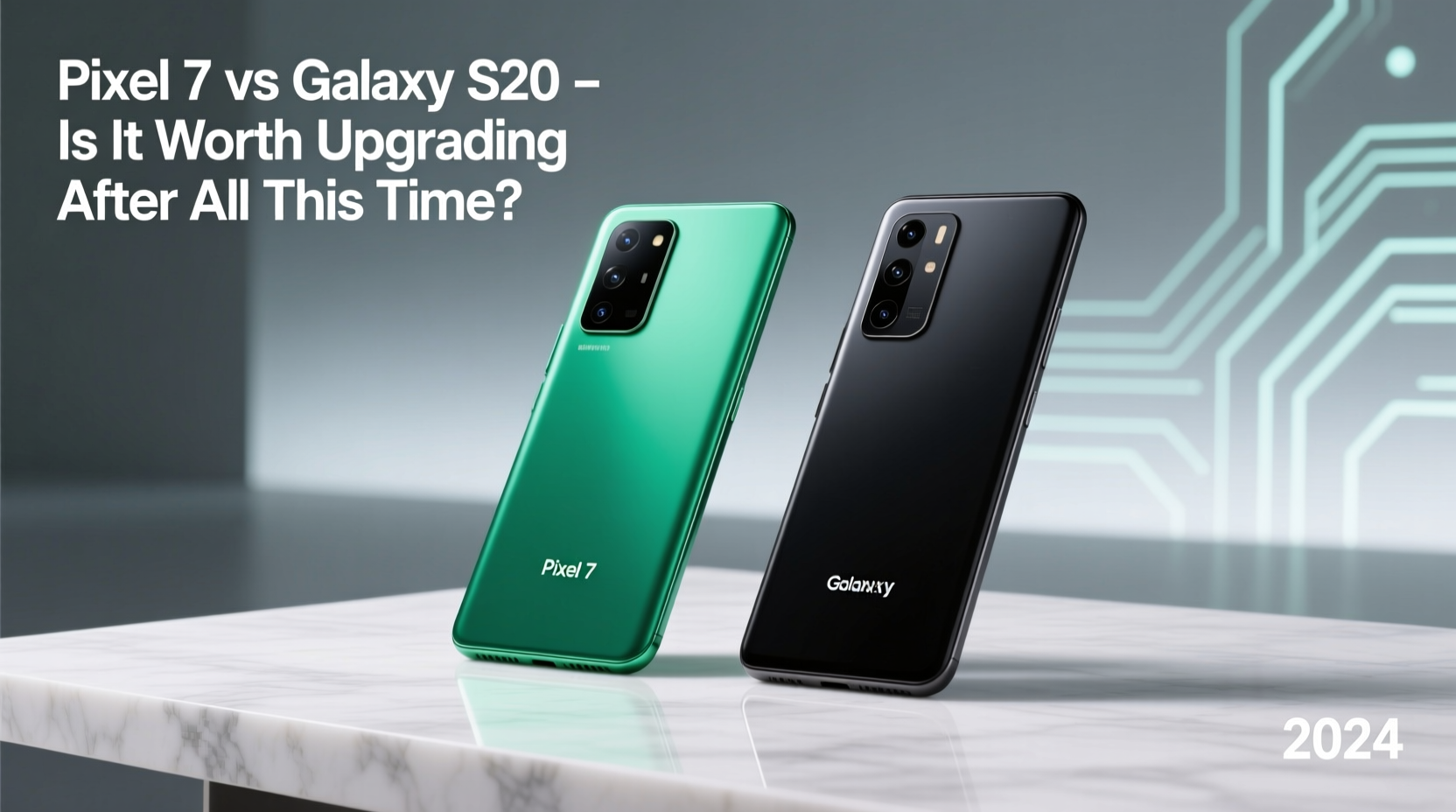
The Galaxy S20 launched with the Qualcomm Snapdragon 865 (or Exynos 990 in some regions), a flagship chip at the time. In contrast, the Pixel 7 runs on Google’s custom Tensor G2, designed specifically for machine learning and AI processing. While raw benchmark scores may favor newer chips, real-world usage reveals more nuanced differences.
The S20 was fast in its day, but over time, background processes, app bloat, and OS updates have slowed many units. The Pixel 7 benefits from optimized Android 13+ integration and a clean, stock Android experience with faster app launches and smoother multitasking. Tensor G2 excels in voice recognition, photo enhancement, and real-time translation—features less dependent on pure CPU power and more on software-hardware synergy.
One critical consideration: thermal throttling. The S20’s Snapdragon 865 was known to overheat under sustained load, especially during gaming or video recording. The Pixel 7 manages heat better thanks to improved thermal design and aggressive throttling policies, though it doesn’t match the sustained performance of current-gen flagships like the Snapdragon 8 Gen 2 devices.
Camera Comparison: Computational Photography vs. Versatility
This is where the Pixel 7 truly shines. While the Galaxy S20 offered a versatile triple-camera setup (wide, ultra-wide, telephoto), its image processing has aged. Dynamic range suffers in high-contrast scenes, and night mode, while functional, lacks the depth and clarity of modern computational photography.
The Pixel 7 uses a dual-camera system—50MP main and 12MP ultra-wide—but compensates with Google’s industry-leading HDR+, Night Sight, and Super Res Zoom. Even without a dedicated telephoto lens, digital zoom up to 8x often outperforms the S20’s 3x hybrid zoom due to advanced sharpening and noise reduction algorithms.
“Google’s approach to photography prioritizes consistency and realism over megapixels. It’s not about how many lenses you have, but what you do with the data.” — David Imel, Mobile Imaging Analyst at DXOMARK
In daylight, both phones produce solid results, but the Pixel delivers more natural skin tones and better shadow recovery. In low light, the difference is stark: Pixel 7 photos retain detail and color accuracy, while the S20 tends to oversharpen and introduce chroma noise.
Software and Long-Term Support: A Key Differentiator
Here’s where timing plays a decisive role. Samsung promised four years of OS updates for the Galaxy S20 series—an impressive commitment at the time. As of 2024, the S20 has likely received its final major Android update (Android 14) and will continue to get security patches until early 2025.
The Pixel 7, meanwhile, is guaranteed updates until 2026—three years of OS upgrades and five years of security patches. That means Android 15, 16, and potentially 17 will be available, keeping the device relevant longer.
Beyond version numbers, Pixel software offers exclusive features: Magic Eraser, Call Screen, Live Translate, and Now Playing. These aren’t just gimmicks—they solve real problems, like removing photobombers from shots or filtering spam calls automatically.
Design and Daily Usability
The Galaxy S20 features a 6.2-inch flat AMOLED display with a 120Hz refresh rate—a spec the Pixel 7 matches with its 6.3-inch Gorilla Glass Victus display. Both are bright, responsive, and excellent for media. However, the S20’s curved edges, once a premium feature, now feel outdated due to accidental touches and screen protection challenges.
The Pixel 7 adopts a more utilitarian design with a two-tone aluminum and glass back. It’s slightly heavier but feels more durable. Its flat screen is easier to protect and use with gloves or wet fingers. IP68 water resistance is present on both, but the Pixel includes a built-in eSIM and supports faster face unlock and in-display fingerprint sensors with fewer false rejections.
| Feature | Galaxy S20 | Pixel 7 |
|---|---|---|
| Release Year | 2020 | 2022 |
| Processor | Snapdragon 865 / Exynos 990 | Google Tensor G2 |
| Rear Cameras | 12MP + 64MP + 12MP | 50MP + 12MP |
| Display | 6.2\" Flat AMOLED, 120Hz | 6.3\" Flat AMOLED, 90Hz |
| Battery | 4000mAh | 4355mAh |
| OS Update End | ~2025 | 2026 |
| Security Patch Until | Early 2025 | 2027 |
Real-World Example: Sarah’s Upgrade Dilemma
Sarah has used her Galaxy S20 since March 2020. By late 2023, she noticed apps taking longer to load, battery draining faster by midday, and missed photo opportunities due to slow shutter response. She considered buying a used iPhone or sticking with Samsung, but curiosity led her to test a friend’s Pixel 7.
What stood out wasn’t raw speed, but reliability. Voice search responded instantly. Photos taken indoors looked sharper. The phone suggested turning on Do Not Disturb as she entered meetings—something her S20 never did. After trading in her S20 for $120, she bought a refurbished Pixel 7 for $380. Eight months later, she reports longer battery life, fewer crashes, and appreciates ongoing updates she knows will last into 2026.
Her verdict: “It wasn’t a flashy upgrade, but it made my phone feel useful again.”
Step-by-Step: Should You Upgrade?
- Evaluate your current S20’s condition: Is the battery holding charge? Are you experiencing lag or overheating?
- Check trade-in value: Sites like Gazelle or Samsung Trade-In can give instant estimates.
- Compare local pricing: Refurbished Pixel 7 models start around $350–$400. New units may exceed $500.
- Assess software needs: Do you want access to Google’s AI tools or longer update support?
- Test in person: Visit a store with a Pixel 7 on display. Try the camera, one-handed usability, and haptics.
- Make the switch: Back up your data, transfer via Quick Switch, and disable Find My Mobile on the S20.
Frequently Asked Questions
Can the Pixel 7 really beat the S20 with fewer cameras?
Absolutely. The Pixel relies on computational photography rather than hardware variety. Google’s algorithms merge multiple exposures, enhance textures, and reduce noise far beyond what the S20 can achieve—even in daylight. Fewer lenses mean less dust accumulation and better weather sealing consistency.
Is the battery life significantly better?
Yes, but not just because of capacity. The Pixel 7’s 4355mAh battery is larger, but the bigger gain comes from software optimization. Adaptive Battery learns your habits, and the 90Hz display dynamically adjusts based on content. Users report 1.5 to 2 hours more screen-on time compared to a well-used S20.
Will my accessories work with the Pixel 7?
Most wired headphones and USB-C chargers will work. However, S20-specific cases and wireless charging pads may not align perfectly due to different dimensions and back curvature. Magnetic mounts might also need repositioning.
Final Verdict: Is It Worth Upgrading?
If your Galaxy S20 is still functioning well and meets your daily needs, the upgrade may not be urgent. But if you’re experiencing slowdowns, poor photo quality, or anxiety about dwindling software support, the Pixel 7 offers tangible improvements in intelligence, longevity, and user experience.
The two-year gap between these phones represents a shift from hardware-centric innovation to software-defined functionality. The Pixel 7 isn’t just faster—it’s smarter. It anticipates needs, adapts to usage, and continues evolving through updates. For users who rely on their phone for productivity, communication, and capturing memories, that evolution matters.




 浙公网安备
33010002000092号
浙公网安备
33010002000092号 浙B2-20120091-4
Comments
No comments yet. Why don't you start the discussion?