
Dogs perceive the world differently than humans. Their senses are tuned for survival—keen hearing, acute smell, and visual systems adapted for detecting movement in low light. This evolutionary wiring explains why many dogs react strongly to certain stimuli, particularly blinking or flickering lights, while remaining indifferent to steady illumination. The sudden onset, irregular timing, and motion-like quality of flashing lights can trigger a dog’s alert system, setting off barking, pacing, or even fear responses. Understanding the root causes and implementing gradual desensitization techniques can help your dog remain calm around these otherwise harmless stimuli.
The Science Behind Canine Vision and Light Sensitivity
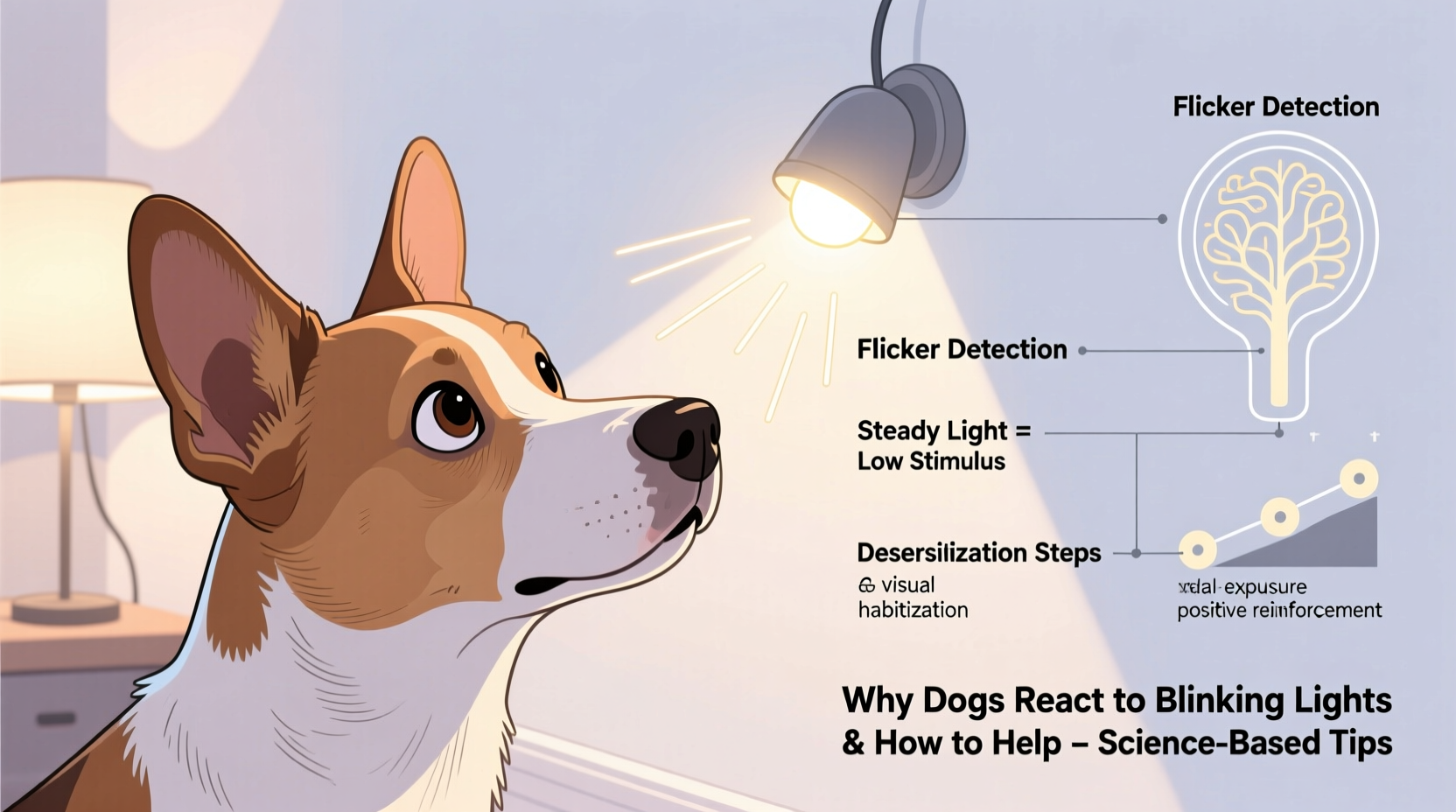
Dogs have a higher proportion of rod cells in their retinas compared to humans, which enhances their ability to detect motion and see in dim conditions. However, this comes at the cost of reduced visual acuity and color perception. More importantly, their brains are wired to respond quickly to changes in their environment—especially anything that mimics movement. A blinking light, with its intermittent on-off pattern, creates a strobe effect that the canine brain may interpret as erratic motion, such as a predator darting through shadows or an unknown object approaching.
Unlike steady lights, which become part of the background after a short period due to sensory adaptation, blinking lights resist habituation. Each flash resets the dog’s attention, making it difficult for them to mentally “tune out” the stimulus. This constant re-engagement keeps the dog in a state of alertness, often escalating into vocalization or defensive behavior.
“Dogs don’t just see blinking lights—they experience them as dynamic events. To a dog, a flickering porch light might resemble something alive and unpredictable.” — Dr. Lisa Marlowe, Veterinary Behaviorist
Why Steady Lights Don’t Trigger the Same Reaction
Steady lights emit continuous illumination, allowing a dog’s visual system to adapt within seconds. Once the brain registers the light as unchanging and non-threatening, it stops prioritizing it for attention. This process, known as neural adaptation, is crucial for filtering out irrelevant environmental input. In contrast, blinking lights violate this expectation of stability. The abrupt transitions between light and dark activate the superior colliculus—a region of the midbrain responsible for orienting responses to sudden visual stimuli.
Additionally, some dogs may associate blinking lights with past negative experiences. For example, a dog that has seen emergency vehicle lights during a stressful event (like a vet visit or thunderstorm) might develop a conditioned response to similar patterns. Even household items like Christmas lights, LED indicators on electronics, or malfunctioning fixtures can become triggers if they resemble those earlier stimuli.
Desensitization and Counterconditioning: A Step-by-Step Guide
Successfully reducing your dog’s reactivity to blinking lights requires a structured approach combining desensitization (gradual exposure) and counterconditioning (changing emotional response). Rushing the process can worsen anxiety, so patience and consistency are essential.
- Identify the Trigger: Determine exactly what kind of blinking light provokes the reaction—color, speed, brightness, location (e.g., TV standby light vs. outdoor security light).
- Control the Environment: Temporarily cover or disable non-essential blinking lights. Use tape, cardboard shields, or opaque covers to minimize exposure during training.
- Create a Safe Distance: Begin training with the light far enough away that your dog notices it but doesn’t react. This is your baseline.
- Pair with Positive Reinforcement: Whenever your dog looks at the light without barking, immediately offer a high-value treat (e.g., small pieces of chicken or cheese). The goal is to create a positive association: “Blinking light = good things happen.”
- Gradually Decrease Distance or Increase Intensity: Over days or weeks, move closer to the light source or use a slightly brighter/more frequent blink pattern—but only if your dog remains relaxed.
- Keep Sessions Short: Limit each session to 5–10 minutes to prevent fatigue or frustration. End on a positive note.
- Maintain Realistic Expectations: Some dogs will never fully ignore blinking lights, but most can learn to stay calm in their presence.
Progress should be measured by your dog’s emotional state—not just absence of barking. Signs of relaxation include loose body posture, soft eyes, yawning, or lying down. If your dog stiffens, stares intensely, or turns away anxiously, you’ve moved too fast. Retreat to a less intense version of the stimulus and rebuild confidence.
Common Challenges and How to Overcome Them
Even with careful planning, setbacks occur. Environmental control is rarely perfect—unexpected lights appear, and progress isn't always linear. Here are common obstacles and practical solutions:
- Inconsistent Exposure: If your dog encounters uncontrolled blinking lights between training sessions, it can undo progress. Try to minimize surprise exposures, especially early in training.
- Overexcitement During Training: Some dogs become overly focused on treats, turning sessions into frantic food scrambles. Use lower-value treats once initial fear subsides, or switch to play-based rewards like brief tug sessions.
- Generalization Issues: A dog may tolerate one type of blinking light (e.g., red LED) but react to another (e.g., blue strobe). Treat each variation as a separate training target until full generalization occurs.
- Owner Anxiety: Dogs pick up on human tension. If you’re nervous about the light triggering a reaction, your dog will sense it. Practice staying calm and neutral during sessions.
Do’s and Don’ts When Addressing Light Reactivity
| Do | Don’t |
|---|---|
| Start training when your dog is calm and well-rested | Try to train during high-stress times (e.g., storms, visitors) |
| Use high-value treats initially to build positive associations | Rely solely on verbal praise, which may not be motivating enough |
| Break down the process into tiny, manageable steps | Force exposure by placing your dog near the trigger |
| Monitor body language closely for signs of stress | Ignore subtle cues like lip licking, whale eye, or freezing |
| Practice in multiple locations to encourage generalization | Only train in one room and expect transfer to other environments |
Real-Life Example: Helping Max Overcome His Fear of Security Lights
Max, a three-year-old Australian Shepherd, began barking aggressively at the blinking red sensor light on his family’s garage door opener. The behavior started after a noisy Fourth of July, during which fireworks coincided with the light being more visible due to power fluctuations. Initially, Max would bark for several minutes every time someone entered the garage. His owners tried scolding him, but the behavior worsened.
Working with a certified trainer, they began a desensitization plan. First, they covered the light with black electrical tape. Then, using a flashlight app on a phone, they simulated a slow, dim blink from across the yard. Max noticed the light but didn’t react, so he was rewarded. Over two weeks, they gradually increased brightness and decreased distance. By week four, they replaced the tape with translucent red film, allowing partial visibility of the real light. After six weeks of consistent training, Max no longer reacted—even when the actual garage light blinked unexpectedly.
The key to success was recognizing that Max wasn’t being “bad”—he was responding to a perceived threat. By changing his emotional experience of the light, his behavior naturally followed.
Essential Tips for Long-Term Success
FAQ: Common Questions About Dogs and Blinking Lights
Can blinking lights harm my dog’s eyes?
No, typical household blinking lights do not cause physical harm to a dog’s eyes. However, extremely bright strobes (like those used in clubs or emergency vehicles) can be overwhelming and should be avoided for prolonged exposure, especially in sensitive dogs.
Is this behavior a sign of a neurological problem?
In most cases, barking at blinking lights is a behavioral response rooted in instinct or learned fear. However, if your dog shows additional symptoms—such as seizures, disorientation, or obsessive staring—consult a veterinarian to rule out conditions like epilepsy or cognitive dysfunction.
Will my dog grow out of this on their own?
Unlikely. Without intervention, many dogs become more sensitized over time. What starts as mild curiosity can escalate into chronic anxiety, especially if the dog is repeatedly exposed without positive reinforcement or relief.
Action Checklist: Reduce Your Dog’s Reactivity to Blinking Lights
- Identify all sources of blinking lights in your home and environment
- Document your dog’s reaction level (barking, lunging, avoidance) for each
- Select one primary trigger to begin desensitization
- Cover or disable the light temporarily during training setup
- Choose high-value treats or rewards your dog loves
- Begin exposure at a distance where no reaction occurs
- Pair sight of the light with immediate reward—repeat 10–15 times per session
- Gradually decrease distance or increase intensity only when your dog stays relaxed
- Practice 2–3 times daily for short durations
- Reintroduce the real light slowly, monitoring for any regression
Conclusion: Building Calm Through Consistency
Your dog’s reaction to blinking lights isn’t defiance—it’s communication. They’re telling you that something in their environment feels unstable or threatening. With empathy, structure, and science-backed methods, you can help your dog reinterpret those flashes as neutral or even positive events. The journey requires time and attentiveness, but the result—a calmer, more confident companion—is worth every effort.




 浙公网安备
33010002000092号
浙公网安备
33010002000092号 浙B2-20120091-4
Comments
No comments yet. Why don't you start the discussion?