
The smartphone landscape is shifting. For over a decade, Samsung’s Galaxy S series has stood as the gold standard for Android flagships—powerful hardware, cutting-edge displays, and unmatched versatility. But with the release of the Pixel 9 Pro XL, Google isn’t just playing catch-up; it’s redefining what a flagship should be. The question now isn’t whether the Pixel can compete—it’s whether Google has finally outmaneuvered Samsung at its own game.
This isn’t about isolated specs or benchmark scores. It’s about integration, intelligence, and user experience. While Samsung continues to refine an already mature formula, Google is betting on a future where AI doesn’t just assist but anticipates. In this comparison, we examine how the Pixel 9 Pro XL stacks up against the Galaxy S24 Ultra—not just on paper, but in daily use.
Design and Build: Refinement vs. Innovation
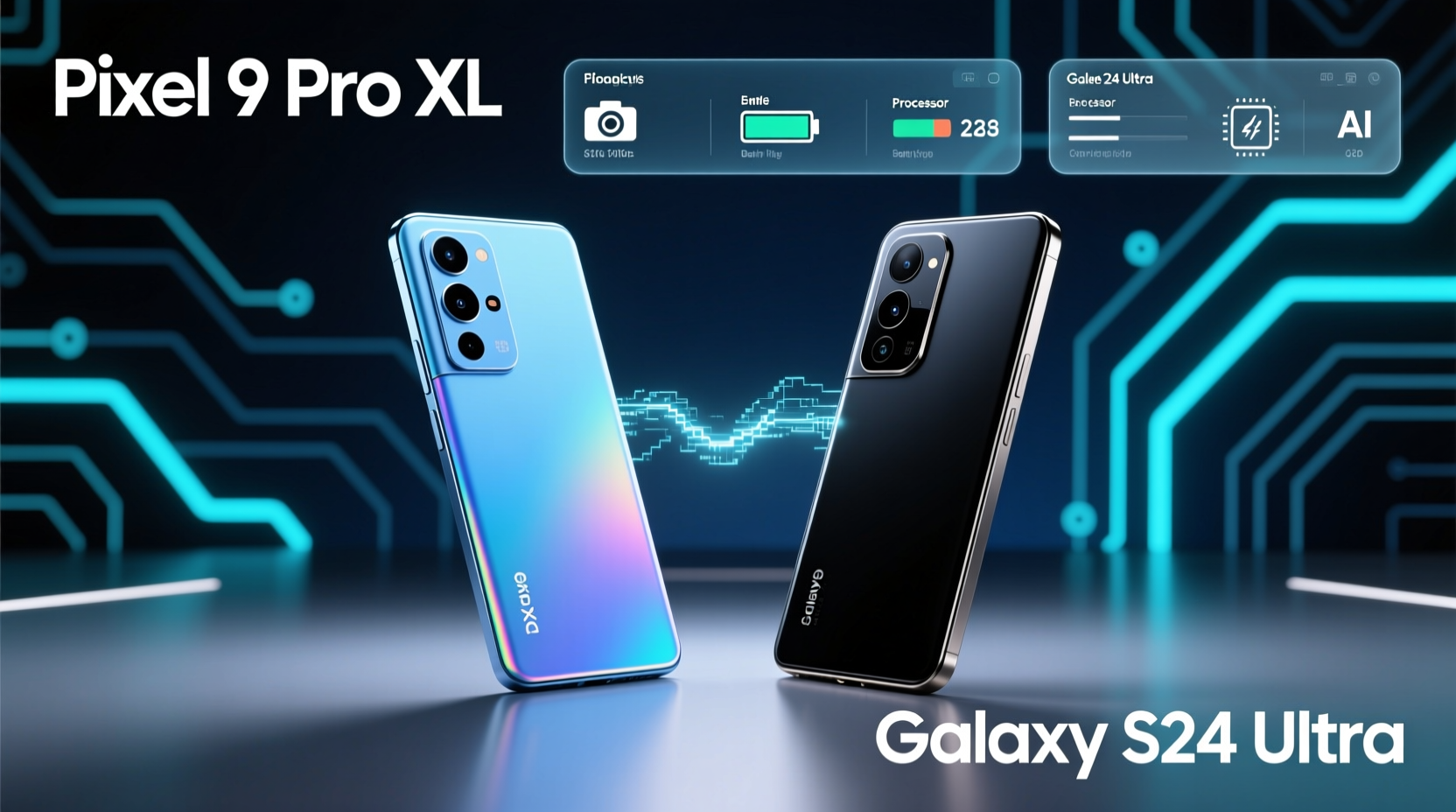
Samsung has long prioritized premium materials and functional design. The S24 Ultra follows that tradition with its titanium frame, flat display, and integrated S Pen. It’s built for productivity, durability, and precision. The squared-off edges give it a tool-like feel—something you’d trust in a boardroom or on a construction site.
Google, meanwhile, has taken a subtler approach with the Pixel 9 Pro XL. Its curved aluminum frame and softer silhouette prioritize comfort and aesthetics. The display is slightly smaller than the S24 Ultra’s 6.8-inch panel, but it’s more compact in hand thanks to tighter bezels and a refined aspect ratio. While it lacks the S Pen, it compensates with superior haptic feedback and a more intuitive touch response.
Where Samsung leans into utility, Google embraces elegance. Neither is objectively better, but the Pixel’s minimalist ethos resonates with users who value simplicity over multitasking gimmicks.
Display and Performance: Brightness vs. Intelligence
The S24 Ultra boasts a 6.8-inch QHD+ Dynamic AMOLED 2X display with a 120Hz refresh rate and peak brightness of 2,600 nits—one of the brightest screens ever on a smartphone. Outdoors, it’s nearly flawless. HDR video playback is cinematic, and the flat screen eliminates glare issues common with curved panels.
The Pixel 9 Pro XL uses a 6.7-inch LTPO OLED with a variable 1–120Hz refresh rate and a peak brightness of 2,400 nits. While slightly dimmer, Google’s new display tuning algorithm adjusts color temperature and contrast based on ambient light in real time. This results in less eye strain during prolonged reading and more natural skin tones in photos.
Under the hood, both devices use next-gen chipsets—the Exynos 2400 (in most regions) for Samsung and Google’s Tensor G4 for the Pixel. Benchmarks favor the S24 Ultra in raw CPU/GPU performance, especially in gaming. However, real-world usage tells a different story. The Pixel’s AI-optimized task management ensures apps launch faster, background processes are minimized, and battery drain is reduced—even under heavy multitasking.
“Raw power matters less when software knows what you’ll do before you do it.” — Dr. Lena Tran, Mobile Systems Researcher at MIT
Camera Showdown: Consistency vs. Versatility
Samsung equips the S24 Ultra with a quad-camera system: 200MP main, 12MP ultrawide, and dual telephoto lenses (3x and 5x). With Space Zoom up to 100x, it’s a telescopic marvel. The high-resolution sensor captures incredible detail in daylight, and the periscope zoom is unmatched for distant subjects.
Google counters with a triple-lens setup: 50MP main, 48MP ultrawide, and 48MP telephoto (5x optical). No 200MP sensor, no 10x hybrid zoom—but what the Pixel lacks in specs, it makes up for in computational photography. Using advanced HDR+, Night Sight, and Magic Editor powered by on-device AI, the Pixel delivers more consistent results across lighting conditions.
In low light, the Pixel’s noise reduction and dynamic range are superior. Portrait mode edges are cleaner, and skin tones are more natural. Samsung tends to oversharpen and oversaturate, especially in automatic mode. For creative control, the Pixel’s Photo Unblur and Best Take features allow editing after capture—something no other phone offers.
| Feature | Pixel 9 Pro XL | S24 Ultra |
|---|---|---|
| Main Sensor | 50MP, f/1.68 | 200MP, f/1.7 |
| Telephoto Zoom | 5x optical, 20x super-res | 3x & 5x optical, 100x digital |
| Low-Light Performance | ★★★★★ | ★★★★☆ |
| AI Editing Tools | Magic Editor, Unblur, Best Take | Prompt Assist (limited) |
| Versatility | Strong in all conditions | Best in daylight and zoom |
AI and Software: The Real Game-Changer
This is where Google pulls ahead. The Pixel 9 Pro XL runs Android 14 with deeper AI integration than any previous device. Features like Call Screen, Hold for Me, and Now Playing have evolved into proactive assistants. The new “Summarize” function transcribes voicemails, meeting recordings, and even YouTube videos in real time—on device, without cloud dependency.
Samsung’s Galaxy AI is impressive but feels bolted on. Translation works well, and note summarization is useful, but many features require internet connectivity and lack the seamlessness of Google’s ecosystem. Bixby still lags far behind Google Assistant in contextual awareness.
Moreover, Google promises seven years of OS and security updates for the Pixel 9 series—a first in the Android world. Samsung offers seven years too, but only for the S24 series onward. Long-term support parity levels the field, but Google’s faster update delivery gives it an edge.
User Experience and Ecosystem Integration
Samsung excels in cross-device functionality with DeX, Smart Switch, and seamless pairing with Windows PCs. However, Google’s ecosystem is becoming equally compelling. With Fast Pair, Nearby Share, and enhanced ChromeOS integration, switching between a Pixel, Nest device, or Chromebook feels effortless.
For example, starting a note on your Pixel and finishing it on a Pixel Tablet happens automatically. Location-based routines trigger smart home actions more reliably than Samsung’s SmartThings. And with Gemini Ultra now embedded in select Pixel models, AI-powered email drafting, calendar scheduling, and photo organization are just a tap away.
Mini Case Study: Travel Photographer’s Workflow
Alex, a travel photographer based in Lisbon, recently switched from the S23 Ultra to the Pixel 9 Pro XL. His workflow involves shooting in varied lighting, backing up photos instantly, and sharing edited previews with clients on the go.
On the S24 Ultra, he appreciated the zoom for capturing distant architecture but found night shots required manual tweaking. With the Pixel, his nighttime street photography improved dramatically—no editing needed. He also used Magic Editor to remove photobombers from group shots while en route to meetings. “The AI didn’t replace my skills,” he said, “but it saved me three hours of post-processing last week alone.”
Frequently Asked Questions
Is the Pixel 9 Pro XL better than the S24 Ultra for photography?
It depends on your needs. If you prioritize zoom and megapixel count, the S24 Ultra wins. But for consistent, point-and-shoot quality—especially in low light and mixed conditions—the Pixel 9 Pro XL delivers more reliable results with less effort.
Does the S24 Ultra still justify its higher price?
For professionals who use the S Pen, need DeX for desktop workflows, or demand maximum screen brightness, yes. But for general users, the Pixel 9 Pro XL offers comparable—if not superior—daily usability at a lower starting price.
Can Google’s AI features work offline?
Yes. Most Gemini and Assistant AI tools on the Pixel 9 Pro XL run entirely on-device using the Tensor G4’s dedicated NPU. This ensures privacy and reliability even without internet access.
Checklist: Choosing Between Pixel 9 Pro XL and S24 Ultra
- ✅ Need S Pen or handwriting input? → Choose S24 Ultra
- ✅ Prioritize low-light photography and AI editing? → Choose Pixel 9 Pro XL
- ✅ Want the brightest outdoor display? → Choose S24 Ultra
- ✅ Value proactive AI assistants and voice transcription? → Choose Pixel 9 Pro XL
- ✅ Use Windows PC and Samsung Watch? → Lean toward S24 Ultra
- ✅ Rely on Google services (Gmail, Drive, Photos)? → Lean toward Pixel 9 Pro XL
Conclusion: A New Era of Android Flagships
The Pixel 9 Pro XL isn’t just competitive with the S24 Ultra—it’s challenging the very definition of what a flagship should be. Samsung still holds advantages in display technology, zoom capability, and accessory integration. But Google has shifted the battlefield from hardware to intelligence.
By deeply integrating AI into everyday tasks, offering unparalleled photo consistency, and committing to long-term software support, Google has created a device that doesn’t just match Samsung’s best—it often surpasses it in meaningful ways. For users tired of chasing specs, the Pixel represents a return to purposeful design.
This isn’t just Google catching up. It’s Google leading.




 浙公网安备
33010002000092号
浙公网安备
33010002000092号 浙B2-20120091-4
Comments
No comments yet. Why don't you start the discussion?