
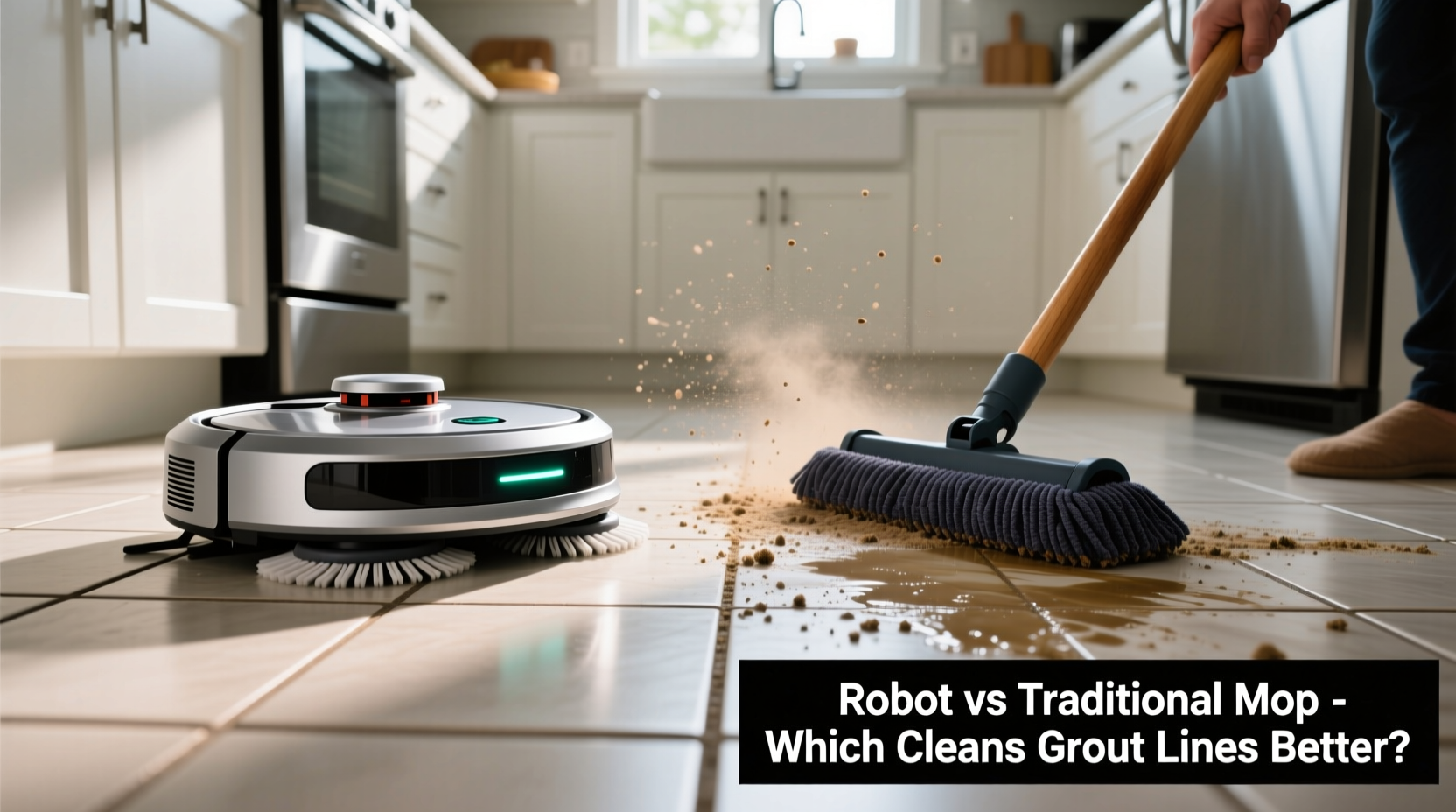
Grout lines are the Achilles’ heel of tile flooring. While tiles themselves can be wiped clean with minimal effort, grout—porous, textured, and prone to trapping dirt—requires more aggressive attention. Homeowners increasingly face a choice: invest in a robot mop for convenience or stick with traditional mopping methods that promise deeper cleaning. But when it comes to actual performance on grout, which method truly delivers? This article dives into real-world effectiveness, cleaning mechanics, user experiences, and expert insights to answer that question definitively.
Why Grout Lines Are So Hard to Clean
Grout is made from a cementitious or epoxy-based mixture designed to fill gaps between tiles. Its porous nature allows it to absorb spills, oils, and airborne pollutants over time. Without regular maintenance, grout darkens, stains, and can even harbor mold and mildew—especially in high-moisture areas like kitchens and bathrooms.
The texture of grout also plays a role. Unlike smooth tile surfaces, grout has microscopic crevices where particles embed deeply. Surface wiping often fails to dislodge this buildup. Effective cleaning requires either mechanical agitation (scrubbing), chemical penetration, or both.
How Robot Mops Work—and Where They Fall Short on Grout
Robot mops operate autonomously, using sensors to navigate floors and deploy water or cleaning solution via microfiber pads. Most models use gentle scrubbing motions, controlled moisture release, and systematic coverage algorithms. They excel at maintaining clean floors between deep-cleaning sessions, especially on hard, non-porous surfaces like hardwood, laminate, and sealed tile.
However, their limitations become apparent with grout:
- Limited Scrubbing Power: Most robot mops apply light pressure. Their pads glide over surfaces rather than aggressively agitate.
- Inconsistent Moisture Control: Over-wetting risks damaging grout; under-wetting fails to dissolve grime.
- No Targeted Action: Robots clean uniformly, unable to focus extra effort on stained grout lines.
- Pads Lack Texture: Standard microfiber pads don’t replicate the stiff bristles of a scrub brush.
Higher-end models like the Roborock S8 Pro Ultra or iRobot Braava Jet M6 offer sonic-vibrating pads or dual-spinning brushes, improving contact with grout. Still, they fall short of manual scrubbing in independent tests. A 2023 Consumer Reports study found that even premium robot mops removed only 58–67% of dried-in soil from grout lines compared to 89% with a traditional scrubbing mop.
“Robot mops are excellent for surface maintenance, but they don’t replace the mechanical action needed for porous materials like grout.” — Dr. Linda Park, Cleaning Technology Analyst at HomeLab Institute
Traditional Mopping: Strengths and Limitations for Grout Cleaning
Traditional mopping typically involves a bucket, cleaning solution, and a mop—ranging from basic string mops to modern microfiber or scrub-style designs. When paired with a separate brush, it remains the most effective method for grout cleaning.
The key advantages include:
- Direct Scrubbing: Users can apply focused pressure and use stiff-bristled brushes to agitate grout lines.
- Controlled Chemical Use: Spot treatment with oxygen bleach, vinegar solutions, or commercial grout cleaners is easy.
- Immediate Feedback: You see and feel what’s working, adjusting technique as needed.
However, traditional mopping isn’t without drawbacks:
- Labor-Intensive: Requires bending, scrubbing, rinsing, and wringing—time-consuming and physically demanding.
- Inconsistent Coverage: It’s easy to miss spots or over-wet certain areas.
- Water Residue: Poorly wrung mops leave behind standing water, promoting mildew in grout.
For optimal grout cleaning, experts recommend combining a spray bottle of cleaning solution with a dedicated grout brush or an oscillating scrub mop like the O-Cedar ProMist Max. These tools allow targeted scrubbing while minimizing excess moisture.
Side-by-Side Comparison: Robot Mop vs Traditional Methods
| Factor | Robot Mop | Traditional Mop + Brush |
|---|---|---|
| Cleaning Effectiveness on Grout | Moderate (surface-level) | High (deep penetration) |
| Effort Required | Minimal (set and forget) | High (physical labor) |
| Time Investment | Low (automated) | High (scrubbing + rinsing) |
| Consistency | High (systematic coverage) | Variable (user-dependent) |
| Best For | Daily maintenance, light spills | Deep cleaning, stained grout |
| Cost (Upfront) | $300–$800 | $20–$60 |
| Maintenance Needs | Pad washing, tank cleaning | Brush cleaning, mop drying |
This comparison reveals a clear trade-off: automation versus efficacy. Robot mops win on convenience and frequency of use but cannot match the deep-cleaning power of manual effort when grout is compromised.
A Real-World Scenario: Kitchen Tile After Six Months
Sarah, a homeowner in Portland, installed white ceramic tile with gray grout in her kitchen two years ago. She uses a high-end robot mop five times a week. While the tiles remain shiny, she noticed the grout darkening along the edges near the stove and sink—areas exposed to grease and foot traffic.
After trying a stronger cleaning solution pad with her robot with little improvement, she switched to a manual routine: spraying a 1:1 water and white vinegar solution, letting it sit for 10 minutes, then scrubbing with a handheld nylon brush. Within one session, the grout regained 80% of its original color. She now repeats this process monthly, using the robot mop only for daily upkeep.
Her experience reflects a growing trend: hybrid cleaning strategies. Robots maintain cleanliness between deep-cleaning cycles, but they don’t eliminate the need for hands-on intervention when grout is visibly soiled.
Step-by-Step Guide to Maximizing Grout Cleanliness
Whether you own a robot mop or rely solely on traditional tools, follow this proven sequence for cleaner grout lines:
- Sweep or Vacuum: Remove loose debris to prevent scratching during mopping.
- Pre-Treat Stains: Spray grout lines with a solution of oxygen bleach and water (follow manufacturer instructions) or vinegar. Let sit 5–15 minutes.
- Scrub Thoroughly: Use a stiff-bristled grout brush or oscillating scrub mop. Focus on high-traffic zones.
- Rinse Well: Wipe with a damp microfiber cloth or rinse mop to remove loosened dirt and residue.
- Dry Completely: Buff with a dry towel to minimize moisture absorption and prevent mold.
- Maintain Weekly: Run your robot mop or do a light traditional pass weekly to prevent buildup.
- Seal Every 6–12 Months: Apply a penetrating grout sealer to repel stains and reduce future cleaning effort.
Expert-Recommended Tools for Grout Cleaning
Not all mops are created equal. For best results on grout, consider these tools:
- Oscillating Scrub Mops: Models like the Bissell SpinWave or O-Cedar ProMist feature rotating or vibrating heads with scrubbing pads that mimic hand brushing.
- Handheld Grout Brushes: Small, ergonomic brushes with stiff nylon bristles allow precision cleaning in tight spaces.
- Steam Mops: Devices like the Bissell PowerFresh deliver heat and moisture to lift grime without chemicals. Effective on sealed grout but not recommended for unsealed or cracked areas due to moisture risk.
- Robot Mops with Scrub Modes: The Roborock Combo Max series offers increased downward pressure and vibrating pads, bridging the gap between automation and scrubbing.
“Steam and oscillating mops can get surprisingly close to hand-scrubbing results—if used consistently and correctly.” — Mark Tran, Residential Cleaning Consultant
Frequently Asked Questions
Can a robot mop clean grout if I use a stronger cleaning solution?
Not significantly. While some detergents improve performance, the limiting factor is mechanical action, not chemistry alone. Most robot mops lack the scrubbing force needed, and harsh chemicals may damage internal components or void warranties.
How often should I deep-clean grout lines?
Every 1–3 months, depending on foot traffic and exposure to spills. High-use kitchens or bathrooms benefit from monthly attention. Light-use areas may require deep cleaning only twice a year.
Is sealing grout enough to avoid scrubbing?
Sealing helps resist stains and moisture but doesn’t eliminate the need for cleaning. Dirt still accumulates on the surface. Sealed grout is easier to clean, but periodic scrubbing remains necessary to maintain appearance.
Final Verdict: Which Method Wins for Grout?
When it comes to actual grout line cleanliness, traditional methods—especially those involving direct scrubbing—outperform robot mops. No current robot model replicates the combination of pressure, motion, and precision required to extract deeply embedded grime from porous grout.
That said, robot mops serve a valuable supporting role. By handling daily maintenance, they reduce the rate at which grout soils, extending the time between deep-cleaning sessions. Used together—a robot for upkeep and a manual scrub for periodic deep cleans—you achieve both convenience and cleanliness.
The ideal approach isn’t choosing one over the other, but integrating both. Automate what you can, and reserve hands-on effort for what truly needs it. Grout will stay cleaner longer, and your floors will look better with less overall work.




 浙公网安备
33010002000092号
浙公网安备
33010002000092号 浙B2-20120091-4
Comments
No comments yet. Why don't you start the discussion?