
The foldable smartphone race has entered a new phase. For years, Samsung dominated the space with relentless innovation, refined hardware, and ecosystem integration. But with Google’s second-generation Pixel Fold entering the arena, the balance of power may be shifting. The Pixel Fold 2 isn’t just another Android device—it’s a statement. And when stacked against the Galaxy Z Fold 5, questions arise: Is Samsung still the undisputed leader in foldables, or has Google closed the gap with precision engineering and clean software?
This isn’t merely about specs on paper. It’s about user experience, longevity, software intelligence, and long-term value. As consumers weigh their premium investments, understanding the nuances between these two devices becomes essential.
Design and Build: Refinement vs Reinvention
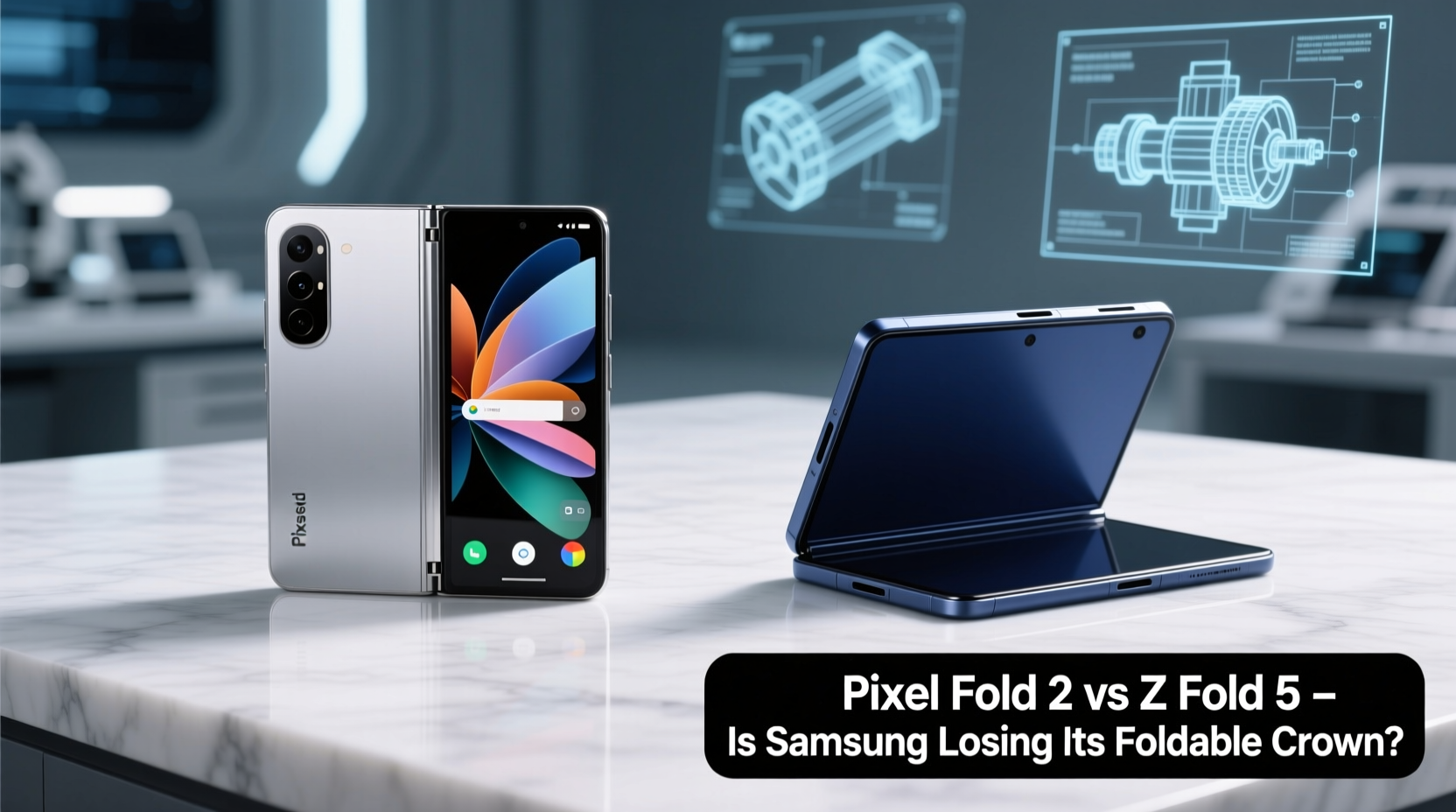
Samsung’s Galaxy Z Fold 5 represents the culmination of five generations of iterative design. Its ultra-thin glass, improved hinge mechanism, and IPX8 water resistance reflect a company that has mastered the art of refinement. The device feels more durable than its predecessors, with fewer visible creases and a slimmer profile when folded.
Google, meanwhile, took a different path with the Pixel Fold 2. While not as aggressively slim, it prioritizes structural integrity and internal display quality. The crease is less intrusive, thanks to a reinforced composite layer beneath the screen. However, it lacks an official IP rating, placing it at a disadvantage for users who value water resistance.
The Z Fold 5’s “Flex Hinge” allows for hands-free multi-angle usage, enabling features like auto-framing during video calls. The Pixel Fold 2 supports similar functionality but with slightly less stability in mid-angle positions. In daily handling, Samsung’s build confidence still leads, though Google’s attention to material selection—especially the matte aluminum frame—gives it a premium feel.
Display and Usability: The Core of the Foldable Experience
Both devices feature a 7.6-inch inner foldable OLED display and a smaller cover screen. The Z Fold 5 uses a 6.2-inch external display with a 120Hz refresh rate, offering smooth navigation even before unfolding. Samsung’s dynamic AMOLED remains vibrant, with excellent brightness and color accuracy.
The Pixel Fold 2’s outer screen is narrower (5.8 inches) and taller, making one-handed use more feasible but sacrificing some multitasking real estate. Its inner display, however, delivers superior uniformity across the fold, with Google employing advanced calibration to minimize brightness drop near the crease.
“Display consistency across the fold is now a key battleground. Samsung led early, but Google’s software-hardware co-tuning is closing the visual gap.” — Linus Lee, Senior Analyst at MobileTrend Insights
In practice, the Z Fold 5 offers a more balanced dual-screen experience, while the Pixel Fold 2 shines in content consumption and media playback due to reduced glare and better viewing angles.
Performance and Software: Stock Android vs Feature-Rich Customization
Under the hood, both phones use the Qualcomm Snapdragon 8 Gen 2, ensuring comparable raw performance. Real-world differences emerge in software optimization and multitasking capabilities.
Samsung’s One UI 5.1.1 (upgradable to newer versions) is deeply tailored for foldables. Features like Taskbar, Split View, and Pop-up windows make multitasking intuitive. App continuity—where apps seamlessly transition from cover to main screen—is well-implemented across Samsung’s first-party apps and many third-party titles.
Google’s Pixel Fold 2 runs near-stock Android 14 with subtle enhancements for larger screens. The advantage? Faster updates, cleaner interface, and AI-powered features like Call Screen, Magic Eraser, and Live Translate integrated natively. Google also optimized core apps (Messages, Gmail, Maps) for dual-pane layouts, reducing the learning curve for new foldable users.
| Feature | Galaxy Z Fold 5 | Pixel Fold 2 |
|---|---|---|
| Operating System | One UI 5.1.1 (Android 13) | Android 14 (near-stock) |
| Update Support | 4 OS upgrades, 5 years security | 5 OS upgrades, 7 years security |
| Multitasking | Advanced (Taskbar, Flex Mode) | Basic-to-mid (Dual-pane apps) |
| AI Features | Bixby Routines, Circle to Search (beta) | Call Screen, Magic Compose, Audio Magic Eraser |
| Biometrics | Side-mounted fingerprint sensor | Under-display fingerprint sensor |
While Samsung offers more granular control, Google provides a more cohesive, future-proof software roadmap. The extended update promise on the Pixel Fold 2 is particularly compelling for long-term ownership.
Battery Life and Charging: Endurance in a Thin Package
Foldables struggle with battery life due to space constraints. The Z Fold 5 packs a 4400mAh dual-cell battery, delivering around 10–11 hours of moderate use. Fast charging tops out at 25W, which feels outdated at this price point.
The Pixel Fold 2 uses a 4700mAh battery—slightly larger—and achieves up to 12 hours of mixed usage. It supports 30W wired charging and 21W wireless, edging ahead in both capacity and speed. Google’s Tensor G3 also includes aggressive background app management, contributing to better efficiency despite lower peak performance than the Snapdragon chip.
Real-World Example: A Digital Nomad’s Dilemma
Consider Maya, a freelance designer who travels frequently. She used the Z Fold 4 for two years, appreciating Samsung DeX and split-screen photo editing. When evaluating an upgrade, she tested both the Z Fold 5 and Pixel Fold 2.
She found the Pixel Fold 2’s camera system superior for client-facing content, especially in low light. Google Meet integration with live captions and noise cancellation improved her remote meetings. However, she missed Samsung’s Dex mode for desktop-like workflows and struggled with fewer optimized creative apps on Android’s foldable platform.
In the end, she chose the Pixel Fold 2—not because it did everything better, but because its strengths aligned with her evolving needs: communication, AI assistance, and reliability over flashy features.
Is Samsung Losing Its Crown?
Samsung hasn’t lost its technical lead overnight. The Z Fold 5 remains the most polished foldable in terms of hinge durability, multitasking, and ecosystem synergy. But Google’s Pixel Fold 2 proves that leadership isn’t just about hardware—it’s about purposeful design and software intelligence.
Where Samsung refines, Google reimagines. The Pixel Fold 2 focuses on solving real user pain points: poor front camera quality, inconsistent app behavior, and slow software updates. It doesn’t try to do everything; it does key things exceptionally well.
Market signals reinforce this shift. According to Counterpoint Research, Google captured 12% of the global foldable market in Q2 2024, up from 3% the previous year. Samsung’s share dipped from 62% to 55% in the same period—not a collapse, but a clear warning.
“The foldable era is maturing. Users no longer buy based on novelty—they demand reliability, updates, and meaningful AI integration. That’s where Google has the upper hand.” — Priya Nair, Tech Editor at MobileInsider Weekly
Checklist: Choosing Your Foldable
- Evaluate your workflow: Do you need desktop-like multitasking (Samsung) or streamlined communication (Google)?
- Check app compatibility: Are your essential apps optimized for large screens?
- Prioritize update policy: Pixel offers 7 years of security patches vs Samsung’s 5.
- Test the outer screen: Can you comfortably type and navigate without unfolding?
- Assess camera needs: Pixel leads in computational photography; Samsung offers more versatility.
- Consider durability: Z Fold 5 has IPX8 and proven hinge longevity.
FAQ
Which phone has better long-term software support?
The Pixel Fold 2 wins with 5 major Android OS updates and 7 years of security patches, compared to Samsung’s 4 OS upgrades and 5 years of security.
Is the crease less noticeable on the Pixel Fold 2?
Yes. While both devices have a visible crease, Google’s display calibration and protective layer reduce tactile feedback and visual disruption when scrolling.
Can either phone replace a tablet or laptop?
Limitedly. The Z Fold 5 comes closer with Samsung DeX, allowing desktop-mode productivity. The Pixel Fold 2 excels as a mobile hub but lacks true desktop emulation.
Conclusion: The Crown Is Now Contested
Samsung built the foundation of the modern foldable. But Google’s Pixel Fold 2 demonstrates that innovation isn’t just about hinges and screens—it’s about intelligence, longevity, and user-centric design. Samsung still holds advantages in durability and multitasking, but Google is rapidly closing the experience gap with software-first thinking.
The foldable crown is no longer guaranteed. It must be earned with every update, every user interaction, and every thoughtful design decision. For consumers, this competition means better devices, faster progress, and more choice than ever before.




 浙公网安备
33010002000092号
浙公网安备
33010002000092号 浙B2-20120091-4
Comments
No comments yet. Why don't you start the discussion?