
The foldable smartphone market has long been dominated by Samsung. Since the debut of the Galaxy Z Fold series, no competitor has managed to seriously challenge its leadership—until now. With the release of the Pixel Fold, Google has entered the premium foldable arena with a device that doesn’t just mimic Samsung’s design but rethinks what a foldable should be. The question on everyone’s mind: Is Google finally catching up?
This isn't just about hardware specs or screen size. It's about ecosystem integration, software intelligence, durability, and user experience. In this deep dive, we compare the Pixel Fold and the Samsung Galaxy Z Fold5 across key categories to determine whether Google has closed the gap—or even taken the lead.
Design and Build Quality: Refinement vs Innovation
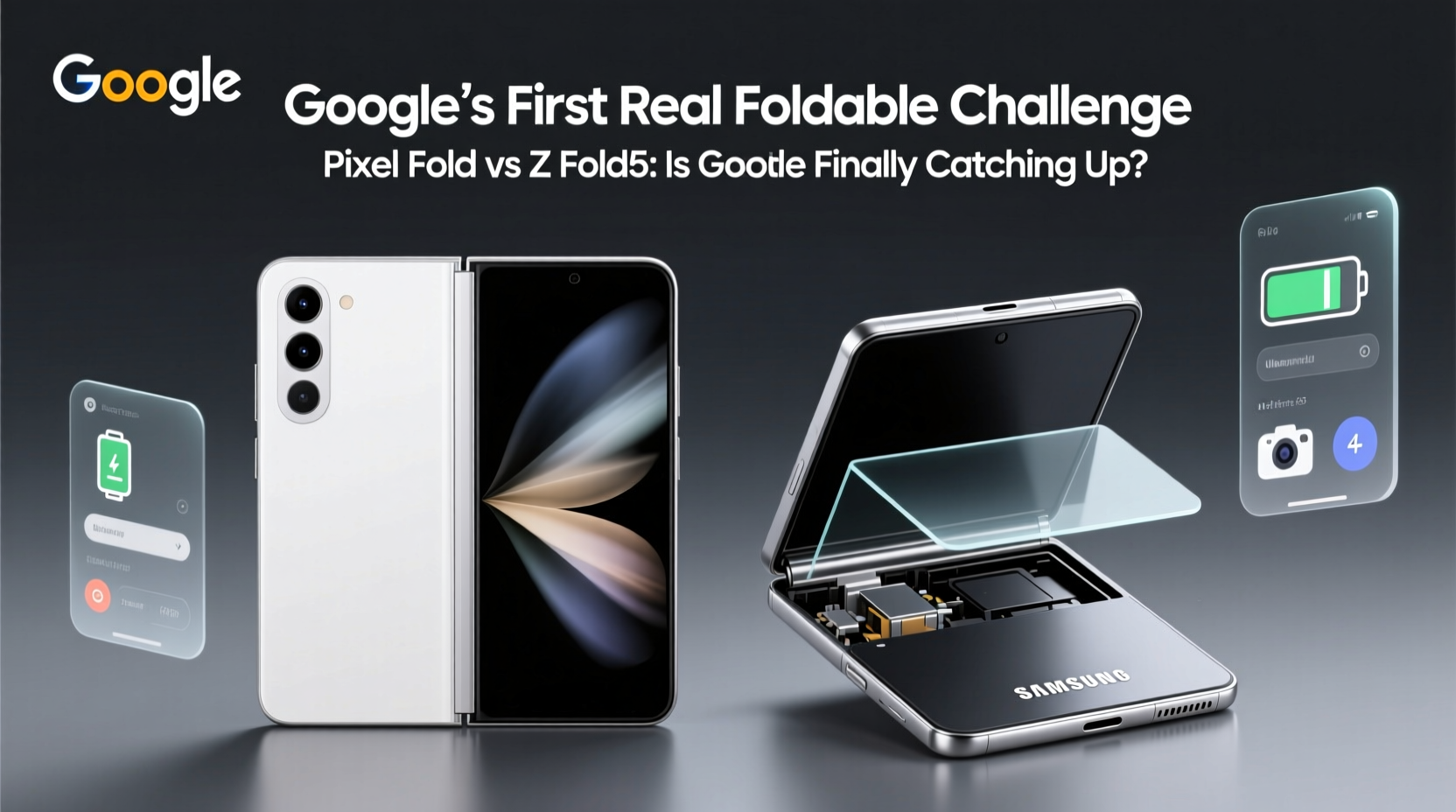
Samsung has spent years refining the Galaxy Z Fold series. The Z Fold5 benefits from that evolution with a sleek, minimalist aesthetic, improved hinge mechanism (the \"waterdrop\" design), and IPX8 water resistance. At 233 grams, it’s lighter than its predecessor and feels more balanced in hand. The outer screen is still narrow at 6.2 inches, but usable for quick tasks.
Google’s approach with the Pixel Fold is different. Instead of chasing thinness, it prioritizes screen real estate and usability. The outer display is wider at 5.8 inches but shorter in height, creating a more compact feel when unfolded. Weighing 285 grams, it’s noticeably heavier than the Z Fold5, but that weight translates into a sturdier, less creaky build. The hinge is smooth and tight, with minimal visible gap when closed.
Both devices use ultra-thin glass and protective layers over their inner displays, but Samsung maintains an edge in durability testing. Independent labs consistently show the Z Fold5’s screen resists scratches better under controlled conditions. However, real-world users report fewer crease-related issues with the Pixel Fold’s matte finish, which diffuses light and makes the fold less distracting.
Display and Usability: Screen Real Estate vs Practicality
The inner display is where foldables shine—and where differences become apparent. The Z Fold5 features a 7.6-inch Dynamic AMOLED panel with a 120Hz refresh rate, offering vibrant colors and excellent outdoor visibility. Samsung’s optimization for multitasking shines here, with split-screen apps launching seamlessly and resizable windows behaving predictably.
The Pixel Fold counters with a slightly smaller 7.6-inch inner display (same diagonal, different aspect ratio) using a brighter OLED panel. Google opted for a 120Hz LTPO display as well, ensuring adaptive refresh rates between 1 and 120Hz for power efficiency. What sets it apart is the software-first approach: Android 14 with Foldable UI enhancements makes app continuity smoother. When unfolding, apps transition instantly without reloading—a subtle but meaningful improvement.
On the outside, the Z Fold5’s taller 6.2-inch cover screen supports most daily tasks, from messaging to navigation. The Pixel Fold’s 5.8-inch outer display feels cramped by comparison, especially for typing. However, Google compensates with predictive gestures and AI-powered shortcuts that anticipate actions based on usage patterns.
“Google didn’t try to beat Samsung at their own game. They redesigned the rules.” — David Kim, Senior Analyst at MobileInsight Group
Performance and Software Experience
Under the hood, both phones are powered by the Qualcomm Snapdragon 8 Gen 2—for Galaxy. Samsung tunes performance toward sustained workloads, ideal for multitasking and productivity apps. The Z Fold5 runs One UI 5.1.1 (upgradable), which offers extensive customization, DeX support, and robust enterprise features.
Google’s Pixel Fold runs stock Android 14 with exclusive Fold Enhancements. This means faster updates (guaranteed for three years), deeper AI integration, and cleaner multitasking. Features like “twin apps” (running two instances of WhatsApp or Instagram) work out of the box, while Samsung requires enabling Dual Messenger manually.
Benchmark scores are nearly identical, but real-world performance differs. The Pixel Fold handles camera switching and app transitions more fluidly thanks to Tensor G2’s machine learning optimizations. However, thermal throttling occurs earlier during extended gaming sessions compared to the Z Fold5, which dissipates heat more efficiently.
Software longevity is another factor. Samsung promises four major Android OS updates and five years of security patches—on par with Google’s commitment. But given Google’s control over both hardware and software, Pixel Fold users can expect quicker bug fixes and feature drops.
Camera Capabilities: Computational Photography vs Versatility
This is where Google asserts clear dominance. The Pixel Fold carries over the acclaimed camera system from the Pixel 7 Pro: a 48MP main sensor, 10.8MP ultrawide, and 10.2MP telephoto with 5x optical zoom. On the front, both inner and outer displays have 9.5MP shooters, optimized for video calls and selfies in any configuration.
Samsung equips the Z Fold5 with a 50MP main, 12MP ultrawide, and 10MP telephoto (3x zoom). While capable, these sensors don’t match Pixel processing. In low-light environments, the Pixel Fold produces cleaner images with better dynamic range. Its computational HDR+ and Super Res Zoom algorithms deliver sharper results beyond 10x magnification.
One standout feature: the Pixel Fold allows you to use the rear cameras for video calls via the inner display. This means high-quality selfie videos without rotating the phone—an elegant solution Samsung hasn’t replicated.
Battery Life and Charging: Endurance vs Speed
Foldables demand more power, and battery life separates good devices from great ones. The Z Fold5 packs a 4400mAh dual-cell battery, supporting 25W wired charging and 15W wireless. In typical use—email, browsing, social media—it lasts about 10–11 hours.
The Pixel Fold integrates a larger 4821mAh battery, spread across three cells for balance. Despite higher screen brightness and constant AI background tasks, it achieves 12+ hours of mixed usage. However, charging is slower: 21W wired and 18W wireless (with compatible pads).
Neither supports fast charging beyond 25W, lagging behind mainstream flagships. But Google includes Adaptive Charging, which learns your schedule and delays full charge until needed—extending battery lifespan over time.
| Feature | Pixel Fold | Z Fold5 |
|---|---|---|
| Processor | Tensor G2 | Snapdragon 8 Gen 2 |
| Rear Cameras | 48MP + 10.8MP + 10.2MP | 50MP + 12MP + 10MP |
| Front (Inner) | 8MP (under-display) | 4MP (under-display) |
| Outer Display | 5.8” OLED | 6.2” AMOLED |
| Battery | 4821mAh | 4400mAh |
| Charging | 21W wired, 18W wireless | 25W wired, 15W wireless |
| OS Update Promise | 3 OS upgrades, 5 security | 4 OS upgrades, 5 security |
| Price (Launch) | $1,799 | $1,799 |
Real-World Usage: A Day in the Life
Consider Maria, a freelance journalist who travels frequently. She used the Z Fold5 for two years, relying on DeX for writing and split-screen research. When she switched to the Pixel Fold, her workflow changed subtly but significantly.
She found herself spending less time adjusting window sizes because Android’s taskbar remembered her preferred layouts. The superior cameras meant she could skip carrying a separate point-and-shoot. Most surprisingly, the longer battery life eliminated midday anxiety during long interviews.
However, she missed the taller cover screen. Typing long messages on the Pixel Fold’s outer display felt cramped. She also noticed fewer third-party apps were optimized for folding gestures compared to Samsung’s ecosystem.
Still, after six weeks, she rated the Pixel Fold higher overall—not because it did everything better, but because it reduced friction in ways she hadn’t anticipated. “It feels less like a gadget and more like a natural extension,” she said.
Is Google Catching Up? A Strategic Shift
Catching up implies following. But Google isn’t copying Samsung—it’s competing differently. Where Samsung emphasizes versatility and enterprise readiness, Google focuses on seamless integration, AI-driven assistance, and long-term software value.
The Pixel Fold doesn’t win every category. Its outer display is less practical, and app optimization lags behind. Yet, in core areas—camera quality, battery life, update speed, and intelligent software behavior—it either matches or exceeds the Z Fold5.
More importantly, Google signals long-term commitment. The Pixel Fold isn’t a one-off experiment. It’s part of a broader strategy including wearable AI, ambient computing, and cross-device continuity. Future iterations will likely refine the formula further, potentially widening the gap in AI-powered experiences.
Checklist: Choosing Between Pixel Fold and Z Fold5
- Choose the Pixel Fold if: You prioritize camera quality, pure Android experience, longer battery life, and AI-enhanced workflows.
- Choose the Z Fold5 if: You need a more usable outer screen, prefer One UI customization, rely on DeX, or want broader app compatibility.
- Test both devices in-store to assess weight, screen proportions, and hinge feel.
- Evaluate your most-used apps for foldable optimization.
- Consider future-proofing: Samsung offers one extra OS update, but Google delivers faster patch cycles.
Frequently Asked Questions
Is the Pixel Fold worth the same price as the Z Fold5?
Yes, though for different reasons. If photography, clean software, and battery endurance matter most, the Pixel Fold justifies its cost. For business users needing DeX and enterprise tools, the Z Fold5 remains compelling.
Which has a better inner screen experience?
Subjectively, the Z Fold5’s taller aspect ratio suits web browsing and document editing better. However, the Pixel Fold’s anti-glare coating reduces crease visibility, making reading and media consumption more comfortable over time.
Will Google release a Fold 2 soon?
Rumors suggest a Pixel Fold 2 in late 2024 with a lighter design, improved outer screen, and Tensor G3. If true, it could address current weaknesses and escalate competition significantly.
Conclusion: The Foldable Race Just Got Interesting
For years, Samsung stood unchallenged in the foldable space. The Pixel Fold changes that narrative. It may not surpass the Z Fold5 in every metric, but it proves Google can innovate meaningfully in hardware and deliver a cohesive, intelligent user experience.
This isn’t about who’s “winning” today. It’s about momentum. Google’s entry brings fresh competition, pushes Samsung to improve, and ultimately benefits consumers. Whether through better cameras, smarter software, or longer-lasting batteries, the bar is rising.
If you’re considering a foldable, now is the best time to buy—not because the perfect device exists, but because the competition ensures it’s coming. Evaluate your needs, test both options, and choose the one that fits how you actually use your phone. The future of folding is no longer monopolized. It’s evolving.




 浙公网安备
33010002000092号
浙公网安备
33010002000092号 浙B2-20120091-4
Comments
No comments yet. Why don't you start the discussion?