
The resurgence of plaid as a staple pattern in casual fashion has made it a go-to choice for accessories, especially bags. Whether you're heading to class, commuting to work, or running errands around town, a plaid bag adds a touch of rustic charm and timeless style. But when it comes down to function—comfort, load distribution, accessibility, and daily wearability—two contenders stand out: the plaid backpack and the plaid tote bag. While both are stylish, one may serve your lifestyle better than the other. The real question isn’t just about looks—it’s about practicality.
Backpacks and totes each come with distinct advantages and drawbacks. Choosing between them depends on how you use your bag, what you carry, and how much strain you’re willing to tolerate over time. This comparison dives deep into ergonomic design, storage efficiency, material durability, and real-world usability to determine which option truly earns its place in your daily routine.
Ergonomics and Comfort: How Weight Affects Your Body
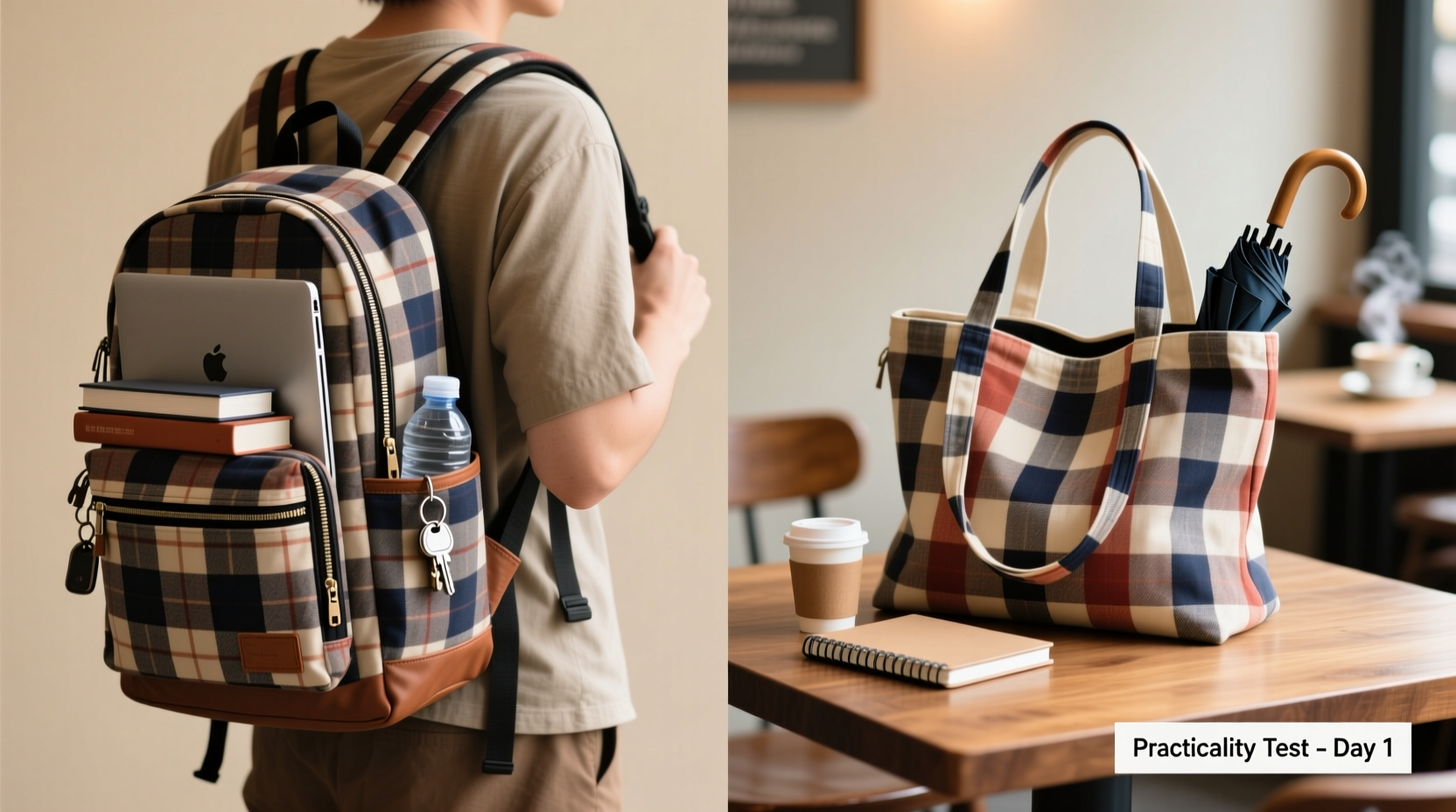
One of the most overlooked aspects of bag selection is ergonomics—the way a bag interacts with your body during extended wear. Carrying weight improperly can lead to shoulder pain, neck strain, and even long-term postural issues.
Tote bags typically rest on one shoulder, concentrating the entire load on a single point. Even with padded straps, uneven weight distribution can cause muscle fatigue, especially if you're carrying textbooks, a laptop, or groceries. Over time, this imbalance may contribute to spinal misalignment. Fashion often prioritizes aesthetics over function, and many plaid totes feature thin, non-adjustable straps that dig into the shoulder.
In contrast, backpacks distribute weight evenly across both shoulders and closer to the spine. This balanced load reduces pressure on any single area of the body. Many plaid backpacks also include padded shoulder straps, sternum straps, and breathable back panels—features designed to enhance comfort during prolonged use. For anyone walking long distances or standing for hours, a backpack significantly lowers physical strain.
Storage Capacity and Organization
How you organize your belongings plays a crucial role in day-to-day efficiency. Tote bags usually offer a single large compartment, sometimes with one interior zip pocket. While this provides easy access to items, it often leads to clutter. Searching for keys, a phone, or a pen inside a cavernous tote can be frustrating and unhygienic, especially in public spaces.
Backpacks, on the other hand, are engineered for organization. Most models include multiple compartments: dedicated laptop sleeves (often padded), front utility pockets, side mesh holders for water bottles, and internal dividers. These features allow users to separate electronics, notebooks, snacks, and personal items efficiently. The structured layout makes retrieval faster and protects fragile contents like laptops from impact.
For students, professionals, or parents on the move, this level of organization translates directly into time saved and stress reduced. A plaid backpack doesn't just carry more—it carries smarter.
Comparison Table: Backpack vs Tote – Key Features at a Glance
| Feature | Plaid Backpack | Plaid Tote Bag |
|---|---|---|
| Weight Distribution | Evenly distributed across both shoulders | Concentrated on one shoulder |
| Carrying Capacity | High (15–25L typical) | Moderate (8–15L typical) |
| Organization | Multiple compartments, pockets, sleeves | Limited; often single main space |
| Hands-Free Use | Yes | No (unless carried by hand) |
| Durability (under heavy load) | High (structured frame, reinforced stitching) | Medium (straps prone to stretching or breaking) |
| Fashion Versatility | Moderate to high (depends on design) | Very high (easily dressed up or down) |
Real-World Use Case: Commuter Life in a Mid-Sized City
Consider Maya, a graphic designer living in Portland, Oregon. Her daily commute includes a 20-minute walk to the MAX light rail, a 30-minute train ride, and another 10-minute walk to her co-working space. She carries a 13-inch laptop, sketchbook, lunch container, water bottle, and occasionally a change of clothes.
Last winter, she used a stylish plaid tote. Within three weeks, she developed persistent right-shoulder discomfort. The tote’s lack of padding and poor weight balance caused her to hunch forward. Dropping her sketchbook became common because there was no secure pocket. After switching to a minimalist plaid backpack with a laptop sleeve and side bottle holder, her posture improved, and she reported feeling “lighter” throughout the day—even though she was carrying the same items.
This scenario reflects a broader trend: functional needs often outweigh aesthetic appeal when used consistently. While the tote looked great in photos, the backpack delivered tangible quality-of-life improvements.
“People underestimate how much daily bag choice affects musculoskeletal health. A well-fitted backpack can prevent years of avoidable pain.” — Dr. Alan Torres, Physical Therapist & Ergonomic Consultant
Durability and Long-Term Wear
Plaid patterns are commonly found on cotton canvas, wool blends, or synthetic fabrics. While visually appealing, these materials react differently under stress.
Tote bags, especially those made from lightweight canvas, are prone to seam splitting when overloaded. Handles are frequent failure points—either detaching from the body or stretching unevenly. Washing can also distort shape and fade colors, particularly with repeated machine cycles.
Backpacks, built for heavier loads, generally use higher-denier fabrics, reinforced stitching at stress points, and durable zippers. Even fashion-oriented plaid backpacks tend to incorporate structural elements like rigid bases or internal frames, which protect against sagging and deformation over time.
If longevity is a priority, the backpack again holds an edge. It withstands daily abuse better and maintains its form longer, making it a more sustainable choice financially and environmentally.
When a Tote Might Be the Better Choice
Despite the backpack’s advantages, the plaid tote still has its place. For short trips, casual outings, or professional settings where a sleek silhouette matters, a tote offers unmatched elegance. Lawyers, journalists, or creatives attending client meetings often prefer the polished look of a structured tote over the utilitarian vibe of a backpack.
Totes also excel in quick-access scenarios. Need to grab your wallet or phone while standing in line? A tote’s open top allows faster retrieval than unzipping multiple backpack compartments. When carrying minimal items—like a tablet, notebook, and sunglasses—a tote performs admirably without causing strain.
The key is matching the bag to the task. Using a tote for a five-block walk to brunch is sensible. Hauling gym clothes, groceries, and a laptop across town in one is asking for discomfort.
Checklist: Choosing the Right Plaid Bag for Your Lifestyle
- ✅ Assess your average load: Do you carry more than 5 lbs daily?
- ✅ Consider commute length: Are you walking or biking over 15 minutes?
- ✅ Evaluate need for hands-free movement: Do you use transit or push a stroller?
- ✅ Prioritize protection: Do you carry fragile electronics regularly?
- ✅ Think long-term: Is durability more important than instant style?
Frequently Asked Questions
Can I make a tote more comfortable for daily use?
Yes, but with limitations. Opt for wide, padded straps and consider adding a detachable crossbody strap for better weight distribution. However, even modified totes cannot match the biomechanical efficiency of a dual-strap backpack.
Are plaid backpacks too casual for office environments?
Not necessarily. Many brands now offer sleek, minimalist plaid backpacks in refined fabrics like water-resistant nylon or waxed canvas. Look for clean lines, muted plaid tones (like navy-and-gray), and subtle branding to maintain professionalism.
Which bag is easier to clean?
Most plaid backpacks are easier to wipe down due to synthetic materials and exterior pockets that resist stains. Canvas totes absorb spills and are harder to clean without warping. Always check care labels, but in general, backpacks win in low-maintenance upkeep.
Final Verdict: Practicality Favors the Backpack
While the plaid tote bag wins points for versatility in styling and ease of access, the plaid backpack emerges as the more practical option for everyday use. Its superior weight distribution, organizational capabilities, durability, and ergonomic design make it better suited for the demands of modern life—whether you're a student, commuter, or busy parent.
Fashion evolves, but function endures. Choosing a backpack doesn’t mean sacrificing style. With thoughtful design, a plaid backpack can be both a statement piece and a reliable companion through years of daily use.




 浙公网安备
33010002000092号
浙公网安备
33010002000092号 浙B2-20120091-4
Comments
No comments yet. Why don't you start the discussion?