
The invention of the telephone stands as one of the most transformative milestones in human communication. Before its arrival, long-distance messaging relied on written letters, telegraphs, or messengers—methods limited by time, literacy, and infrastructure. The desire to transmit voice across distances not only answered a practical need but also redefined how societies connect. The story behind the telephone’s creation is layered with scientific curiosity, rivalry, and incremental breakthroughs that culminated in a device now considered indispensable.
The Need for Real-Time Voice Communication
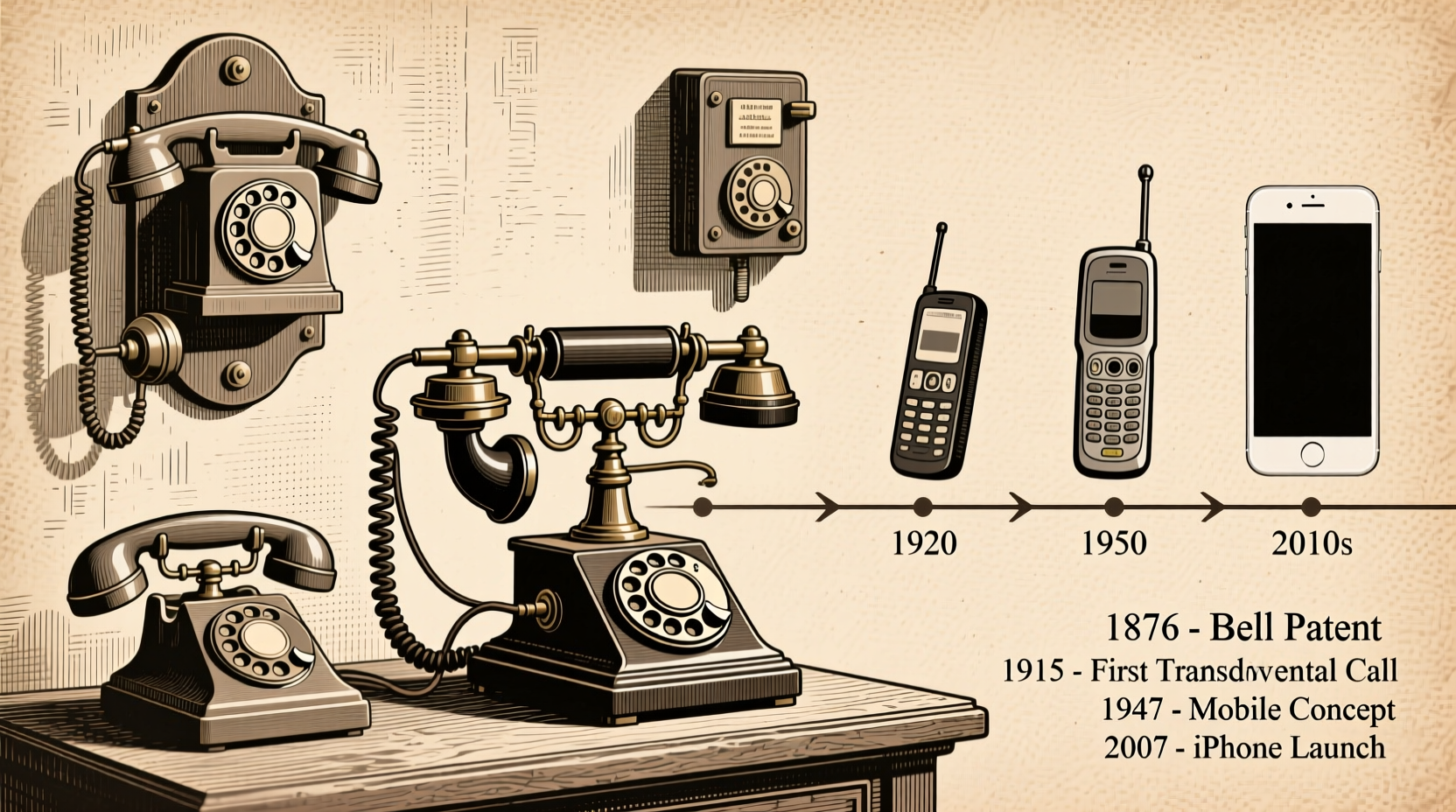
In the mid-19th century, the telegraph had already revolutionized long-distance communication by transmitting coded electrical signals over wires. However, it required trained operators and could not convey tone, emotion, or nuance. The idea of sending actual human speech through wires emerged from both scientific exploration and social demand. Inventors recognized that if electrical pulses could carry dots and dashes, they might also replicate the complex vibrations of the human voice.
Alexander Graham Bell, a Scottish-born inventor and teacher of the deaf, was deeply invested in sound transmission. His work with acoustics and vocal physiology laid the foundation for his interest in voice telegraphy—the concept of sending multiple telegraph messages simultaneously over a single wire using different audio frequencies. This research eventually led him down the path of voice transmission.
Key Innovations Leading to the Telephone
The journey toward the telephone involved several critical technological advances. Each innovation built upon prior discoveries in electricity, magnetism, and acoustics.
- Electromagnetism (1820s–1830s): Hans Christian Ørsted and Michael Faraday established that electric current could generate magnetic fields, enabling the development of electromagnets—core components in early telephones.
- The Telegraph (1837): Samuel Morse's system proved that information could travel instantly over wires, setting a precedent for electrical communication networks.
- Harmonic Telegraph Experiments (1870s): Elisha Gray and Alexander Graham Bell independently explored using tuned reeds to send multiple signals. These experiments revealed that varying electrical currents could mimic sound waves.
- Sound-to-Electric Conversion: Bell and his assistant Thomas Watson developed a method to convert sound vibrations into fluctuating electrical signals using a diaphragm attached to a coil near a magnet.
- Transmission and Reception Mechanism: The breakthrough came when Bell successfully transmitted intelligible speech on March 10, 1876, saying, “Mr. Watson, come here—I want to see you.”
This moment marked the birth of the practical telephone—a device capable of capturing sound, converting it into electrical impulses, transmitting those impulses over wire, and reconstructing them into audible speech at the receiving end.
Timeline of Critical Milestones
A clear timeline illustrates how rapidly the telephone evolved from concept to widespread utility.
| Year | Event | Significance |
|---|---|---|
| 1875 | Bell and Watson build a working \"harmonic telegraph\" | Demonstrated ability to transmit tones electrically |
| March 7, 1876 | U.S. Patent No. 174,465 granted to Bell | Official recognition of the telephone invention |
| March 10, 1876 | First successful voice transmission | Proved feasibility of two-way spoken communication |
| 1877 | First commercial telephone line installed (Boston to Somerville) | Marked beginning of public use |
| 1878 | First telephone exchange opens in New Haven, Connecticut | Enabled multi-user network connectivity |
| 1891 | Almon Strowger patents automatic dialing system | Laid groundwork for modern switching technology |
Rivalry and Controversy: Bell vs. Gray
The invention of the telephone was not without controversy. On the very same day Bell filed his patent—February 14, 1876—Elisha Gray submitted a caveat (a preliminary patent notice) describing a nearly identical liquid transmitter design. Legal battles ensued for years, with courts ultimately upholding Bell’s priority based on documentation and laboratory notes proving earlier conception.
“While Gray may have conceived similar ideas, Bell demonstrated a continuous chain of experimentation leading to a functional device.” — Dr. Susan MacLeod, Historian of Technology
Bell’s deep understanding of vocal anatomy—shaped by his work teaching deaf students—gave him unique insight into mimicking human speech electronically. His holistic approach distinguished his work from purely mechanical attempts by others.
Impact and Evolution of the Telephone
Once proven viable, the telephone spread rapidly. By 1880, there were over 47,000 telephones in the United States. The formation of the Bell Telephone Company (later AT&T) helped standardize equipment, expand infrastructure, and promote adoption.
- Introduced private home lines, transforming domestic life
- Enabled faster business decisions and customer service
- Paved the way for emergency services (e.g., dialing 911)
- Served as the foundation for later innovations: mobile phones, VoIP, video calling
The core principle—converting sound into electrical signals—remains central to digital voice communication today, even as technology has shifted from analog wires to fiber optics and wireless networks.
Mini Case Study: The First Long-Distance Call
In 1892, Alexander Graham Bell placed a ceremonial call from New York City to Chicago, a distance of over 800 miles. Though rudimentary by today’s standards, this demonstration captured public imagination and validated the potential of nationwide voice networks. Operators manually connected the call through a series of switchboards, and the signal degraded significantly along the way. Yet, the words were understood.
This event accelerated investment in long-line circuits and reinforced the idea that geography no longer needed to limit personal or professional conversations. Within decades, transcontinental calls became routine, shrinking the perceived size of the nation.
Actionable Checklist: Understanding Innovation Through the Telephone’s Legacy
To appreciate how transformative inventions emerge, consider applying these lessons from the telephone’s history:
- Identify existing limitations in current technology (e.g., telegraph lacked voice).
- Draw from interdisciplinary knowledge (Bell combined acoustics, electricity, and linguistics).
- Document your process meticulously—patents favor proof of conception and testing.
- Test prototypes early, even if imperfect.
- Build scalable systems—Bell didn’t stop at one device; he envisioned a network.
- Anticipate societal impact—how will people actually use this?
Frequently Asked Questions
Was Alexander Graham Bell the sole inventor of the telephone?
No single person can claim complete authorship. While Bell received the first U.S. patent and achieved the first verified transmission of speech, others like Elisha Gray, Antonio Meucci, and Johann Philipp Reis made significant contributions. Meucci, an Italian immigrant, developed a voice communication device in the 1850s but lacked funds to secure a full patent. In 2002, the U.S. Congress acknowledged his work with a resolution honoring his pioneering efforts.
How did the telephone change society?
The telephone reduced isolation, especially in rural areas. It allowed instant coordination in emergencies, improved business efficiency, and strengthened personal relationships across distances. Over time, it contributed to the expectation of immediacy in communication—a cultural shift still evolving today.
What was the first telephone used for?
The earliest telephones were used primarily for demonstration and short-range communication between laboratories or nearby buildings. The first commercial applications included connecting offices, hospitals, and fire stations. One of the first recorded non-experimental uses was a doctor in Massachusetts installing a line to his home so patients could reach him after hours.
Conclusion: A Legacy of Connection
The telephone was invented not merely as a technical feat, but as a response to humanity’s enduring need to speak directly to one another across space. Its development fused scientific rigor with visionary thinking, overcoming skepticism and engineering hurdles to create a tool that reshaped daily life. From Bell’s first call to today’s smartphones, the essence remains unchanged: the desire to hear a loved one’s voice, conduct business in real time, or simply say, “Hello.”
As we navigate an age of digital overload, reflecting on the origins of the telephone reminds us that the most powerful technologies are those that deepen human connection. Whether you're innovating new tools or simply making a call, remember that every conversation carries forward a legacy nearly 150 years in the making.




 浙公网安备
33010002000092号
浙公网安备
33010002000092号 浙B2-20120091-4
Comments
No comments yet. Why don't you start the discussion?