
When it comes to building a functional, stylish, and long-lasting wardrobe for children, the humble t-shirt plays a central role. Among the most common choices are plain tees and graphic tees—both staples in any kid’s closet. But when push comes to shove, which one truly offers more versatility? Is it the minimalist flexibility of a solid-colored shirt, or the personality-packed appeal of a printed design? The answer isn’t as simple as it seems, and depends on how you define “versatile.” For some parents, versatility means mix-and-match potential. For others, it’s about durability, ease of care, or emotional connection. Let’s break down the strengths and limitations of each option to see which emerges as the true champion of adaptability.
The Case for Plain Tees: Simplicity with Strategic Value
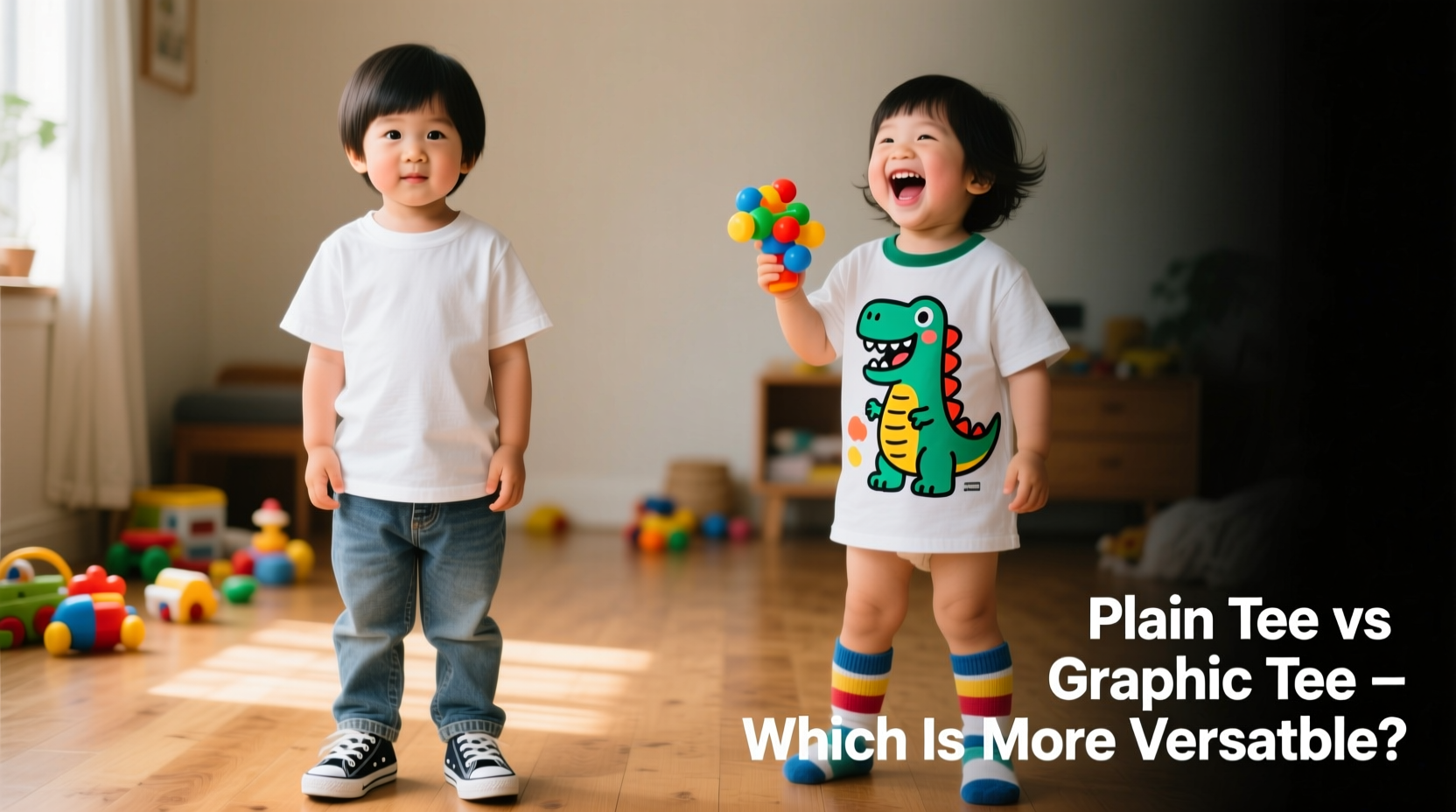
Plain tees are the backbone of a child’s wardrobe. Available in a wide range of colors and made from breathable fabrics like cotton or cotton blends, they serve as neutral canvases that pair effortlessly with nearly anything. Whether layered under a cardigan, worn with jeans, shorts, or even school uniforms, a plain tee adapts without demanding attention.
One of their greatest advantages is longevity beyond trends. While graphic designs may go out of style—or become too small before they wear out—plain tees remain relevant year after year. This makes them ideal for hand-me-downs and seasonal rotation. They’re also easier to match across siblings with different tastes, reducing morning outfit conflicts.
Durability and Care: The Practical Edge
From a maintenance standpoint, plain tees often outperform their graphic counterparts. Without screen prints or vinyl transfers, there’s no risk of cracking, peeling, or fading during washing. This means fewer restrictions on laundering—no need to turn shirts inside out or avoid high heat drying.
Fabrics used in plain tees are typically consistent throughout, allowing for uniform shrinkage and wear. In contrast, graphic tees often have reinforced areas around prints that behave differently under stress and moisture, leading to warping over time.
The Appeal of Graphic Tees: Personality, Play, and Purpose
Graphic tees bring energy, identity, and storytelling into a child’s wardrobe. Whether it’s a favorite cartoon character, a humorous slogan, or a band logo passed down from an older sibling, these shirts spark joy and conversation. For many kids, wearing a graphic tee is an act of self-expression—even at a young age.
They’re particularly valuable during playdates, camps, or school events where shared interests help form social bonds. A child wearing a dinosaur-themed shirt might quickly connect with another dino enthusiast, making the garment a subtle social tool.
“Clothing helps children explore identity early on. A graphic tee isn’t just fabric—it’s a declaration of what matters to them today.” — Dr. Lena Patel, Child Psychologist & Developmental Specialist
Limited Mixability, High Emotional Value
While graphic tees excel in personality, they fall short in pairing flexibility. A bright orange superhero print doesn’t coordinate well with plaid pants or polka-dot skirts. These shirts often dictate the rest of the outfit, limiting layering options and accessory choices.
Additionally, because they’re tied to specific themes or phases (e.g., space obsession, princess era), they may be worn intensely for a few months and then abandoned. This reduces their long-term utility despite high initial excitement.
Comparative Analysis: When Each Type Shines
| Factor | Plain Tee | Graphic Tee |
|---|---|---|
| Mix-and-Match Potential | High – works with all bottoms and layers | Low – limited by color/theme of print |
| Durability | High – no print degradation | Moderate – prints crack over time |
| Style Longevity | Years – timeless and trend-neutral | Months – tied to fleeting interests |
| Emotional Engagement | Moderate – comfort-focused | High – fun, expressive, identity-building |
| Hand-Me-Down Friendliness | Excellent – gender and age-neutral options | Poor – often gendered or theme-specific |
| Cost Efficiency Over Time | High – longer usable lifespan | Moderate – shorter peak usage period |
A Real-Life Scenario: Two Siblings, Two Approaches
Consider the Johnson family: parents of Mia (age 7) and Leo (age 4). Mia loves unicorns and rainbows, so her closet is filled with vibrant graphic tees featuring glittery prints and catchy phrases. She wears them constantly—but only with purple leggings or rainbow sneakers. When those items are dirty, she refuses to wear the shirts with alternatives.
Leo, meanwhile, has five plain tees in primary colors. His mother pairs them interchangeably with cargo shorts, joggers, or denim, depending on the day. Even when he spills juice, replacing one shirt doesn’t disrupt his entire wardrobe rhythm. Over six months, Leo gets significantly more wear out of fewer shirts.
The result? Mia’s graphic-heavy collection sees heavy use for a season, then sits unused. Leo’s plain tees last through two summers and get passed to a cousin. Functionally, the plain tees proved far more adaptable.
Step-by-Step Guide: Building a Balanced Kids’ Tee Wardrobe
To get the best of both worlds, follow this practical approach to curating a versatile yet joyful wardrobe:
- Assess Core Needs: Determine how many daily outfits your child needs and how often laundry is done.
- Start with Base Layers: Stock 6–8 plain tees in durable, washable fabrics and neutral or favorite colors.
- Add Personality Pieces: Introduce 3–4 graphic tees that reflect current interests but avoid overly narrow themes.
- Rotate Seasonally: Swap out graphics every few months to keep things fresh without overbuying.
- Layer Strategically: Use cardigans, vests, or jackets to tone down bold graphics or add flair to plain shirts.
- Evaluate Quarterly: Check fit, condition, and usage patterns. Donate unused graphics; replenish plain staples.
Checklist: Maximizing Versatility in Kids’ T-Shirts
- ☐ Prioritize soft, breathable cotton or organic blends for comfort
- ☐ Choose crew necks or relaxed fits for longer wear across growth spurts
- ☐ Stick to classic colors (navy, gray, white, burgundy) for plain tees
- ☐ Opt for subtle graphics (small chest prints) instead of full-front designs
- ☐ Avoid glued-on embellishments that reduce wash durability
- ☐ Label sleeves with names to prevent loss in daycare or school
- ☐ Wash new tees before first wear to check shrinkage and color bleed
Frequently Asked Questions
Can graphic tees be as durable as plain ones?
Only if they use high-quality printing methods like direct-to-garment (DTG) or sublimation. Traditional screen prints and iron-on transfers tend to crack after repeated washing. Even then, the fabric around the print often wears faster, reducing overall lifespan compared to plain tees.
How many plain tees should a child own?
Aim for 7–10 plain tees per child if doing weekly laundry. This allows for daily changes plus backups for spills or accidents. Adjust based on activity level and access to laundry facilities.
Are graphic tees worth buying if they go out of style quickly?
Yes—but treat them as seasonal or milestone pieces. A graphic tee from a birthday party, vacation, or special event can become a keepsake. Just don’t rely on them as wardrobe anchors.
Final Verdict: Why Plain Tees Win on Pure Versatility
While graphic tees bring fun and individuality, plain tees are objectively more versatile. They offer unmatched pairing flexibility, superior durability, better hand-me-down potential, and longer functional life. They adapt to seasons, occasions, and changing tastes without becoming obsolete.
That said, eliminating graphic tees entirely would strip childhood dressing of its joy. The smart solution isn’t choosing one over the other—it’s balancing both. Build the foundation with plain tees, then sprinkle in graphics for moments of expression. This hybrid strategy delivers practicality without sacrificing personality.




 浙公网安备
33010002000092号
浙公网安备
33010002000092号 浙B2-20120091-4
Comments
No comments yet. Why don't you start the discussion?