
For decades, Converse Chuck Taylor All Stars have stood as a symbol of effortless style—minimalist, timeless, and adaptable to nearly any wardrobe. In recent years, however, a bolder variation has surged in popularity: the platform Chuck. With their lifted soles and retro-modern edge, they’ve become a favorite among fashion-forward wearers. But with added height comes a practical question many shoppers ask before buying: Are platform Converse actually heavier to walk in than regular Chucks?
The short answer is yes—platforms are heavier. But the full picture involves more than just scale weight. It’s about how that weight is distributed, how it affects balance, foot fatigue, and overall walking experience. To truly understand the difference, we need to look at construction, materials, biomechanics, and real-life wear.
Weight Comparison: Numbers Don’t Tell the Whole Story
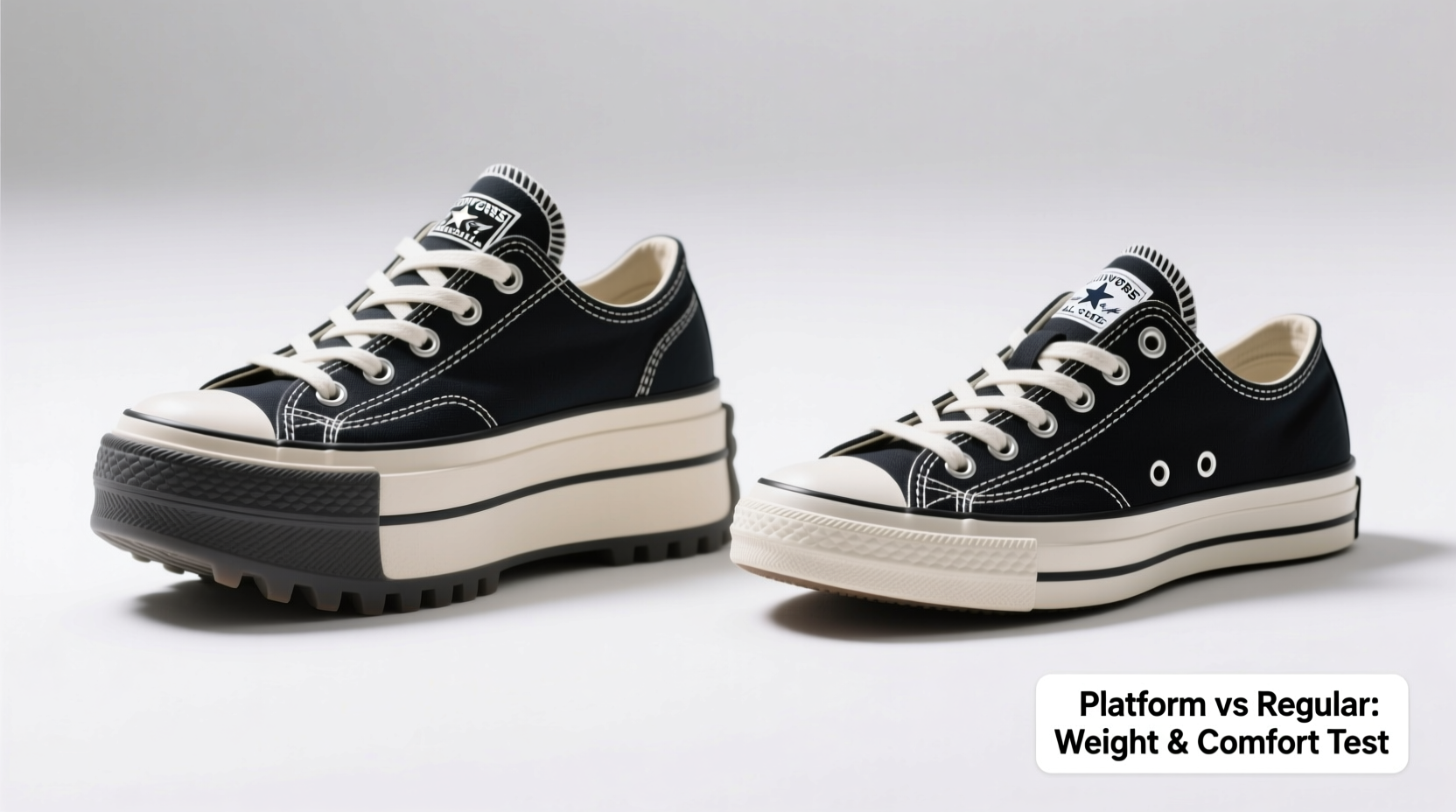
At first glance, comparing the weights seems straightforward. A standard unisex Converse Chuck 70 (regular) weighs approximately 11.5 ounces (326 grams) per shoe. The platform version, such as the Chuck 70 Platform Ox, tips the scales at around 14.5 ounces (411 grams)—a noticeable increase of about 3 ounces (85 grams) per shoe.
That might not sound like much, but over time, even small differences in shoe weight can influence gait, energy expenditure, and foot strain—especially during extended wear. However, weight alone doesn’t determine how “heavy” a shoe feels when walking.
| Model | Avg. Weight (per shoe) | Sole Thickness | Height Increase |
|---|---|---|---|
| Chuck 70 (Regular) | 11.5 oz (326g) | 1 inch | ~1 inch |
| Chuck 70 Platform | 14.5 oz (411g) | 1.5 inches | ~1.75 inches |
| One Star Platform | 13.8 oz (391g) | 1.4 inches | ~1.5 inches |
The platform models add both material and structural layers. The extra rubber or EVA foam in the midsole contributes to the increased mass, but also changes how that weight is positioned on the foot.
How Sole Design Impacts Perceived Heaviness
What makes a shoe feel “heavy” isn’t just its actual weight—it’s where that weight sits. Platform Chucks place additional mass under the forefoot and heel, which alters the shoe’s center of gravity. This shift can create a sensation of front-heaviness or instability, especially for those used to the flat, lightweight profile of classic Chucks.
Classic Chucks have a low-to-the-ground design with minimal cushioning. Their canvas upper and thin rubber sole make them responsive and agile, almost like wearing slippers with structure. Platform versions, by contrast, elevate the foot higher off the ground and often feature slightly stiffer soles to support the added height.
This change impacts proprioception—the body’s ability to sense its position in space. With less direct contact with the ground, your feet send fewer feedback signals to your brain, which can make walking feel less precise or natural at first.
“Increased sole thickness can reduce sensory feedback from the ground, leading to subtle changes in posture and stride. It’s not just about weight—it’s about neuromechanical adaptation.” — Dr. Lena Torres, Podiatrist & Gait Specialist
Comfort and Fatigue Over Time
Many users report that while platform Chucks feel fine initially, they begin to notice discomfort after several hours of walking. This isn’t solely due to weight—it’s a combination of factors:
- Lack of arch support: Neither regular nor platform Chucks offer built-in arch support. The added height of platforms can amplify strain on the arches and plantar fascia, especially on hard surfaces.
- Rigid sole flex: The thicker sole resists bending at the ball of the foot, requiring more effort with each step. This increases muscular work in the calves and toes.
- Ankle stability: The elevated base narrows the base of support, making lateral movements or uneven terrain trickier. This forces stabilizing muscles in the ankles and lower legs to work harder.
In urban environments where walking distances exceed a few blocks, these micro-efforts accumulate. After 3–4 miles, wearers often describe a “dragging” sensation—not because the shoes are excessively heavy, but because the body is compensating for unnatural mechanics.
Real-World Example: A Week of Commuting in Both Styles
Sophie, a graphic designer based in Portland, tested both styles during her daily commute—a mix of biking, walking, and standing in studio critiques. She wore regular Chucks Monday through Wednesday, then switched to platforms Thursday through Friday.
Her notes: “The platforms looked amazing with my wide-leg jeans and gave me a confidence boost. But by Thursday afternoon, I noticed my calves were tighter, and my feet felt ‘numb’—like I wasn’t fully grounded. On Friday, after a two-mile walk across town, I had a dull ache behind my knees. Switching back to regular Chucks on Saturday felt like relief. They’re lighter, sure—but more importantly, they let me *feel* the ground.”
Her experience highlights a key insight: perceived heaviness is often tied to fatigue and postural compensation, not just raw weight.
Design Evolution: Are Newer Platforms More Walkable?
Converse has responded to criticism about platform comfort with incremental improvements. Recent releases, such as the CX foam-lined versions of the platform Chuck 70, integrate lightweight cushioning systems designed to enhance underfoot comfort without drastically increasing weight.
The CX line uses compression-molded foam that reduces impact while keeping the sole relatively light. Though the total weight remains similar to non-CX platforms (~14–15 oz), users report a softer step, better energy return, and reduced fatigue. The trade-off? Slightly bulkier aesthetics and higher price points.
However, even with CX technology, the fundamental biomechanical challenges remain. Elevation still limits ground feel, and the wider sole can catch on stairs or curbs. These aren’t flaws—they’re design consequences of prioritizing style and height.
Checklist: How to Choose Based on Walking Needs
- Will I be walking more than 1–2 miles per day in these shoes? → Lean toward regular Chucks.
- Do I prioritize style and height over all-day comfort? → Platforms may suit your goals.
- Am I on my feet for long periods (e.g., retail, travel)? → Consider adding insoles or choosing CX models.
- Have I worn thick-soled shoes before without issues? → You may adapt quickly to platforms.
- Do I walk on uneven terrain or stairs frequently? → Regular Chucks offer better agility.
Breaking Them In: A Step-by-Step Guide
If you’ve decided to go with platform Chucks, proper break-in can reduce discomfort and improve walking ease. Follow this timeline:
- Days 1–2: Indoor wear only. Wear socks and walk around your home for 1–2 hours. Focus on bending your foot at the toe box to loosen the sole.
- Days 3–4: Short outdoor walks. Take 15–20 minute walks on flat pavement. Pay attention to pressure points or heel slippage.
- Day 5: Add an insert. Use a thin memory foam or gel insole to improve cushioning and reduce void space inside the shoe.
- Days 6–7: Gradual increase. Extend walks to 45 minutes. Test stairs and inclines. If pain persists beyond mild discomfort, reconsider long-term use.
Skipping the break-in process often leads to blisters, joint strain, or early abandonment of the shoes.
Frequently Asked Questions
Do platform Chucks hurt your feet?
They don’t inherently cause injury, but their lack of support and elevated design can contribute to foot fatigue, arch strain, or ankle instability—especially during prolonged use. People with pre-existing foot conditions (e.g., plantar fasciitis, flat feet) should proceed with caution or consult a podiatrist.
Can I make platform Chucks more comfortable for walking?
Yes. Adding quality insoles with arch support and cushioning helps significantly. Look for slim orthotics that won’t make the shoe too tight. Also, ensure a proper fit—platforms should not be sized up, as this increases internal sliding and instability.
Are there lightweight platform alternatives?
Some brands offer ultra-light platform sneakers using advanced foams (e.g., Adidas Samba Platform, Puma Creeper Platform). While not identical in style, they provide similar aesthetic height with better ergonomics. For Converse fans, the One Star Platform tends to be slightly lighter than the Chuck 70 Platform.
Final Verdict: Heavier in Weight, But Heavier in Impact Too?
Platform Converse are objectively heavier than regular Chucks—by about 25% per shoe. But the real issue isn’t just the number on the scale. It’s how that extra weight interacts with your body’s movement patterns. The raised sole, reduced flexibility, and altered balance require your muscles and joints to adapt, often at the cost of comfort over time.
For short outings, casual wear, or fashion-focused looks, platforms deliver undeniable appeal. They elongate the leg, add presence, and align with current trends. But if your day involves extensive walking, standing, or physical activity, regular Chucks remain the more functional, natural-feeling choice.
Ultimately, the decision comes down to priorities. If style and silhouette are paramount, embrace the platform—with realistic expectations. If comfort and ease of movement matter most, stick with the classic flat sole. And if you want a middle ground, explore the CX line or consider rotating between both styles depending on your daily needs.
“The best shoe is the one that fits your life—not just your outfit.” — Marcus Lin, Footwear Ergonomics Consultant
Take Action: Find Your Perfect Fit
Don’t let marketing or trends dictate your footwear choices. Try both styles side by side. Walk in them. Compare how your body responds. Listen to the subtle cues—tight calves, shifting balance, foot numbness. These are signs worth heeding.
Your feet carry you through every part of your day. Whether you choose platform or regular Chucks, make the decision with intention, comfort, and long-term well-being in mind.




 浙公网安备
33010002000092号
浙公网安备
33010002000092号 浙B2-20120091-4
Comments
No comments yet. Why don't you start the discussion?