
For decades, Converse Chuck Taylor All Stars have been a staple in casual footwear—simple, iconic, and effortlessly cool. But in recent years, the brand has expanded its lineup with a bolder silhouette: the platform Chuck 70. With nearly an inch of added height from a thick rubber sole, these shoes stand out both visually and structurally. The big question isn’t just about style—it’s about comfort. Are platform Converse actually more comfortable than their classic counterparts? Or is the extra lift just a fashion statement with trade-offs?
The answer depends on what you value in a shoe: arch support, weight, cushioning, stability, or simply how it feels after hours on your feet. To get to the truth, we need to break down the design differences, analyze user experiences, and consider biomechanics—not just trends.
Design Differences: What Sets Platforms Apart?
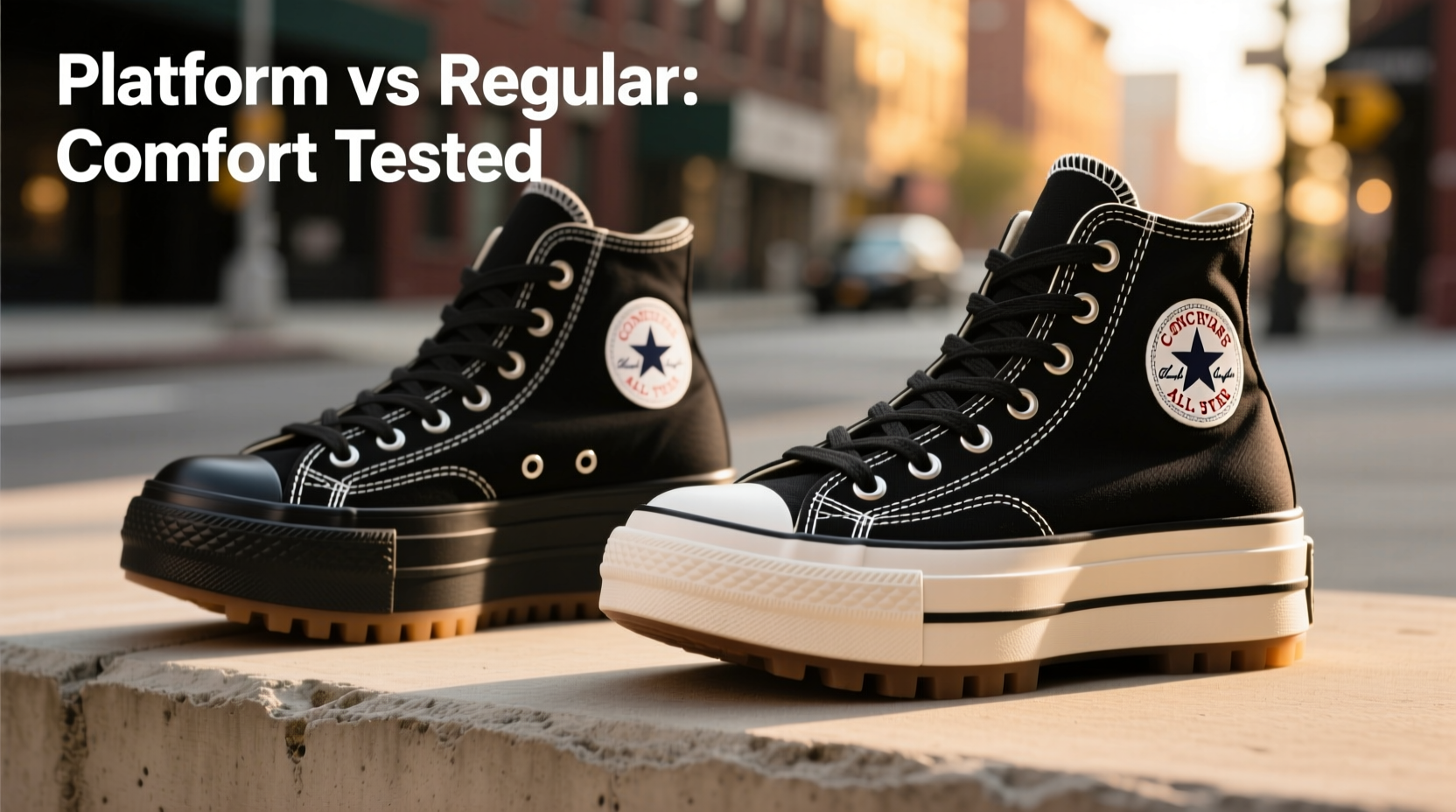
The most obvious difference between platform Chucks and regular Chucks lies in the sole. While both models share the same canvas upper and rubber toe cap, the construction beneath your foot diverges significantly.
Regular Chucks feature a thin, flat vulcanized rubber sole—about 1 cm thick at the heel. This minimalist design gives wearers a “barefoot” connection to the ground, which some appreciate for board sports or city walking. However, that same thinness means little shock absorption and minimal arch structure.
In contrast, the platform Chuck 70 (the most common elevated version) includes a dual-layer sole: a thickened midsole made of EVA foam sandwiched between the canvas upper and the rubber outsole. This adds approximately 35–40mm of height, mostly under the heel and ball of the foot. The result is a stiffer, heavier shoe—but one that provides more underfoot padding and a higher foot position within the shoe.
Weight and Flexibility Comparison
One of the first things wearers notice when switching from regular to platform Chucks is the weight. A standard Chuck II weighs around 11–12 ounces per shoe; the platform version tips the scale closer to 15–16 ounces. That may not sound like much, but over a full day of walking, the extra mass becomes noticeable, especially if you're used to lightweight sneakers.
Flexibility is another key factor. Regular Chucks are highly flexible due to their thin soles—they bend easily at the forefoot, allowing natural foot movement. Platform versions, however, are more rigid. The added midsole resists bending, which can affect gait for some people, particularly those who spend long periods standing or walking.
Comfort Breakdown: Cushioning, Support, and Fit
When evaluating comfort, it helps to separate the experience into three components: cushioning, support, and fit. Each plays a role in how a shoe feels during extended wear.
Cushioning: More Foam, Better Impact Absorption
This is where platform Chucks clearly win. The EVA foam midsole acts as a shock absorber, reducing the force transmitted to your joints when walking on pavement or concrete. For someone spending all day on their feet—whether at work, traveling, or exploring a city—this extra layer can make a meaningful difference.
Regular Chucks offer almost no cushioning. Step onto a hard floor, and you’ll feel every vibration through the thin rubber. Over time, this lack of padding can lead to foot fatigue, especially for individuals with sensitive heels or plantar fasciitis.
“Adding even a small amount of midsole foam can reduce peak pressure by up to 25% during heel strike.” — Dr. Lena Torres, Podiatrist & Footwear Biomechanics Researcher
Arch Support: Still Minimal, But Perception Varies
Neither platform nor regular Chucks come with built-in arch support. Both rely entirely on the flat insole and your foot’s natural mechanics. However, many users report that the platform model *feels* more supportive—likely because the thicker sole creates a sense of being “lifted” or cradled.
That said, perception isn’t reality. Without contoured footbeds or medial posting, neither shoe corrects overpronation or alleviates flat-foot discomfort. People needing therapeutic support should consider adding custom orthotics or choosing a different sneaker altogether.
Fit and Heel Slippage
Some wearers find that platform Chucks provide a more secure fit. Because the sole is thicker, the interior volume changes slightly—the foot sits higher, which can reduce heel slippage, a common complaint with regular Chucks.
However, fit varies by model. The platform Chuck 70 runs slightly narrower than the standard Chuck 70, so those with wide feet may find them snug. Conversely, tall individuals or those with larger feet often prefer the proportions of the platform—they look less boxy and balance better with longer limbs.
Real-World Wear Test: A Day in the Life
To understand how these shoes perform outside the showroom, consider the experience of Maya, a graphic designer in Portland who wears her Chucks daily—from biking to meetings to evening outings.
Maya started with regular high-top Chucks two years ago. She loved the look but found herself removing them by midday due to heel pain. After seeing influencers praise the platform version, she decided to try a pair in black canvas.
“The first thing I noticed was how much quieter my steps were,” she said. “It felt like there was something soft between me and the sidewalk. I wore them for nine hours straight—walking to client meetings, standing during photo shoots—and didn’t want to take them off.”
She did note the added weight took some getting used to. “They don’t feel agile. If I’m rushing across town, I still reach for my runners. But for style + staying power, the platforms are better.”
Still, Maya occasionally switches back to regular Chucks when she wants a “closer to the ground” feel, especially when riding her bike, where sole stiffness can hinder pedal responsiveness.
Comparative Overview: Platform vs Regular Chucks
| Feature | Platform Chuck 70 | Regular Chuck 70 |
|---|---|---|
| Sole Thickness | ~40mm (heel) | ~10–12mm (heel) |
| Midsole Material | EVA foam | None (rubber only) |
| Weight (per shoe) | 15–16 oz | 11–12 oz |
| Cushioning Level | Moderate | Minimal |
| Arch Support | Flat insole (none) | Flat insole (none) |
| Flexibility | Low (stiff sole) | High (bends easily) |
| Heel Slippage | Less common | More common |
| Best For | All-day wear, fashion-forward looks, added height | Skateboarding, minimalists, vintage aesthetic |
Who Should Choose Which Shoe?
Selecting between platform and regular Chucks shouldn’t be based solely on trendiness. Consider your lifestyle, foot type, and typical usage.
Choose Platform Chucks If You:
- Spend long hours on your feet
- Prioritize cushioning over agility
- Want added height without wearing boots or heels
- Prefer a modernized twist on the classic look
- Have mild heel sensitivity or discomfort in flat shoes
Stick With Regular Chucks If You:
- Value lightness and flexibility
- Use them for skateboarding or active movement
- Prefer a retro, minimalist aesthetic
- Don’t mind breaking in stiff soles
- Want maximum ground feel and responsiveness
How to Maximize Comfort in Either Model
No matter which style you choose, small upgrades can dramatically improve comfort. Here’s a checklist to enhance your Chuck experience:
Comfort Optimization Checklist
- Add an aftermarket insole: Brands like Superfeet, Dr. Scholl’s, or Sorbothane offer slim inserts that fit without altering the shoe’s shape.
- Break them in gradually: Wear new Chucks for 1–2 hours at home before full-day use to soften the collar and sole.
- Lace them properly: Use a heel-lock lacing technique to prevent slippage, especially in regular Chucks.
- Rotate your footwear: Avoid wearing the same pair every day to extend lifespan and reduce foot strain.
- Stretch wide feet: Place a bag of water inside the toe box and freeze overnight to gently expand tight areas.
Additionally, proper sizing matters. Many people size down in Chucks for a snug fit, but this can increase pressure on the toes. Consider going up half a size, especially in platform versions, which run narrow.
Frequently Asked Questions
Do platform Converse hurt your feet?
Not inherently. Most complaints arise from improper fit or unrealistic expectations. Because they’re still flat-soled compared to athletic shoes, prolonged use without adequate support can cause fatigue. But for average daily wear, platform Chucks are generally more comfortable than regular ones due to added cushioning.
Can I wear platform Chucks for walking all day?
Yes—many users report successfully wearing them for 8+ hour days, especially with added insoles. They’re not ideal for hiking or long-distance travel, but for urban environments and moderate activity, they hold up well.
Are platform Chucks good for flat feet?
Not on their own. Neither regular nor platform Chucks provide arch support. However, flat-footed individuals may find the thicker sole of the platform version more tolerable, especially when paired with orthotic inserts.
Final Verdict: Are Platforms Actually More Comfortable?
The evidence points to yes—platform Converse are generally more comfortable than regular Chucks for most people, especially in real-world, everyday scenarios. The addition of EVA foam makes a tangible difference in impact absorption, reducing foot fatigue and improving overall wearability.
That said, “comfort” is subjective. If you value a close-to-the-ground feel, flexibility, or skateboard functionality, the classic Chuck remains unmatched. But if you're looking for a stylish, durable casual shoe that won’t leave your feet aching by sunset, the platform version delivers a clear upgrade.
Ultimately, the best choice depends on your priorities. Fashion, function, and personal physiology all play a role. Fortunately, with both options available, you don’t have to compromise—you can own both and switch based on your day’s demands.




 浙公网安备
33010002000092号
浙公网安备
33010002000092号 浙B2-20120091-4
Comments
No comments yet. Why don't you start the discussion?