
When it comes to timeless footwear, few silhouettes are as iconic as the Converse Chuck Taylor All Star. Since its debut in 1917, this canvas staple has evolved into a cultural symbol—worn by athletes, artists, rebels, and fashion enthusiasts alike. Over time, Converse expanded its lineup with variations like the platform version, which adds height and structure while maintaining the brand’s signature aesthetic. But how do platform Converse compare to regular Chucks in terms of comfort and style? The answer depends on individual needs, foot shape, usage context, and personal taste.
Understanding the key differences between these two styles isn’t just about aesthetics—it can impact everything from daily wearability to long-term foot health. Whether you're building a capsule wardrobe or looking for comfortable streetwear staples, knowing what sets each model apart helps you make smarter choices.
Design and Construction: What Sets Them Apart?
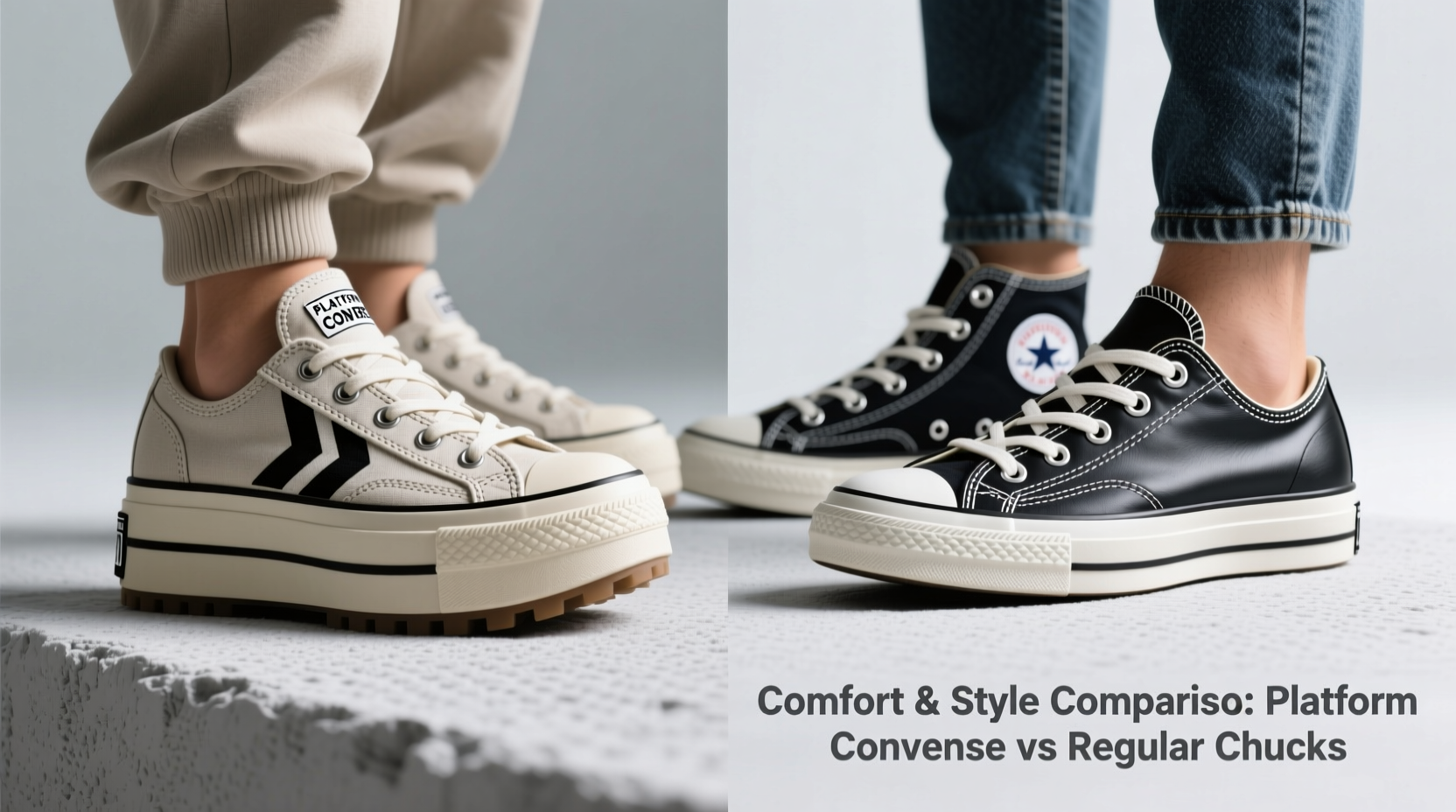
The most apparent difference lies in their sole construction. Regular Chucks feature a flat rubber outsole with minimal cushioning—typically around 1 inch thick at the heel. This design prioritizes simplicity and flexibility, offering a barefoot-like feel that many fans appreciate for its authenticity and ease of movement.
In contrast, platform Converse elevate both function and form. These models include a thicker midsole, usually ranging from 1.5 to 2 inches, adding visible height and improved shock absorption. The added layer is often made of EVA foam or rubber composites designed to distribute pressure more evenly across the footbed. Visually, platforms create a chunkier profile, making them stand out in casual and fashion-forward settings.
Both versions maintain the classic upper: durable canvas or suede, reinforced toe cap, lace-up closure, and the unmistakable rubber toe bumper. However, due to the elevated sole, platform variants may have slightly modified ankle collars and internal padding to accommodate changes in posture and gait.
“While traditional Chucks celebrate minimalism, platform versions respond to modern expectations for support without sacrificing identity.” — Marcus Lin, Footwear Historian & Streetwear Curator
Comfort Comparison: Daily Wear and Support Analysis
Comfort is subjective, but certain factors influence how each shoe performs during extended use. Let's break down the core aspects:
Arch Support and Cushioning
Neither regular nor platform Chucks come with built-in arch support or memory foam insoles. However, the platform’s thicker midsole provides noticeably better underfoot cushioning than the thin, nearly rigid sole of standard Chucks. For people who walk frequently or spend hours on their feet, this makes a tangible difference in reducing fatigue.
That said, individuals with high arches or plantar fasciitis may still find both options lacking without orthotic inserts. Many users report that platform Chucks feel “softer” upon impact, especially on hard surfaces like concrete or tile floors.
Weight and Flexibility
Due to the added sole material, platform Converse are heavier—typically 0.3 to 0.5 pounds per pair more than regular Chucks. While not drastic, the extra weight can be felt after prolonged activity, particularly for those accustomed to lightweight footwear.
Flexibility remains relatively similar; both shoes allow natural forefoot bending thanks to the canvas upper and segmented outsole. However, the stiffer platform base reduces overall bend compared to the flatter original, which some describe as feeling “more planted” but less agile.
Fitting and Break-In Period
Both styles run true to size, though they tend to fit snug initially. Canvas stretches over time, so a tight fit early on often loosens within a week or two of regular wear. Platform models sometimes require a longer break-in period because the thicker sole alters heel placement and ankle alignment.
Users with wide feet often prefer regular Chucks for their roomier toe box, while slimmer-footed individuals may appreciate the snugger hold of platforms. Trying both on—or ordering multiple sizes—is recommended before committing.
Styling Differences: Fashion Impact and Outfit Pairing
Style is where the divergence becomes most evident. Both shoes carry the same retro-cool DNA, but their visual effect varies significantly depending on context.
Silhouette and Proportion
Regular Chucks offer a low-profile, grounded look ideal for minimalist outfits. They pair effortlessly with slim jeans, cropped trousers, skirts, and dresses, allowing other elements of an outfit to take center stage. Their subtlety makes them versatile across seasons and occasions—from errands to concerts.
Platforms, by contrast, command attention. The lifted sole elongates the leg line and adds volume to the lower half of the body. This works exceptionally well with cuffed jeans, bike shorts, midi skirts, and oversized blazers. Because of their bolder presence, platforms often serve as the focal point of an ensemble.
Gender and Identity Expression
Historically unisex, both styles are embraced across gender identities. However, platform Chucks have gained particular popularity in queer fashion, femme-presenting communities, and alt subcultures (e.g., grunge, goth, kawaii) where exaggerated proportions and self-expression are celebrated.
For shorter individuals or those seeking added height without heels, platforms provide a practical yet stylish solution. Meanwhile, regular Chucks remain a favorite among purists and those favoring understated cool.
| Feature | Regular Chucks | Platform Chucks |
|---|---|---|
| Sole Height | ~1 inch | ~1.5–2 inches |
| Cushioning Level | Minimal | Moderate |
| Weight (per shoe) | ~8 oz | ~10–11 oz |
| Fashion Profile | Classic, subtle | Bold, statement-making |
| Best For | Daily wear, layering, laid-back looks | Outfits with attitude, leg-lengthening effect |
| Break-In Time | Short (3–5 wears) | Moderate (5–10 wears) |
Real-World Use Case: Emma’s Transition from Flats to Platforms
Emma, a 28-year-old graphic designer based in Portland, wore regular black Chucks exclusively for over a decade. She loved their simplicity and reliability but began experiencing foot soreness after transitioning to a job requiring long commutes and standing meetings.
After researching alternatives, she tried platform Chucks in white canvas. Initially skeptical about the look, she found the extra cushioning reduced her end-of-day discomfort significantly. “I was surprised by how much the slight lift helped my posture,” she said. “Plus, I got compliments every time I wore them.”
Now, she rotates between both styles: using platforms for workdays and travel, and reserving flat Chucks for relaxed weekends or when pairing with vintage denim that fits better with a lower sole.
Her experience reflects a growing trend—people aren’t choosing one over the other permanently, but rather curating a collection based on purpose.
How to Choose Based on Lifestyle and Needs
Selecting between platform and regular Chucks shouldn't rely solely on trends or appearance. Consider your daily routine and priorities.
- Assess Your Activity Level: If you walk more than 5,000 steps daily or stand for extended periods, opt for platforms for better shock absorption.
- Evaluate Your Wardrobe: Do you lean toward edgy, layered, or theatrical styles? Platforms enhance such aesthetics. Prefer clean lines and neutral tones? Regular Chucks integrate seamlessly.
- Test for Fit Early: Always try both versions side-by-side. Pay attention to heel lift, toe wiggle room, and ankle comfort.
- Consider Seasonality: Platforms can feel bulkier in summer; flat Chucks breathe better and suit open-hemmed pants and sandals-style layering.
- Think Long-Term Value: Both are durable, but platforms may show wear faster on the midsole edges due to increased surface contact.
Expert Recommendations for Maximizing Comfort
No matter which style you choose, small upgrades can dramatically improve comfort:
- Replace stock insoles with supportive ones (e.g., Superfeet, Dr. Scholl’s).
- Use padded socks made from moisture-wicking materials.
- Lace them with “heel lock” technique to minimize slippage.
- Clean canvas regularly with mild soap and water to maintain breathability.
- Store in a ventilated area away from direct sunlight to prevent yellowing.
“The biggest mistake people make is treating all sneakers the same. A flat Chuck and a platform serve different biomechanical roles—even if they share a logo.” — Dr. Lena Torres, Podiatrist & Sneaker Consultant
FAQ: Common Questions Answered
Are platform Converse good for walking?
Yes, especially compared to regular Chucks. The added midsole offers better cushioning and stability, making them suitable for moderate walking. However, they’re not designed for athletic performance or long-distance hiking. For serious walking, consider adding orthotics.
Do platform Chucks run big or small?
They generally run true to size, but some users report a slightly tighter fit due to the structured interior. If you're between sizes or have wide feet, consider sizing up by half a size. Always check reviews specific to the colorway and material, as leather platforms may fit differently than canvas.
Can I dress up platform Converse?
Absolutely. While traditionally considered casual, platform Chucks have been styled with tailored trousers, blazers, and even midi dresses in editorial and street photography. The key is balance—pair bold shoes with streamlined clothing to avoid overwhelming the silhouette.
Final Thoughts: Which One Should You Buy?
The choice between platform Converse and regular Chucks ultimately comes down to intention. If you value tradition, versatility, and a no-frills aesthetic, the classic flat version remains unmatched. It’s a wardrobe anchor that never goes out of style.
But if you want enhanced comfort, a bit of height, and a stronger fashion statement, platform Chucks deliver—with caveats. They’re heavier, slightly less flexible, and draw more attention, which may or may not align with your personal style.
Many people now own both, switching based on occasion, mood, or outfit. That flexibility is part of what makes the Chuck Taylor legacy endure: adaptability without compromise.




 浙公网安备
33010002000092号
浙公网安备
33010002000092号 浙B2-20120091-4
Comments
No comments yet. Why don't you start the discussion?