
Footwear plays a pivotal role in shaping posture, influencing gait, and determining long-term musculoskeletal health. Among the most common choices for casual and semi-formal wear are platform sandals and flats—both prized for style and comfort, but often misunderstood in terms of their impact on foot mechanics. While many assume that flat shoes are inherently better for posture due to their low heel, and platforms are merely fashion-forward statements, the reality is more nuanced. The key lies not just in height, but in structure: arch support, midsole cushioning, heel alignment, and weight distribution.
This article examines how platform sandals and flats affect posture and arch support from a biomechanical and orthopedic perspective. We’ll compare design elements, evaluate real-world usability, and provide actionable guidance for choosing footwear that supports long-term spinal alignment and foot health.
The Biomechanics of Footwear and Posture
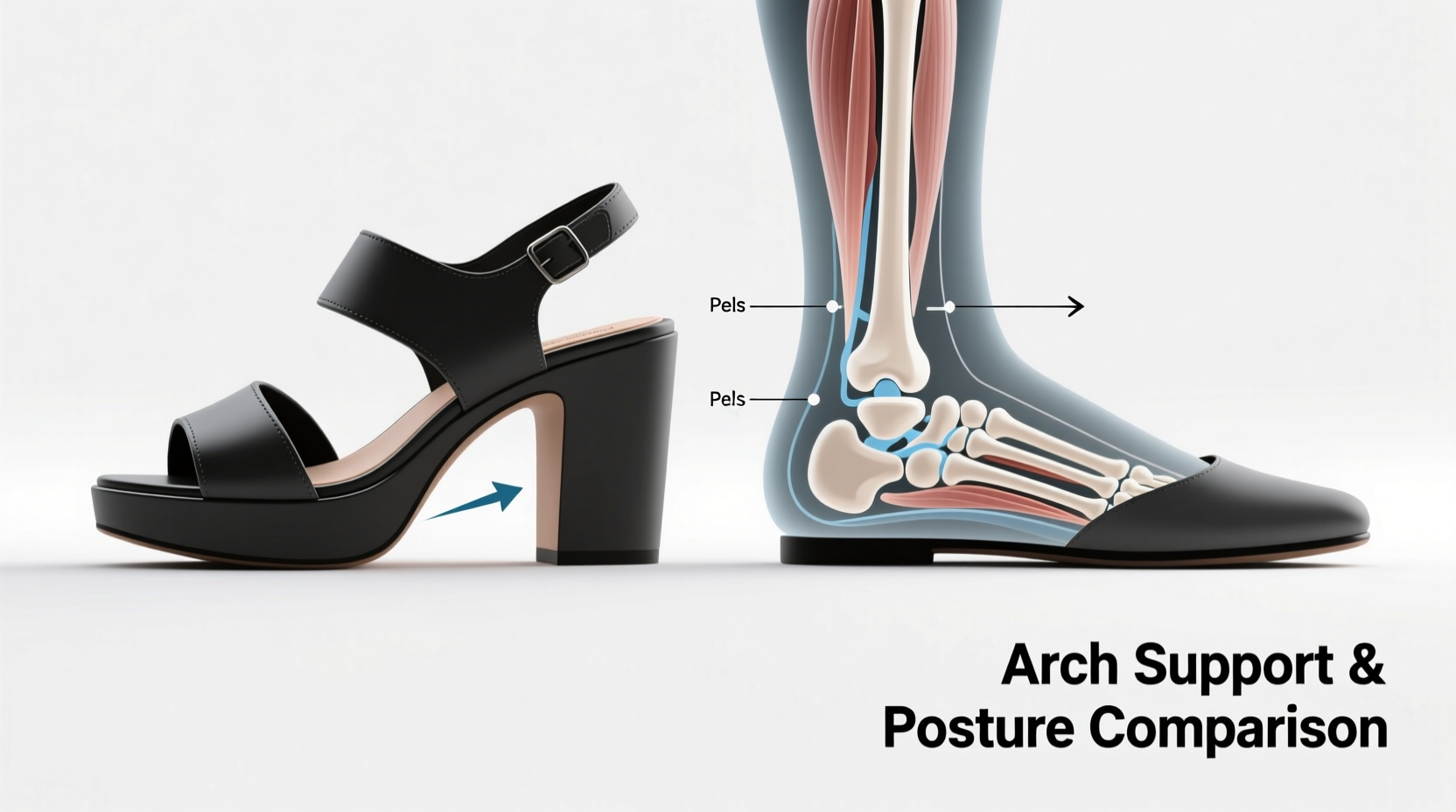
Posture isn’t solely about standing up straight—it begins at the feet. Every step initiates a kinetic chain reaction: from the ground up through the ankles, knees, hips, and spine. Poorly designed footwear disrupts this chain, leading to compensatory movements that strain joints and muscles over time.
A shoe’s influence on posture hinges on three core factors:
- Heel-to-Toe Drop: The height difference between the heel and forefoot. A higher drop shifts weight forward, increasing pressure on the ball of the foot and altering spinal curvature.
- Arch Support: Proper support maintains the natural curve of the medial longitudinal arch, preventing overpronation (inward rolling of the foot).
- Stability and Cushioning: Adequate shock absorption reduces joint stress during walking or prolonged standing.
Flats typically have a minimal heel-to-toe drop (0–5mm), suggesting they promote a more neutral stance. However, many mass-market flats lack internal structure, offering little more than a thin layer of leather or synthetic material between the foot and pavement. In contrast, well-designed platform sandals can incorporate built-in arch contouring, deeper cushioning, and a stable base—features absent in most ballet flats.
“Many patients come in with lower back pain traced directly to unsupportive flats. The absence of arch support forces the body to compensate, often leading to pelvic tilt and lumbar strain.” — Dr. Lena Torres, Podiatrist and Gait Specialist
Platform Sandals: Fashion or Functional?
Modern platform sandals vary widely—from flimsy festival styles to engineered designs with anatomical footbeds. The best examples mimic orthopedic principles: elevated soles with gradual incline, contoured arches, and heel cups that stabilize the calcaneus (heel bone).
High-quality platform sandals often feature:
- EVA or polyurethane midsoles that absorb impact
- Molded arch support aligned with the foot’s natural curve
- Wide, stable bases that reduce lateral instability
- Adjustable straps that secure the foot and prevent slippage
The elevation provided by platforms doesn’t necessarily compromise posture if the entire sole lifts uniformly. Unlike high heels, which pitch the body forward and compress the forefoot, platforms maintain a level foot position even at increased height. This allows the wearer to gain vertical lift without sacrificing balance or shifting excessive load to the toes.
When Platforms Fail: The Pitfalls of Poor Design
Not all platforms are created equal. Many fast-fashion versions prioritize aesthetics over function, featuring:
- Hard, inflexible soles with no shock absorption
- Flat arch profiles that don’t match foot anatomy
- Narrow toe boxes that crowd the metatarsals
- Loose straps that force toes to grip, causing fatigue
These flaws negate any potential benefits. A poorly constructed platform can be worse than a flat shoe, as the added height increases leverage and places greater stress on misaligned joints.
Flats: The Hidden Drawbacks of \"Natural\" Footwear
Flats are often marketed as the healthy alternative to heels. Yet, clinical evidence suggests otherwise. A 2022 study published in the Journal of Foot and Ankle Research found that women who wore unsupportive flats daily were 37% more likely to develop plantar fasciitis than those wearing structured low-heeled shoes.
The problem lies in what’s missing: cushioning and arch contouring. Most ballet-style flats have:
- No midsole padding—hard floors transmit full impact to bones and joints
- Completely flat insoles that don’t accommodate the foot’s arch
- Fraying or collapsing shanks after minimal use
- Slip-on designs that encourage toe-gripping to stay on
Over time, this leads to overpronation, where the arch collapses inward with each step. The tibia rotates internally, the knee tracks improperly, and the pelvis tilts—an imbalance that ascends into the lower back. Chronic overuse of such flats correlates with conditions like shin splints, bunions, and even early-onset osteoarthritis.
Exception: Supportive Flats Designed for Health
Some flats break the mold. Brands like Dansko, Rockport, and Clarks offer models with:
- Polyurethane footbeds with memory foam layers
- Removable insoles compatible with custom orthotics
- Rigid heel counters that stabilize rearfoot motion
- Flexible foreparts that allow natural toe-off
These variants blur the line between fashion and function, offering the sleek profile of a flat shoe with biomechanical integrity. However, they remain the exception rather than the norm in most wardrobes.
Comparative Analysis: Platform Sandals vs Flats
| Feature | Typical Platform Sandals | Typical Flats | Winner |
|---|---|---|---|
| Heel-to-Toe Drop | Low to moderate (4–8mm), often level | Minimal (0–5mm) | Flats (slight edge) |
| Arch Support | Often contoured; varies by brand | Rarely present; mostly flat | Platforms |
| Cushioning | Generally good in quality models | Poor; thin soles | Platforms |
| Stability | Wider base improves balance | Narrow; prone to rolling | Platforms |
| Postural Alignment | Better if well-designed | Poor due to overpronation risk | Platforms |
| Fashion Versatility | Seasonal; limited formal options | High; works with dresses, pants, skirts | Flats |
The data shows that while flats win on versatility, platform sandals—particularly those with ergonomic design—outperform in nearly every biomechanical category critical to posture and arch health.
Real-World Example: A Week in the Life of Two Wearers
Consider two office workers, both logging 8,000 steps daily, including commutes and meetings.
Sarah wears classic leather ballet flats. By mid-afternoon, she experiences arch fatigue and tightness in her calves. She frequently adjusts her posture at her desk, leaning to one side. Over six months, she develops heel pain diagnosed as early-stage plantar fasciitis.
Jamila, meanwhile, opts for supportive platform sandals with a 1.5-inch uniform sole and molded arch. Though slightly taller, her shoes distribute weight evenly. She reports less foot fatigue and improved standing endurance. Her gait analysis shows neutral foot strike and minimal pronation.
This scenario illustrates that perceived “naturalness” of flats doesn’t equate to better support. Functionality trumps tradition when it comes to long-term foot health.
How to Choose Footwear That Supports Posture and Arch Health
Selecting the right shoe requires looking beyond silhouette. Follow this checklist to make informed decisions:
✅ Supportive Footwear Checklist
- Press the heel counter—if it bends easily, it lacks stability
- Check the insole: Is it contoured, or completely flat?
- Test flexibility: The shoe should bend at the ball of the foot, not the arch
- Walk in them: Do your toes grip to keep the shoe on?
- Assess weight distribution: Stand barefoot, then in shoes—do you feel balanced?
- Look for brands with podiatrist endorsements (e.g., APMA Seal of Acceptance)
Step-by-Step Guide: Transitioning to Supportive Shoes
- Assess Your Current Footwear: Identify which shoes you wear most and evaluate their support features using the checklist above.
- Visit a Specialty Store: Get professionally fitted. Many stores offer gait analysis and pressure mapping.
- Start with One Pair: Replace your most-worn flat with a supportive alternative—either an ergonomic flat or a low-profile platform sandal.
- Break In Gradually: Wear new shoes for 1–2 hours initially, increasing duration over a week.
- Monitor Symptoms: Note changes in foot, knee, or back discomfort. Improvement should occur within 2–3 weeks.
- Incorporate Orthotics if Needed: If you have existing conditions, consider removable insoles tailored to your arch type.
Frequently Asked Questions
Can platform sandals cause back pain?
Only if poorly designed. High, unstable platforms with no arch support or heel cushioning can alter gait and increase spinal load. However, well-constructed platforms with even elevation and proper foot alignment often reduce back pain by improving overall posture.
Are flats ever good for arch support?
Yes—but only specific models. Look for flats with built-in arch contouring, firm heel counters, and cushioned midsoles. Avoid ultra-thin, flexible styles commonly sold as “ballet flats.”
Do I need arch support if I don’t have foot pain?
Preventive support matters. Even asymptomatic individuals benefit from proper arch alignment. It reduces cumulative strain on joints and muscles, lowering the risk of chronic issues later in life.
Conclusion: Prioritize Structure Over Style Alone
The debate between platform sandals and flats isn’t settled by heel height alone. When evaluating posture and arch support, structural integrity outweighs aesthetic conventions. A well-engineered platform sandal often provides superior biomechanical benefits compared to a traditional flat lacking in cushioning and arch contouring.
That said, the best choice depends on design, not category. A supportive flat can outperform a flimsy platform, just as a high-quality sandal can enhance alignment better than a collapsed ballet shoe. The key is to look beneath the surface—examine materials, test fit, and prioritize features that align with your body’s needs.
Your feet carry you through life. Choosing footwear that supports natural posture isn’t a luxury—it’s a necessity. Start paying attention to what’s under your feet today, and you’ll stand taller, walk easier, and move with confidence for years to come.




 浙公网安备
33010002000092号
浙公网安备
33010002000092号 浙B2-20120091-4
Comments
No comments yet. Why don't you start the discussion?