
When navigating the produce aisle or planning a recipe that calls for mild peppers, confusion often arises between poblano and Cubanelle varieties. Though both are large, green, and frequently used in savory dishes, they differ significantly in flavor, texture, heat level, and ideal applications. Understanding these differences empowers home cooks to make informed choices—whether roasting for chiles rellenos, slicing into fajitas, or stuffing for a weekend casserole. This guide breaks down each pepper’s profile, compares them directly, and provides practical guidance on how to use them effectively in everyday cooking.
Definition & Overview
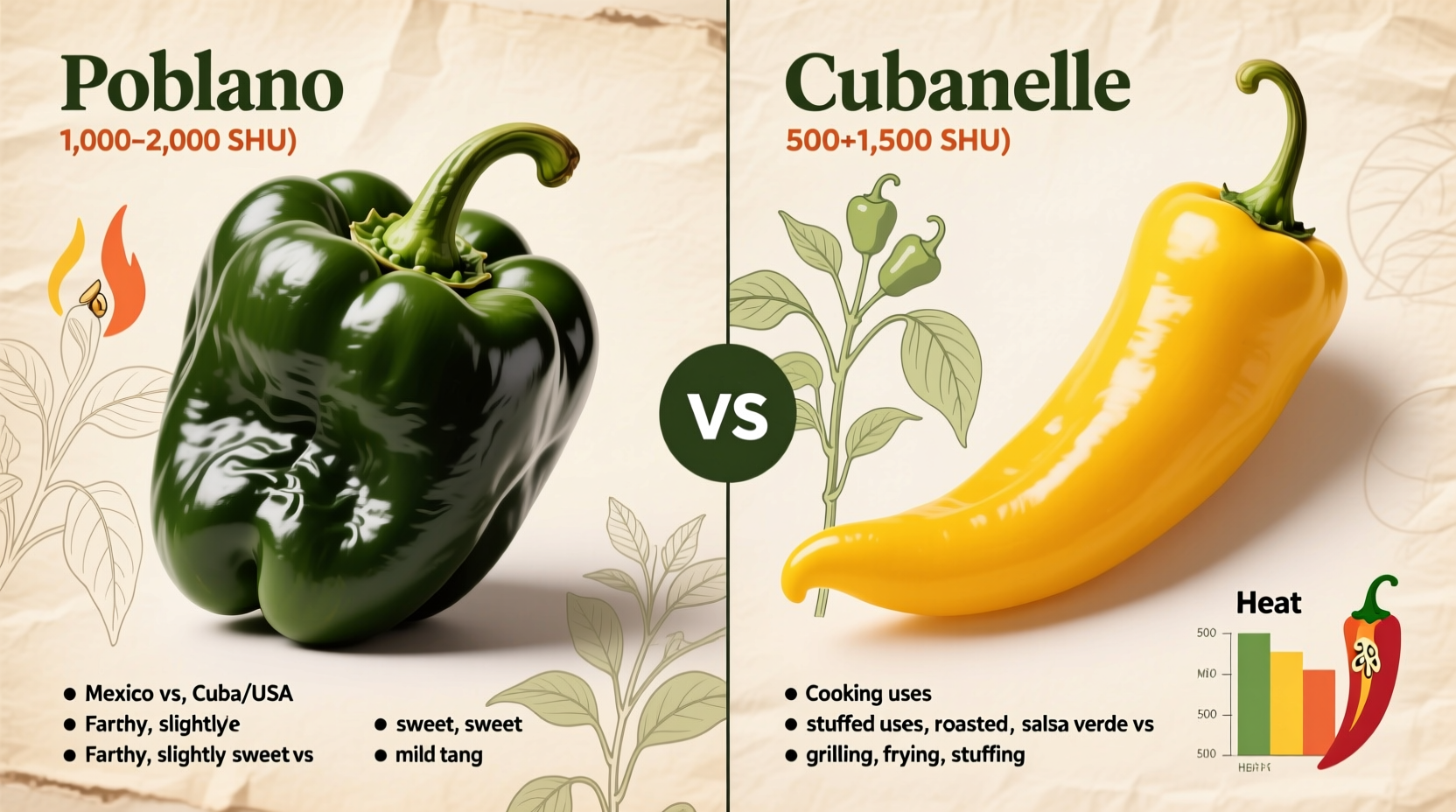
Poblano peppers (Capsicum annuum) originate from the state of Puebla in Mexico, which gives them their name. They are a staple in traditional Mexican cuisine and are typically harvested when dark green and mature, though they can ripen to a deep red or brown. Fresh, they have a rich, earthy flavor with a thick flesh ideal for roasting, stuffing, and blending into sauces. When dried, they become known as ancho chiles, prized for their sweet, raisin-like depth in mole and adobo preparations.
Cubanelle peppers, sometimes called Italian frying peppers or Cuban yellow hots, are a sweet pepper cultivar believed to have roots in Italy but widely adopted in Caribbean and Latin American cooking. Despite occasional labeling as “mild cuban peppers,” they are not particularly hot. Their elongated shape, thin walls, and pale yellow-green color make them easy to distinguish once familiar. They are most often used fresh in sautés, sandwiches, and antipasto platters, valued more for sweetness and texture than complexity.
Key Characteristics
| Characteristic | Poblano Pepper | Cubanelle Pepper |
|---|---|---|
| Heat Level (Scoville) | 1,000–2,000 SHU (mild to moderate) | 0–1,000 SHU (very mild to nearly heatless) |
| Flavor Profile | Earthy, slightly grassy, with hints of cocoa and dried fruit when roasted | Sweet, crisp, mildly vegetal—similar to bell pepper but brighter |
| Color (Mature) | Dark green; turns red when fully ripe | Pale green to golden yellow |
| Shape & Size | Broad, heart-shaped, 4–6 inches long | Long, tapered, 6–8 inches, slender |
| Flesh Thickness | Thick, meaty walls | Thin to medium walls |
| Culinary Function | Roasting, stuffing, sauce base, grilling | Sautéing, frying, pickling, raw use |
| Shelf Life (Fridge) | 7–10 days | 5–7 days |
| Dried Form | Ancho chile (dried red poblano) | Rarely dried; not commercially significant |
Practical Usage: How to Use Each Pepper
Using Poblano Peppers
The poblano’s thick flesh makes it uniquely suited for high-heat techniques that require structure retention. Roasting is one of the most transformative methods: blistering the skin over an open flame or under a broiler loosens the outer layer, which can be peeled away to reveal a tender, smoky interior. This process enhances its natural earthiness and reduces any raw bitterness.
One of the most iconic preparations is chiles rellenos—stuffed poblanos filled with cheese (often queso fresco or Oaxaca), dipped in egg batter, and fried until golden. Because of their size and depth, they hold fillings well without splitting during cooking. They also work beautifully in casseroles like chile con queso bakes or layered into enchiladas.
In sauces, roasted or dried poblanos contribute body and subtle warmth. A simple blended puree of roasted poblano, garlic, onion, and broth becomes a foundational sauce for huevos rancheros or simmered beans. Ground dried ancho chiles add complexity to spice rubs for meats or slow-cooked stews.
Pro Tip: Always taste a small piece of raw poblano before using. While generally mild, individual peppers can vary in heat due to growing conditions. If preparing for sensitive palates, remove all seeds and white ribs—the source of most capsaicin.
Using Cubanelle Peppers
Cubanelles shine in quick-cooking applications where texture and subtle sweetness matter more than depth. Their thin walls mean they cook rapidly and don’t hold up to prolonged roasting or stuffing like poblanos. Instead, slice them into ½-inch strips and sauté with onions and garlic—a classic preparation known as ajillo in Puerto Rican and Dominican kitchens—for serving alongside grilled meats or eggs.
They are also excellent for frying. Lightly battered and fried, Cubanelles turn crisp-tender with a delicate crunch, often served as a tapa or side dish. In sandwiches—particularly Cuban sandwiches—their slight sweetness balances the saltiness of ham and Swiss cheese, especially when pressed and warmed.
Because they remain firm yet tender when cooked briefly, Cubanelles are ideal for stir-fries and pasta dishes. Toss them into a warm olive oil-based sauce with garlic, anchovies, and cherry tomatoes for a rustic Italian-inspired dish. They can even be thinly sliced and added raw to salads or relishes for a juicy, clean bite.
Cooking Hack: For maximum flavor development, sear Cubanelle slices over medium-high heat until edges caramelize slightly. Avoid overcrowding the pan to ensure proper browning rather than steaming.
Variants & Types
Poblano Variants
- Green Poblano (Fresh): Most common form; used within weeks of harvest. Best for roasting, stuffing, and grilling.
- Red/Ripe Poblano: Fully matured fruit with deeper sweetness and higher sugar content. Often dried into anchos.
- Ancho Chile (Dried): Dried red poblano with a wrinkled appearance and concentrated, fruity flavor. Used whole or ground in moles, salsas, and braising liquids.
- Choricero Pepper (Similar but distinct): Sometimes confused with ancho; slightly smaller and hotter, commonly used in Spanish cuisine.
Cubanelle Variants
- Young Green Cubanelle: Pale green, very mild, best for raw or quick-cook use.
- Mature Yellow Cubanelle: Ripened to golden yellow; sweeter and softer, ideal for frying or roasting lightly.
- Frying Pepper Blends: Often sold mixed with other sweet frying peppers like banana or Hungarian wax (though caution is needed—wax peppers can be hot).
- Italian Long Sweet Peppers: Nearly identical botanically and culinarily; used interchangeably in Mediterranean recipes.
It's important to note that some markets mislabel milder wax peppers or unripe jalapeños as Cubanelles. True Cubanelles should have almost no heat and a glossy, thin skin.
Comparison with Similar Ingredients
Both peppers are frequently mistaken for others due to overlapping appearances and regional naming inconsistencies. Here’s how they compare to commonly confused counterparts:
Poblano vs Bell Pepper
- Flavor: Poblanos have a more complex, earthy taste compared to the neutral sweetness of green bell peppers.
- Heat: Poblanos carry mild heat; bells are completely non-pungent.
- Texture: Poblanos have thicker walls better suited for stuffing and roasting intact.
- Use Case: Substitute bell pepper for poblano only if eliminating heat entirely—but expect less depth.
Cubanelle vs Banana Pepper
- Appearance: Both are long and yellow, but banana peppers tend to be shorter and wider at the tip.
- Taste: Banana peppers are tangier, often vinegared when pickled; Cubanelles are sweeter and fresher tasting.
- Heat: Banana peppers are typically heatless, like Cubanelles, but some strains may have a faint kick.
- Culinary Role: Pickled banana peppers go on pizzas and sandwiches; Cubanelles are usually cooked fresh.
Poblano vs Cubanelle – Direct Comparison
| Factor | Poblano | Cubanelle |
|---|---|---|
| Best Cooking Method | Roasting, stuffing, drying | Sautéing, frying, grilling quickly |
| Raw Eating Suitability | Firm, slightly bitter—better cooked | Crisp, sweet—excellent raw |
| Substitution for Heat | Adds mild warmth | Adds zero heat |
| Availability by Season | Peak summer to early fall | Late summer through fall |
| Price (Average) | $2.50–$4 per pound | $3–$5 per pound (less common) |
\"The key difference isn't just heat—it's function. Poblanos build flavor foundations; Cubanelles add brightness and texture.\" — Chef Elena Ruiz, Culinary Instructor, Institute of Latin American Cuisine
Practical Tips & FAQs
Can I substitute a Cubanelle for a poblano?
Only in recipes where minimal heat and thinner texture are acceptable. For example, in a stir-fry or omelet, yes. But for stuffed peppers or roasted chile sauces, no—Cubanelles lack the structural integrity and depth of flavor. If substituting, consider using a green bell pepper instead, or combine a mild bell with a pinch of smoked paprika to mimic roastiness.
Are Cubanelle peppers supposed to be spicy?
No. Authentic Cubanelles are bred to be very mild, registering near zero on the Scoville scale. If your Cubanelle has noticeable heat, it may have been mislabeled—possibly a young Hungarian wax pepper, which looks similar but can reach 15,000 SHU.
How do I store these peppers?
Store both in the crisper drawer of your refrigerator in a perforated plastic bag. Poblanos last longer due to thicker skin—up to 10 days. Cubanelles degrade faster; use within a week. Do not wash until ready to use to prevent mold.
Can I freeze either pepper?
Yes, but with caveats. Roasted and peeled poblanos freeze exceptionally well for up to six months—ideal for batch-prepping chile rellenos or sauce bases. Blanch first, then pack tightly in freezer-safe containers. Cubanelles can be frozen but lose crispness upon thawing; best used later in cooked dishes like soups or stews, not raw applications.
What dishes highlight each pepper best?
- Poblano: Chiles Rellenos, Rajas con Crema, Ancho-Mole Chicken, Chile Colorado, Stuffed Poblano Casserole
- Cubanelle: Sautéed Peppers and Onions, Fried Cubanelles with Garlic, Cuban Sandwiches, Antipasto Platter, Pepper Stir-Fry with Sausage
Is there a size difference that affects cooking?
Absolutely. Poblanos average 4–6 inches wide and 3–4 inches tall, making them suitable for halving and stuffing. Cubanelles grow longer—up to 8 inches—but remain narrow (about 1.5 inches wide), so they’re better sliced than stuffed. Adjust quantities accordingly: one large poblano ≈ two medium Cubanelles by volume when diced.
Do they nutritionally differ?
Both are low-calorie, high-fiber vegetables rich in vitamin C and antioxidants. Poblanos contain slightly more capsaicin, which may boost metabolism modestly. Cubanelles, being riper when yellow, offer higher beta-carotene levels. Neither is a major protein or fat source, but both enhance nutrient absorption when paired with healthy fats (e.g., olive oil, cheese).
Storage Pro Tip: For extended freshness, wrap unwashed poblanos individually in paper towels before refrigerating. This absorbs excess moisture and prevents spoilage.
Summary & Key Takeaways
While poblano and Cubanelle peppers may appear superficially similar—especially when lined up in a market bin—they serve distinct roles in the kitchen. Recognizing their differences ensures better results and avoids culinary disappointment.
- Poblanos are earthy, mildly spicy, and structurally robust—ideal for roasting, stuffing, and drying into anchos. They bring depth to Mexican classics and benefit from slow, flavor-building techniques.
- Cubanelles are sweet, crisp, and delicate—perfect for fast sautés, frying, or raw use. They excel in Caribbean, Italian, and fusion dishes where freshness and texture take precedence.
- Never assume interchangeability. Substituting one for the other alters mouthfeel, flavor balance, and dish integrity.
- Always inspect before purchase: look for glossy, taut skins without soft spots or wrinkles.
- Label awareness matters—especially with Cubanelles, which are sometimes confused with hotter varieties.
Mastering these peppers means understanding not just what they are, but how they behave under heat, how they complement proteins and grains, and when to choose one over the other. With this knowledge, you’ll elevate everything from weekday fajitas to holiday feasts.
Challenge Yourself: Try making both chiles rellenos (with poblano) and fried Cubanelles in garlic oil in the same meal. Compare textures, flavors, and techniques side by side to deepen your intuition in the kitchen.




 浙公网安备
33010002000092号
浙公网安备
33010002000092号 浙B2-20120091-4
Comments
No comments yet. Why don't you start the discussion?