
Every morning, you wake up with 24 hours that no one else can claim. Yet for many, the days blur into routines filled with distractions, obligations, and a quiet sense of regret. The realization that time is slipping away often comes not with a crisis, but with a slow ache — a feeling that life isn’t aligning with what truly matters. The good news? It’s never too late to shift course. Lasting fulfillment doesn’t come from grand gestures alone, but from consistent, practical decisions that reflect your deepest values.
Clarify What Truly Matters to You
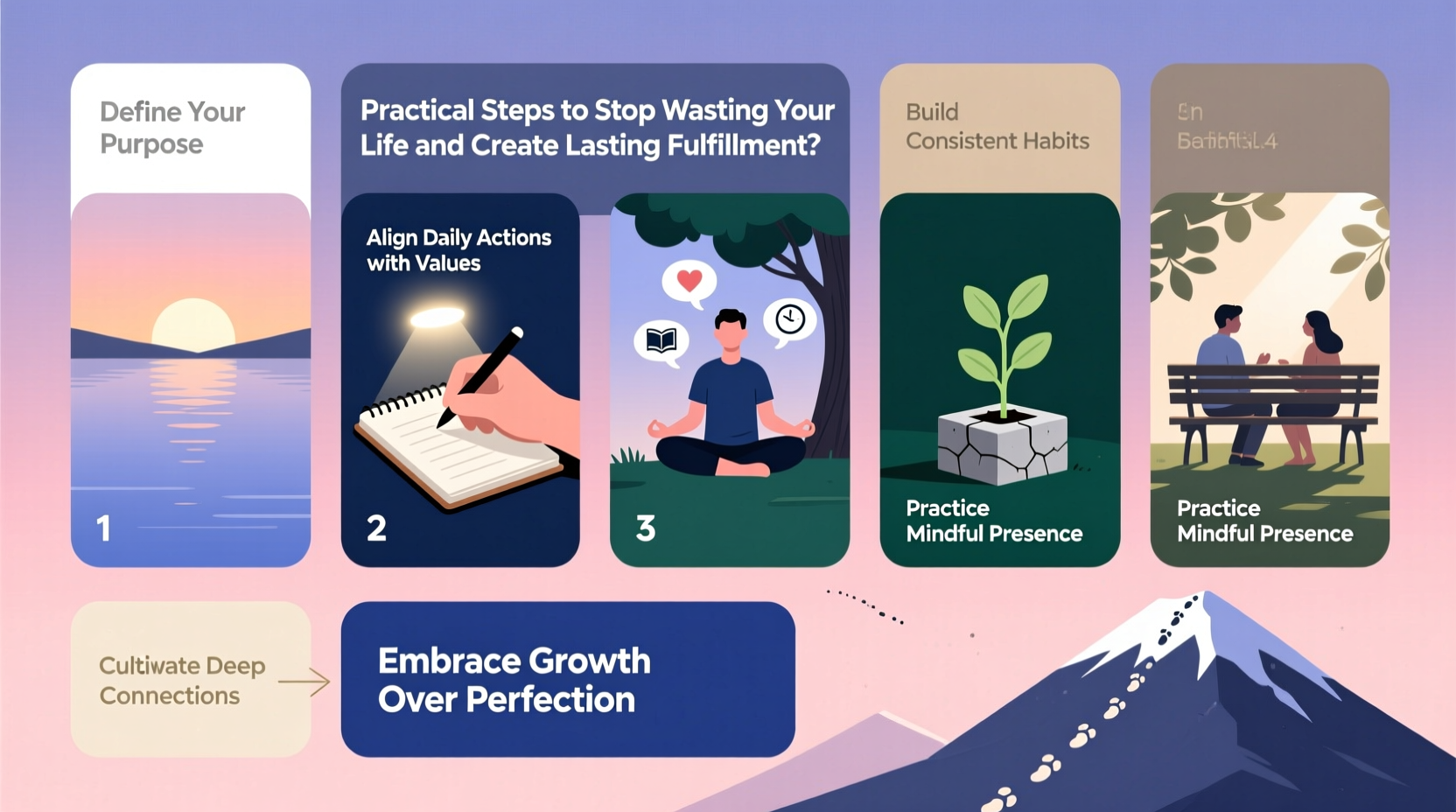
Fulfillment begins with clarity. Without a clear understanding of your values, goals, and definition of a meaningful life, it’s easy to drift — chasing external validation, accumulating possessions, or staying in roles that drain you. Start by asking yourself: What kind of life would make me look back with pride and peace? Not what society expects, not what your parents hoped for, but what resonates with *you*.
Journaling can be a powerful tool here. Spend 20 minutes writing answers to questions like:
- When have I felt most alive?
- What activities make me lose track of time?
- Who do I admire, and what qualities do they embody?
- If I had one year left, how would I spend it?
This process isn’t about crafting a perfect mission statement. It’s about peeling back layers of expectation to uncover what genuinely energizes and sustains you.
Eliminate Time-Wasting Habits Systematically
We don’t waste our lives in big leaps — we lose them in small increments. Scrolling endlessly, overcommitting to low-value tasks, tolerating draining relationships, or working in jobs that offer no growth — these habits accumulate into years of unfulfilled potential.
Start by auditing your time. For one week, log how you spend each hour. Categorize activities into:
- Essential (health, family, core work)
- Meaningful (creative projects, learning, connection)
- Draining (toxic interactions, mindless consumption)
- Optional (entertainment, social media, passive scrolling)
After tracking, identify at least two time drains you can reduce or eliminate. Replace them with activities tied to your values. For example, if you value creativity, use that reclaimed hour to write, paint, or learn an instrument.
| Habit | Impact | Alternative Action |
|---|---|---|
| 3+ hours daily on social media | Mental fatigue, comparison, lost time | Limit to 30 mins; use rest for reading or skill-building |
| Over-scheduling with low-priority tasks | Stress, burnout, lack of progress | Apply the 80/20 rule — focus on high-impact activities |
| Avoiding difficult conversations | Resentment, stagnation | Schedule one honest talk per week to improve relationships |
Design a Daily Routine That Supports Growth
Motivation fades. Discipline wavers. But a well-designed routine sustains progress. Structure your day around energy peaks, not just calendars. Most people operate under the illusion that willpower will carry them through. Instead, build systems that make the right choices easier.
Begin with your morning. How you start the day sets the tone. Consider incorporating:
- 10 minutes of mindfulness or gratitude journaling
- Physical movement — even a short walk
- A nutritious breakfast without screens
In the evening, review your day. What went well? What distracted you? What one step brought you closer to fulfillment? This reflection reinforces intentionality.
“Until you make the unconscious conscious, it will direct your life and you will call it fate.” — Carl Jung
Take Purposeful Action, Not Just Busywork
Activity is not achievement. Many people stay busy to avoid confronting whether their efforts matter. To stop wasting your life, shift from motion to meaningful action. Ask: Is this task moving me toward something I care about?
Create a “Fulfillment Project” — a long-term goal rooted in your values. It could be launching a small business, writing a book, building deeper relationships, or contributing to a cause. Break it into quarterly milestones, then monthly actions.
For instance, if your project is “Write a memoir,” your first three months might include:
- Week 1–2: Outline major life chapters
- Week 3–6: Write 500 words twice a week
- Week 7–12: Share drafts with a trusted friend for feedback
The key is consistency over intensity. Two focused hours weekly yield more than sporadic bursts of effort.
Real Example: From Burnout to Balance
Meet Daniel, a 38-year-old software engineer. He worked 60-hour weeks, earned well, but felt increasingly empty. His kids barely knew him. His health declined. After a panic attack, he took two weeks off and began asking hard questions.
He realized his values were family, contribution, and continuous learning — none of which were reflected in his daily life. Using the steps above, he:
- Reduced screen time by turning off non-essential notifications
- Negotiated remote Fridays to spend with his children
- Started volunteering at a coding bootcamp for underprivileged youth
- Began a podcast on tech ethics — a passion he’d ignored for years
Within a year, Daniel hadn’t become famous or wealthy from his side projects. But he reported higher energy, stronger relationships, and a renewed sense of purpose. “I’m not just surviving,” he said. “I’m finally living.”
Checklist: Steps to Reclaim Your Life
Use this checklist to begin transforming your days into a life of meaning:
- ☐ Define your top 3 personal values
- ☐ Track your time for 7 days
- ☐ Eliminate one major time-waster
- ☐ Design a morning routine that supports mental clarity
- ☐ Identify one “Fulfillment Project” and break it into next steps
- ☐ Schedule one hour this week for deep, focused work on that project
- ☐ Reflect weekly on progress and alignment
FAQ
Isn’t fulfillment just a state of mind? Can’t I just be happier with what I have?
Contentment is valuable, but it shouldn’t be confused with complacency. True fulfillment comes from growth and contribution, not passive acceptance. You can appreciate what you have while still striving for a more meaningful life. The goal isn’t to reject the present, but to shape the future intentionally.
What if my job doesn’t align with my values?
Very few people have the luxury of immediate career change. Start by integrating values into your current role. If you value creativity, propose innovative solutions. If you value service, mentor a junior colleague. Simultaneously, build skills and connections outside work that open new paths. Change often begins on the margins, not with a dramatic exit.
How do I stay consistent when motivation fades?
Motivation is unreliable. Systems are not. Focus on designing environments and routines that support your goals. Commit to tiny, sustainable actions — like writing 100 words a day or meditating for five minutes. Over time, consistency builds momentum, and momentum fuels motivation.
Conclusion: Your Life Is Waiting
You don’t need more time. You need more intention. Fulfillment isn’t found in some distant future when everything lines up perfectly. It grows from the daily choice to act in alignment with what matters. Every decision — what you pay attention to, how you spend your hours, who you invest in — either moves you toward that life or pulls you further away.
The steps outlined here aren’t quick fixes. They’re practices. Some will feel uncomfortable. That’s a sign they’re working. Growth happens at the edge of ease. Start small, stay consistent, and trust the process. Your most fulfilling life isn’t waiting for permission. It’s waiting for you to begin.




 浙公网安备
33010002000092号
浙公网安备
33010002000092号 浙B2-20120091-4
Comments
No comments yet. Why don't you start the discussion?