
Changing habits and reshaping your mindset isn’t about willpower alone. It’s a process grounded in psychology, consistency, and self-awareness. While motivation may spark the journey, sustainable transformation comes from structured practices that align behavior with intention. This article explores advanced, evidence-based strategies to help you shift not just what you do, but how you think—leading to deeper, longer-lasting change.
The Science Behind Habit Formation
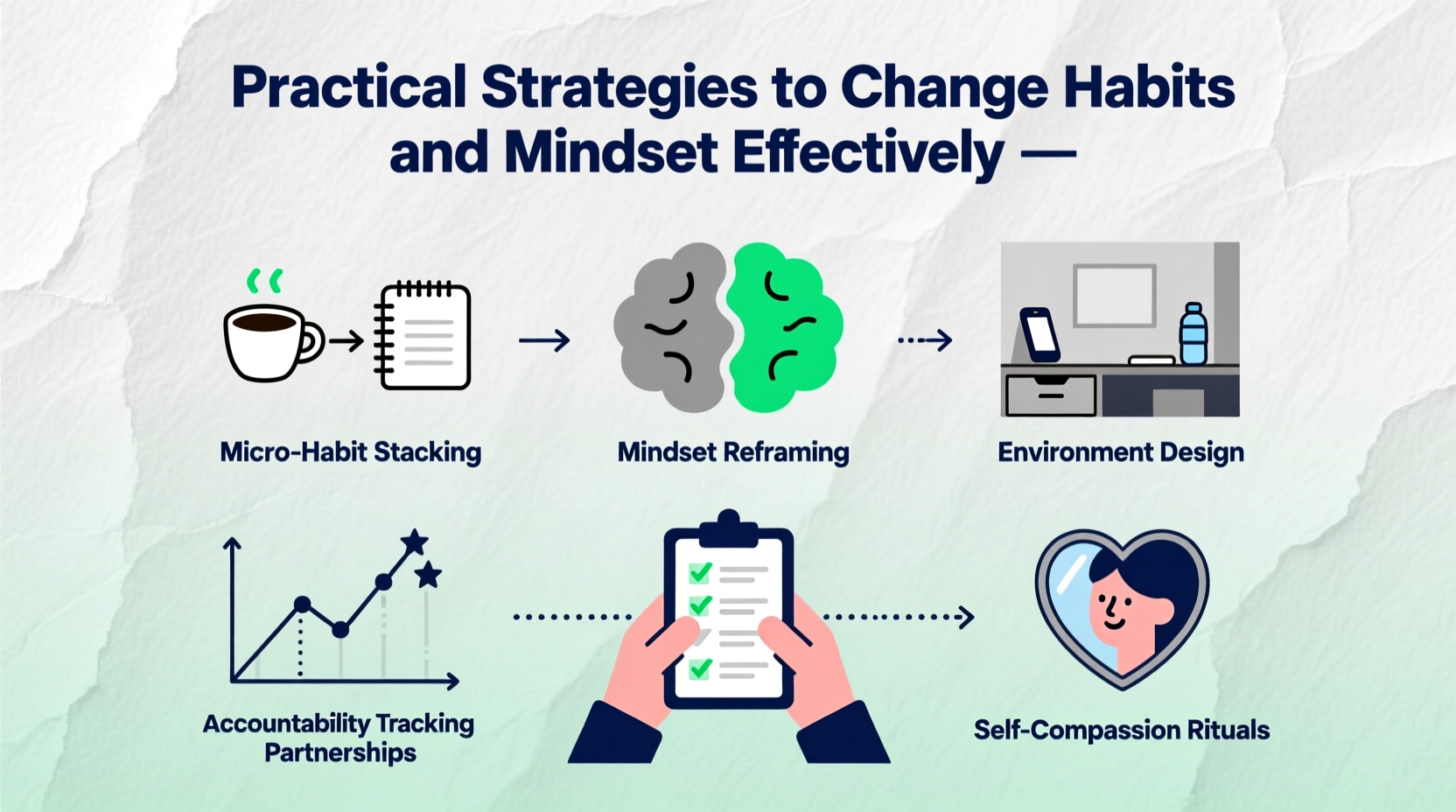
Habits are automatic behaviors triggered by cues in our environment. According to research by neuroscientists at MIT, habits form through a loop: cue, routine, and reward. The brain learns to associate a specific trigger (like feeling stressed) with a behavior (such as scrolling social media), which delivers a short-term payoff (distraction or dopamine). Over time, this loop becomes ingrained, operating below conscious awareness.
To disrupt unhelpful patterns, you must first identify the components of your habit loops. For example, if you consistently skip morning workouts, examine the cue (e.g., hitting snooze), the routine (skipping exercise), and the reward (extra sleep). Once mapped, you can redesign the loop—replacing the routine while preserving the reward.
Reframing Your Mindset: From Fixed to Growth
Your mindset shapes your capacity for change. Psychologist Carol Dweck’s research on fixed versus growth mindsets reveals that people who believe abilities can be developed (growth mindset) outperform those who see traits as static (fixed mindset). When setbacks occur, the former ask, “What can I learn?” while the latter think, “I’m just not good at this.”
Cultivating a growth mindset begins with language. Replace self-limiting statements like “I can’t do this” with “I can’t do this yet.” This small shift acknowledges current limitations without defining permanent failure. Over time, this reframing reduces fear of mistakes and increases persistence.
“We are not born with a fixed amount of resilience. Like a muscle, we can build it through use.” — Dr. Dennis Charney, co-author of *Resilience: The Science of Mastering Life’s Greatest Challenges*
A Step-by-Step Guide to Rewiring Habits
Real change requires more than inspiration—it demands structure. Follow this six-phase timeline to systematically transform habits and mindset over eight weeks:
- Week 1–2: Awareness & Audit – Track existing habits using a spreadsheet or notebook. Note frequency, triggers, and emotional impact.
- Week 3: Prioritize One Change – Choose a single high-leverage habit (e.g., daily movement, mindful eating) rather than attempting multiple shifts.
- Week 4: Design Your Environment – Remove friction for desired behaviors (e.g., lay out workout clothes the night before) and increase friction for unwanted ones (e.g., uninstall distracting apps).
- Week 5–6: Implement Tiny Habits – Start with actions so small they feel effortless (e.g., two push-ups after brushing teeth). Success builds confidence and momentum.
- Week 7: Anchor New Behaviors – Link new habits to existing routines (e.g., meditate for two minutes after brewing morning coffee).
- Week 8: Review and Adjust – Reflect on progress. Celebrate wins. Tweak strategies based on what worked and what didn’t.
Do’s and Don’ts of Sustainable Change
| Do | Don't |
|---|---|
| Start with micro-habits that require minimal effort | Try to overhaul your entire life overnight |
| Use positive reinforcement (e.g., self-praise, small rewards) | Rely solely on punishment or guilt for motivation |
| Practice self-compassion when you slip up | Abandon progress after one missed day |
| Surround yourself with supportive people or communities | Isolate yourself during the change process |
| Track progress visually (e.g., habit tracker calendar) | Depend only on memory to assess improvement |
Real Example: How Maria Transformed Her Relationship with Food
Maria, a 38-year-old project manager, struggled with emotional eating for years. Stress at work led to late-night snacking, followed by guilt and disrupted sleep. Instead of jumping into a strict diet, she applied behavioral principles gradually.
First, she identified her cue: finishing emails after 8 p.m. She then replaced the routine. Rather than opening the pantry, she began brewing herbal tea and journaling for five minutes. The warmth and ritual provided comfort, fulfilling the same emotional need without calories. Within six weeks, the new habit stuck. More importantly, her mindset shifted—she stopped seeing herself as “undisciplined” and began viewing change as a skill she was developing.
Today, Maria uses the same method to build other habits, including a 10-minute evening walk and weekly meal planning. Her success wasn’t due to perfection, but to consistent, compassionate iteration.
Checklist: Building Lasting Change
- ☐ Identify one key habit to change (not more than one initially)
- ☐ Map its cue, behavior, and reward
- ☐ Reduce barriers to the desired behavior
- ☐ Use an existing routine as an anchor for the new habit
- ☐ Commit to a two-week trial of a micro-version of the habit
- ☐ Track daily progress with a simple mark on a calendar
- ☐ Practice self-kindness when off track—no all-or-nothing thinking
- ☐ Review progress weekly and adjust approach as needed
Frequently Asked Questions
How long does it really take to form a new habit?
Contrary to the popular myth of 21 days, research from University College London found that habit formation takes an average of 66 days, with significant variation depending on the behavior and individual. Simpler habits like drinking a glass of water after breakfast may stabilize in a month, while complex ones like regular exercise can take several months.
What should I do when I fall back into old habits?
Relapse is part of the process. Instead of labeling it failure, treat it as data. Ask: What triggered the setback? Was there increased stress? A change in routine? Use the insight to strengthen your strategy. The key is not to break the chain completely—just restart quickly.
Can mindset changes be measured or tracked?
Yes. While less tangible than habits, mindset shifts can be observed through language, reactions to challenges, and persistence. Keep a brief weekly reflection log noting phrases you catch yourself saying (e.g., “This is too hard” vs. “This is challenging, but I can improve”). Over time, you’ll see a clear evolution in tone and self-perception.
Conclusion: Your Mindset Is Malleable—Start Today
You are not locked into the thoughts and behaviors of your past. Every day offers a chance to rewire your responses, reshape your identity, and build systems that support the person you want to become. Lasting change doesn’t demand heroic willpower—it thrives on small, repeatable actions and a belief in your capacity to grow.




 浙公网安备
33010002000092号
浙公网安备
33010002000092号 浙B2-20120091-4
Comments
No comments yet. Why don't you start the discussion?