
Codependency often masquerades as love or loyalty, but in reality, it erodes personal identity and distorts emotional connection. It manifests in relationships where one person consistently sacrifices their needs to meet the demands of another—often at great personal cost. While rooted in care, this dynamic becomes unhealthy when it fosters dependency, control, or emotional imbalance. The good news is that codependency is not a life sentence. With awareness and intentional practice, individuals can dismantle these patterns and cultivate relationships grounded in mutual respect, autonomy, and genuine intimacy.
Understanding Codependency: Beyond Emotional Attachment
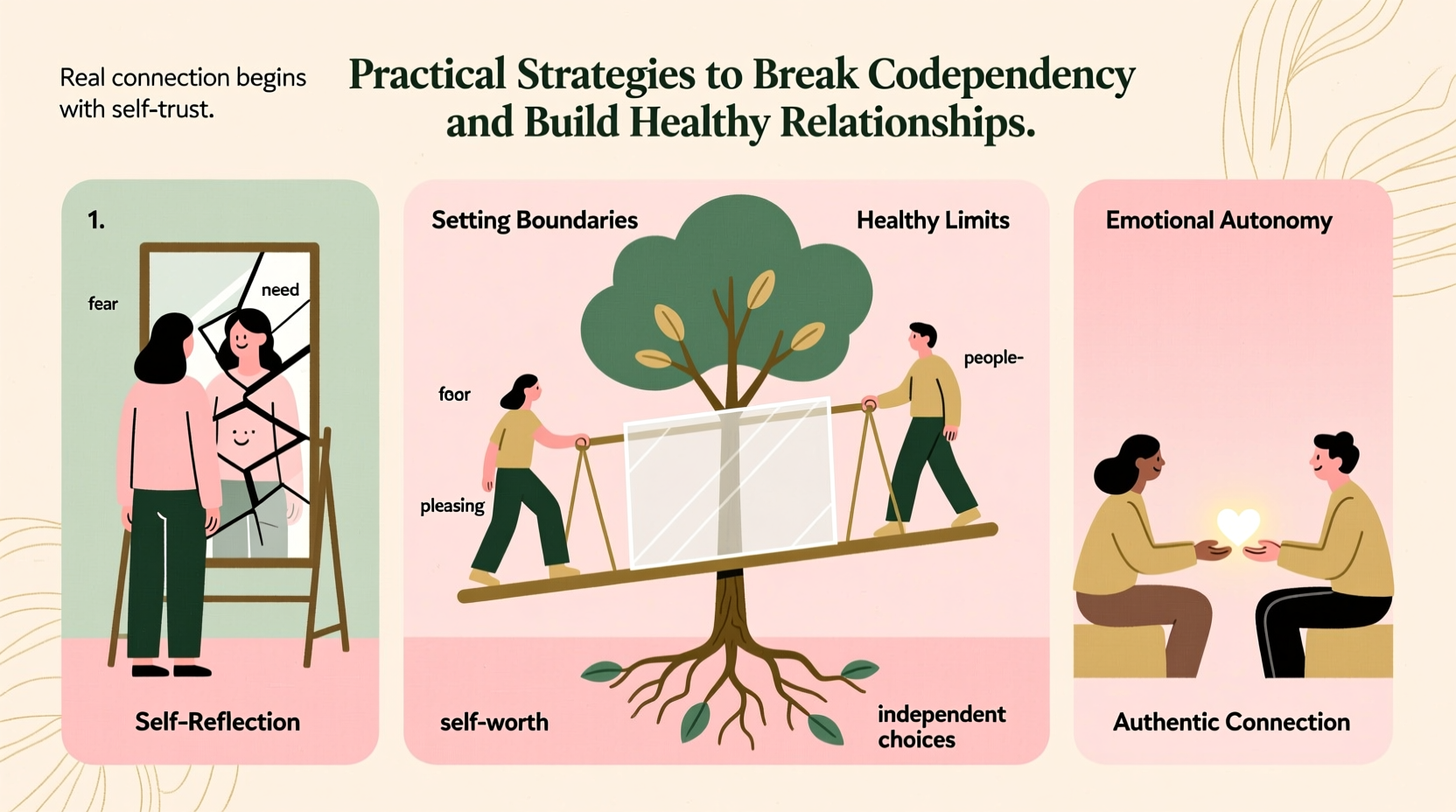
Codependency typically develops in environments where emotional needs go unmet, such as in families with addiction, chronic illness, or emotional neglect. Over time, individuals learn to derive their sense of worth from being needed, fixing others, or maintaining peace at any cost. Common signs include difficulty saying no, fear of abandonment, excessive caretaking, low self-esteem, and blurred personal boundaries.
It’s important to distinguish codependency from healthy interdependence. In balanced relationships, both partners maintain individuality while supporting each other. They communicate openly, respect boundaries, and take responsibility for their own emotions. Codependent dynamics, by contrast, involve enmeshment—where personal lines blur, needs are fused, and one person’s well-being hinges on managing the other’s mood or behavior.
“Codependency isn’t about loving too much—it’s about losing yourself in the process.” — Dr. Melody Beattie, author of *Codependent No More*
Step-by-Step Guide to Breaking Codependent Patterns
Healing from codependency is a gradual process that requires consistent effort and self-compassion. Below is a six-phase timeline designed to guide meaningful change over several months:
- Phase 1: Self-Assessment (Weeks 1–4)
Reflect on your relationship patterns. Journal about moments when you felt resentful, anxious, or invisible. Identify triggers and recurring behaviors, such as people-pleasing or conflict avoidance. - Phase 2: Educate Yourself (Weeks 5–8)
Read books like *The New Codependency* by Melody Beattie or *Set Boundaries, Find Peace* by Nedra Glover Tawwab. Understand the psychology behind attachment styles and emotional regulation. - Phase 3: Establish Boundaries (Weeks 9–12)
Begin setting small, clear limits. Practice saying no without justification. For example: “I can’t talk right now. I’ll call you tomorrow.” Observe how you feel and how others respond. - Phase 4: Strengthen Self-Identity (Months 4–6)
Reconnect with personal interests, values, and goals. Spend time alone doing things that bring joy or fulfillment, independent of others’ approval. - Phase 5: Improve Communication (Months 7–9)
Use “I” statements instead of blaming. Replace “You never listen” with “I feel unheard when I’m interrupted.” Focus on expressing your experience, not changing the other person. - Phase 6: Maintain & Evaluate (Ongoing)
Regularly assess your progress. Are you less reactive? More confident in your decisions? Continue therapy or support groups to reinforce growth.
Key Strategies for Building Healthy Relationships
Breaking codependency isn’t just about ending harmful habits—it’s about replacing them with healthier ones. These evidence-based practices help foster secure, balanced connections:
- Practice emotional self-regulation. When triggered, pause before reacting. Ask: “Is this my emotion to carry?” Learn grounding techniques like box breathing or journaling to process feelings internally.
- Develop internal validation. Reduce reliance on external approval by affirming your own worth. Keep a daily log of accomplishments, no matter how small.
- Choose accountability over rescue. Instead of solving someone else’s problems, ask: “How can I support you in finding your own solution?” This respects their agency and protects your energy.
- Prioritize reciprocity. Healthy relationships involve give-and-take. Notice if you’re always initiating contact, offering help, or absorbing emotional labor. Gently address imbalances through honest conversation.
Do’s and Don’ts in Recovering from Codependency
| Do | Don’t |
|---|---|
| Express your needs clearly and calmly | Assume others should know what you want without asking |
| Spend time alone to reconnect with yourself | Avoid solitude out of fear of loneliness |
| Seek therapy or join a support group like CoDA (Codependents Anonymous) | Try to heal in isolation |
| Accept that you cannot control others’ choices | Take responsibility for someone else’s happiness or recovery |
| Validate your own feelings as legitimate | Dismiss your emotions to keep the peace |
Real Example: From Enmeshment to Empowerment
Sarah, a 34-year-old teacher, grew up caring for her emotionally volatile mother. As an adult, she found herself in relationships where she managed her partner’s moods, apologized for their irritability, and canceled plans to stay home with them. She felt exhausted but guilty when considering her own needs.
After attending therapy and reading about codependency, Sarah began setting boundaries. She told her partner, “I love you, but I need evenings to myself twice a week to recharge.” Initially, her partner reacted with anger, which triggered Sarah’s anxiety. But she stayed firm, reminding herself that self-care wasn’t rejection.
Over time, her partner adjusted. Sarah started painting again—a hobby she’d abandoned for years. Her confidence grew, and she noticed she was less reactive during conflicts. The relationship evolved into one of mutual respect, not dependency. Sarah realized that loving someone didn’t require losing herself.
Essential Checklist for Recovery
Use this checklist monthly to track your progress in breaking codependent tendencies:
- ✅ I can identify my emotions without blaming others
- ✅ I’ve set at least one clear boundary in the past month
- ✅ I spend time alone without feeling anxious
- ✅ I’ve asked for what I need in a relationship
- ✅ I’ve refrained from fixing or rescuing someone who didn’t ask for help
- ✅ I engage in activities purely for my own enjoyment
- ✅ I seek support when struggling, rather than isolating
Frequently Asked Questions
Can codependency happen in friendships or family relationships?
Absolutely. While often discussed in romantic contexts, codependency frequently appears in friendships, parent-child dynamics, and sibling relationships. Any close bond where one person consistently prioritizes the other’s needs while suppressing their own can become codependent.
Is it possible to be in a relationship without being codependent?
Yes—and that’s the goal of healthy interdependence. In balanced relationships, both people maintain autonomy, communicate honestly, and support each other without losing themselves. Interdependence means choosing connection, not needing it to survive emotionally.
How long does it take to recover from codependency?
There’s no fixed timeline. For some, significant shifts occur within six months of consistent work. For others, especially those with deep trauma histories, it may take years. Progress isn’t linear, but with therapy, self-reflection, and practice, lasting change is achievable.
Conclusion: Reclaim Your Relationship with Yourself
Breaking codependency begins with a radical act: choosing yourself. It means recognizing that your worth isn’t tied to how much you do for others, how needed you are, or how perfectly you manage their emotions. True intimacy flourishes not in sacrifice, but in authenticity—in showing up as your whole self, boundaries and all.
Healthy relationships aren’t built on dependency, but on two whole individuals choosing to walk side by side. Every boundary you set, every need you voice, and every moment you spend nurturing your own life is a step toward freedom. The journey isn’t easy, but it’s profoundly liberating. Start today—not when you’re “ready,” but exactly as you are.




 浙公网安备
33010002000092号
浙公网安备
33010002000092号 浙B2-20120091-4
Comments
No comments yet. Why don't you start the discussion?