
Determining the correct ring size for your index finger doesn’t require a trip to the jeweler. With careful attention and the right technique, you can achieve accurate results from the comfort of your home. Whether you're shopping online for an engagement band, stacking rings, or surprising someone with a gift, precision is essential. A poorly fitting ring can slip off, feel tight, or cause discomfort over time. This guide provides reliable, field-tested methods to measure your index finger size with confidence—using everyday household items and smart practices.
Why Index Finger Sizing Is Different
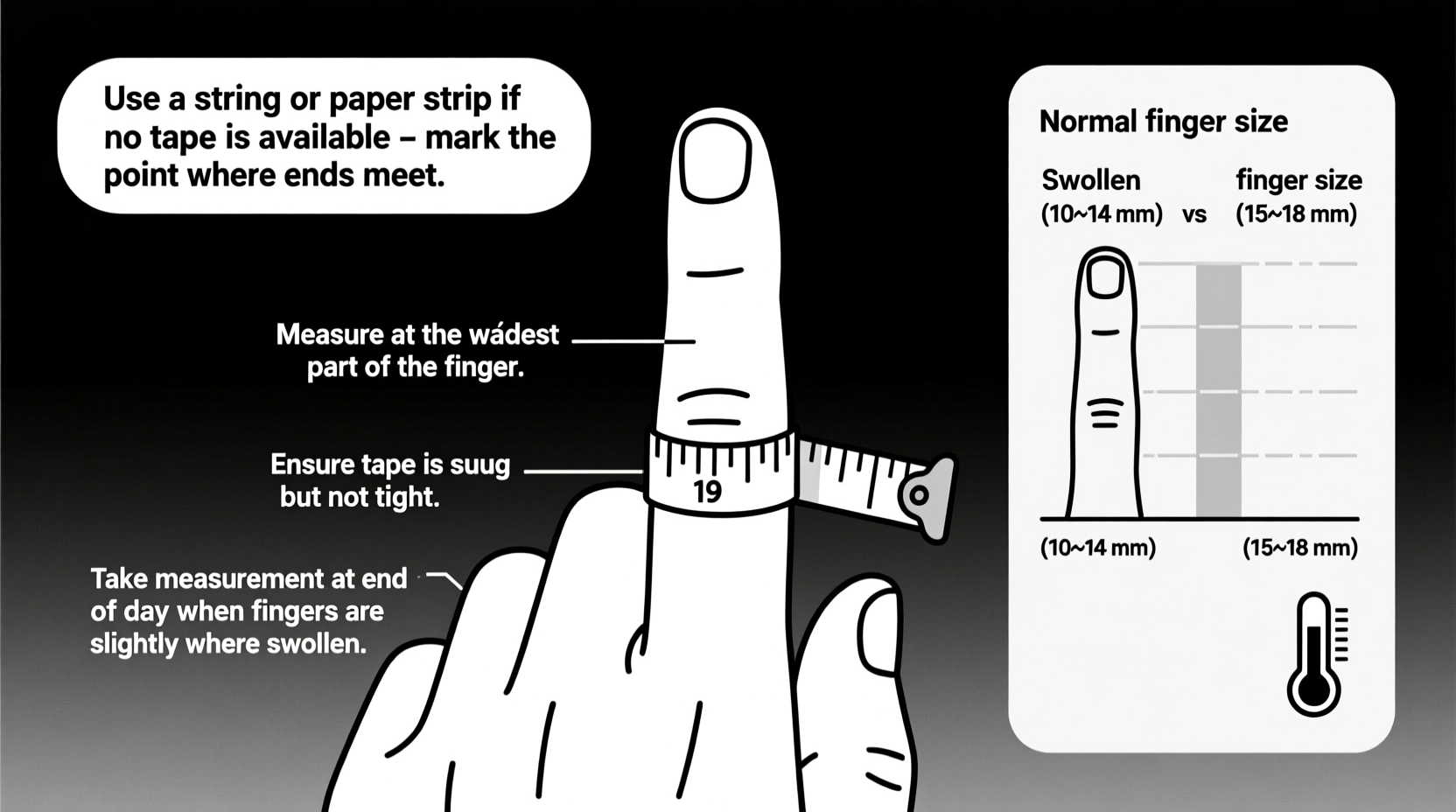
The index finger often presents unique challenges when sizing for rings. Unlike the ring finger, which tends to be more commonly used for jewelry, the index finger typically has a larger knuckle relative to the base of the finger. This means a ring must be sized to slide over the knuckle comfortably but still remain snug enough not to spin or fall off. Temperature, time of day, and even hydration levels affect finger swelling, making consistency in measurement critical.
“Finger size can fluctuate by half a size throughout the day. Measuring at the right time improves accuracy.” — Daniel Reyes, Master Jeweler & Founder of Artisan Bands Co.
Step-by-Step Guide: How to Measure Your Index Finger Accurately
Follow this detailed sequence to ensure your measurements are repeatable and trustworthy. Each method below uses accessible materials and includes built-in error correction.
- Choose the Right Time: Measure in the late afternoon or evening. Avoid early morning or cold environments where fingers shrink.
- Gather Supplies: You’ll need a flexible tape measure, a strip of paper or string (about 1/4 inch wide), a pen, and a ruler.
- Prepare Your Finger: Remove any existing rings. Wash and dry your hand to eliminate moisture that might affect fit.
- Wrap Method (Paper or String):
- Cut a thin strip of paper or use a piece of non-stretchy string.
- Wrap it snugly around the base of your index finger—the area just below the knuckle.
- Mark where the ends overlap with a pen.
- Lay the strip flat on a surface and measure the length in millimeters using a ruler.
- Convert Circumference to Ring Size: Use a standard conversion chart (see table below) to match your measurement to a US or international ring size.
- Repeat 2–3 Times: Conduct the measurement at least three times across different days to account for natural variation.
Alternative: Use a Known-Fitting Ring
If you already own a ring that fits your index finger well, place it on a ruler and measure the internal diameter from edge to edge in millimeters. Match this number to a size chart. For example, a 17 mm inner diameter corresponds to a US size 6.
Ring Size Conversion Table
| US Size | Inner Diameter (mm) | Circumference (mm) | UK/AU Size | EU Size |
|---|---|---|---|---|
| 5 | 15.9 | 50 | H | 49 |
| 6 | 16.5 | 52 | J | 52 |
| 7 | 17.3 | 54 | L | 54 |
| 8 | 18.1 | 57 | N | 57 |
| 9 | 18.9 | 59 | P | 59 |
This table covers common sizes, but full charts extend beyond these ranges. Always verify with your jeweler if ordering outside standard sizes.
Avoid These Common Measurement Mistakes
Even small errors can lead to incorrect sizing. Below are frequent pitfalls and how to avoid them:
- Measuring only once: Fingers swell and contract daily. Single measurements lack reliability.
- Ignoring knuckle size: If your knuckle is significantly larger than the finger base, consider sizing up and adding a comfort-fit design or spring insert.
- Using stretchy material: Elastic bands or yarn will give false readings. Use non-stretch paper, floss, or tailor’s tape.
- Not accounting for ring width: Wider rings (over 6mm) may feel tighter and should be sized up by half a size for comfort.
- Measuring a cold finger: Cold temperatures reduce blood flow and shrink fingers, leading to undersized results.
“Half of all online ring returns happen due to incorrect sizing. Taking ten extra minutes to measure properly saves time, money, and disappointment.” — Lena Park, E-commerce Jewelry Consultant
Mini Case Study: Sarah’s Custom Signet Ring
Sarah wanted to surprise her partner with a custom signet ring engraved with their initials. She used the paper-wrap method one morning before coffee, recorded a circumference of 50 mm, and ordered a US size 5. When the ring arrived, it wouldn’t pass the knuckle without force. Confused, she remeasured three evenings later using the same method and got 53 mm consistently—closer to a size 7. The difference? Morning vasoconstriction and a slightly tighter wrap. After exchanging the ring, the new size fit perfectly: loose enough to slide on with mild effort, secure during daily wear. Her takeaway: timing and repetition matter.
Checklist: Ensuring Accuracy at Home
Use this checklist every time you measure to maintain consistency:
- ✅ Measure in the evening after normal activity
- ✅ Perform the test on three separate days
- ✅ Use non-stretch material (printer paper, dental floss, or cloth tape)
- ✅ Record each result and calculate the average
- ✅ Account for ring width—size up for bands over 6mm
- ✅ Compare results against a known-fitting ring if available
- ✅ Consult the seller’s sizing chart—some brands run small or large
Frequently Asked Questions
Can I use a ring sizer app on my phone?
While some apps claim to measure ring size using augmented reality, they lack precision due to camera calibration issues and screen scaling errors. Physical methods remain more reliable.
What if my knuckle is much larger than my finger base?
This is common with the index finger. In such cases, consider a comfort-fit ring with a domed interior or request a half-size larger with a sizing bead added inside for security.
How do temperature and health affect finger size?
Heat, exercise, salt intake, and medical conditions like arthritis can cause temporary swelling. Measure under typical conditions—not during illness or extreme weather.
Final Tips for Confidence in Sizing
Accuracy begins with patience. Don’t rush the process. If giving a gift, borrow a ring your recipient already wears on their index finger. Alternatively, trace the inner circle of a worn ring on paper and bring it to a jeweler for sizing. For self-purchases, err on the side of caution: if between sizes, go larger. You can always add sizing inserts later, but resizing down removes metal and may weaken structural integrity.
Take Action Today
Now that you have the tools and knowledge, take five minutes tonight to measure your index finger properly. Repeat it tomorrow and the next day. Compare results, calculate the average, and lock in your true size. Whether you’re investing in a statement piece or preparing a heartfelt gift, precise sizing ensures your ring stays where it belongs—with comfort, elegance, and confidence.




 浙公网安备
33010002000092号
浙公网安备
33010002000092号 浙B2-20120091-4
Comments
No comments yet. Why don't you start the discussion?