
The nail industry has undergone a quiet revolution over the past few years. Once dismissed as flimsy costume accessories, press-on nails have evolved into high-performance alternatives to traditional salon enhancements like acrylics. With innovations in materials, adhesives, and application techniques, many women now ask: Are press-ons finally durable enough for real life? Can they withstand typing, dishwashing, gym sessions, and even gardening? More importantly, how do they truly stack up against acrylics—the long-standing gold standard in artificial nails?
This isn’t just about aesthetics. It’s about functionality, longevity, convenience, and cost-effectiveness. Whether you're a busy professional, a parent, or someone who values both beauty and practicality, understanding the real differences between press-on nails and acrylics can help you make smarter choices—without compromising your lifestyle.
The Evolution of Press-On Nails: From Party Favors to Performance Wear
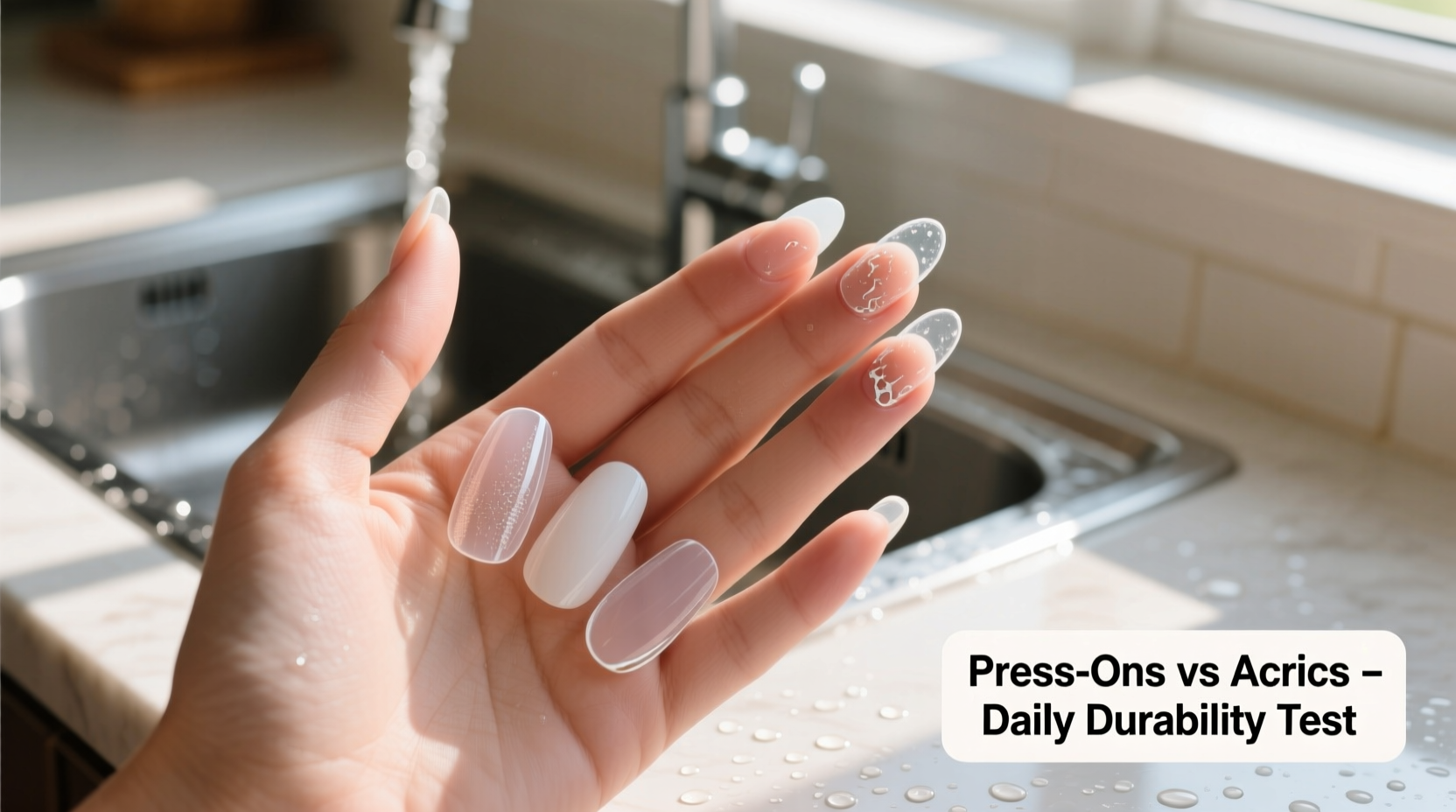
Press-on nails used to be synonymous with short-term wear and poor fit. Sold in drugstores in rigid plastic sheets, they often popped off after a few hours, looked unnatural, and couldn’t survive contact with water or light manual tasks. But that image is outdated.
Today’s premium press-ons are engineered using flexible, ultra-thin materials such as dual-layer polymer films, UV-cured gel hybrids, and even 3D-printed molds tailored to individual nail beds. Brands like ManiMe, Glamnetic, and KISS Real Nail Technology now offer sets that mimic the thickness and resilience of salon-applied enhancements. Some even come with adhesive tabs that last up to two weeks under normal conditions.
Advancements in bonding technology have been equally transformative. Instead of relying solely on weak glue strips, modern kits include medical-grade gels, double-sided tapes, and prep solutions (like dehydrators and primers) that create a seal comparable to what you’d get at a nail bar.
Acrylic Nails: The Benchmark for Durability
Acrylic nails remain the benchmark for strength and customization. Created by combining a liquid monomer with a powder polymer, they form a hard, resilient overlay that bonds directly to the natural nail. When applied correctly, acrylics can endure heavy use—chipping keyboards, opening packages, even light construction work—without breaking.
They’re also highly customizable. Nail technicians can extend length, correct shape irregularities, and repair damage mid-wear. Because they’re sculpted on-site, they conform precisely to each client’s nail bed, reducing lifting and snagging.
However, this durability comes at a cost. Acrylics require frequent fills (every 2–3 weeks), involve harsh filing during removal, and often weaken natural nails over time due to dehydration and mechanical stress. The process also emits strong fumes, contains chemicals like MMA (in lower-quality applications), and demands significant time investment per session.
“Acrylics are still unmatched in structural integrity, but they’re not without trade-offs—especially for people with active lifestyles or sensitive nail beds.” — Lila Nguyen, Master Nail Technician & Educator, Los Angeles
Comparing Durability: Real-World Testing Across Daily Tasks
To assess whether modern press-ons can genuinely compete, we evaluated performance across common daily activities. Here's how both types fare:
| Task | Acrylic Nails | Modern Press-Ons |
|---|---|---|
| Typing / Computer Work | Excellent – no interference | Good – may click if too long; thinner press-ons perform better |
| Dishwashing / Wet Work | Good – lasts if seal remains intact | Fair to Good – depends on adhesive quality; some brands resist water well |
| Gym / Weight Training | Poor – risk of snagging or breaking | Good – flexible press-ons bend rather than snap |
| Cooking / Chopping | Fair – long acrylics hinder dexterity | Excellent – shorter styles allow precision and protection |
| Laundry / Folding Clothes | Good – minimal impact | Excellent – no lifting unless poorly applied |
| Outdoor Activities (Gardening, Biking) | Poor – dirt collects under tips; prone to lifting | Good – easier to clean; less buildup if sealed properly |
What stands out is that while acrylics win in raw toughness, press-ons excel in adaptability and low-risk wear. Their flexibility reduces breakage, and because they don’t chemically bond to the natural nail, removal is gentler. This makes them ideal for intermittent use, travel, or situations where you want protection without permanent commitment.
A Real-Life Test: Sarah’s Two-Week Trial
Sarah, a 34-year-old graphic designer and mother of two, tested premium press-ons (ManiMe custom-fit set) against her usual acrylics over a two-week period. Her routine includes daily laptop use, meal prep, laundry, and occasional jogging.
With acrylics, she experienced minor lifting after five days due to moisture exposure while washing bottles. One nail cracked when her toddler pulled on it. In contrast, the press-ons stayed intact for 10 full days. She reported slight loosening on one corner after hand sanitizer use but fixed it with a drop of nail glue. “I was shocked,” she said. “They held up through everything—even when I dropped my phone and caught it with my fingertips.”
She noted one downside: reapplication took longer than expected (about 15 minutes with proper prep), whereas her salon visits included cuticle care and massage—a psychological perk she missed.
When Press-Ons Shine: Practical Advantages Over Acrylics
While acrylics dominate in permanence and strength, press-ons offer distinct benefits that align with modern living:
- No Damage to Natural Nails: Since they sit on top without drilling or filing, press-ons preserve nail health. Ideal for those recovering from acrylic trauma.
- Time Efficiency: Application takes 10–20 minutes at home versus 1.5+ hours at a salon.
- Cost Savings: A high-end press-on set costs $25–$40 and lasts 1–2 weeks. Compare that to $70+ every three weeks for acrylic fills.
- Variety & Flexibility: Switch styles weekly—from French tips to chrome ombré—without damaging your nails.
- Travel-Friendly: Lightweight, pre-sized, and TSA-compliant. No need to schedule appointments abroad.
Moreover, hygiene is simpler. You can disinfect reusable press-ons with alcohol wipes. Unlike shared salon tools, there’s no cross-contamination risk.
Limitations and Considerations
Despite progress, press-ons aren’t perfect. Their durability hinges heavily on proper application and maintenance. Skipping prep steps—like pushing back cuticles or degreasing the nail surface—can cut wear time in half. Also, most off-the-rack options don’t accommodate wide or unusually shaped nails, leading to gaps and early detachment.
Water resistance varies widely. Basic sticker-backed press-ons fail within days in humid environments. Even advanced systems struggle with prolonged soaking, such as swimming or long showers. And while they resist bending, excessive pressure (e.g., prying open jars) can still cause cracking or separation.
Finally, customization lags behind acrylics. You can’t adjust length mid-wear or repair a broken tip. If a press-on chips, replacement is the only option—unless you invest in a DIY gel topcoat system to seal edges.
Step-by-Step Guide: Maximizing Press-On Durability
To get the most out of your press-ons—especially for active lifestyles—follow this proven routine:
- Prep Your Nails: Remove old polish. Gently push back cuticles. Lightly buff the surface to create texture for adhesion.
- Clean Thoroughly: Wipe each nail with rubbing alcohol or a dedicated nail dehydrator. Let dry completely.
- Dry Fit First: Test each press-on for size and alignment. Trim slightly if needed using nail clippers.
- Activate Adhesive: Use the brand-recommended method—peel-and-stick tabs, glue dots, or liquid adhesive. Avoid excess glue, which can weaken the bond.
- Apply with Pressure: Press each nail firmly onto the natural bed for 15–20 seconds. Start from the center, then press down the sides.
- Seal the Edges: Apply a thin layer of top coat (or clear gel) around the perimeter to lock in the seal and prevent moisture ingress.
- Maintain Daily: Avoid soaking hands unnecessarily. Re-seal any lifted edges promptly.
FAQ: Common Questions About Press-Ons vs Acrylics
Can press-on nails really last a week or more?
Yes—high-quality, properly applied press-ons can last 7–14 days. Factors like nail prep, adhesive type, and daily activities affect longevity. Custom-fit or semi-permanent styles tend to last longest.
Do press-ons damage your natural nails?
No, not when used correctly. Unlike acrylics, they don’t require filing or chemical bonding. However, peeling them off aggressively can cause micro-tears. Always remove gently using warm soapy water or acetone-soaked wraps.
Are press-ons suitable for people with active jobs?
Increasingly yes—especially for moderate activity. Nurses, teachers, and office workers report success with flexible, shorter-length designs. For heavy manual labor, however, acrylics or dip powder may still be preferable.
Final Verdict: Are Press-Ons Durable Enough for Daily Life?
The answer is a qualified yes. Modern press-on nails are no longer disposable novelties. Thanks to material science and better design, they’ve crossed a threshold where they can reliably handle everyday challenges—typing, cleaning, commuting, parenting, and even workouts—provided you choose quality products and apply them carefully.
They won’t replace acrylics for everyone. Those seeking maximum extension, sculpted shapes, or monthly low-maintenance wear will still lean toward salon services. But for the growing number of consumers prioritizing nail health, flexibility, and convenience, press-ons are emerging as a viable, durable alternative.
More than just a trend, they represent a shift toward personalized, sustainable beauty—one where looking polished doesn’t mean sacrificing practicality or well-being.




 浙公网安备
33010002000092号
浙公网安备
33010002000092号 浙B2-20120091-4
Comments
No comments yet. Why don't you start the discussion?