
In the world of photography, videography, and stage lighting, flash patterns are no longer just about bursts of light—they’re tools for expression. Whether you're shaping mood in a portrait, choreographing a live performance, or capturing high-speed motion, how your flash behaves can define the outcome. Two dominant approaches exist: programmable flash patterns and preset flash patterns. While both serve essential roles, one clearly offers greater creative freedom. Understanding the difference—and knowing when to use each—can elevate your work from predictable to exceptional.
The Core Difference: Flexibility vs Convenience
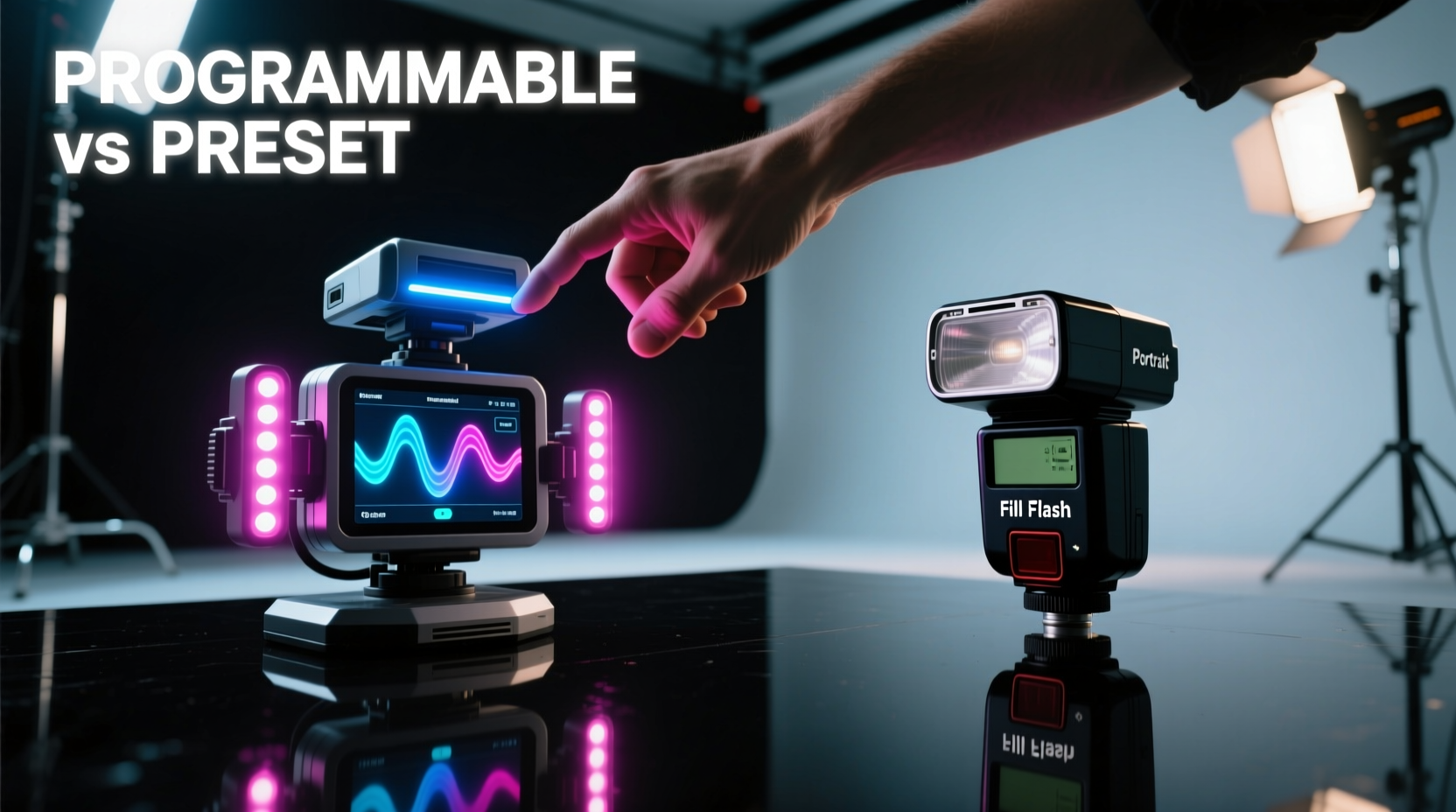
Preset flash patterns are factory-designed sequences embedded into lighting equipment. They offer immediate usability with minimal setup—ideal for beginners or fast-paced environments where consistency matters more than customization. Examples include \"strobe,\" \"pulse,\" \"fade-in,\" or \"lightning burst.\" These are reliable and repeatable, but they come with limitations: you cannot adjust timing between flashes, vary intensity mid-sequence, or layer effects dynamically.
Programmable flash patterns, on the other hand, allow users to build custom sequences from scratch. You decide the duration, frequency, brightness, color (if applicable), and even synchronization with sound or motion sensors. This level of control transforms lighting from a supporting element into a central creative instrument.
“Light is not just illumination—it’s rhythm, emotion, and narrative. Programmable systems let artists compose with time and intensity like a musician composes with notes.” — Lena Torres, Lighting Designer & Educator at NYU Tisch School of the Arts
Creative Control: Why Programmability Wins
When evaluating creative control, three key factors emerge: customization, adaptability, and integration.
- Customization: With programmable systems, you can design a flash sequence that mirrors a heartbeat, simulates fire flicker with organic randomness, or pulses in sync with music beats. Presets may approximate these, but rarely capture nuance.
- Adaptability: Real-world conditions change. A scene shot outdoors under shifting sunlight might require subtle adjustments to flash timing. Programmable units allow real-time tweaking without switching devices.
- Integration: Advanced setups often involve triggers, cameras, audio inputs, or DMX controllers. Programmable flashes can respond to external signals, enabling complex synchronized performances across multiple lights.
Practical Applications: Where Each Shines
While programmable systems offer superior creative potential, presets still have their place—especially in situations demanding speed, reliability, or simplicity.
Best Uses for Preset Flash Patterns
- Event Photography: Wedding or party photographers often rely on quick-access strobes or pop-up flashes with standard settings like “slow sync” or “rear-curtain sync.” These ensure consistent results without fiddling with menus.
- Security & Safety Lighting: Emergency beacons or hazard indicators benefit from standardized, universally recognized patterns (e.g., alternating red flashes).
- Beginner Learning: Newcomers can study lighting effects by observing how different presets alter a subject before diving into manual programming.
Where Programmable Patterns Excel
- Cinematic Visual Effects: Creating artificial lightning, muzzle flashes, or sci-fi energy pulses demands frame-accurate timing and variable intensity—all achievable through user-defined sequences.
- Theatrical Productions: Stage designers program cues that evolve over time—dimming after a flash, staggering delays across fixtures, or fading into blackout.
- Experimental Art Installations: Interactive exhibits may trigger unique flash rhythms based on audience movement or biometric input, impossible with static presets.
Comparative Breakdown: Programmable vs Preset
| Feature | Preset Flash Patterns | Programmable Flash Patterns |
|---|---|---|
| Custom Sequence Design | ❌ No | ✅ Yes |
| Adjustable Timing Intervals | ❌ Fixed | ✅ Fully adjustable |
| Intensity Variation Within Sequence | ❌ Rarely supported | ✅ Supported |
| Sync with External Triggers | ❌ Limited | ✅ Common (audio, motion, DMX) |
| Ease of Use | ✅ Immediate access | ⚠️ Requires learning curve |
| Ideal For | Fast workflows, consistency, entry-level use | Artistic projects, dynamic scenes, professional production |
Step-by-Step: Building Your First Custom Flash Pattern
If you’ve only used presets so far, stepping into programmability might seem daunting. Here’s a practical guide to designing a simple yet expressive flash sequence using common software or hardware interfaces (such as Godox AD series, Profoto Pro-10, or open-source platforms like Arduino-based LED drivers).
- Define the Purpose: Ask what emotion or effect you want—urgency? Drama? Calm interruption? A flickering candle won’t mimic a police siren.
- Choose Your Tool: Select a flash unit or controller that supports user-defined patterns. Check compatibility with apps or desktop software.
- Map the Timeline: Sketch out a timeline (even on paper). Example: Flash at full power for 50ms, wait 200ms, then a softer second flash at 30% for 100ms.
- Input Parameters: Enter durations, intensities, and delays into your device. Some systems use grid editors; others accept code-like syntax.
- Test and Refine: Shoot a short clip or observe the pattern in person. Adjust gaps or brightness until it feels natural or intentionally jarring—whichever suits your goal.
- Save and Reuse: Store your creation with a descriptive name (“Heartbeat Slow,” “Storm Distant”) for future sessions.
Real-World Example: Capturing Emotion in Portrait Photography
Photographer Malik Chen was commissioned to shoot a series on anxiety and resilience. He wanted his lighting to reflect internal tension—not just illuminate the face. Using a programmable strobe system synced to a metronome app, he created a pulsing pattern mimicking an elevated heart rate: rapid double-flashes every two seconds, followed by silence.
The result? Shadows jumped subtly with each pulse, creating a sense of unease while keeping facial features visible. When printed large, viewers reported feeling “on edge” without knowing why. A traditional preset strobe would have produced flat, clinical repetition—effective for exposure, but emotionally neutral.
This case illustrates how programmable lighting transcends function: it becomes part of the story.
Checklist: Choosing the Right System for Creative Work
Before investing in new gear, assess your needs with this checklist:
- ☐ Does the system allow frame-accurate timing (e.g., millisecond precision)?
- ☐ Can I adjust brightness levels within a single sequence?
- ☐ Is there support for external triggering (sound, sensor, camera shutter)?
- ☐ Can I save and organize multiple custom patterns?
- ☐ Is firmware updatable for future features?
- ☐ Is documentation or community support available?
- ☐ Does it integrate with my current camera or audio setup?
If most answers are “yes,” you’re looking at a tool built for creativity. If many are “no,” it’s likely optimized for convenience over control.
Frequently Asked Questions
Can I convert preset flashes into programmable ones?
Not directly—but some advanced modifiers or controllers can override built-in presets. For example, using a PocketWizard radio with TTL pass-through and custom scripting allows reprogramming otherwise fixed units. However, true flexibility usually requires native programmable hardware.
Do programmable flashes drain batteries faster?
They can, due to increased processing and variable output cycling. However, modern units optimize power usage during idle phases. Always carry spares or use AC adapters during long shoots.
Are programmable systems only for professionals?
No. While pros leverage them heavily, hobbyists in cosplay photography, DIY theater, or music videos find immense value. Many entry-level programmable LEDs now come with intuitive smartphone apps, lowering the barrier to entry.
Final Thoughts: Control Is Creative Currency
In any artistic medium, constraints shape innovation—but so does freedom. Preset flash patterns serve an important role in democratizing access to dynamic lighting. They offer safety, speed, and predictability. But when originality matters, when a project demands a signature look or emotional texture, nothing replaces the depth of programmable control.
The shift from preset to programmable isn’t just technical—it’s philosophical. It moves you from selecting someone else’s idea of “dramatic” to defining your own. That transition marks the leap from technician to creator.
Today’s tools make this accessible. Open-source libraries, affordable microcontrollers, and responsive commercial systems mean that whether you’re shooting portraits in a studio or staging an immersive gallery piece, you can craft light exactly as you envision it.




 浙公网安备
33010002000092号
浙公网安备
33010002000092号 浙B2-20120091-4
Comments
No comments yet. Why don't you start the discussion?