
As holiday decorating trends evolve, projection Christmas lights have emerged as a modern alternative to traditional string lights. Marketed as quick, easy, and hassle-free, these devices promise dazzling light displays with minimal setup. But how do they truly compare to classic physical strings of LED or incandescent lights? For homeowners weighing convenience against visual impact, the answer isn’t always straightforward. This article dives deep into performance, aesthetics, cost, and practicality to determine whether projection lights are genuinely effective—or just a flashy shortcut that falls short in execution.
How Projection Christmas Lights Work
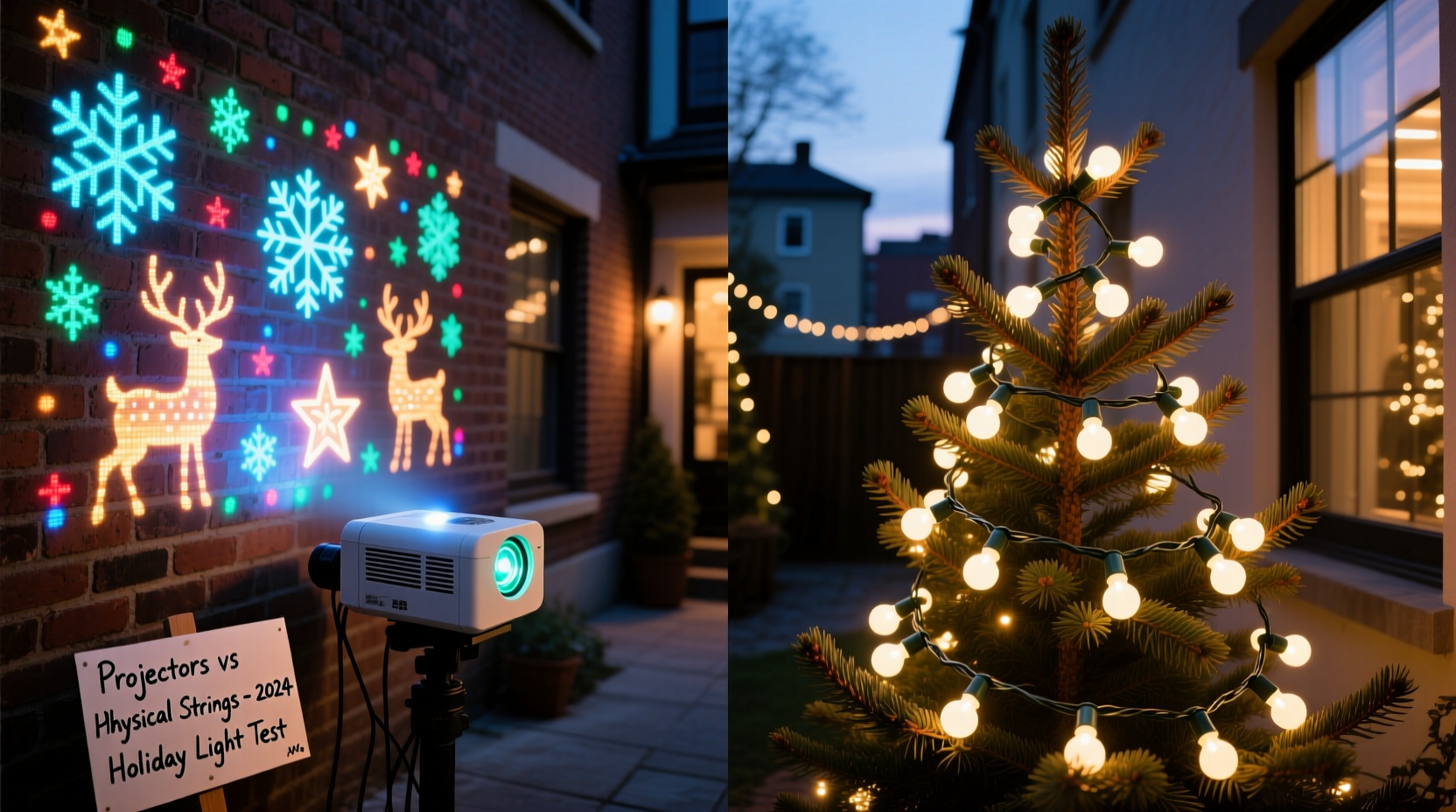
Projection Christmas lights operate using small, motorized units that emit beams of light onto surfaces like house exteriors, fences, or garage doors. These projectors typically use LED bulbs combined with rotating lenses or digital patterns to simulate twinkling lights, snowflakes, or animated holiday scenes. Mounted on stands or attached to eaves, they can cover large areas—sometimes up to 700 square feet—with a single unit.
The appeal lies in simplicity: plug in the device, aim it at your desired surface, and instantly transform your home’s façade. No climbing ladders, untangling wires, or securing hundreds of bulbs. Some models even offer remote controls, color-changing options, and built-in timers.
However, effectiveness depends heavily on environmental conditions. Light projection works best on flat, light-colored surfaces. Dark siding, textured walls, or uneven brick absorb or scatter light, significantly reducing visibility. Additionally, ambient outdoor lighting from streetlamps or neighboring homes can wash out the effect, especially after dusk.
Physical String Lights: The Traditional Standard
Physical Christmas light strings remain the gold standard for holiday décor. Whether simple white LEDs or multicolored strands with various bulb shapes, these lights provide direct illumination that is consistent, bright, and customizable. Modern LED versions consume minimal energy, last up to 50,000 hours, and are far more durable than older incandescent models.
Installation requires time and effort. Lights must be carefully draped along rooflines, windows, trees, and walkways, often involving extension cords, clips, and ladder work. However, this hands-on process allows for precision in design. You can create defined patterns, outline architectural features, or cluster lights in focal points—something projections simply can’t replicate.
One major advantage of physical lights is their visibility in all weather and lighting conditions. Unlike projections, which fade under sunlight or compete with urban glow, real lights shine brightly regardless of surroundings. They also maintain consistency across different wall textures and colors, making them reliable for any home exterior.
“While projectors save time, they lack the depth and sparkle of real lights. There’s no substitute for actual bulbs creating tangible light.” — Daniel Reyes, Lighting Designer & Holiday Display Consultant
Comparing Effectiveness: A Side-by-Side Analysis
To assess whether projection lights are truly effective, we need to evaluate them across key criteria: brightness, coverage, realism, ease of use, and durability.
| Feature | Projection Lights | Physical String Lights |
|---|---|---|
| Brightness | Moderate; highly dependent on surface and ambient light | High; consistent output regardless of environment |
| Coverage Area | Large (up to 700 sq ft per unit) | Limited by cord length and placement effort |
| Realism | Low to moderate; appears flat, lacks depth | High; three-dimensional sparkle and texture |
| Setup Time | 5–10 minutes | 1–5+ hours depending on size |
| Durability | Moderate; sensitive to moisture and misalignment | High; weather-resistant models available |
| Customization | Pre-set patterns only | Full creative control over layout and design |
| Energy Use | Low (typically 10–20 watts) | Low to moderate (depends on number of strands) |
The data shows a clear trade-off: projection lights win on speed and broad coverage but fall short in visual quality and adaptability. Physical lights require more labor but deliver superior aesthetic results and reliability.
When Projection Lights Make Sense
Despite their limitations, projection lights are not without merit. They can be an excellent choice in specific scenarios:
- Renters or temporary setups: Those who can’t drill into walls or hang decorations benefit from the non-invasive nature of projectors.
- Apartment balconies or small spaces: Limited area means full coverage with one device, avoiding clutter from multiple cords.
- Supplemental décor: Used alongside traditional lights, projectors can add animated effects like falling snow or stars to enhance the overall display.
- Short-term events: For parties or pop-up holiday markets, quick deployment makes projectors ideal.
In neighborhoods with strict HOA rules or where elaborate displays are discouraged, projection lights offer a subtle yet festive option that complies with regulations without sacrificing seasonal cheer.
Mini Case Study: The Urban Townhouse Dilemma
Sarah M., a resident of a downtown Chicago townhouse, wanted to decorate her narrow 3-story home for Christmas. With limited roofline access and no trees, hanging traditional lights was impractical. She opted for two projection units—one for the front façade, another for the small backyard patio.
Results were mixed. The front projection created a convincing field of green and red dots across her beige stucco wall, visible from the sidewalk. Neighbors commented positively, though some mistook it for a movie being projected. In contrast, the backyard unit failed due to a dark wooden fence absorbing most of the light. After repositioning and adding a white backdrop board, visibility improved.
Sarah appreciated the 15-minute setup and ability to change patterns weekly via app control. However, she admitted the display lacked the “warmth” of real lights. “It looks cool,” she said, “but not magical.”
Step-by-Step Guide: Choosing the Right Option for Your Home
Deciding between projection and physical lights shouldn’t be arbitrary. Follow this sequence to make an informed choice:
- Evaluate your space: Measure the area you want to illuminate. Note wall color, texture, and exposure to ambient light.
- Assess accessibility: Can you safely reach eaves and gutters? Do you have outlets nearby?
- Determine your goal: Are you aiming for subtle ambiance or a standout display?
- Check local regulations: Some communities restrict light brightness, timing, or installation methods.
- Test both options: Rent or borrow a projector and a string set to trial-run each method.
- Consider maintenance: Will you store and reuse the lights annually, or prefer disposable convenience?
- Budget accordingly: Projectors range from $30–$100; high-quality LED strings cost $10–$25 per 50-light strand.
This structured approach prevents impulse buys and ensures your selection aligns with both practical constraints and aesthetic goals.
Tips for Maximizing Projection Light Performance
If you choose projection lights, optimize their effectiveness with these strategies:
- Use white or light-gray surfaces for best reflection.
- Avoid aiming at glass windows—they reflect inward and reduce external visibility.
- Combine multiple projectors with complementary patterns (e.g., lights + snowfall) for layered effects.
- Secure cords with outdoor-rated clips to prevent tripping hazards.
- Use a smart plug to automate on/off times and conserve energy.
Hybrid Approach: Best of Both Worlds
Many decorators now adopt a hybrid model—using physical lights for outlines and focal points while enhancing the scene with projections. For example, LED icicle lights along the roofline paired with a projector casting animated stars on the upper wall create depth and movement.
This method balances effort and impact. The tangible presence of real lights grounds the display, while projections add dynamic flair without excessive wiring. It’s particularly effective for homes with partial coverage capability or those seeking a professional-tier look with manageable labor.
Frequently Asked Questions
Can projection lights work on dark houses?
Effectiveness drops significantly on dark or textured surfaces. Black, navy, or heavily shaded walls absorb most of the light, rendering the projection nearly invisible. If you have a dark exterior, physical lights are a far better investment.
Do projection Christmas lights use a lot of electricity?
No. Most models consume between 10 and 20 watts—less than a standard LED bulb. Running one for 6 hours nightly over a month uses roughly 0.6–1.2 kWh, costing less than $0.20 in electricity.
Can I leave projection lights outside all winter?
Only if the unit is explicitly rated for outdoor use (IP44 or higher). Many budget models lack weather resistance and can fail in rain or freezing temperatures. Always check manufacturer guidelines and consider bringing the projector indoors during storms.
Conclusion: Are Projectors Actually Effective?
Projection Christmas lights are effective—but within limits. They excel in convenience, speed, and broad coverage, making them ideal for renters, small spaces, or supplemental décor. However, they cannot match the brilliance, depth, and emotional resonance of physical string lights. Their performance is highly situational, influenced by surface type, ambient lighting, and viewer proximity.
For those prioritizing ease and efficiency, projectors offer a viable shortcut. For those seeking a truly memorable holiday display, nothing replaces the sparkle of real bulbs. The smartest approach may lie in combination: use projections to enhance, not replace, the tradition that has lit up winters for generations.




 浙公网安备
33010002000092号
浙公网安备
33010002000092号 浙B2-20120091-4
Comments
No comments yet. Why don't you start the discussion?