
The glow of Christmas lights has long been a hallmark of the holiday season—a visual promise of warmth, nostalgia, and celebration. For decades, families have spent evenings draping strings of lights across eaves, trees, and railings, turning homes into beacons of festive cheer. But in recent years, a new contender has emerged: projection Christmas lights. With just the flip of a switch, these devices blanket entire facades in shimmering patterns without a single bulb to untangle. As their popularity grows, a quiet debate simmers—do projection lights deliver convenience at the cost of charm? Are they, in fact, killing the magic?
The Rise of Projection Christmas Lights
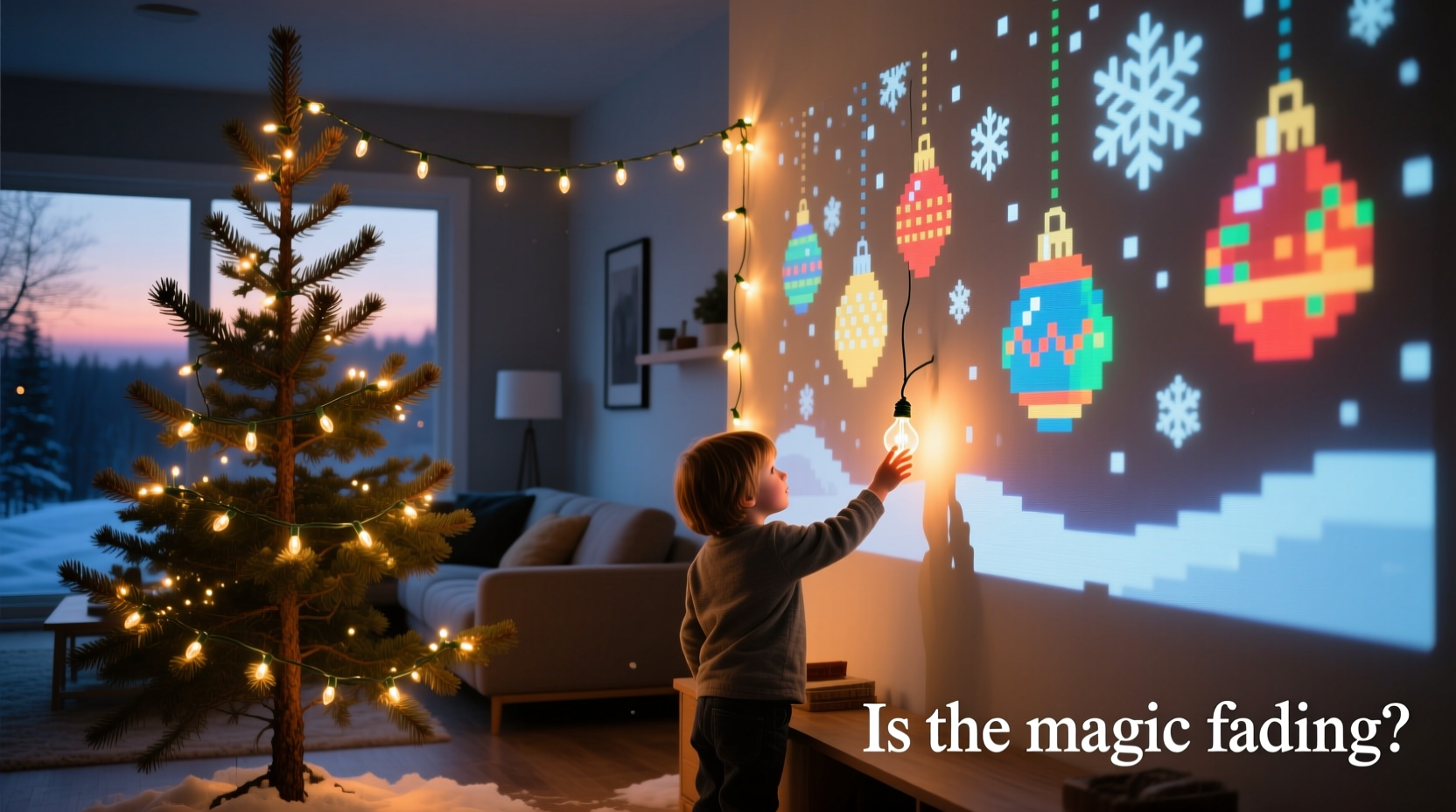
Projection lights entered the mainstream around the mid-2010s, marketed as a hassle-free alternative to traditional lighting. Instead of climbing ladders and wrestling with tangled cords, homeowners could now plug in a compact unit and instantly project animated light displays onto walls or windows. These projectors often feature multiple modes—twinkling snowflakes, falling stars, or classic multicolored bulbs—and some even sync to music.
The appeal is obvious. Installation takes minutes. There’s no risk of electrical overload from daisy-chained strings. And cleanup? Unplug and store. No more November trips to the attic to retrieve boxes of fragile ornaments.
Manufacturers like Mr. Beams, HomeyPro, and Lithe Products have capitalized on this demand, offering increasingly sophisticated models with remote controls, timers, and app integration. Retailers report consistent year-over-year growth in projector sales, particularly among younger homeowners and renters who value convenience and portability.
Physical String Lights: Tradition, Texture, and Tactility
Despite the rise of projectors, physical string lights remain deeply embedded in holiday culture. Their appeal goes beyond illumination—it’s about ritual. The act of selecting lights, testing strands, and carefully placing each bulb fosters connection. Many recall childhood memories of helping parents hang lights, sipping cocoa while bundled against the winter chill.
Beyond sentiment, physical lights offer tangible benefits. They create depth and dimension that projections can’t replicate. A strand of warm white LEDs draped over a pine tree casts real shadows, reflects off window glass, and interacts naturally with snowfall. When viewed up close, there’s texture—the slight flicker of incandescent bulbs, the subtle weight of wires bending under frost.
Moreover, traditional lights allow for creative customization. From icicle drops to net lights on bushes, the options are nearly limitless. You can design a unique display that reflects your personal style, not just choose from preset projector templates.
“Lighting a home with physical strings is like composing a piece of music—each strand adds nuance, rhythm, and emotion. Projectors are convenient, but they’re playing someone else’s recording.” — Daniel Reeves, Lighting Designer & Holiday Display Consultant
Comparing the Two: A Practical Breakdown
To understand the trade-offs, consider key factors like installation, cost, durability, and visual impact. The table below summarizes a side-by-side comparison.
| Factor | Projection Lights | Physical String Lights |
|---|---|---|
| Installation Time | 5–10 minutes | 1–4 hours (depending on size) |
| Upfront Cost | $30–$100 per unit | $50–$300+ for full coverage |
| Lifespan | 3–5 years (bulb degradation) | 5–10+ years (with care) |
| Weather Resistance | Good (if properly mounted) | Excellent (outdoor-rated) |
| Visual Depth | Flat, 2D effect | 3D, layered, dynamic |
| Customization | Limited to presets | Highly customizable |
| Energy Use | Moderate (15–30W per unit) | Low to moderate (LEDs efficient) |
A Real-World Example: The Thompson Family's Dilemma
The Thompsons, a family of four in suburban Denver, faced a decision last holiday season. Mark, the father, had recently undergone back surgery and couldn’t manage the ladder work required for their usual rooftop display. Their teenage daughter, Lily, suggested switching to projectors after seeing a neighbor’s setup.
They purchased two high-lumen projectors—one for the front wall, another for the garage. Setup took less than 15 minutes. The animated snowfall and twinkling star patterns were bright and eye-catching from the street. Neighbors complimented the “modern look.”
But something felt off. The kids missed helping Dad untangle lights. The dog didn’t react to the projected glow the way he used to bark at blinking strands. And when a snowstorm hit, the projector beams diffused into hazy smears rather than glistening on real surfaces.
By January, Mark admitted, “It looked nice, but it didn’t *feel* like Christmas.” This year, they’ve opted for a hybrid approach: minimal string lights on the porch railing and tree, supplemented by one projector for the upper facade. “We kept the soul of the tradition,” Mark said, “but spared my spine.”
When Projectors Shine—and When They Fall Short
Projection lights excel in specific scenarios. Renters, urban dwellers, and those with mobility challenges benefit most. They’re also ideal for temporary setups—holiday parties, storefront promotions, or quick curb appeal boosts before an open house.
However, limitations become apparent in broader contexts. Projectors require a flat, light-colored surface to work effectively. Dark siding, textured stucco, or heavy foliage can distort or absorb the image. Wind can shift the unit, throwing off alignment. And unlike physical lights, which glow from within, projections are ambient—they don’t illuminate objects, only simulate them.
Another concern: light pollution. High-lumen projectors aimed upward can contribute to skyglow, disturbing neighbors and wildlife. Some municipalities have begun regulating outdoor lighting intensity, especially in residential zones.
Step-by-Step: Creating a Balanced Holiday Lighting Plan
For those torn between convenience and authenticity, a blended strategy may offer the best of both worlds. Follow this timeline to plan a thoughtful display:
- Assess Your Space (Early October): Walk around your property. Note areas difficult to reach (peaks, gutters) versus accessible zones (porch, shrubs).
- Determine Priorities (Mid-October): Decide what matters most—ease of setup, visual impact, tradition, or energy efficiency.
- Choose Your Mix (Late October): Use projectors for hard-to-reach areas. Reserve physical strings for focal points like trees, railings, or entryways.
- Test Equipment (Early November): Check projector focus and brightness. Test string lights for burnouts or frayed wires.
- Install in Stages (Late November): Begin with physical lights on safe, ground-level areas. Mount projectors last, adjusting angles for optimal spread.
- Review and Adjust (December 1–10): View your display at night from the sidewalk. Make tweaks to brightness, color balance, or placement.
Checklist: Choosing the Right Option for Your Home
- ☐ Do you own your home or have permission to install permanent fixtures?
- ☐ Are there safety concerns (ladders, electrical outlets, roof access)?
- ☐ What type of exterior surfaces do you have? (Smooth/light = good for projectors)
- ☐ How important is customization and personal expression?
- ☐ Do you enjoy the ritual of decorating, or do you dread the process?
- ☐ Is minimizing storage space a priority?
- ☐ Are you sensitive to neighbor relations regarding light brightness or noise (some projectors have sound features)?
Frequently Asked Questions
Can projection lights replace all my traditional strings?
Technically, yes—but visually, no. Projectors work best as supplements. They struggle to replicate the depth and realism of three-dimensional lighting, especially on uneven surfaces or in snowy conditions.
Do projection Christmas lights use more electricity?
Not significantly. Most modern projectors use LED-based lamps and consume 15–30 watts, comparable to a small string of lights. However, running multiple units for hours can add up. Always check the wattage and consider using timers.
Are physical lights safer than projectors?
Safety depends on usage. Physical lights pose tripping, ladder, and circuit overload risks if misused. Projectors eliminate ladder work but can overheat if enclosed or blocked. Both should be UL-listed and used according to manufacturer instructions.
Conclusion: Magic Isn’t Killed—It’s Evolving
The question isn’t whether projection lights are “killing the magic,” but how we define magic in the first place. For some, magic is in the ritual—the cold air, the tangled wires, the shared laughter when the cat chews through a strand. For others, magic is in accessibility—being able to participate fully despite physical limits or time constraints.
Technology doesn’t erase tradition; it expands who gets to take part. Projection lights aren’t replacing physical strings so much as offering an alternative path to celebration. The true spirit of the season lies not in the medium of light, but in the intention behind it.
Rather than choosing sides, many families are finding harmony in hybrid displays—honoring tradition where it matters most, while embracing innovation where it helps. In doing so, they preserve the warmth of memory without sacrificing practicality.




 浙公网安备
33010002000092号
浙公网安备
33010002000092号 浙B2-20120091-4
Comments
No comments yet. Why don't you start the discussion?