
The holiday season is defined by light—twinkling displays that evoke warmth, nostalgia, and wonder. As homes prepare for festive decoration, a growing debate has emerged: should you use traditional string lights or modern projector lights to create that magical atmosphere? Both have passionate advocates, but the answer isn’t simply about brightness or coverage—it’s about emotion, effort, and experience. Understanding the strengths and limitations of each option reveals not just which looks better, but which feels more meaningful in different settings.
The Magic of Light: What Makes a Display Feel Special?
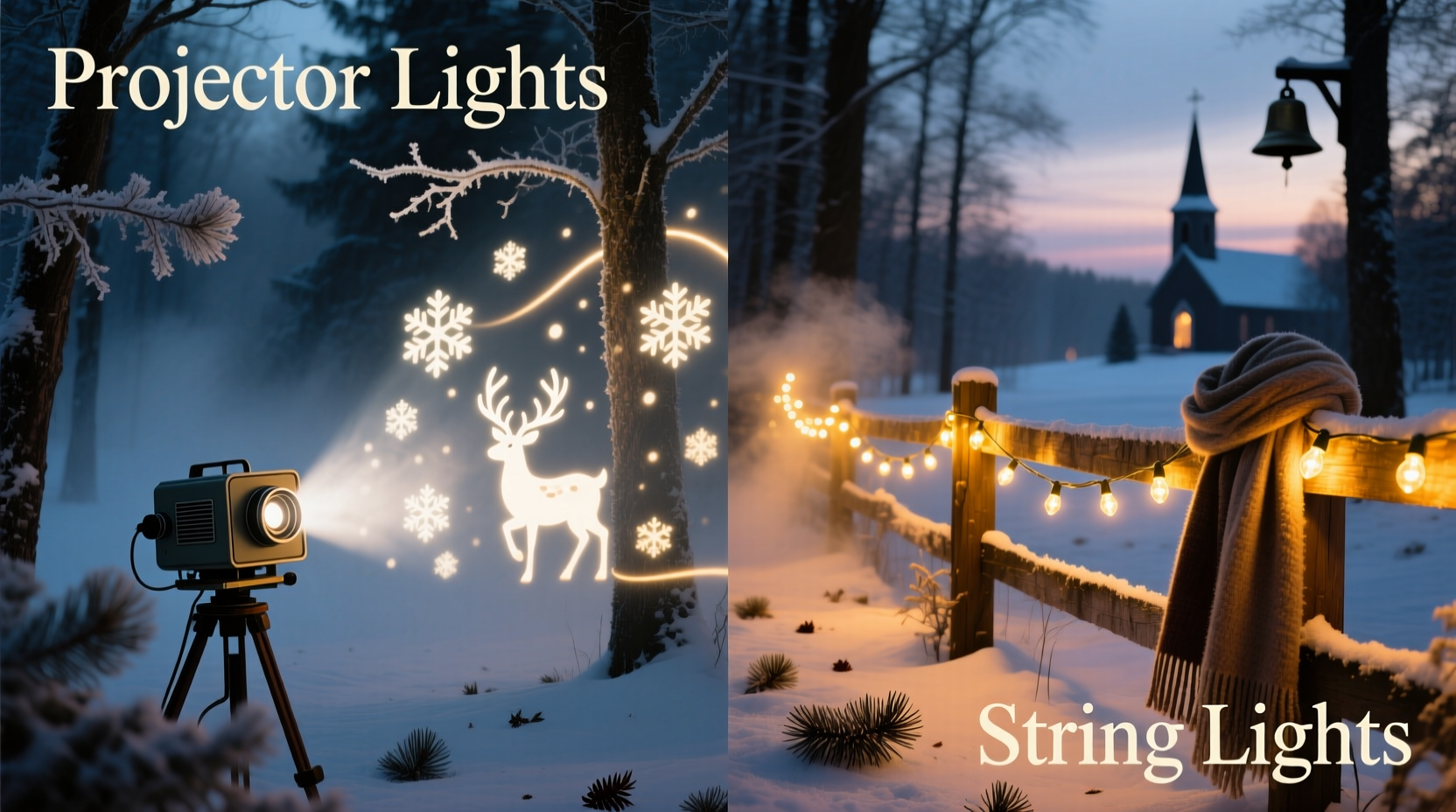
Magic in holiday lighting comes from more than just lumens or color variety. It stems from contrast—the interplay between darkness and illumination, stillness and movement, simplicity and spectacle. A truly magical display captures attention without overwhelming it. It invites pause, wonder, and even memory. The best holiday lighting doesn’t shout; it whispers through subtle flickers, gentle glows, and rhythmic patterns that feel alive.
String lights have long been the standard because they offer tactile charm. Their physical presence on railings, trees, and eaves creates depth and dimension. You can see individual bulbs, spacing, and craftsmanship. Projector lights, on the other hand, project patterns onto surfaces using concentrated beams. They cover large areas instantly and often include animated effects like falling snow or twinkling stars. While less tangible, they can transform entire facades with minimal effort.
The emotional response each evokes differs. String lights tend to inspire intimacy and tradition. They’re associated with childhood memories, family gatherings, and handmade ornamentation. Projector lights lean toward spectacle and surprise—ideal for grabbing attention from afar or adding dynamic motion where static lights might fall short.
How Projector Lights Work and Where They Shine
Christmas light projectors are compact units that emit high-intensity LED beams through rotating or static lenses. These beams project repeating patterns—such as snowflakes, stars, or classic bulb shapes—onto walls, roofs, sidewalks, or trees. Most models plug into standard outlets and offer remote controls for adjusting brightness, speed, and pattern selection.
One major advantage is speed of installation. A single projector can illuminate an entire side of a house in under five minutes. There’s no need to measure, drape, or secure wires. This makes them ideal for renters, people with mobility challenges, or anyone short on time. They also eliminate tripping hazards from ground-level cords and reduce strain on gutters or fragile architectural features.
Projectors excel in urban or suburban neighborhoods where curb appeal matters. A well-placed unit can make a modest home appear lavishly decorated. Some models even sync with music or change colors seasonally, offering versatility beyond December. However, their magic is largely visual and external. From inside the house, the effect may be less immersive unless projected through windows.
Limitations include dependency on surface texture and ambient light. Rough stucco or dark siding absorbs more light than smooth, light-colored walls. Streetlights or neighboring displays can wash out projections. Additionally, repeated patterns may begin to feel mechanical over time, lacking the organic randomness of real twinkle.
The Enduring Charm of String Lights
String lights remain the gold standard for holiday ambiance—not because they’re the easiest, but because they’re the most authentic. Whether incandescent or LED, warm white or multicolor, their physical presence adds texture and warmth. Each bulb casts its own micro-glow, creating layers of light that interact with wind, snow, and shadow.
Unlike projections, string lights are three-dimensional. They wrap around objects rather than overlaying them. This allows for creative arrangements: outlining windows, weaving through tree branches, or framing doorways. The process of hanging them—even if tedious—becomes part of the ritual. Many people report that decorating with string lights enhances their sense of holiday readiness, almost like a mental switch signaling the start of the season.
“Light has memory. The way real bulbs flicker in the cold air—that slight delay when they power on, the way they catch frost—that’s what people remember decades later.” — Daniel Reeves, Lighting Designer & Holiday Display Consultant
From a design perspective, string lights offer finer control. You can cluster them for emphasis, space them evenly for rhythm, or mix colors and lengths for complexity. High-quality LEDs now mimic the soft glow of vintage bulbs while using minimal energy. For indoor spaces, draping strings over mantels, shelves, or ceilings creates cozy atmospheres unmatched by any projector.
However, installation demands time, tools, and often a ladder. Outdoor setups require weather-resistant materials and careful anchoring. Over time, strands may fail, requiring troubleshooting. Storage is another consideration—coiling hundreds of feet of lights properly prevents tangles and extends lifespan.
Direct Comparison: Features That Matter
| Feature | Projector Lights | String Lights |
|---|---|---|
| Installation Time | Under 5 minutes | 30 minutes to several hours |
| Coverage Area | Up to 1,000 sq ft per unit | Limited by strand length (typically 25–100 ft) |
| Realism & Depth | Flat, two-dimensional projection | Three-dimensional, layered lighting |
| Energy Use | Low (15–30 watts) | Varies (LED: 5–10W per 100 bulbs) |
| Customization | Pattern and color presets | Full control over placement, density, and design |
| Durability | High (few moving parts) | Moderate (wiring vulnerable to weather/animals) |
| Indoor Usability | Limited (best on large walls) | Excellent (versatile in any room) |
| Cost (Initial) | $30–$80 per unit | $10–$25 per strand (multiple needed) |
This comparison shows that neither option is universally superior. Projectors win on convenience and scale. String lights dominate in authenticity and flexibility. Your choice depends on priorities: speed and visibility versus depth and personalization.
When to Choose Each Option: A Practical Guide
Deciding between projector and string lights shouldn’t be arbitrary. Consider these scenarios to determine which aligns with your goals.
Choose Projector Lights If:
- You live in a rental and can’t attach fixtures to walls or gutters.
- Your home has a large, visible façade facing the street.
- You want maximum impact with minimal setup time.
- You enjoy animated effects like falling snow or rotating stars.
- You're decorating a commercial space or community area.
Choose String Lights If:
- You value tradition and hands-on decoration rituals.
- You’re enhancing trees, porches, or interior spaces.
- You want a cozy, intimate atmosphere rather than a public display.
- You plan to mix lighting with ornaments, garlands, or candles.
- You enjoy fine-tuning your display year after year.
Real-World Example: Two Homes, Two Approaches
In suburban Denver, neighbors Sarah and Mark took opposite approaches to their holiday lighting. Sarah, a nurse with two young children, chose two red-and-white projector units. She placed one on her front lawn and another on the second-floor balcony. Within minutes, her entire house was covered in shimmering star patterns. Her display drew compliments from passersby and required only weekly checks for debris or misalignment.
Mark, a retired electrician, spent four weekends installing over 1,200 feet of LED string lights. He outlined every roofline, wrapped porch columns, and created a glowing arch over his driveway. His display included programmable sequences that mimicked waves and chases. While more labor-intensive, his work became a local attraction—families stopped to take photos, and kids waved as they drove by.
Both homes felt magical, but differently. Sarah’s had modern flair and instant charm. Mark’s radiated craftsmanship and heart. Neither was “better”—they reflected different values and lifestyles.
Step-by-Step: Creating a Magical Display (Regardless of Choice)
- Assess your space. Walk around your property at dusk. Note which areas are visible from the street and which benefit from close-up detail.
- Define your goal. Are you aiming for neighborhood admiration, family enjoyment, or photo-worthy moments?
- Select your primary method. Based on time, budget, and structure, choose projector or string lights as your base.
- Add complementary elements. Pair projectors with window candles or outdoor silhouettes. Combine string lights with wreaths or lanterns.
- Test before finalizing. Turn on your lights at night to check visibility, color balance, and coverage gaps.
- Schedule maintenance. Set reminders to clean lenses (for projectors) or inspect connections (for strings).
- Enjoy intentionally. Spend quiet moments observing your display. Let it serve as a reminder of the season’s meaning.
Frequently Asked Questions
Can projector lights work in snowy climates?
Yes, but snow accumulation on the lens can block or distort the image. Choose a model with a protective hood or install it under an eave. Clear the lens regularly during heavy snowfall.
Do string lights use more electricity than projectors?
It depends on scale. A single projector uses less power than 500+ bulbs. However, a small string of 50 LED lights consumes only about 5 watts—less than most projectors. Efficiency improves with LED technology and timers.
Can I mix projector and string lights safely?
Absolutely. Just ensure all electrical loads are within circuit limits. Use GFCI outlets outdoors and avoid daisy-chaining too many devices. The combination often produces the richest visual layering.
Final Thoughts: Magic Is Personal
The question isn’t whether projector lights or string lights create a more magical effect—it’s which kind of magic resonates with you. Projectors deliver instant wonder, democratizing dazzling displays for those who lack time or access. String lights reward patience with depth, warmth, and a sense of personal investment.
True holiday magic lies not in perfection, but in intention. It’s in the pause when someone stops to look up. It’s in the shared moment between family members untangling a strand or laughing at a crooked projection. Technology evolves, but the human desire for light in the darkest time of year remains constant.
You don’t need to choose one forever. Experiment. Start with a projector this year, then add strings next. Or go all-in on tradition and see how it feels. The most magical display is the one that brings you joy—not just to look at, but to create.




 浙公网安备
33010002000092号
浙公网安备
33010002000092号 浙B2-20120091-4
Comments
No comments yet. Why don't you start the discussion?