
When it comes to decorating outdoor spaces with ambient lighting—especially during holidays or seasonal events—two popular options stand out: projector-based lighting systems and physical light net curtains. Both aim to transform shrubs, hedges, and bushes into glowing focal points, but they differ significantly in how quickly and effectively they achieve full coverage. The question isn’t just about brightness or aesthetics—it’s about speed of deployment, ease of use, and visual impact over time.
This article compares projectors and physical light net curtains specifically on their ability to cover bushes quickly and efficiently. Whether you're preparing for a holiday display, an evening garden party, or a commercial installation, understanding the strengths and limitations of each method can save hours of labor and deliver better results.
Understanding the Basics: How Each Method Works
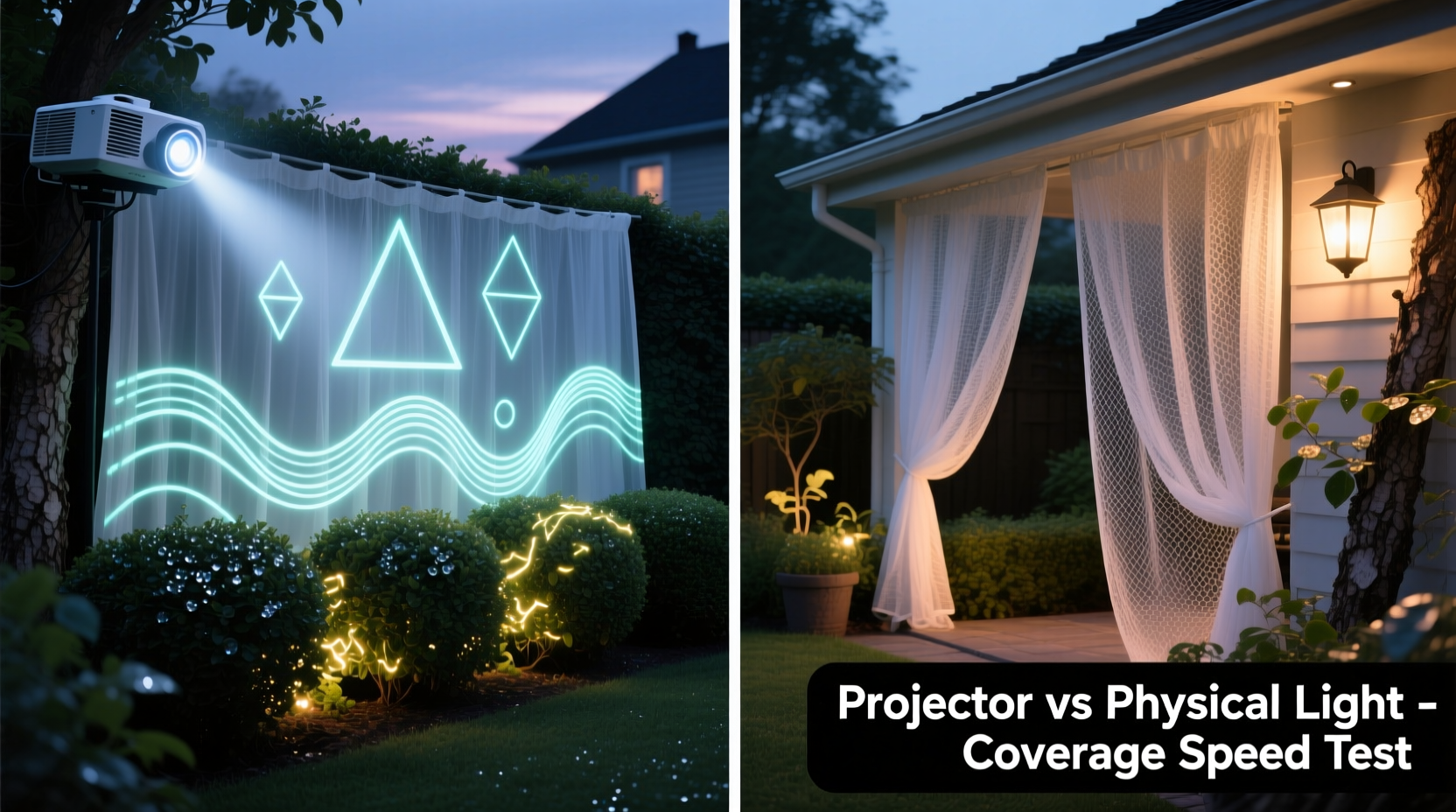
Before comparing speed, it's essential to understand what each technology offers.
Physical light net curtains are pre-strung grids of LED lights, typically arranged in a rectangular or square mesh pattern. These are designed to be draped directly over bushes, trees, or shrubs like a blanket. The lights are evenly spaced, often at 3-inch or 6-inch intervals, ensuring consistent illumination across the surface of the foliage.
Projector-based lighting systems, on the other hand, use high-lumen digital projectors (often weather-resistant) to cast animated or static light patterns onto landscaping features. These projectors don’t require physical contact with the bush—they’re mounted on tripods, stakes, or nearby structures and aimed at the target area.
The fundamental difference lies in contact versus projection. One requires hands-on placement; the other relies on line-of-sight and positioning. This distinction plays a major role in how fast each method can \"cover\" a bush.
Speed of Coverage: Setup Time Comparison
When evaluating which option covers bushes faster, setup time is the most critical factor. Here's how they compare:
- Physical Net Curtains: Installation involves unrolling the net, draping it over the bush, securing edges (often with clips or weights), and connecting power. For a medium-sized bush (4–6 feet tall), this takes 5–15 minutes per unit, depending on density and accessibility.
- Projectors: Setup includes mounting the projector, adjusting focus and angle, plugging in power, and testing the image. Once positioned correctly, a single projector can illuminate multiple bushes simultaneously—if aligned properly. Initial setup may take 10–20 minutes, but no physical attachment to plants is required.
In terms of raw speed per bush, projectors have a clear advantage when covering multiple targets from a central location. A single projector can “cover” three or four bushes in under 30 minutes with no climbing, draping, or clipping involved. However, if only one isolated bush needs lighting, physical nets may be faster due to simpler plug-and-play operation.
“From a landscape technician’s perspective, projectors win on scalability. If you're doing more than two bushes, especially in hard-to-reach areas, projection cuts labor time by up to 70%.” — Marcus Reed, Outdoor Lighting Specialist, Pacific Illumination Group
Comparison Table: Projector vs Physical Net Curtains
| Feature | Projector | Physical Light Net Curtains |
|---|---|---|
| Setup Time per Bush | Fast (shared across multiple bushes) | Moderate (per-unit draping required) |
| Coverage Flexibility | High (adjustable beam, animations) | Fixed (limited by net size/shape) |
| Installation Effort | Low (mount and aim) | High (manual handling, climbing) |
| Durability in Wind/Rain | High (no moving parts on bush) | Variable (nets may shift or tear) |
| Reusability & Storage | Very high (compact unit) | Moderate (bulky, tangles easily) |
| Best For | Multiple bushes, large yards, dynamic effects | Single bushes, tight foliage, even sparkle |
Real-World Example: Holiday Display at a Suburban Home
Consider a homeowner in Portland, Oregon, preparing their front yard for a December holiday display. The property has six evergreen bushes lining the walkway, each about 5 feet tall and densely foliaged.
Scenario A – Using Physical Net Curtains:
The homeowner purchases six 6x9-foot net lights. Over two evenings, they spend approximately 12 minutes per bush unrolling, draping, tucking lights into branches, and securing loose ends. Total active time: ~72 minutes. Challenges include tangled wires and difficulty reaching the backside of inner bushes near the wall.
Scenario B – Using Two Outdoor Projectors:
They install two weatherproof LED projectors—one on the porch railing, another on a ground stake. After 15 minutes of adjustment (angle, zoom, brightness), both units project snowfall and twinkling star patterns across all six bushes simultaneously. Some overlap occurs, but the overall effect is cohesive and magical. Total setup: 20 minutes.
In this case, the projector method covered all bushes faster, required less physical effort, and allowed for creative flexibility. However, close inspection reveals that the inner sides of the bushes remain dimmer compared to the net-lit version, where every branch sparkles uniformly.
Step-by-Step Guide: How to Quickly Cover Bushes Based on Your Needs
Follow this decision-driven process to determine the fastest way to light your bushes:
- Assess the Number and Layout of Bushes
If you have three or more bushes within a 30-foot radius, consider projectors. Clustered arrangements favor projection efficiency. - Evaluate Accessibility
Bushes near walls, fences, or under eaves are harder to drape. Projectors eliminate the need to climb or stretch, making them faster in constrained spaces. - Determine Desired Effect
Want steady, uniform sparkle? Nets provide tactile brilliance. Prefer motion, color shifts, or seasonal themes (snow, stars)? Projectors offer dynamic visuals with zero additional hardware. - Check Power Source Availability
Projectors usually require standard outlets and may need extension cords. Nets also need power but can sometimes run on battery packs. Proximity to power influences setup speed. - Test Before Full Deployment
For projectors: do a nighttime test run to confirm coverage and avoid hotspots. For nets: lay one out first to estimate fit and connection points. This prevents wasted time during final installation.
Common Limitations and How They Affect Speed
While both methods can work well, certain limitations slow down real-world performance.
With Physical Nets:
- Tangling: Stored improperly, nets become knotted, adding 5–10 minutes per unit to untangle.
- Sizing Mismatch: A bush too large for a net means buying extra pieces or patching gaps—slowing coverage.
- Weather Sensitivity: Wet conditions make nets heavier and slippery, increasing handling time.
With Projectors:
- Obstruction Issues: Overhanging branches or furniture can block the beam, requiring repositioning.
- Daylight Interference: Projectors are ineffective in daylight. While not affecting setup speed, it limits usable hours for testing.
- Surface Reflectivity: Dark or deeply textured foliage absorbs light, reducing perceived brightness and possibly requiring multiple units.
Hybrid Approach: Combining Both Methods for Optimal Speed and Impact
In professional installations, many landscapers now use a hybrid model—leveraging the speed of projectors with the precision of net curtains.
For example, a contractor might use a projector to blanket five bushes with a base layer of animated stars, then apply small net sections only to the most visible front-facing shrub for added texture. This approach cuts labor time while maintaining visual richness.
A 2023 survey by the National Association of Landscape Professionals found that 68% of commercial holiday lighting teams now incorporate at least one projector into their setups, citing faster turnaround and reduced crew size requirements.
Frequently Asked Questions
Can a projector fully replace physical net lights on bushes?
Not entirely. Projectors excel at creating atmospheric effects and broad coverage but lack the tactile depth and uniform sparkle of physical LEDs woven into foliage. For high-expectation displays (e.g., show homes or retail), a combination works best.
How many bushes can one projector cover effectively?
Depending on lumen output and distance, a single 5,000-lumen outdoor projector can clearly illuminate 3–5 medium bushes (4–6 ft tall) within a 20-foot cone. Higher-end models (8,000+ lumens) can reach farther and wider.
Are light net curtains reusable year after year?
Yes, if stored properly. Coil them carefully around a cardboard frame or use storage bags to prevent tangling. Avoid compressing them tightly, as this damages wiring over time.
Final Recommendation: Which Covers Bushes Faster?
For sheer speed across multiple bushes, projectors win decisively. They eliminate physical contact, reduce labor intensity, and allow rapid adjustments. A single operator can light an entire yard in under 30 minutes once the system is calibrated.
However, for unmatched detail, consistency, and close-up brilliance, physical light net curtains remain superior. They “cover” in the literal sense—every inch of the bush can be touched by light.
The fastest solution depends on your priorities:
- Need to cover many bushes quickly? → Go with projectors.
- Only lighting one or two key bushes where detail matters? → Use net curtains.
- Want the best of both? → Combine a projector for background ambiance with small net panels on focal points.
Take Action Today
Don’t wait until the last weekend before the holidays to figure out your lighting strategy. Evaluate your bushes now, measure distances, and test a rental projector or a single net curtain to see what works best for your space. With the right approach, you can transform your landscape in under an hour—and enjoy the glow for weeks.




 浙公网安备
33010002000092号
浙公网安备
33010002000092号 浙B2-20120091-4
Comments
No comments yet. Why don't you start the discussion?