
Learning Spanish doesn’t have to be overwhelming. Millions of people have successfully acquired the language not through years of rote memorization, but by applying consistent, intelligent strategies that align with how the brain naturally learns. Whether you're a beginner or someone who’s struggled with Spanish in the past, the key lies not in talent—but in method. With the right approach, speaking Spanish confidently is within reach, often faster than you expect.
Immerse Yourself Daily—Even Without Traveling
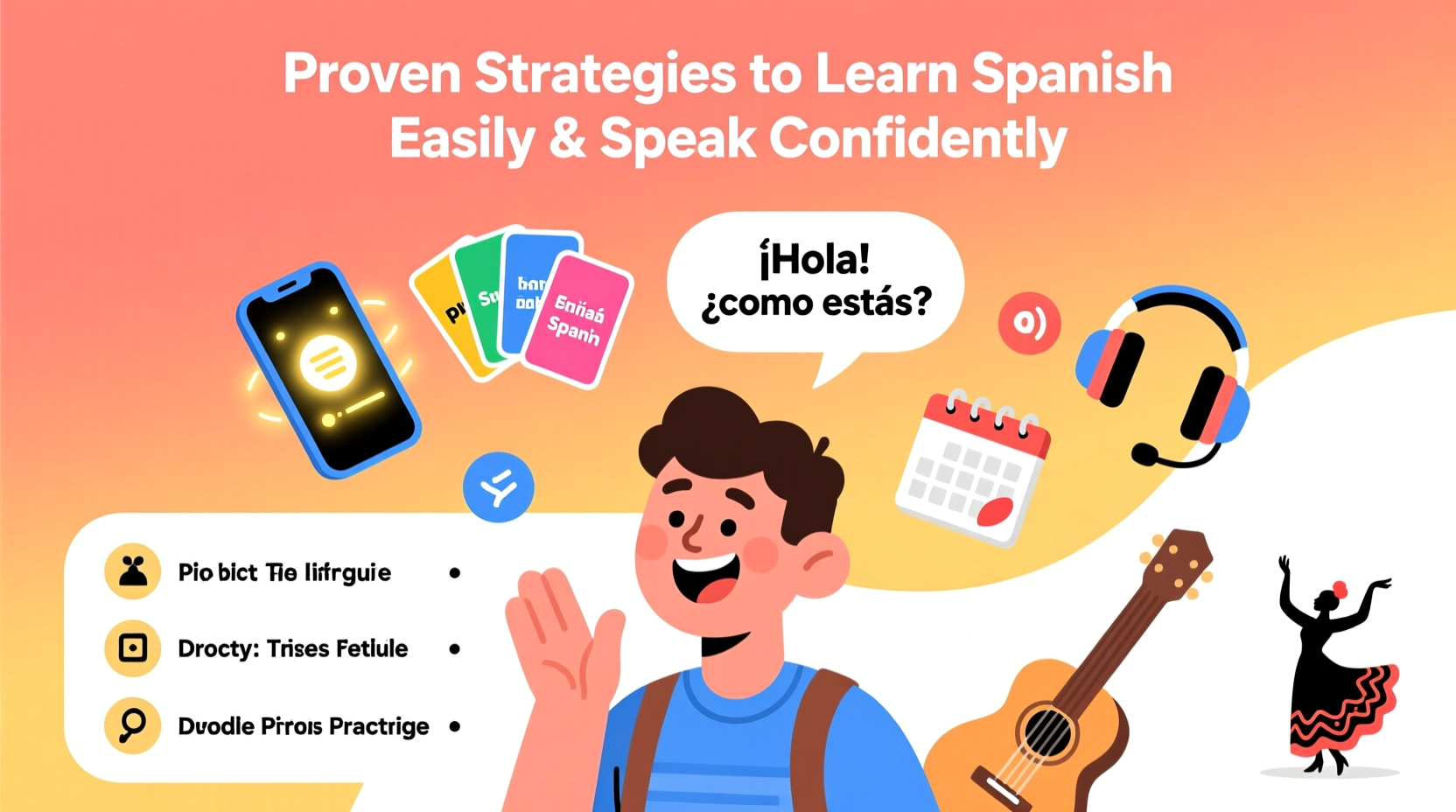
Immersion is the most powerful tool in language acquisition. You don’t need to move to Spain or Latin America to experience it. Instead, create an immersive environment at home. Change your phone’s language settings to Spanish, follow Spanish-speaking influencers on social media, listen to Spanish podcasts during your commute, and watch shows with subtitles.
The goal is exposure. Your brain begins recognizing patterns, pronunciation, and common phrases without conscious effort. This passive learning builds familiarity, which accelerates active learning later.
Master High-Frequency Vocabulary First
Spanish has over 100,000 words, but you only need about 2,000 to understand 80% of everyday conversations. Focus on high-frequency words—the ones used most often in daily speech.
Begin with core categories: greetings, food, family, time, emotions, and common verbs like ser, estar, tener, and ir. Use spaced repetition systems (SRS) like Anki or Memrise to retain them long-term. These tools show you flashcards just before you’re likely to forget, maximizing memory efficiency.
| Priority Level | Vocabulary Focus | Example Words |
|---|---|---|
| High | Top 100 words | el, la, de, que, no, a, en, un, ser, tener |
| Medium | Everyday phrases | Hola, gracias, ¿dónde está?, ¿cuánto cuesta? |
| Low | Rare or technical terms | photosynthesis, bureaucracy |
Speak from Day One—Yes, Really
Many learners wait until they “feel ready” to speak. That moment rarely comes. Confidence isn’t the result of preparation—it’s the result of practice.
Start speaking immediately, even if it’s just repeating phrases aloud or narrating your actions: “Estoy desayunando,” “Voy al trabajo.” Use language exchange apps like Tandem or HelloTalk to connect with native speakers. Most are eager to help and will correct your mistakes gently.
“Language is learned by doing, not by waiting. Every mistake is data for improvement.” — Dr. Elena Mora, Linguistics Professor at Universidad Complutense
Mini Case Study: From Silent Learner to Confident Speaker
Carlos, a software developer from Canada, studied Spanish for two years using textbooks but couldn’t hold a basic conversation. Frustrated, he shifted tactics: he committed to 15 minutes of daily speaking via video calls with a tutor on iTalki. He also started journaling simple thoughts in Spanish each morning.
Within four months, Carlos booked a solo trip to Guatemala and navigated markets, asked for directions, and made friends—all in Spanish. His breakthrough wasn’t due to perfect grammar; it was his willingness to speak early and often.
Use the “Listen, Imitate, Repeat” Method
Pronunciation and rhythm are critical for confidence. Spanish has predictable phonetics—once you know the rules, you can pronounce any word correctly. But hearing the sounds regularly trains your ear and mouth.
Follow this three-step process daily:
- Listen: Choose a short audio clip (30–60 seconds) from a podcast or YouTube channel.
- Imitate: Pause after each sentence and mimic the speaker’s tone, speed, and intonation.
- Repeat: Do this 3–5 times until your delivery feels natural.
This technique, known as shadowing, improves listening comprehension, accent, and fluency simultaneously.
Build Sentences, Not Just Words
Knowing vocabulary isn’t enough. Fluency comes from being able to assemble words into meaningful sentences. Practice using new words in full contexts.
For example, instead of memorizing “comer” (to eat), create mini-dialogues:
- “Yo como pan cada mañana.”
- “¿Tú comes carne o vegetales?”
- “Ella no come pescado.”
This reinforces grammar naturally and prepares you for real conversations. Use sentence mining—collect useful phrases from real conversations or shows and add them to your review deck.
Checklist: Daily Spanish Practice Routine
Follow this balanced routine to make steady progress:
- ✅ Spend 10 minutes reviewing flashcards (Anki or similar)
- ✅ Listen to a Spanish audio clip and shadow it (5–10 minutes)
- ✅ Speak aloud: describe your day or answer a prompt (5 minutes)
- ✅ Learn 1–2 new phrases in context (e.g., ordering food, making plans)
- ✅ Write 3–5 original sentences using new vocabulary
Consistency beats intensity. Even 20 focused minutes a day yield better results than two-hour weekly marathons.
Avoid Common Learning Traps
Many learners stall because they fall into predictable pitfalls. Recognize these and adjust accordingly:
| Do | Don't |
|---|---|
| Focus on communication over perfection | Wait to speak until grammar is flawless |
| Embrace mistakes as feedback | Fear errors and avoid trying |
| Use Spanish in real-life tasks (e.g., shopping lists) | Only study in abstract exercises |
| Review regularly with spaced repetition | Cram once and never revisit |
Confidence grows when you prioritize progress over perfection. The goal isn’t to sound like a native—it’s to be understood, and to understand others.
FAQ
How long does it take to speak Spanish confidently?
According to the Foreign Service Institute (FSI), Spanish requires approximately 600 hours of study for English speakers to reach general professional proficiency. With one hour of daily practice, that’s about 18–24 months. However, conversational confidence can emerge in as little as 3–6 months with consistent speaking practice.
Is it okay to mix Spanish and English when speaking?
Yes—especially in the beginning. This “code-switching” is natural and part of the learning process. As your vocabulary grows, you’ll rely less on English. Don’t let fear of mixing languages stop you from communicating.
Can I learn Spanish effectively without a tutor?
You can, but speaking with others dramatically accelerates fluency. Free tools like language exchanges, online communities, and AI conversation partners (like ChatGPT set to Spanish mode) can compensate for lack of formal tutoring. However, occasional feedback from a native speaker helps correct bad habits early.
Conclusion
Learning Spanish easily and speaking confidently isn’t about shortcuts—it’s about strategy. Immersion, prioritized vocabulary, daily speaking, and consistent practice form the foundation of real progress. Mistakes aren’t setbacks; they’re essential steps forward. The most fluent learners aren’t the smartest—they’re the ones who show up every day and keep going.




 浙公网安备
33010002000092号
浙公网安备
33010002000092号 浙B2-20120091-4
Comments
No comments yet. Why don't you start the discussion?